TL;DR: women entrepreneurs in 2026, the key statistics
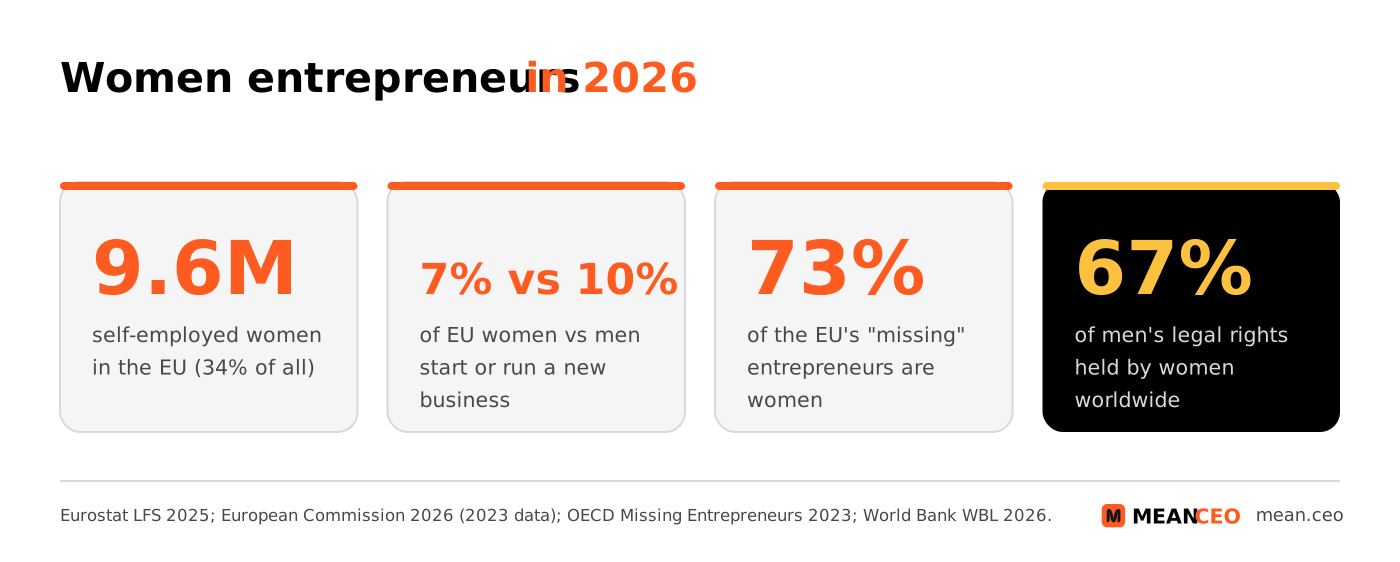
In the EU, 9.6 million women are self-employed, 34% of all self-employed people, and 2.5 million of them employ staff. Women are less likely than men to start a business (7% vs 10% of adults), and they make up about 73% of the EU's "missing" entrepreneurs. Worldwide, 10.7% of women run a new business, against 13.2% of men, and Europe has the widest gap of any region. Women entrepreneurs are more educated than men, more often work alone or part-time, and face bigger funding and care barriers. Below: the full 2026 data, by country and topic.
👉 Start building your business in the Fe/male Switch startup game
Statistics on women entrepreneurs are scattered across Eurostat, the OECD, the European Commission, the Global Entrepreneurship Monitor and national sources, each with different definitions and years. This hub brings the latest figures together in one place, with the year and source for each, so you can quote them correctly.
For funding numbers in more depth, see our female founder funding statistics; for the companies women have built, see the most valuable female-founded companies. For how to actually raise the money, see our funding playbook for female entrepreneurs.
Women entrepreneurs in Europe: key statistics
Women make up 34.0% of the EU's 28.2 million self-employed people, up from 32.0% in 2015, according to Eurostat. The number of self-employed women grew 6.8% in ten years while the number of self-employed men fell. But only a quarter of self-employed women employ anyone, and women are 27.7% of all employers.
Among employers, women's share is highest in Bulgaria (32.6%), Croatia (32.3%), France and Latvia (30.4% each), and lowest in Malta (18.5%), Slovenia (19.8%) and Sweden (21.0%), by our calculation from Eurostat data. For national support, see the European countries that best support female founders. For pay, pension and investing gaps, see business women and money in 2026.
Who are Europe's women entrepreneurs?
A June 2026 report for the European Commission paints a clear profile, based on 2023 data:
- Sectors: women are the majority of entrepreneurs in other services (69%), health and social work (65%) and education (57%), but only 4% in construction.
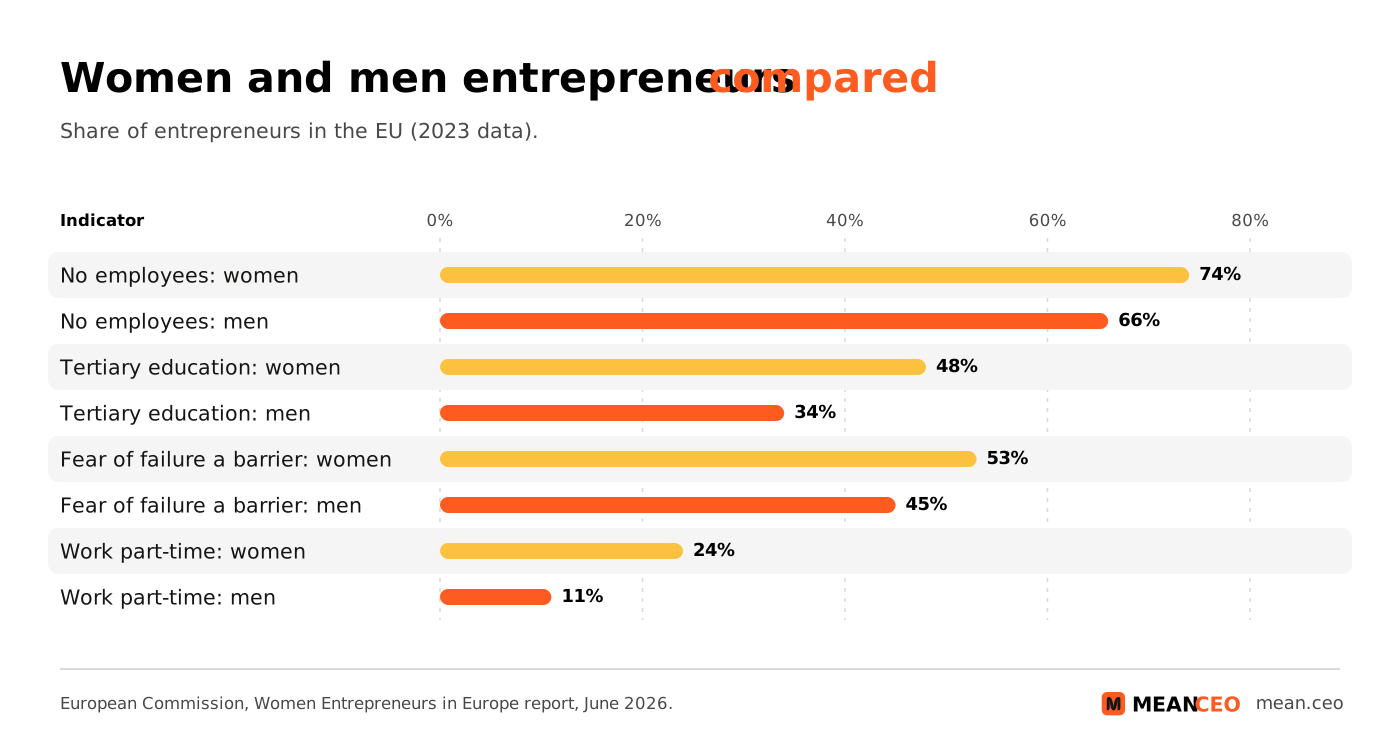
- Size: 74% of women entrepreneurs have no employees, compared with 66% of men.
- Hours: 24% work part-time, compared with 11% of men.
- Education: 48% have a university degree, compared with 34% of men.
- Income: mean net annual income was about €21,000 for both women and men, though the report warns that self-employed incomes are under-reported.
- Age: 43.8% of self-employed women in the EU are aged 50–74, up from 39.9% in 2015, and the number aged 65–74 rose 30% in ten years, according to Eurostat. See our business ideas for women over 50.
Why women start businesses, and what holds them back
Across 51 economies, 49.8% of women starting a business want "to make a difference in the world", 57.3% want to build wealth and 71.1% cite scarce jobs, according to the GEM 2024/2025 Women's Entrepreneurship Report.
- Confidence and skills: 53% of women in the EU see fear of failure as a barrier, against 45% of men, and 42% think they have the skills to start a business, against 55% of men (European Commission, 2026).
- Care: the Commission's report names gaps in childcare, eldercare and parental leave, and tax rules that penalise second earners. Women are 1.47 times as likely as men to close a business for family reasons, according to GEM.
- Finance: businesses led by women receive about 2% of venture capital, and women who do raise venture capital get about 70% of the amounts men get, according to the OECD's 2025 report on the finance gap.
- Ambition gap or support gap? Only 10% of women entrepreneurs expect to create 19 or more jobs in five years, compared with 17% of men (OECD).
Equal participation would be worth a lot: women make up about 73% of the EU's "missing" entrepreneurs, according to the OECD and European Commission. For balancing a business with family, see raising kids while building a startup in Europe.
Women entrepreneurs and funding
- Europe: female-founded companies raised €9.5 billion across more than 1,800 deals in 2025, according to PitchBook's European All In report.
- By stage: all-women founding teams received 4.17% of European seed capital and only 0.81% of Series A capital in 2025, according to Atomico.
- US: startups with at least one female founder raised a record $73.6 billion in 2025, about two-thirds of it in AI, according to PitchBook.
For every route to money, from grants to angels and VC, see our European grants for female founders and the full female founder funding statistics.
Women entrepreneurs worldwide
Across 51 economies, 10.7% of adult women were starting or running a new business in 2024, against 13.2% of men, so women were about 20% less likely to start. Women's rates were below men's in 47 of the 51 economies, from 32% in Ecuador to 2.3% in Poland, and Europe had the widest gap of any region, with 76 women starting a business for every 100 men, according to GEM.
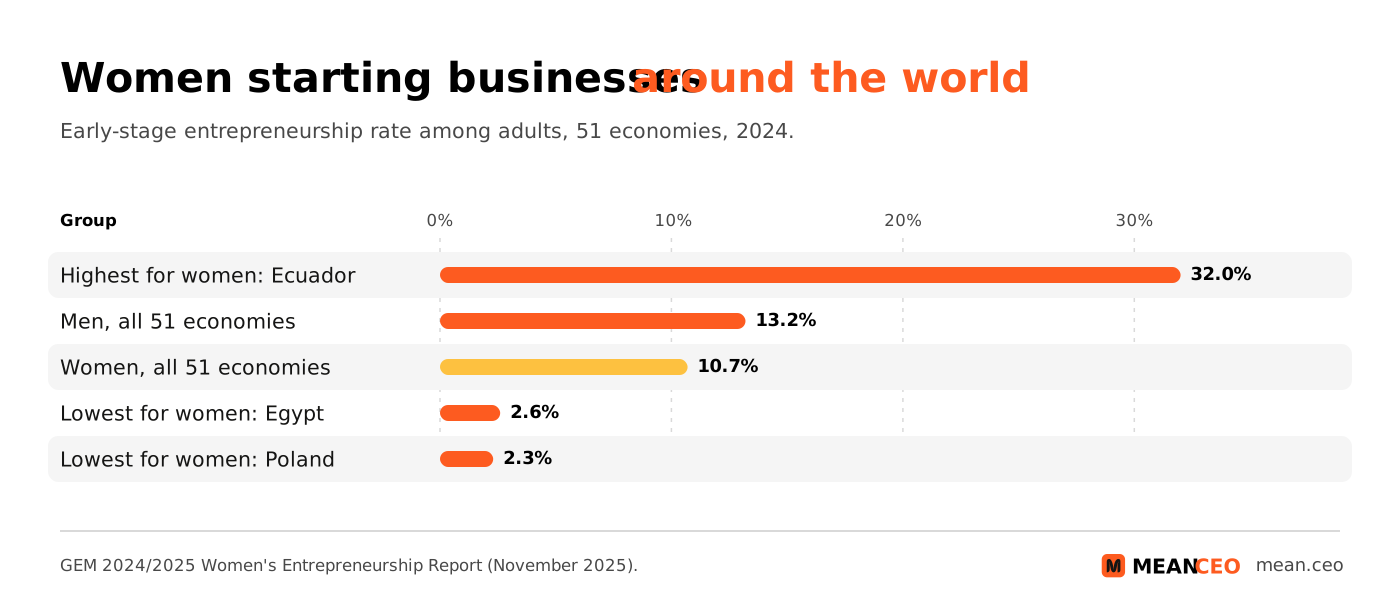
Legal barriers still shape who can start a business: women hold only 67% of the legal rights of men on average, according to the World Bank's Women, Business and the Law 2026. In the US, women own 39% of all businesses, with $2.8 trillion in receipts, according to the US Census Bureau.
Trends to watch in 2026
- Older women are starting businesses: the fastest growth in EU self-employment is among women over 50.
- AI is the new gap: only 2.3% of women entrepreneurs work in ICT, against 6.1% of men, and women rate AI as important 11% less often (GEM). Women are 19.5% of the EU's ICT specialists and 33.6% of its STEM graduates (Eurostat). See our startup ideas where VC money is going.
- Women's health is opening up: many female founders build for problems they know; see these femtech business ideas.
- Women at the top remain rare: only about one in ten CEOs of the largest companies are women.
Join the women building businesses in 2026
The Fe/male Switch startup game takes you from idea to first customers in weekly quests, with an AI co-founder and a community of women founders.
👉 Start the game
Conclusion: more women entrepreneurs, but the gaps persist
Europe has more self-employed women than ever, 9.6 million in 2025, and they are better educated than their male peers. But women are still less likely to start a business, more likely to stay small, and far less likely to receive venture capital. The gaps come from confidence and skills, care responsibilities and access to finance, which means they can be closed with the right support. For practical steps, see the complete handbook for female entrepreneurship in Europe.
FAQ: women entrepreneurs statistics
How many women entrepreneurs are there in Europe?
About 9.6 million women in the EU were self-employed in 2025, 34% of all self-employed people, and 2.5 million of them employed staff, according to Eurostat.
What percentage of entrepreneurs are women?
Women are 34% of the self-employed and 33% of all entrepreneurs in the EU. Worldwide, 10.7% of women and 13.2% of men are early-stage entrepreneurs, according to GEM.
Which EU country has the most women entrepreneurs?
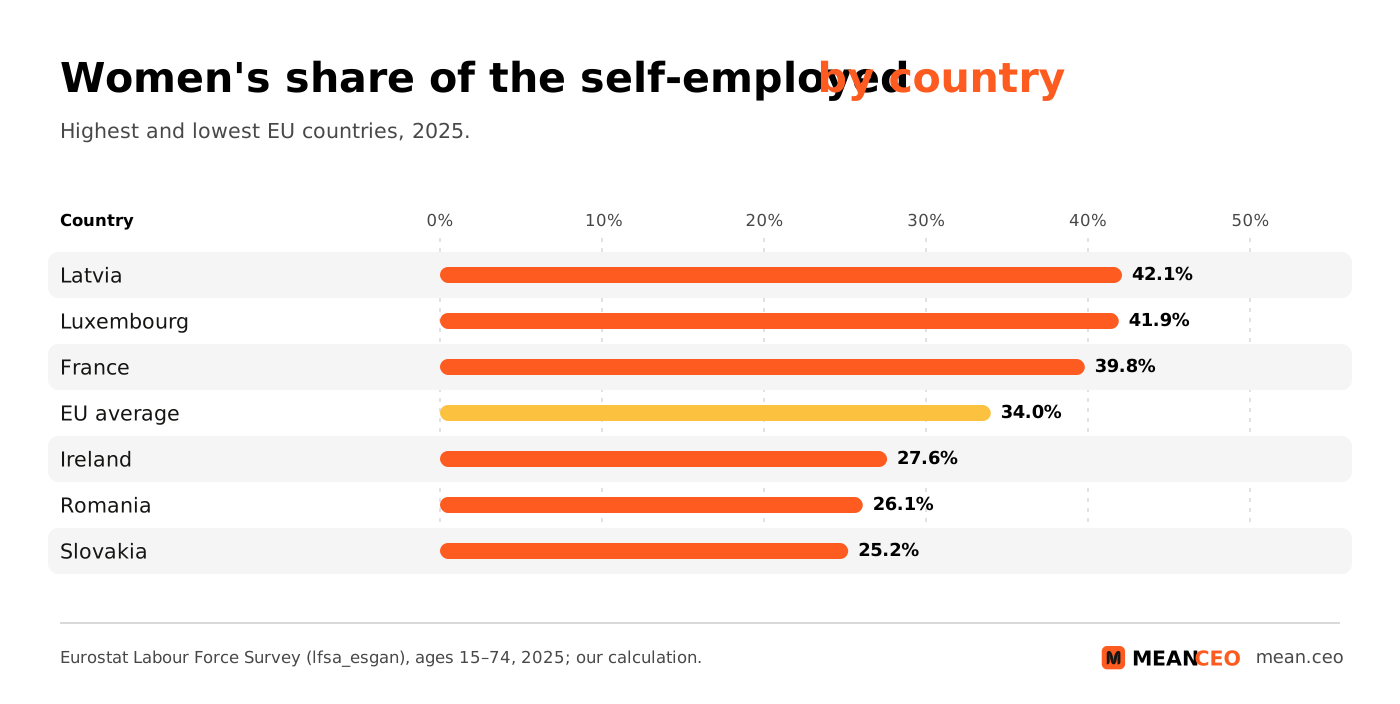
In 2025 women's share of the self-employed was highest in Latvia (42.1%), Luxembourg (41.9%) and France (39.8%), and lowest in Slovakia, Romania and Ireland.
Why are there fewer women entrepreneurs?
Women report more fear of failure and less confidence in their skills, carry more care responsibilities, and receive a small share of venture capital. Women make up about 73% of the EU's "missing" entrepreneurs.
Why do women start businesses?
Across 51 economies, 49.8% want to make a difference, 57.3% want to build wealth and 71.1% cite a lack of jobs, according to GEM's 2024/25 report.
How much venture capital goes to women?
In Europe, female-founded companies raised €9.5 billion in 2025 (PitchBook), but all-women teams received only about 4% of seed and under 1% of Series A capital (Atomico).
How many businesses do women own in the US?
About 14.2 million of 36.4 million US businesses, and 1.4 million of 5.9 million employer firms, according to the US Census Bureau.
Are women entrepreneurs more educated than men?
Yes, in the EU: 48% of women entrepreneurs have a university degree, against 34% of men, according to the European Commission's 2026 report.
About the Author
Violetta Bonenkamp, also known as MeanCEO, is an experienced startup founder with an impressive educational background including an MBA and four other higher education degrees. She has over 20 years of work experience across multiple countries, including 5 years as a solopreneur and serial entrepreneur. Throughout her startup experience she has applied for multiple startup grants at the EU level, in the Netherlands and Malta, and her startups received quite a few of those. She’s been living, studying and working in many countries around the globe and her extensive multicultural experience has influenced her immensely.
