TL;DR: what's the state of business women's pay and wealth in 2026?
Women in the EU earn 11.1% less per hour than men, the gap in total earnings is far larger, and women's pensions are 24.2% lower. Women are also less likely to invest (18% vs 30%) and to have high financial literacy (13% vs 24%). 2026 brings a new tool: the EU Pay Transparency Directive gives you the right to see pay ranges and pay data by gender. Research shows women negotiate as well as men when they're told pay is negotiable. Below: the data, your new rights, what works in negotiation, and a money action plan.
👉 Build your own business with the Fe/male Switch startup game
Business women have never been more visible, but the money gaps are still large, and they grow over a working life. Lower pay leads to lower savings, lower investment and lower pensions. The good news is that 2026 is a turning point: new EU rules make pay visible, and research shows which negotiation tactics work.
This guide focuses on money: pay, negotiation, investing, wealth and pensions. For the numbers on women in business and 20 women who built companies, see our sister guide to business women in 2026; for the history, see business women in Europe from a husband's permission to boardroom quotas. If you're raising money for a business, see the 2026 funding playbook for female entrepreneurs.
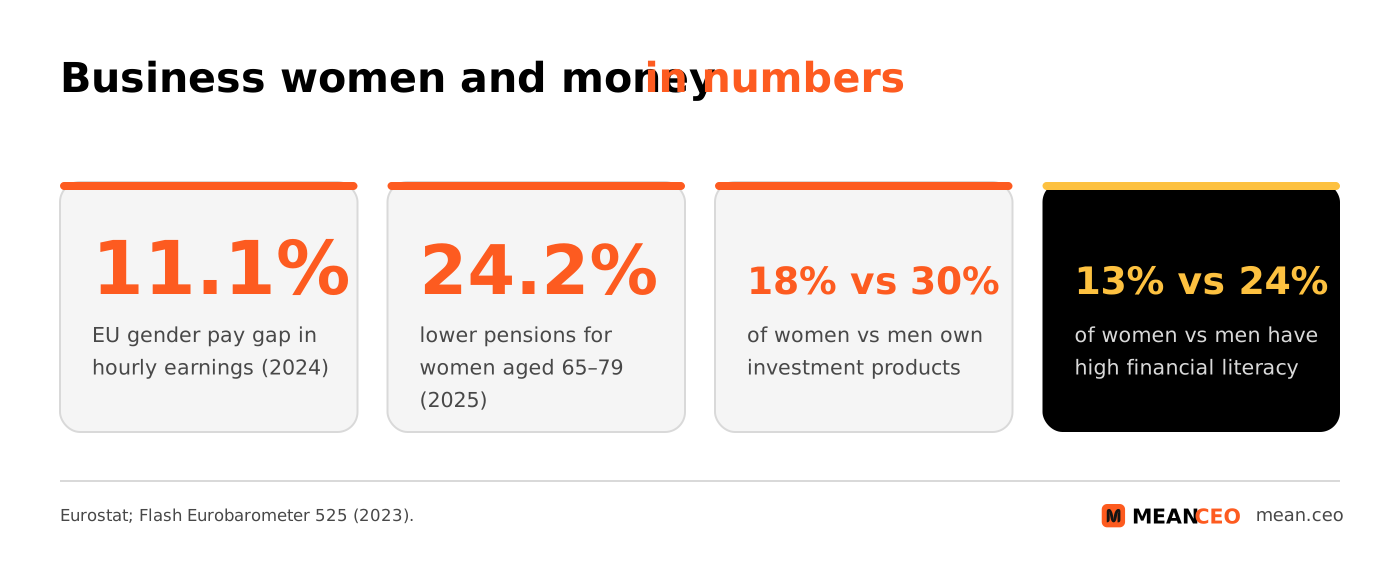
The pay gap is a few percent per hour. Over a lifetime, it becomes a gap in wealth and pensions.
The gender pay gap in 2026
Women in the EU earned 11.1% less than men per hour on average in 2024, down from 14.4% in 2018, according to Eurostat. The gap ranges from 18.8% in Estonia and 18.5% in Czechia to almost zero in Belgium and Luxembourg.
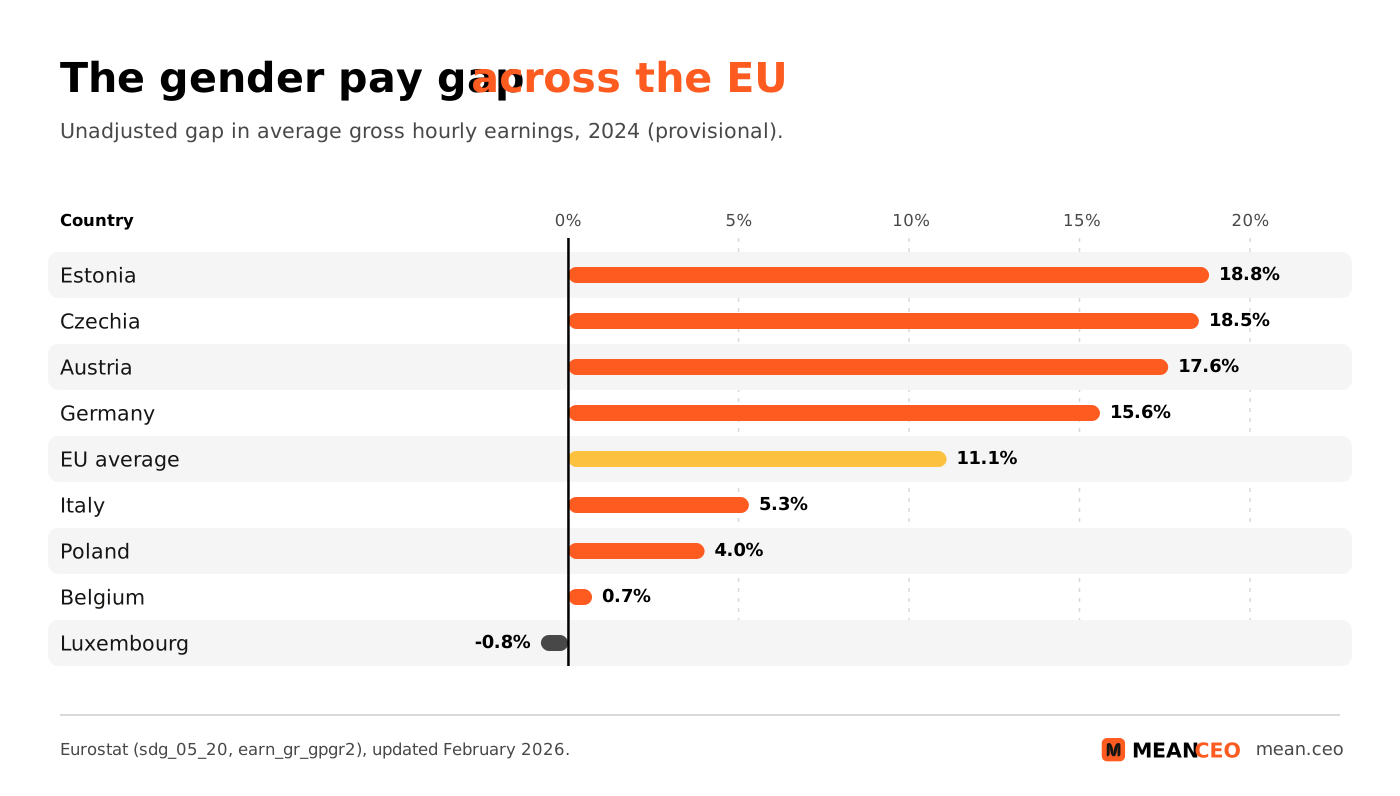
The hourly gap understates the difference in what women take home. Counting hours worked and employment rates, women's overall earnings were 36.2% lower than men's in 2018, the latest year Eurostat has published. A low gap can also hide low female employment, as in Italy, where fewer women are in paid work.
Source: Eurostat.
Why the gap persists: care and careers
Much of the gap comes from who does the unpaid work. In the EU, 41% of women care for children for 35 hours or more a week, compared with 20% of men, and 59% of women do housework every day, compared with 33% of men, according to EIGE's Gender Equality Index 2025.
Children change women's careers far more than men's: in 2025, 70.0% of EU women aged 25–54 with a child under six were employed, against 91.9% of fathers, according to Eurostat. Without children, the rates are much closer (80.4% vs 83.6%). Part-time years mean lower pay, fewer promotions and smaller pensions. For founders juggling both, see balancing motherhood and startup growth.
The EU Pay Transparency Directive: your new rights
The EU Pay Transparency Directive (2023/970) had to be written into national law by 7 June 2026, according to the European Commission. Only a handful of the 27 member states had passed full laws by autumn 2026, so check your country's status, but the main rights are:
If you run a company, budget time for pay structures and job-ad ranges now; reporting starts at 100 employees, but transparent pay also helps small startups hire. See how to set your own founder salary.
Negotiation: what the research really says
- Women often ask less, but the context matters. Linda Babcock and Sara Laschever's book Women Don't Ask (2003) made the point famous.
- Asking can carry a penalty. In experiments by Bowles, Babcock and Lai (2007), evaluators penalised women more than men for starting a negotiation, which partly explains why women hesitate.
- Clear rules close the gap. In a field experiment with about 2,500 job seekers, men negotiated more when pay rules were vague, but the gap disappeared when the job ad said wages were negotiable, according to Leibbrandt and List (2015).
- Women choose well when to ask. Women negotiate less but tend to choose the right moments, and pushing women to always negotiate can backfire, according to Exley, Niederle and Vesterlund (2020).
- Women do ask for raises. Australian data show women ask for raises as often as men but are less likely to get them (Artz, Goodall and Oswald, 2018).
The practical lesson: negotiate where the rules invite it, bring evidence, and use the new right to pay information to anchor your ask in real numbers rather than guesses. Founders negotiating their own pay can use salary negotiation for female startup CEOs; for investors, see how to handle mansplaining in investor meetings.
Investing and wealth: the hidden gap
In 2023, 30% of men in the EU owned or had recently owned an investment product, compared with 18% of women; 25% of men had a private pension product, against 19% of women. Only 13% of women had high financial literacy, compared with 24% of men, according to Flash Eurobarometer 525.
Across 39 economies, the overall financial literacy gap between men and women is small, under two points out of 100, and comes mainly from financial knowledge, according to the OECD/INFE 2023 survey. In other words, women are about as good with money in practice; they're less often taught about investing.
- Saving isn't the problem. In Germany, women save 14% of their monthly income and men 10%, yet men's median net wealth is more than double women's, according to DIW Berlin.
- Wealth gaps add up. German women's wealth was about 35% lower than men's (around €31,000) in 2012 data, according to a DIW study.
- Patience pays. In a classic US study, men traded 45% more than women, which cut their net returns more (Barber and Odean, 2001).
Pensions: where the gaps end up
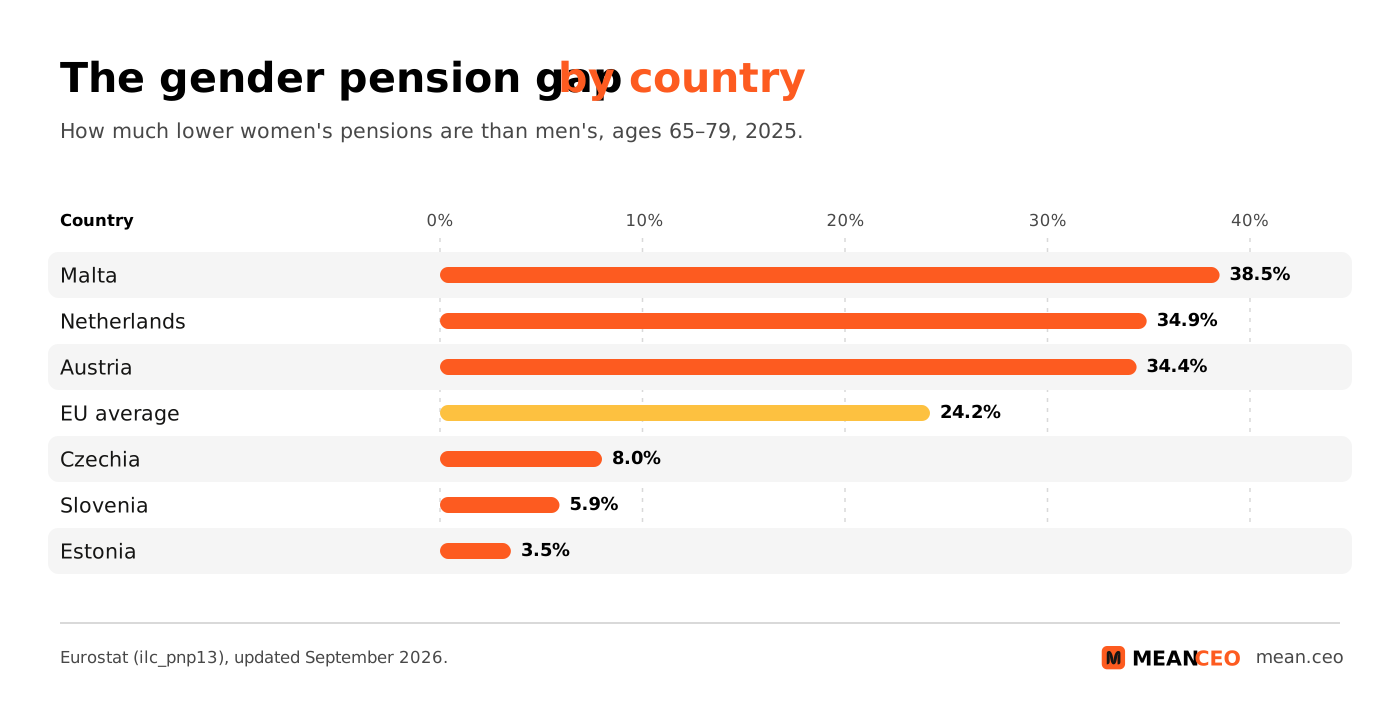
Women aged 65–79 in the EU receive pensions 24.2% lower than men's, down from 29.6% in 2018, according to Eurostat. The gap is largest in Malta, the Netherlands and Austria and smallest in Estonia, Slovenia and Czechia.
Self-employed women are especially exposed: many pay little into pensions while their business grows. Women are 34.3% of the EU's self-employed aged 15–64, and an older EIGE study found self-employed women earned 45% less than self-employed men. See our women entrepreneurs statistics for the latest data.
Your money action plan
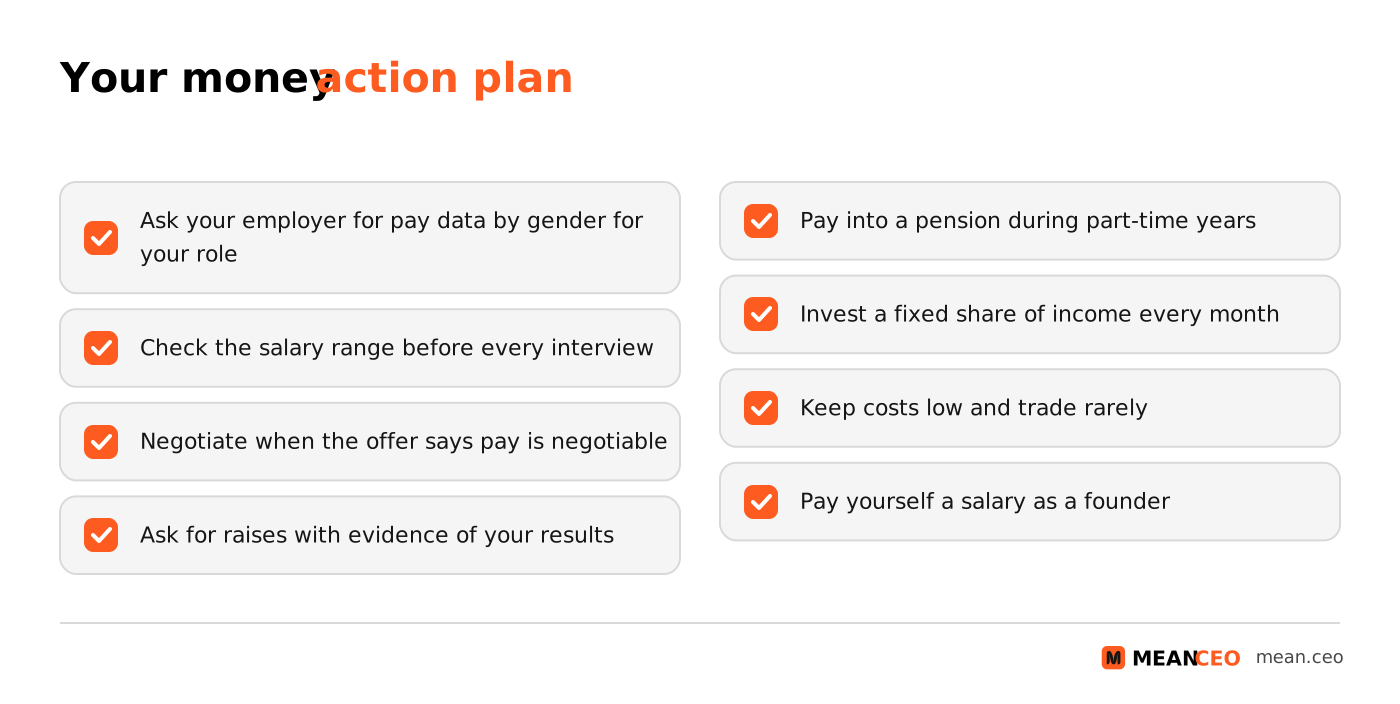
- Use your new rights. Ask for pay data by gender for your role once your country has implemented the directive.
- Know the range before you talk. Use the published range and market data to set your ask.
- Negotiate the whole package: salary, bonus, pension contributions, flexible hours and training.
- Protect your pension during care years. Keep contributing, even small amounts, and check what your partner's pension covers.
- Invest regularly and simply. Low-cost, diversified funds and a monthly amount beat trying to time the market.
- If you run a business, pay yourself. See founder salary before revenue.
- Build your own income stream. Many women close the gap by starting a business; see the female-founded companies leading the way and female CEOs of the biggest companies.
Learn to price, negotiate and pitch in a safe space
The Fe/male Switch startup game takes you through pricing, negotiation and fundraising quests, with an AI co-founder and a community of women founders.
👉 Start the game
Conclusion: make the money visible
The EU's gender pay gap has narrowed to 11.1%, but it grows into a 24% pension gap by retirement, through care years, part-time work, lower investment and smaller savings. 2026 gives business women new tools: pay ranges before interviews, the right to see pay data by gender, and research showing that clear rules close the negotiation gap. Use them, invest early, protect your pension, and if you build a business, pay yourself first.
FAQ: business women, pay and wealth
What is the gender pay gap in the EU in 2026?
The latest figure is 11.1% for 2024: women earned 11.1% less per hour than men on average, according to Eurostat. It ranges from 18.8% in Estonia to below zero in Luxembourg.
What is the EU Pay Transparency Directive?
An EU law that had to be implemented by 7 June 2026. It requires pay ranges before interviews, bans questions about pay history, gives workers the right to pay data by gender and makes companies with 100 or more employees report their gender pay gap.
Do women negotiate less than men?
Often, yes, partly because women who ask can be penalised. But when job ads say pay is negotiable, the gender gap in negotiation disappears, according to a field experiment by Leibbrandt and List.
How big is the gender pension gap?
Women aged 65–79 in the EU receive pensions 24.2% lower than men's (2025), with the largest gaps in Malta, the Netherlands and Austria.
Do women invest less than men?
Yes: 18% of EU women owned investment products in 2023, against 30% of men, according to Flash Eurobarometer 525. In Germany, women save a larger share of their income than men, according to DIW Berlin, but invest less.
How can women close the wealth gap?
Negotiate pay using published ranges and pay data, keep paying into pensions during care years, invest regularly in low-cost diversified funds, and if self-employed, pay yourself and your pension first.
Are women worse investors?
No. Research by Barber and Odean found men trade 45% more than women, which hurts their net returns more. The gap is in participation and knowledge, not skill.
What share of managers in the EU are women?
35.9% in 2025, according to Eurostat. Women are fewer still at the very top: about one in ten CEOs of the largest listed companies.
About the Author
Violetta Bonenkamp, also known as MeanCEO, is an experienced startup founder with an impressive educational background including an MBA and four other higher education degrees. She has over 20 years of work experience across multiple countries, including 5 years as a solopreneur and serial entrepreneur. Throughout her startup experience she has applied for multiple startup grants at the EU level, in the Netherlands and Malta, and her startups received quite a few of those. She’s been living, studying and working in many countries around the globe and her extensive multicultural experience has influenced her immensely.
