TL;DR: how many female CEOs lead the biggest companies in 2026?
Still few, but a record number. Women run 56 of the Fortune 500 (11.2%), 34 of the Fortune Global 500 (6.8%), 43 of the Fortune 500 Europe (8.6%) and 9.2% of the EU's largest listed companies, while they hold 36% of those companies' board seats. Well-known female CEOs include Mary Barra (GM), Jane Fraser (Citi), Lisa Su (AMD), Julie Sweet (Accenture), Meg O'Neill (BP) and Belén Garijo (Sanofi). Most reached the top through internal promotion, often via president, COO or CFO roles. Below: the numbers, 20 profiles, the routes and the research.
👉 Practise leading a company in the Fe/male Switch startup game
Women make up nearly half the workforce in Europe and the US, but only about one in ten CEOs of the largest companies. The numbers are rising slowly, and 2026 brought records in both the US and Europe, as well as some notable departures.
This guide brings the latest data together: how many female CEOs there are in each major index, who they are, how they got there and what research says about their performance. For women who built companies rather than climbed them, see the most valuable female-founded companies. For women who run their own businesses, see our women entrepreneurs statistics.
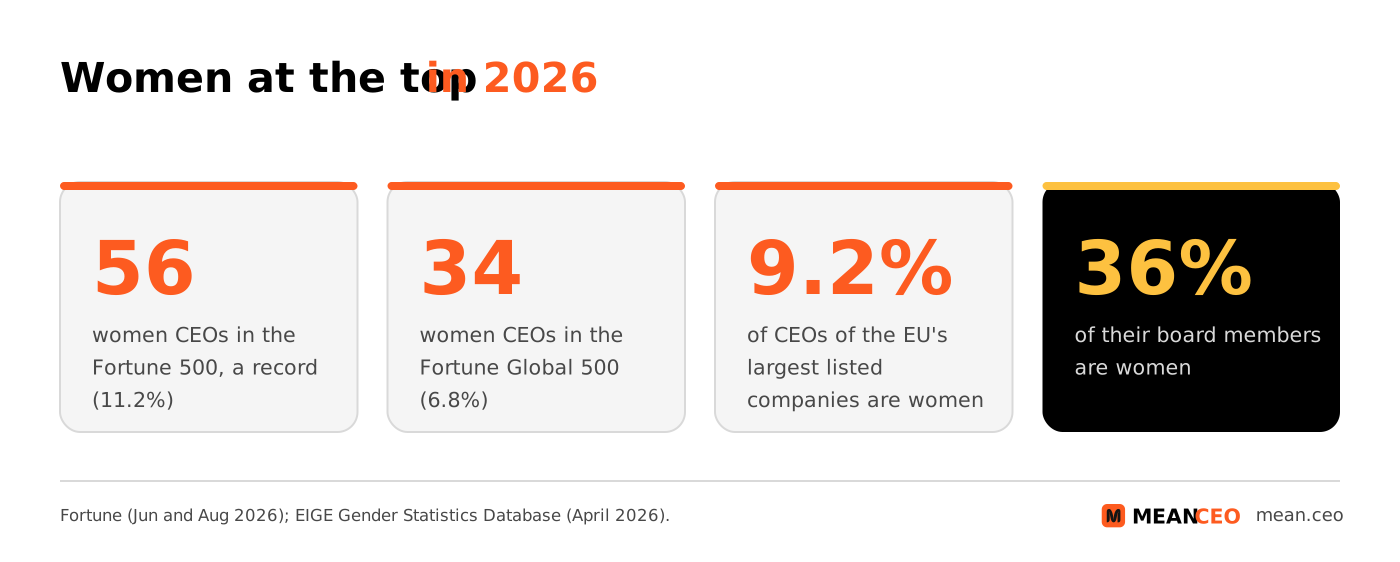
Women now hold more than a third of board seats in the EU's largest companies, but fewer than one in ten CEO jobs. The gap is at the very top.
How many female CEOs are there in 2026?
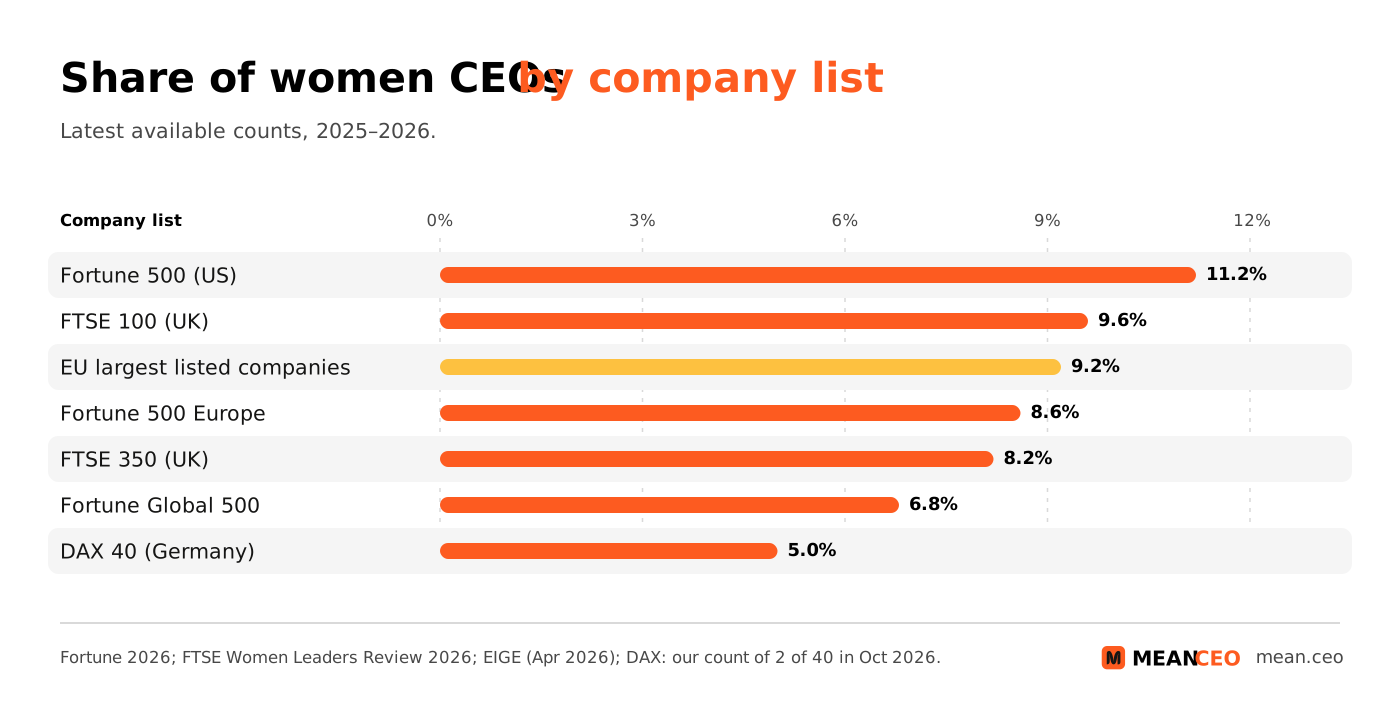
- Fortune 500 (US): a record 56 women CEOs, or 11.2%, up from 55 a year earlier, according to Fortune (June 2026). The highest-ranked woman-led companies are Elevance Health (No. 18), Centene (No. 19) and General Motors (No. 23).
- Fortune Global 500: a record 34 women CEOs, or 6.8%, up by one (August 2026).
- Fortune 500 Europe: 43 women CEOs, or 8.6%, up from 8.2%. Their companies earn 8.0% of the list's revenue, about $1.2 trillion, and BP is the largest, according to Fortune.
- UK: 9 FTSE 100 companies (9.6%) and 21 FTSE 350 companies (8.2%) had a female CEO, according to the FTSE Women Leaders Review 2026.
- Germany: after Belén Garijo left Merck KGaA in April 2026 and Helen Giza left Fresenius Medical Care in October 2026, only two DAX 40 companies are led by women: Commerzbank (Bettina Orlopp) and Daimler Truck (Karin Rådström), by our count. Women hold 27% of DAX 40 management board seats, according to EAF Berlin.
- US S&P 500: 48 women CEOs in 2025, according to the Women's Power Gap study by the Eos Foundation.
Women on EU boards: the 2026 target
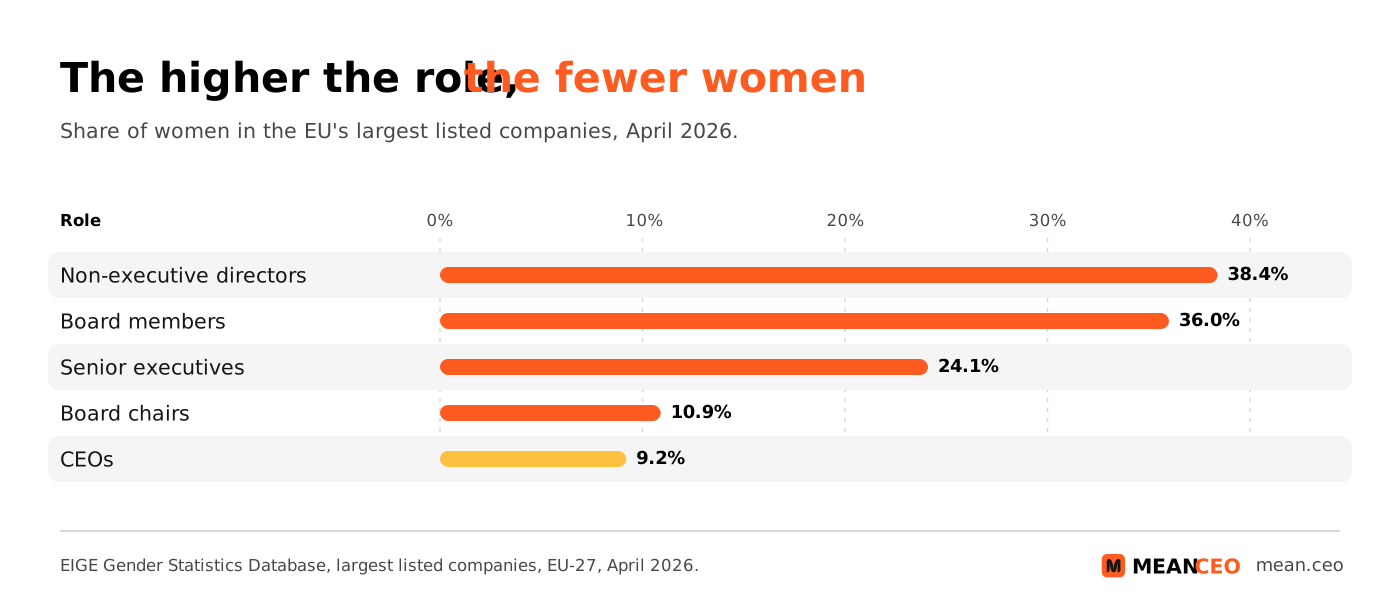
In the EU's largest listed companies, women held 36.0% of board seats in April 2026, but only 10.9% of board chair roles and 9.2% of CEO roles, according to EIGE's Gender Statistics Database. The share of women CEOs has edged up from 8.0% in 2023 to between 9% and 10% since 2025.
Boards are changing because of law. The EU Women on Boards Directive requires listed companies to have at least 40% of non-executive director seats, or 33% of all director seats, held by the under-represented sex by 30 June 2026, and to report on it every year, according to the European Commission. By late 2025, 14 member states had transposed it, six relied on existing laws, and the rest were still working on it, according to EIGE.
Country CEO shares swing a lot because each country has only a few large listed companies. Source: EIGE Gender Statistics Database.
20 female CEOs of the biggest companies
1. Mary Barra, General Motors
Barra joined GM as a student and worked her way up through engineering, manufacturing and human resources. GM ranked No. 23 on the 2026 Fortune 500.
2. Gail Boudreaux, Elevance Health
Boudreaux leads the US health insurer that is the highest-ranked woman-led company on the 2026 Fortune 500, at No. 18.
3. Sarah London, Centene
London runs the health insurer ranked No. 19 on the 2026 Fortune 500, one place behind Elevance.
4. Jane Fraser, Citigroup
The first woman to lead a major Wall Street bank, Fraser came to Citi from McKinsey and ran several of its businesses before becoming CEO. She topped Fortune's Most Powerful Women list in 2026.
5. Lisa Su, AMD
An electrical engineer with a PhD from MIT, Su joined AMD in 2012 and became CEO two years later, leading one of the biggest turnarounds in the chip industry.
6. Julie Sweet, Accenture
A lawyer by training, Sweet was a partner at a New York law firm before joining Accenture as general counsel. She is now chair and CEO.
7. Kathy Warden, Northrop Grumman
Warden was promoted from president and chief operating officer, a common route for women CEOs.
8. Carol Tomé, UPS
Tomé was Home Depot's chief financial officer and sat on the UPS board for years before becoming CEO.
9. Thasunda Brown Duckett, TIAA
Duckett leads the US retirement and investment group and is one of the few Black women to run a Fortune 500 company.
10. Meg O'Neill, BP
O'Neill moved from running Australia's Woodside Energy to become BP's CEO in April 2026. BP is the largest woman-led company on the 2026 Fortune 500 Europe list.
11. Belén Garijo, Sanofi
A physician who spent 15 years at Sanofi earlier in her career, Garijo returned as CEO in May 2026 after leading Germany's Merck KGaA from 2021.
12. Catherine MacGregor, Engie
An engineer who previously ran energy services businesses, MacGregor leads the French energy group.
13. Estelle Brachlianoff, Veolia
Brachlianoff was Veolia's chief operating officer before taking over the water, waste and energy services group.
14. Christel Heydemann, Orange
Heydemann became the first woman to lead Orange, the French telecoms group.
15. Amanda Blanc, Aviva
Blanc took over the UK insurer in 2020 after leading insurance businesses at other groups.
16. Margherita Della Valle, Vodafone
Della Valle joined Vodafone in 1994 and rose through finance to chief financial officer before becoming CEO.
17. Allison Kirkby, BT Group
Kirkby ran Swedish telecoms group Telia before returning to the UK to lead BT.
18. Bettina Orlopp, Commerzbank
A former McKinsey partner, Orlopp was Commerzbank's chief financial officer before becoming CEO.
19. Karin Rådström, Daimler Truck
Rådström came from Swedish truck maker Scania and now leads one of the world's largest truck makers.
20. Emma Delaney, OMV
After more than 30 years at BP, Delaney became the first woman to lead Austrian energy group OMV in September 2026.
Who joined and who left in 2026
2026 brought new firsts: Meg O'Neill at BP, Emma Delaney at OMV and Joanne McNamara, the first woman to lead British Land in its 170-year history. Belén Garijo moved from Merck KGaA to Sanofi. Several well-known female CEOs also left: Emma Walmsley handed over at GSK and Liv Garfield at Severn Trent at the start of 2026, Vicki Hollub retired from Occidental in June, Safra Catz stepped down at Oracle, and Helen Giza left Fresenius Medical Care in October. Every departure matters when the total is this small.
How women become CEOs
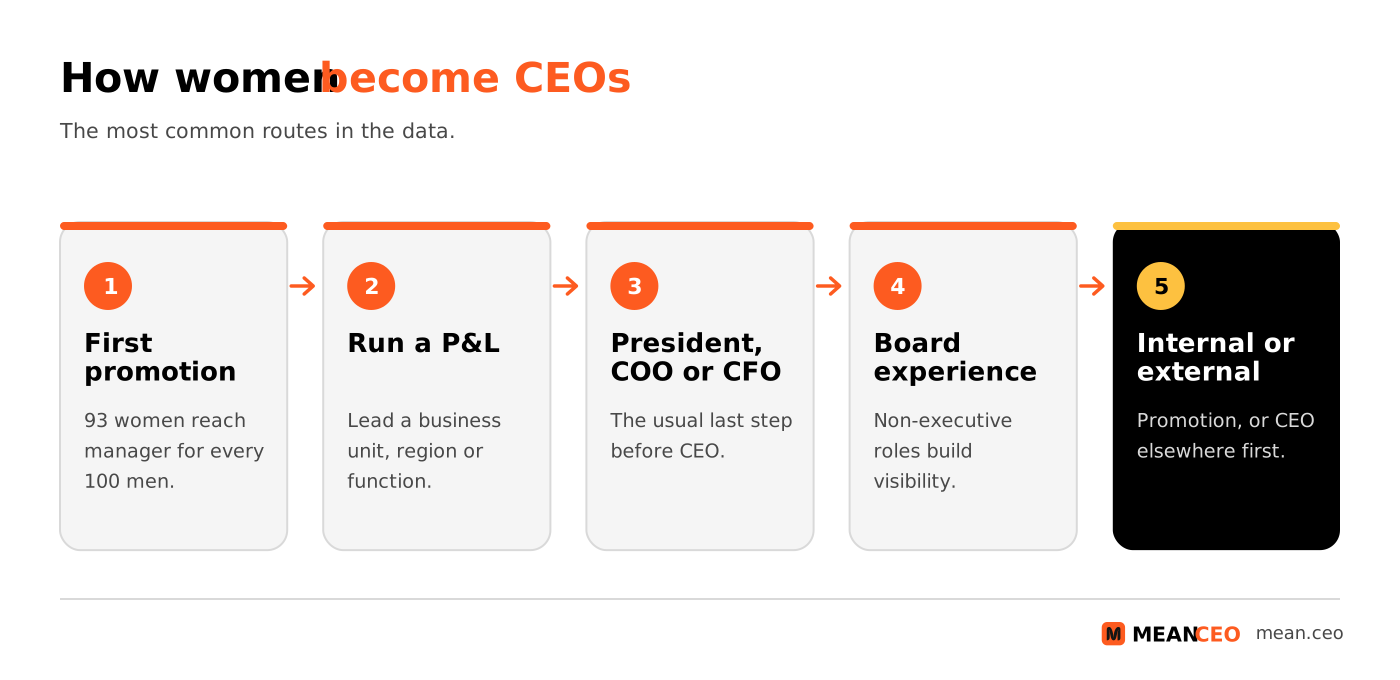
- The first promotion is where the gap starts. For every 100 men promoted to manager, 93 women were promoted in 2025, and women held 29% of C-suite roles, according to McKinsey and LeanIn.Org's Women in the Workplace 2025.
- President and COO roles are stepping stones. Women CEOs in the S&P 500 were 32% more likely than men to have served as president before becoming CEO, and more likely to have been CFO, according to the Eos Foundation.
- New appointments are still rare. Women received only 9% of new CEO appointments worldwide in 2025, 8% in the S&P 500 and 3 of 10 in the FTSE 100, according to Russell Reynolds. 86% of all new CEOs were first-timers.
- Internal promotion dominates, as with Mary Barra, Lisa Su, Margherita Della Valle and Bettina Orlopp, but external hires such as Meg O'Neill and Belén Garijo show that a CEO job elsewhere can be the springboard.
Do companies with female CEOs perform better?
The evidence is mixed, and anyone who tells you otherwise is simplifying. A meta-analysis of 146 studies in 33 countries found a small positive link between women in CEO and top-team roles and long-term financial performance, and a small negative link with short-term stock returns (Jeong and Harrison, Academy of Management Journal, 2017). Another review of 78 studies called the overall findings "equivocal", but found a more positive link in more gender-egalitarian cultures (Hoobler et al., Journal of Management, 2018).
Context matters too. Research on the "glass cliff" by Michelle Ryan and Alex Haslam found that UK companies appointing women to their boards were more likely to have performed badly beforehand, so women may be given leadership in harder situations.
What this means if you want to lead
- Ask for line roles. Profit-and-loss responsibility is the clearest route to CEO.
- Aim for president, COO or CFO roles, the last step for many women CEOs.
- Take a board seat early. Non-executive roles are now open to more women because of the EU directive.
- Or build your own company. Founding is the fastest route to the CEO title; see CEO leadership in a bootstrapped company.
- Prepare for bias. See navigating gender bias as a female founder and how to handle mansplaining investors.
For the bigger picture of women in business, see our sister guides to business women: the data and 20 who built companies and business women in European history.
Practise being the CEO
In the Fe/male Switch startup game you run a startup in weekly quests, making the decisions a CEO makes, with an AI co-founder at your side.
👉 Start the game
Conclusion: records, but still one in ten
2026 set records for female CEOs in the Fortune 500, the Fortune Global 500 and Europe's largest companies, and women now hold more than a third of board seats in the EU's biggest listed firms. But only about one in ten CEOs of large companies is a woman, new appointments remain scarce, and each departure moves the numbers. The routes are clear: line roles, the president, COO or CFO seat, board experience, or founding your own company.
FAQ: female CEOs
How many Fortune 500 CEOs are women in 2026?
A record 56, or 11.2% of the list, according to Fortune's June 2026 count.
What percentage of CEOs are women in Europe?
Women were 9.2% of CEOs of the EU's largest listed companies in April 2026, according to EIGE, and 8.6% of CEOs in the Fortune 500 Europe.
Who is the most powerful female CEO?
Jane Fraser of Citigroup topped Fortune's Most Powerful Women list in 2026, followed by leaders including Lisa Su of AMD and Julie Sweet of Accenture.
Which large European companies have female CEOs?
Among them BP (Meg O'Neill), Sanofi (Belén Garijo), Engie (Catherine MacGregor), Veolia (Estelle Brachlianoff), Orange (Christel Heydemann), Aviva (Amanda Blanc), Vodafone (Margherita Della Valle), BT (Allison Kirkby), Commerzbank (Bettina Orlopp), Daimler Truck (Karin Rådström) and OMV (Emma Delaney).
What is the EU Women on Boards Directive?
An EU law requiring listed companies to have at least 40% of non-executive director seats, or 33% of all director seats, held by the under-represented sex by 30 June 2026, with yearly reporting.
How do most women become CEOs?
Mostly through internal promotion, often after a president, COO or CFO role. Some, like Meg O'Neill at BP, are hired after being CEO elsewhere.
Do female CEOs perform better?
Research is mixed: a large meta-analysis found a small positive link with long-term financial performance but a small negative link with short-term stock returns.
How many FTSE 100 CEOs are women?
Nine, or 9.6%, according to the FTSE Women Leaders Review 2026.
About the Author
Violetta Bonenkamp, also known as MeanCEO, is an experienced startup founder with an impressive educational background including an MBA and four other higher education degrees. She has over 20 years of work experience across multiple countries, including 5 years as a solopreneur and serial entrepreneur. Throughout her startup experience she has applied for multiple startup grants at the EU level, in the Netherlands and Malta, and her startups received quite a few of those. She’s been living, studying and working in many countries around the globe and her extensive multicultural experience has influenced her immensely.
