TL;DR: how can female entrepreneurs get funding in 2026?
Climb the funding ladder: customer revenue first, then grants and honour loans, guaranteed bank loans, angels and crowdfunding, and venture capital last. Women get only about 11% of European VC, but several routes are built for them: the EU's Women TechEU grant (€75,000 for 160 deep-tech startups, next deadline 14 January 2027), EIC Accelerator interviews that prioritise women CEOs, France's 80% loan guarantee for women, Spain's ENISA loans for women-led digital companies, Germany's EXIST Women, and investors who have signed gender pledges. Below: every route, with official terms and dates.
👉 Prepare your pitch in the Fe/male Switch startup game
Female entrepreneurs don't lack funding options; they lack a map. Most advice jumps straight to venture capital, the route where women get the smallest share. In practice, most women-led businesses are funded by customers, savings, grants and loans first, and the founders who raise VC usually arrive with revenue and other money behind them.
This playbook lists every route to money for female entrepreneurs in Europe in 2026, in the order most founders use them, with official amounts and deadlines. For the statistics behind it, see our women entrepreneurs statistics for 2026; for a list of grants, see European grants specifically for female founders.
Don't start with VC. Start with the money that doesn't cost you equity, and arrive at VC with proof.
The funding gap in 2026
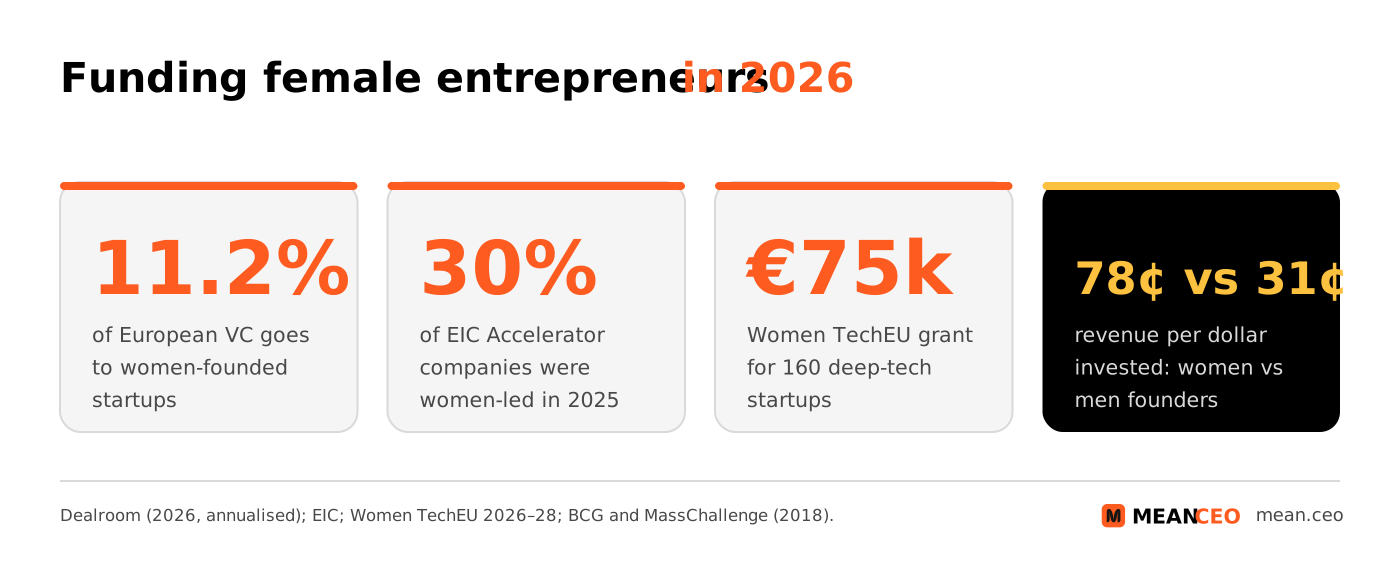
- Venture capital: startups with at least one woman founder received about 11.2% of European VC in 2026, up from 8.0% in 2016, according to Dealroom. All-women teams founded only about 6% of European startups, according to Atomico.
- Angels: 18.7% of European angel investments in 2024 went to startups with at least one female founder, according to the European Business Angels Network (EBAN), but only about one in ten European angels is a woman.
- Banks: female-led firms report similar difficulty getting finance as male-led ones, but rely more on bank loans and own or family money, and less on angels, according to the European Investment Bank. Research on EU survey data also suggests women apply for loans less often because they expect to be rejected.
- Efficiency: in a 2018 study of MassChallenge startups, women-founded companies generated 78 cents of revenue for every dollar invested, against 31 cents for men's, according to BCG.
The funding ladder: which money fits which stage
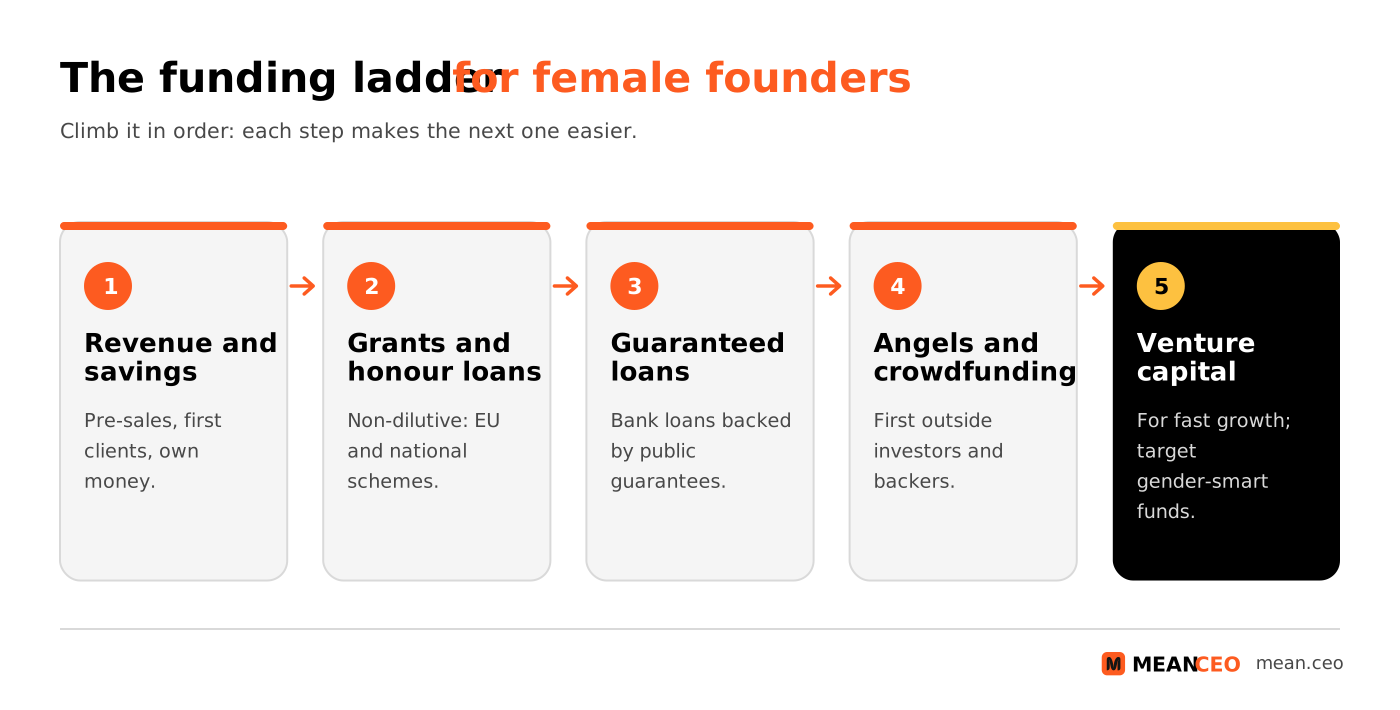
The amounts are indicative ranges; grant and loan amounts come from the schemes below, so check each scheme's own terms.
Route 1: customers and bootstrapping
Revenue is the cheapest money there is, and the strongest signal to every investor and lender who comes later. Pre-sales, paid pilots and service revenue can fund a product while you keep 100% of your company. See customer-funded growth before revenue and our honest comparison of bootstrapping versus VC funding.
Route 2: EU programmes for women founders
- Women TechEU: a €75,000 equity-free grant for women-led deep-tech startups, with €12 million for 160 companies in the 2026–28 edition. Remaining full-proposal deadlines are 14 January 2027, 1 April 2027 and 8 July 2027, according to Women TechEU.
- EIC Accelerator: grants and equity for deep-tech scale-ups. In 2025, 30% of companies it supported were women-led, and the EIC prioritises women CEOs when inviting companies to interviews, according to the European Innovation Council. Its Women Leadership Programme offers training to women already in the EIC community.
- EIF Gender Smart Equity Investment Programme: the European Investment Fund invests in VC funds with women in senior roles, not directly in founders, so look for the funds it backs.
- Not for Europe: the EIB's SheInvest initiative is for women in Africa, and WEgate is an information platform, not a funder.
For more EU money, see how European grants fund startups and the European accelerators worth applying to.
Route 3: national schemes for women entrepreneurs
Official sources: EXIST Women, the French Ministry of the Economy and ENISA. Terms change, so always check the scheme's own page before applying.
Route 4: bank loans and guarantees
Bank loans keep your equity intact, and public guarantee schemes reduce what the bank needs from you. Ask your bank which national or EU-backed guarantees it can use, and apply even if you expect a no: research on EU survey data suggests women-run firms apply less often because they expect rejection. For negotiating terms, see how to negotiate debt funding with European banks.
Route 5: crowdfunding
Reward crowdfunding has been one of the few channels where women outperform. In a study of more than 450,000 campaigns on nine platforms in 2015–16, women-led campaigns were 32% more likely to reach their target than men's, according to PwC and The Crowdfunding Center. Men still ran 89% of campaigns that raised over $1 million, so big targets need a big community.
Route 6: business angels
Angels are often the first outside investors. Women-focused networks such as Angel Academe in the UK and Sie Ventures, whose Arāya Sie Fund backs women-led startups in the UK and Europe, are good places to start, alongside national angel associations. For building relationships before you need money, see how to network in male-dominated investment circles.
Route 7: venture capital
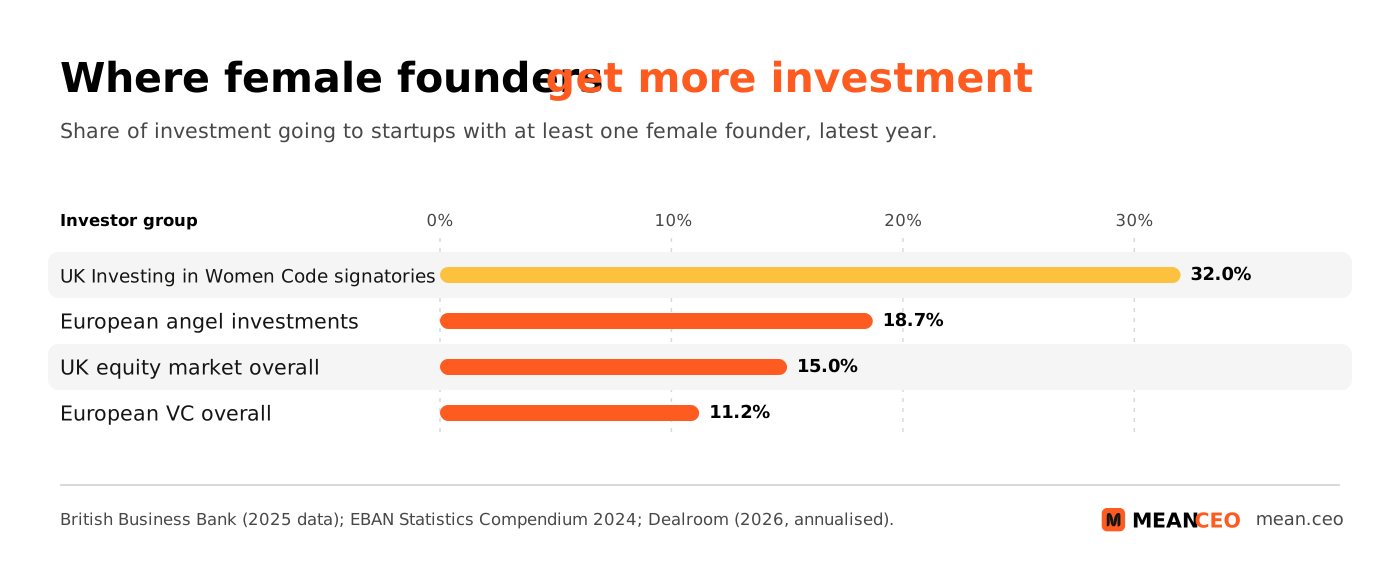
Target investors who have committed to backing women. In the UK, signatories of the Investing in Women Code put 32% of their venture capital into teams with at least one female founder in 2025, against 15% in the wider market, according to the British Business Bank. Female-focused funds include Voulez Capital (London), Fund F (Vienna) and Auxxo Female Catalyst Fund (Germany); inclusive funds such as Ada Ventures also back women founders.
Before you pitch, read how to say no to VC money and prepare for mansplaining in investor meetings. For which sectors VCs fund, see our startup ideas where VC money is going.
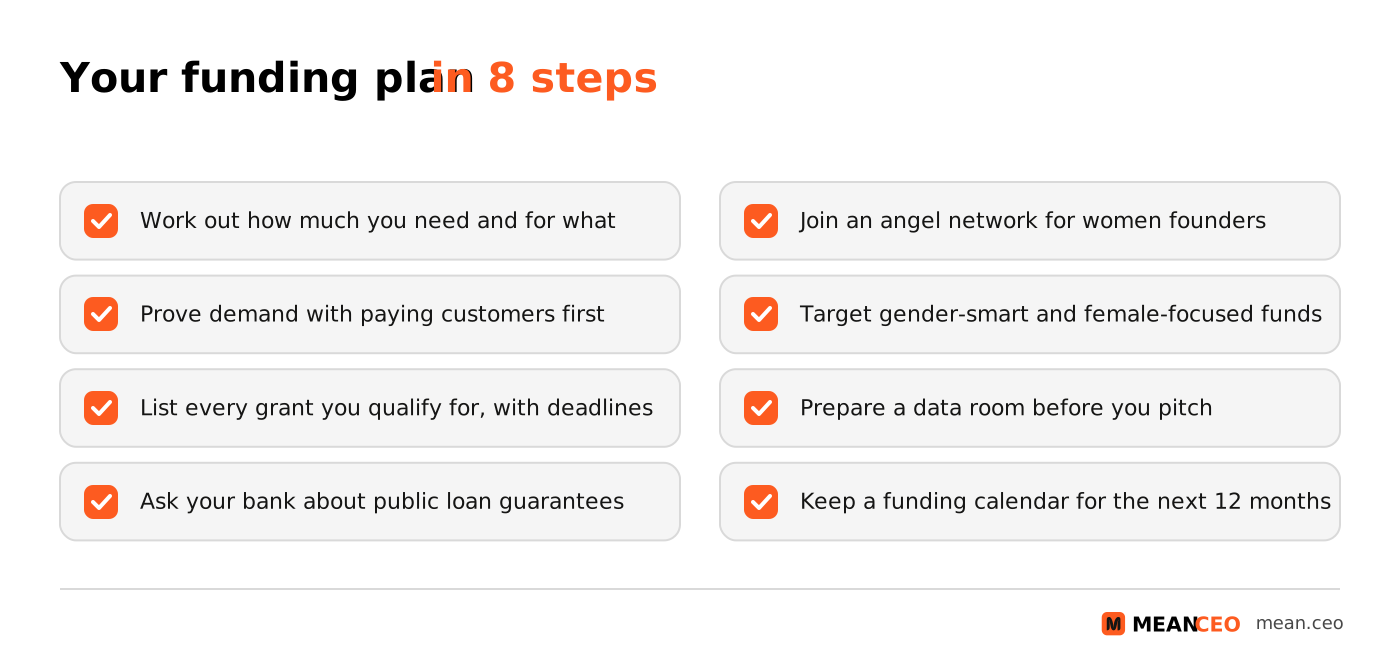
Your 12-month funding plan
Practise your pitch before investors hear it
The Fe/male Switch startup game includes fundraising quests, with an AI co-founder that helps you build your pitch deck and answer tough investor questions.
👉 Start the game
Conclusion: build a funding stack, not a single bet
Female entrepreneurs get a small share of venture capital, but they have more routes to money than ever: EU grants such as Women TechEU, EIC priority for women CEOs, national guarantees and loans for women, angel networks and investors who have pledged to back women. The founders who do best combine them: revenue first, then non-dilutive money, then loans, angels and VC when the business is ready. Put the next 12 months of deadlines in a calendar today.
FAQ: funding for female entrepreneurs
What funding is available for female entrepreneurs in Europe?
EU programmes such as Women TechEU (€75,000 grants) and the EIC Accelerator, national schemes such as EXIST Women (Germany), Garantie ÉGALITÉ Femmes (France) and ENISA Emprendedoras Digitales (Spain), bank loans with public guarantees, crowdfunding, women's angel networks and gender-smart VC funds.
What is Women TechEU?
An EU programme giving €75,000 equity-free grants to women-led deep-tech startups. The 2026–28 edition funds 160 companies; remaining deadlines are 14 January, 1 April and 8 July 2027.
Are there grants only for women in Europe?
Yes, including Women TechEU at EU level and national schemes such as EXIST Women in Germany. Many other grants are open to all but prioritise women, such as EIC Accelerator interviews.
How much venture capital goes to female founders?
Startups with at least one woman founder received about 11.2% of European VC in 2026, according to Dealroom, and all-women teams much less.
Is it easier for women to get a bank loan or VC?
Usually a loan: women-led firms rely more on bank finance, and guarantee schemes such as France's Garantie ÉGALITÉ Femmes reduce what the bank needs from you.
Do women do better at crowdfunding?
Yes, in reward crowdfunding: women-led campaigns were 32% more likely to hit their target than men's in a study of over 450,000 campaigns (PwC and The Crowdfunding Center).
Which VC funds invest in female founders?
Female-focused funds such as Voulez Capital, Fund F and Auxxo, inclusive funds such as Ada Ventures, and in the UK the signatories of the Investing in Women Code, who put 32% of their VC into teams with a female founder.
Should female founders raise VC at all?
Only if the business needs fast growth and can return investors' money many times over. Many women-led businesses grow better on revenue, grants and loans, keeping full control.
About the Author
Violetta Bonenkamp, also known as MeanCEO, is an experienced startup founder with an impressive educational background including an MBA and four other higher education degrees. She has over 20 years of work experience across multiple countries, including 5 years as a solopreneur and serial entrepreneur. Throughout her startup experience she has applied for multiple startup grants at the EU level, in the Netherlands and Malta, and her startups received quite a few of those. She’s been living, studying and working in many countries around the globe and her extensive multicultural experience has influenced her immensely.
