TL;DR: what company should I start in 2026?
Consider a B2B company: one that sells to other businesses. Companies pay for problems that cost them money or put them at legal risk, and new EU rules are creating many of those. Strong B2B company ideas for 2026 include e-invoicing set-up, credit control, managed cybersecurity, accessibility audits, AI implementation and training, supplier sustainability reports, packaging compliance, recruitment for shortage jobs, public tender consulting, fractional finance and specialist localisation. Most can start with expertise and a laptop, and earn recurring revenue. Below: the deadlines, buyers, prices where they exist, rules and a first step for each.
👉 Check your company idea with the free Idea Validator
Most first-time founders think of consumer products. But selling to companies is often the faster road to a profitable business: business customers have budgets, buy to solve expensive problems, and stay for years if you deliver. You need fewer customers, and one good client can pay your rent.
This guide covers 12 company ideas that sell to other businesses, each backed by a deadline, a statistic or a rule that makes companies need help now. For ideas in sectors that attract venture capital, see our startup ideas where VC money is going; for consumer niches, see these niche market examples. If you'd rather start a local business that can grow, see these small business ideas that can scale.
Consumers buy what they want. Companies buy what they must. Build for the must.
Why start a B2B company?
B2B buyers also want to research on their own: 61% of B2B buyers prefer to buy without talking to a sales rep, according to Gartner. Clear pricing, case studies and useful content on your website do much of the selling. Private B2B software companies grew at a median of 25% in 2025, according to SaaS Capital's benchmark of more than 1,000 firms, so steady, compounding growth is the norm rather than overnight success.
EU deadlines that create B2B demand
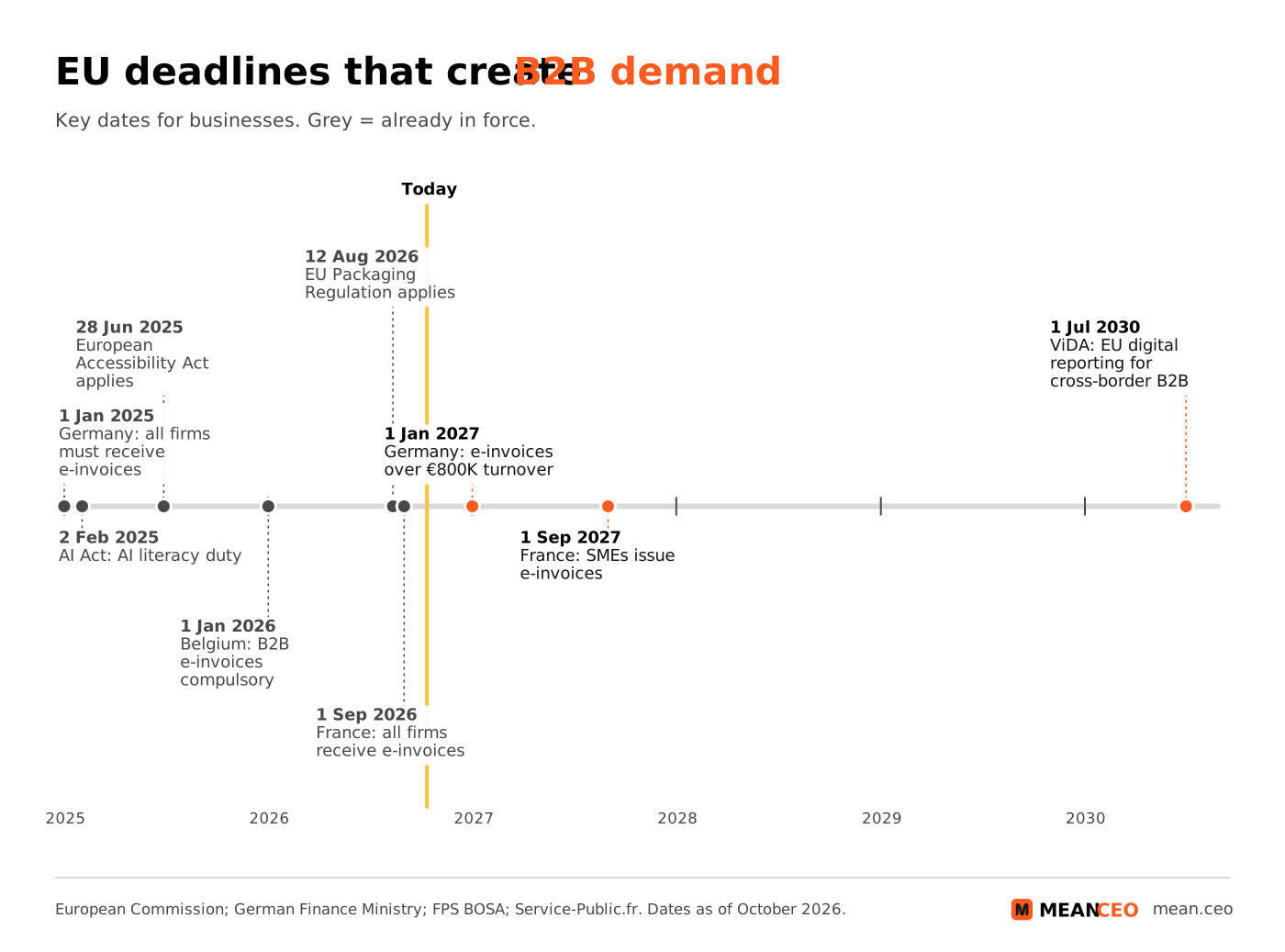
New rules force companies to change how they work, and most small and mid-sized firms have no one in-house to do it. Every deadline below has created a market for advisers, software and outsourced services.
For more businesses created by new EU rules, including consumer ideas, see our sister guide to new business ideas for 2026.
12 B2B company ideas for 2026
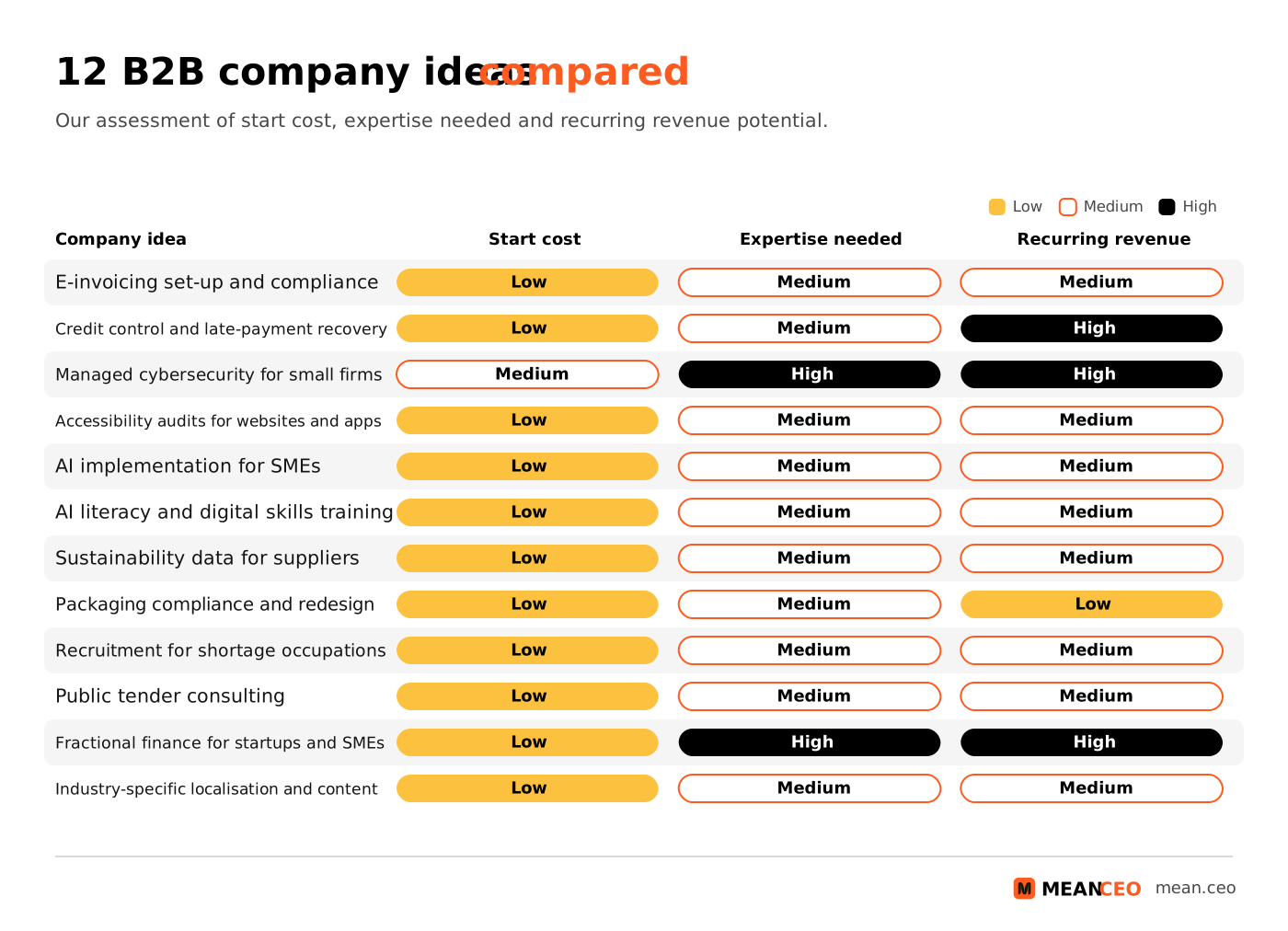
For each idea: why companies need it now, who pays, typical prices where a reliable benchmark exists (we say so when it doesn't), the rules and a first step. The chart compares start cost, expertise and recurring revenue.
1. E-invoicing set-up and compliance
Helping small and mid-sized companies choose e-invoicing software, connect it to their accounting, and meet each country's deadlines for sending and receiving structured electronic invoices.
- Why now: Germany has required every business to be able to receive e-invoices since 1 January 2025, and paper or PDF invoices are only allowed until the end of 2026 (end of 2027 for firms with turnover up to €800,000), according to the German Finance Ministry. Belgium made structured e-invoices compulsory between businesses from 1 January 2026. In France, all companies must be able to receive them since 1 September 2026, and small firms must issue them from 1 September 2027. EU-wide digital reporting for cross-border B2B sales follows from 1 July 2030 under the EU's VAT in the Digital Age (ViDA) package.
- Who pays: Small manufacturers, wholesalers, trades and service firms without an in-house IT team, often through their accountant.
- Typical price: We found no reliable public benchmark. Charge a fixed set-up fee per company, plus an optional monthly support plan.
- Rules: Invoices must meet national formats (such as XRechnung or Factur-X) and VAT archiving rules.
- First step: Partner with two accounting firms and offer their clients a fixed-price e-invoicing set-up.
2. Credit control and late-payment recovery
Outsourced credit control for small firms: chasing invoices politely but firmly, setting payment terms, checking new customers and escalating when needed.
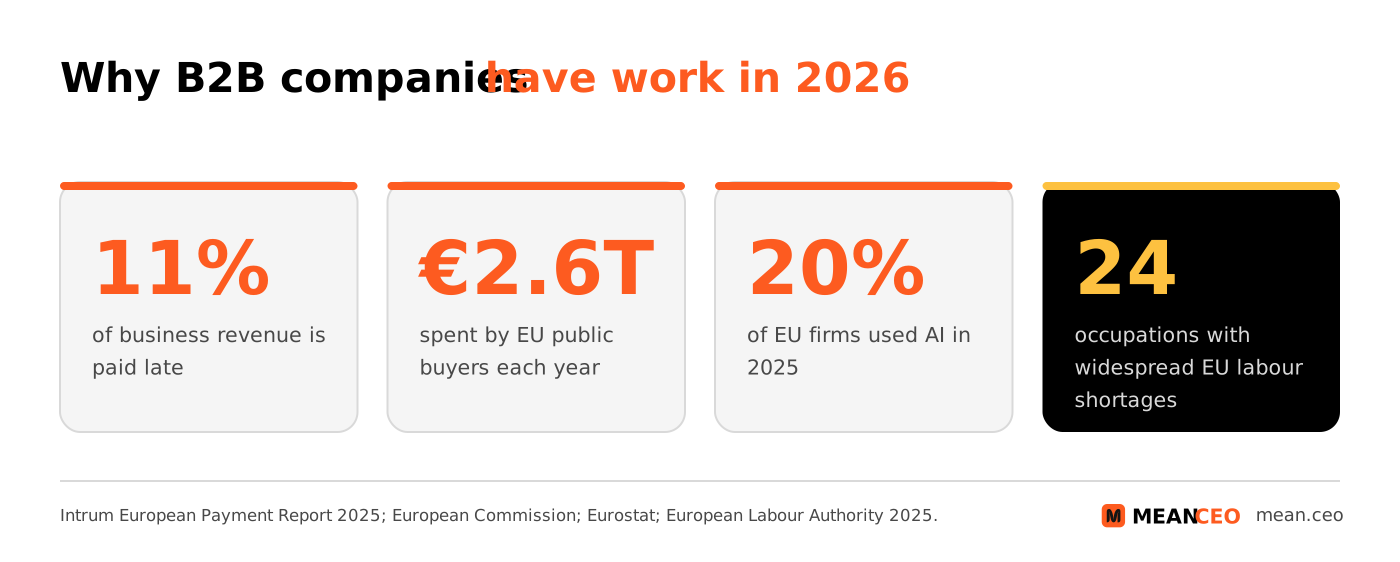
- Why now: Businesses say 11% of their revenues are paid late every year, according to the Intrum European Payment Report 2025, a survey of 9,150 executives in 25 countries.
- The rules: Under the EU Late Payment Directive, businesses must pay each other within 60 days unless agreed otherwise and not grossly unfair, and public authorities within 30 days. Creditors can claim interest of at least 8 percentage points above the European Central Bank rate plus €40 compensation per late invoice. A proposed stricter regulation with a 30-day cap is blocked in the Council, according to the European Parliament.
- Who pays: Small agencies, wholesalers and contractors with many open invoices and no finance team.
- Typical price: No reliable public benchmark; common models are a monthly retainer or a percentage of what you recover.
- Watch out: Debt collection needs a licence or registration in many countries, and in the UK consumer debt collection is regulated by the FCA. Start with friendly B2B credit control before collection.
- First step: Offer five local firms a free review of their overdue invoices and a fixed monthly chasing service.
3. Managed cybersecurity for small firms
Running security for companies too small to hire an expert: device management, backups, staff phishing training, incident response plans and help with supplier security questionnaires.
- Why now: The NIS2 directive extends cybersecurity duties to 18 critical sectors, and big customers pass security requirements down to their small suppliers. In January 2026 the Commission proposed amendments to ease compliance for 28,700 companies, including 6,200 micro and small firms, which shows how many small firms are affected.
- Who pays: Small firms in or supplying to energy, transport, health, manufacturing, digital services and other NIS2 sectors.
- Typical price: UK IT support providers charge about £45–95 per user per month (provider price lists, 2026); full security services cost more.
- What it takes: Security certifications, professional indemnity and cyber insurance, and a reliable on-call process.
- First step: Run a free security check for ten small firms and sell the fixes as a monthly plan.
4. Accessibility audits for websites and apps
Testing websites, apps and documents against accessibility standards, fixing the problems and training teams to keep them accessible.
- Why now: The European Accessibility Act has applied to products and services placed on the market since 28 June 2025, including online shops, ticketing, banking and e-books, according to Your Europe. Service businesses with fewer than 10 employees and under €2 million in turnover are exempt.
- Who pays: Online shops, banks, travel and ticketing companies, publishers and the agencies that build their websites.
- Typical price: No reliable public benchmark; most providers price per audit, based on the number of page templates.
- What it takes: Knowledge of the WCAG guidelines and assistive technology, and ideally testers with disabilities.
- First step: Audit five online shops for free and offer to fix the top issues for a fixed price.
5. AI implementation for small and mid-sized companies
Finding where AI can save time in a company, connecting the tools, training staff and keeping the automations running.
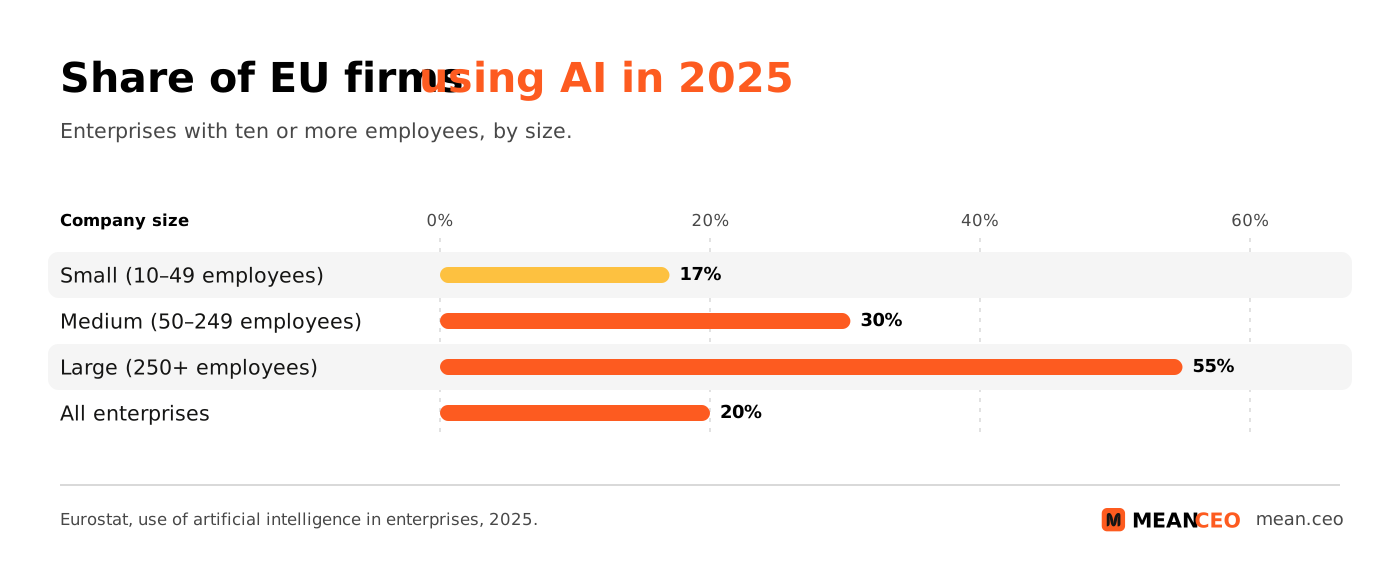
- Why now: Only 20.0% of EU enterprises with ten or more employees used AI in 2025, up from 13.5% in 2024, according to Eurostat. Among small firms (10–49 employees) the share was 17%, compared with 55% of large firms.
- Who pays: Owner-managed companies with repetitive admin: logistics, wholesale, property, professional services.
- Typical price: No reliable public benchmark; a fixed-price audit followed by a monthly retainer is the usual model.
- Rules: Under GDPR you need a data processing agreement with clients, and AI Act transparency rules apply to chatbots and AI-generated content.
- First step: Automate one painful process for a company you know, measure the hours saved, and use it as your case study.
6. AI literacy and digital skills training
Short, practical training that teaches staff to use AI tools safely and well, tailored to one industry.
- Why now: The AI Act requires providers and deployers of AI systems to take measures to ensure their staff's AI literacy. The duty has applied since 2 February 2025; a 2026 amendment removed any required level of literacy but kept the duty, and supervision starts from August 2026, according to the European Commission's AI literacy Q&A.
- Gap: Only 22.3% of EU enterprises trained staff in ICT skills in 2024, and 17.2% of small ones, according to Eurostat.
- Who pays: HR and operations managers; training budgets and public training subsidies in many countries.
- Typical price: No reliable public benchmark; sell half-day workshops per group or a yearly programme.
- First step: Run a free one-hour session for a business association and sell in-house workshops to its members.
7. Sustainability data for suppliers
Helping small suppliers answer the sustainability questions their banks and large customers ask, using the EU's voluntary standard for SMEs (VSME).
- Why now: After the 2026 simplification, mandatory sustainability reporting under the CSRD only applies to companies with more than 1,000 employees and over €450 million turnover, according to the Council of the EU. Companies with fewer than 1,000 employees don't have to give their big customers more than the voluntary standards ask for, so the VSME has become the common format.
- Who pays: Suppliers of large manufacturers and retailers, and firms applying for bank loans with green conditions.
- Typical price: No reliable public benchmark; sell a fixed-price VSME report and a yearly update.
- What it takes: Accounting or environmental expertise and a simple carbon-calculation method.
- First step: Prepare one VSME report for a supplier you know and ask their main customer what else it needs.
8. Packaging compliance and redesign
Helping producers and online sellers meet the new EU packaging rules: checking recyclability, cutting empty space, finding reusable options and handling producer registrations.
- Why now: The EU Packaging and Packaging Waste Regulation has applied since 12 August 2026. It aims to make all packaging recyclable by 2030 and sets reuse targets; packaging waste reached a record 186.5 kg per person in the EU in 2022, according to the European Commission.
- Who pays: Food and drink producers, cosmetics brands, e-commerce sellers and their packaging suppliers.
- Typical price: No reliable public benchmark; charge per product range audit plus redesign projects.
- What it takes: Packaging, materials or supply-chain experience and contacts with packaging manufacturers.
- First step: Audit the packaging of three small food or cosmetics brands and show them what must change by 2030.
9. Recruitment for shortage occupations
A specialist recruitment firm for one shortage job, such as welders, electricians, nurses or care workers, including international hiring and onboarding.
- Why now: The EU job vacancy rate was 2.0% in Q2 2026, and 4.1% in the Netherlands, according to Eurostat. The European Labour Authority's 2025 report found widespread shortages in 24 occupations, led by specialist doctors, welders, electricians, nurses and plumbers.
- Who pays: Employers, usually a fee per hire or a margin on temporary staff.
- Typical price: We found no reliable public benchmark for recruitment fees.
- Rules: Some countries require a licence, for example for temporary agency work in Germany. International hiring involves work permits and recognition of qualifications.
- First step: Pick one occupation in one region and build a list of 50 qualified candidates before you sign employers.
10. Public tender consulting
Finding suitable public tenders for small companies, writing the bids and helping them win contracts with governments, cities, hospitals and schools.
- Why now: Public authorities in the EU spend around €2.6 trillion a year, about 15% of GDP, through more than 250,000 buyers, according to the European Commission. Small and mid-sized firms win 71% of contracts but only 55% of their value, according to the Commission's impact assessment for a new Public Procurement Act.
- Who pays: Small and mid-sized firms in construction, IT, cleaning, catering, consulting and healthcare supplies.
- Typical price: No reliable public benchmark; common models are a fee per bid, a monthly retainer or a success fee.
- What it takes: Bid-writing skills and knowledge of procurement rules; a former public buyer is a strong co-founder.
- First step: Set up alerts for one sector and region, and offer to write a first bid for a local company.
11. Fractional finance for startups and SMEs
Part-time finance leadership: bookkeeping, cash-flow forecasting, investor reporting and fundraising support for companies that can't afford a full-time finance director.
- Why it sells: Growing companies need a finance director long before they can pay for one, especially before a funding round or a bank loan.
- Typical price: UK bookkeepers typically charge £25–35 an hour (Institute of Certified Bookkeepers, via Dext). For part-time finance directors one UK provider quotes £600–1,200 a day; we found no independent benchmark.
- Rules: In the UK, bookkeepers and accountants need anti-money-laundering supervision; regulated audit and tax work need professional qualifications.
- First step: Offer a monthly cash-flow and reporting package to three startups in your network.
12. Industry-specific localisation and content
Translation, localisation and content for one industry, such as medical devices, machinery or software, combining AI drafting with expert human review.
- Market: The language services market was worth about $50.6 billion in 2024 and was forecast to shrink 3.7% in 2025 as AI takes over simple work, according to CSA Research. Specialist, high-risk content still needs experts.
- Why B2B content sells slowly: Only about 5% of business buyers are ready to buy at any time, according to the LinkedIn B2B Institute, so clients need steady content to be remembered when they are.
- Who pays: Manufacturers, medtech and software companies selling across Europe.
- Typical price: As a benchmark, German courts pay translators €1.95 per 55 characters for editable texts under the JVEG fee law.
- First step: Specialise in one industry and language pair and offer a sample localisation of a product page.
How to start a B2B company
- Use your industry experience. The best B2B founders sell to people they used to work with or alongside. They know the jargon, the budgets and who decides.
- Talk to buyers before you build. Interview ten potential clients about the problem and what it costs them. Our 12 steps to validate a B2B idea show how.
- Start as a service. Do the work by hand for the first clients, learn the process, then turn the repeatable parts into software or a fixed package. See how to move from services to product.
- Price for value, monthly where possible. Recurring retainers make cash flow predictable. Our guide to pricing a bootstrapped SaaS covers the basics.
- Sell directly. Personal outreach, referrals from accountants and lawyers, and talks at industry events beat ads for most B2B services; see these strategies to build B2B relationships and lean customer acquisition for bootstrapped startups. Prepare for objections with this objection handling framework for B2B sales.
Only about 5% of business buyers are ready to buy at any one time, according to the LinkedIn B2B Institute. Keep in touch with the other 95% through useful content, and they'll remember you when the deadline hits. AI-powered sales outreach can help a small team do this at scale.
Build your first company in a safe space
The Fe/male Switch startup game takes you from idea to first customers in weekly quests, with an AI co-founder that helps with interviews, pricing and pitches.
👉 Start the game
Conclusion: sell what companies must buy
The most reliable company ideas in 2026 solve problems that businesses can't ignore: getting paid, meeting new EU rules, staying secure, hiring scarce workers and using AI without falling behind. These ideas need expertise more than capital, and they can earn monthly recurring revenue from a small number of clients. Pick the idea closest to your experience, talk to ten potential buyers this month, and sign your first paying client before you build anything else.
FAQ: company ideas
What is a good company to start in 2026?
A B2B company that solves a costly or legally required problem for businesses, such as e-invoicing set-up, credit control, cybersecurity for small firms, accessibility audits, AI implementation, sustainability reports for suppliers, packaging compliance or recruitment for shortage jobs.
What is a B2B company?
A company that sells products or services to other businesses rather than to consumers, for example accounting firms, software for companies, cleaning contractors or recruitment agencies.
Is B2B or B2C easier to start?
B2B is usually easier to make profitable with little capital: you need fewer customers, prices are higher and clients stay longer. Sales take longer, and you need to understand the industry.
Which B2B businesses can I start with little money?
Service businesses based on expertise: e-invoicing set-up, credit control, accessibility audits, AI implementation, training, sustainability reports, packaging audits, tender writing and fractional finance.
How do I find my first B2B clients?
Start with your network and former colleagues, partner with accountants or lawyers who advise your target clients, speak at industry events and offer a free audit that leads to paid work.
Which EU rules create business opportunities in 2026 and 2027?
E-invoicing mandates in Germany, Belgium and France, the European Accessibility Act, the Packaging and Packaging Waste Regulation, the AI Act's AI literacy duty, NIS2 cybersecurity rules and, from 2030, ViDA digital reporting.
How much should I charge B2B clients?
Price on the value you create or the risk you remove, not your hours. Fixed-price audits followed by monthly retainers work well for most B2B services.
Do I need a licence to start a B2B company?
Most advisory services don't, but debt collection, temporary staffing, accounting and some security work need licences or registration in many countries. Check your country's rules first.
About the Author
Violetta Bonenkamp, also known as MeanCEO, is an experienced startup founder with an impressive educational background including an MBA and four other higher education degrees. She has over 20 years of work experience across multiple countries, including 5 years as a solopreneur and serial entrepreneur. Throughout her startup experience she has applied for multiple startup grants at the EU level, in the Netherlands and Malta, and her startups received quite a few of those. She’s been living, studying and working in many countries around the globe and her extensive multicultural experience has influenced her immensely.
