TL;DR: which small businesses can grow into real companies?
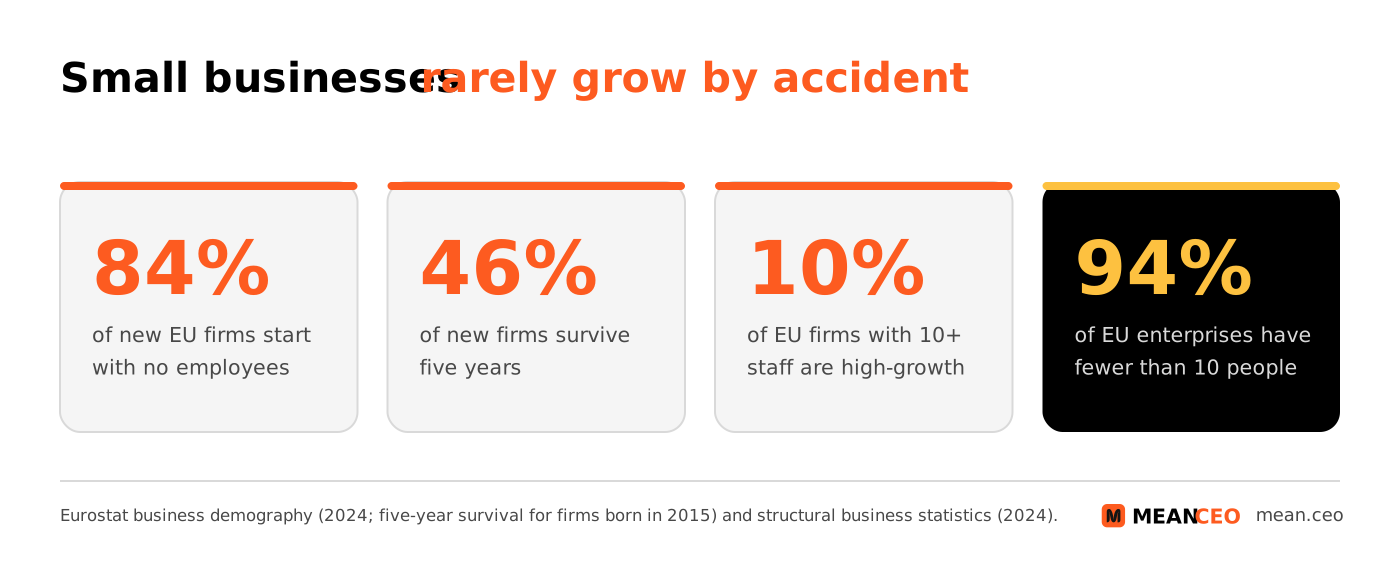
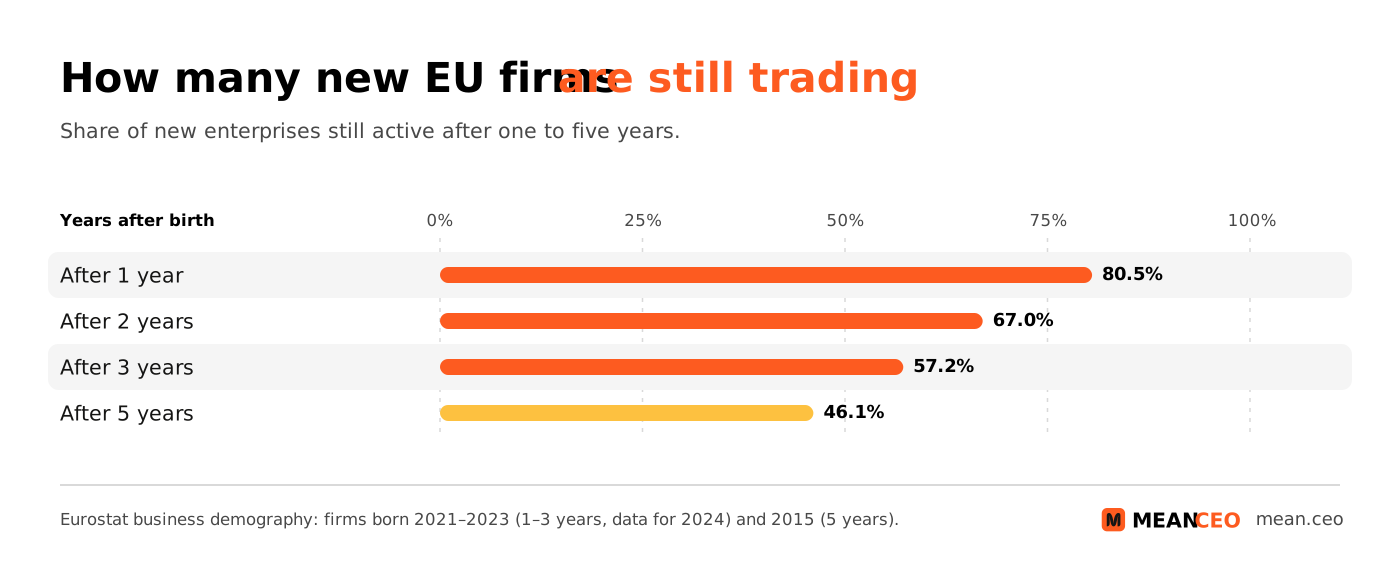
Those that sell recurring work, can be run by a team following your processes, and can be repeated in new places. Good examples are commercial cleaning, childcare, bookkeeping, home care, dog daycare, coffee kiosks, productised web studios, property maintenance, tutoring, physiotherapy, e-commerce brands and event rental. Most small businesses never grow: 84% of new EU firms start with no employees and only 46% survive five years. Below: 12 small business ideas with typical prices, rules and the route each one takes to scale.
👉 Check your small business idea with the free Idea Validator
Most small business ideas lists stop at the first sale. This one looks further ahead: which small businesses can grow from one person into a company with employees, contracts and several locations, and what that path looks like.
That matters, because growth is rare. Most new firms in Europe start and stay as one-person businesses. The ideas below were chosen because each has a proven route to scale: recurring customers, work that can be taught, and a model you can repeat. For home-based options, see our sister guide to small business ideas from home for parents; for small towns and villages, see small business ideas for rural Europe; and for more ideas by budget, see the small business ideas guide on Fe/male Switch. Another way to skip the hardest years is to buy an existing business.
A small business that can't run without you is a job. One that runs on your systems is a company.
What makes a small business able to grow?
Of the roughly 34 million enterprises in the EU, 94% have fewer than ten people, according to Eurostat. Among new firms born in 2024, 84% had no employees at all, and only 0.4% started with ten or more. Among firms that do reach ten employees, about 10% are classed as high-growth, meaning they grow their staff by more than 10% a year for three years in a row, according to Eurostat.
The businesses that make it share four traits:
- Recurring revenue. Contracts, plans and memberships mean you start each month with income, not a blank page. See our sister guide to low-risk businesses with recurring revenue.
- Work that can be taught. If only you can do the job, you can't grow beyond your own hours.
- Demand beyond your street. The same service must sell in the next district, city or country.
- Margins that survive wages. Your price must cover an employee's full cost, not just your own time.
12 small business ideas that can grow
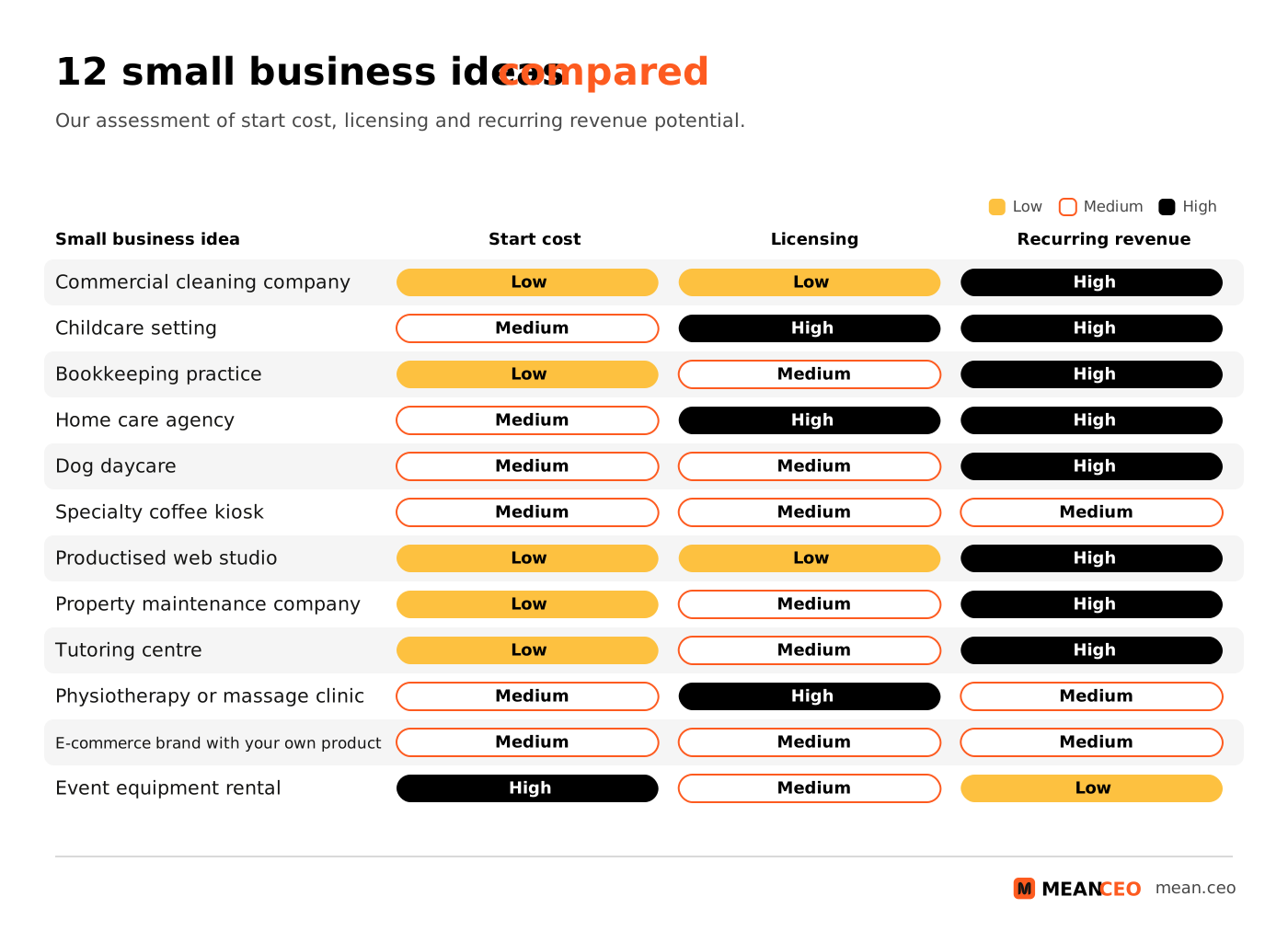
Each idea includes typical prices from reputable sources (mostly UK, where public price data is best), the rules to check, how it scales, where to find the first clients and a first step. Prices in your country will differ, so check local competitors before you set yours.
1. Commercial cleaning company
Cleaning offices, shops, clinics and common areas of apartment buildings on regular contracts, starting with your own hands and growing into a team.
- Typical prices: We found no reliable per-hour price benchmark. Wages set the floor: in Germany the binding minimum wage for cleaning staff is €15.00 an hour from 1 January 2026 (€18.40 for glass and facade cleaning).
- Rules: Employment and minimum-wage rules for every cleaner; in the UK, COSHH rules for handling cleaning chemicals; public liability insurance.
- How it scales: Contracts are recurring. Once you have three or four, hire a cleaner for each site and move into supervising, quoting and sales.
- First clients: Small offices, dental and medical practices, and property managers of apartment buildings.
- First step: Clean one small office yourself for a month at a fair price and ask for a referral to the neighbours.
2. Childcare setting
Starting as a registered childminder and growing into a small nursery or a group of childminding settings, in areas where parents struggle to find places.
- Typical prices: In England, families who aren't eligible for funded hours pay £189 a week for a part-time place (25 hours) for a child under two, according to the Coram Childcare Survey 2026.
- Rules: In England you must register with Ofsted or a childminder agency to be paid to look after children under eight for more than two hours a day. Nurseries need suitable premises and qualified staff.
- How it scales: From childminding at home, to a nursery with employed staff, to several settings.
- First clients: Parents in your neighbourhood, local parent groups and employers without childcare.
- First step: Contact your local registration body and check the waiting lists of nearby nurseries.
3. Bookkeeping practice
Monthly bookkeeping, payroll and VAT returns for sole traders and small companies, delivered remotely with cloud accounting software.
- Typical prices: UK bookkeepers typically charge £25–35 an hour (Institute of Certified Bookkeepers, via Dext). Fixed monthly packages are easier to sell and scale.
- Rules: In the UK, bookkeepers need anti-money-laundering supervision before they trade, from a professional body or HMRC; trading without it is a criminal offence.
- How it scales: Standard monthly packages, cloud software and junior bookkeepers let you serve dozens of clients.
- First clients: Tradespeople, freelancers and small shops, often referred by accountants who don't want small clients.
- First step: Register for supervision and sign three clients on a fixed monthly package.
4. Home care agency
Care and support for older and disabled people in their own homes, from companionship visits to personal care with a team of carers.
- Typical prices: The Homecare Association's minimum price for regulated homecare in England was £32.14 an hour for 2025-26 and £34.42 for 2026-27, based on the National Living Wage.
- Rules: Personal care in England needs registration with the Care Quality Commission (CQC), with DBS checks for you and your staff. Companionship-only services usually don't.
- How it scales: Recruit and train carers, win contracts with councils and private clients, and add branches.
- First clients: Families of older people, GP surgeries, hospital discharge teams and local councils.
- First step: Start with companionship visits while you prepare your CQC registration.
5. Dog daycare
Supervised day care for dogs whose owners work, in a licensed space with enough room and staff.
- Typical prices: UK dog daycare costs about £30 a day on average, according to Rover.
- Rules: Commercial dog day care in England needs a council licence. The statutory guidance sets a maximum of ten dogs per staff member and at least 6 m² per dog, according to the UK government.
- How it scales: Larger premises, more staff, then added services such as grooming and training, or a second site.
- First clients: Office workers returning to the office, new dog owners and local vets' clients.
- First step: Check the licence conditions with your council before you sign any lease.
6. Specialty coffee kiosk
A small coffee kiosk or cart at a busy spot (station, campus, business park or market) that can become a chain or a roaster.
- Typical prices: The average 12oz latte at UK branded coffee chains cost £3.64 in 2025, according to World Coffee Portal, in a UK branded coffee shop market worth £6.1 billion.
- Rules: In the UK, register as a food business with your council at least 28 days before you trade. You'll also need hygiene training and permission for the pitch.
- How it scales: A second and third kiosk, then a café, wholesale coffee or a franchise.
- First clients: Commuters, students and office workers at one busy location.
- First step: Count footfall at three possible pitches at peak hours before you choose.
7. Productised web studio
Building and looking after websites for small businesses with fixed packages instead of custom quotes, so the work becomes repeatable.
- Typical prices: UK web development contractors earned a median of £513 a day over the six months to October 2026, according to IT Jobs Watch. Website care plans typically cost £30–150 a month per site (provider price lists).
- Rules: Since 28 June 2025 the European Accessibility Act has applied to many of your clients' online services, such as online shops and booking. Build accessible sites by default.
- How it scales: Fixed packages, templates and monthly care plans let junior staff deliver while you sell.
- First clients: Local businesses with outdated websites, trades and professional practices.
- First step: Define one package with a fixed price and delivery time, and sell it to three clients.
For more B2B services that grow on retainers, see our company ideas that sell to other businesses.
8. Property maintenance company
Repairs and maintenance for landlords, letting agents and homeowners, growing from a handyman service into a company with several trades.
- Typical prices: UK handymen charge £30 an hour on average and £50 in London, with call-out fees of £40–50, according to Checkatrade. Larger firms charge £60 an hour or more.
- Rules: Gas work in the UK requires Gas Safe registration, and electrical work needs qualified electricians. Public liability insurance is essential.
- How it scales: Maintenance contracts with letting agents and housing providers, and a team of trades you schedule.
- First clients: Letting agents, small landlords and older homeowners.
- First step: Offer two letting agents a fast-response service for small repairs.
9. Tutoring centre
Tutoring in maths, languages or exam preparation, growing from one-to-one lessons into a centre or online school with several tutors.
- Typical prices: Most UK private tutors charge £30–50 an hour, according to tutoring software provider TutorCruncher, and more in London.
- Rules: Background (DBS) checks for anyone working with children; safeguarding policies; premises suitable for children if you open a centre.
- How it scales: Group classes, other tutors working under your brand, and online courses.
- First clients: Parents of pupils facing exams, through schools and local parent groups.
- First step: Run a small group class before exam season and turn it into a weekly programme.
10. Physiotherapy or massage clinic
A clinic for sports injuries, back pain or massage that grows from one treatment room into a practice with several therapists.
- Typical prices: A private physiotherapy initial assessment in the UK typically costs about £65 and a follow-up about £50, according to the comparison site TreatCompare, with London 30–50% higher.
- Rules: "Physiotherapist" is a protected title in the UK; you must be registered with the Health and Care Professions Council (HCPC) to use it. Massage therapists need training and insurance.
- How it scales: Rent rooms to other therapists, employ practitioners, and add classes such as Pilates.
- First clients: Runners' clubs, gyms, sports clubs and employers.
- First step: Rent a room by the day in an existing gym and build a client list first.
11. E-commerce brand with your own product
Designing and selling your own product online, from skincare to homeware, and growing through marketplaces, wholesale and other EU countries.
- Typical prices: Shopify's Basic plan costs £19 a month in the UK when billed yearly, plus card fees from 2% + 25p.
- Rules: Under the EU General Product Safety Regulation, which has applied since 13 December 2024, products sold online must be safe and traceable, and marketplaces have new duties, according to the Council of the EU. Cosmetics, toys and electrical goods have extra rules.
- How it scales: Wholesale to shops, marketplaces, more products and new countries.
- First clients: Your social media audience, markets and small independent shops.
- First step: Sell a small first batch at markets to learn which version people buy again.
12. Event equipment rental
Renting out marquees, furniture, lighting or tableware for weddings, parties and corporate events.
- Typical prices: UK couples spend an average of £4,633 on marquee hire, according to Bridebook, and £3,000–6,000 for 50 guests.
- Rules: Temporary structures must be safe to erect and use; follow the UK HSE guidance on temporary demountable structures and get liability insurance.
- How it scales: More stock, staff for set-up and partnerships with venues and wedding planners.
- First clients: Wedding planners, venues without equipment and companies planning summer events.
- First step: Start with one product line, such as furniture or lighting, and partner with two planners.
How to grow a small business: the usual path
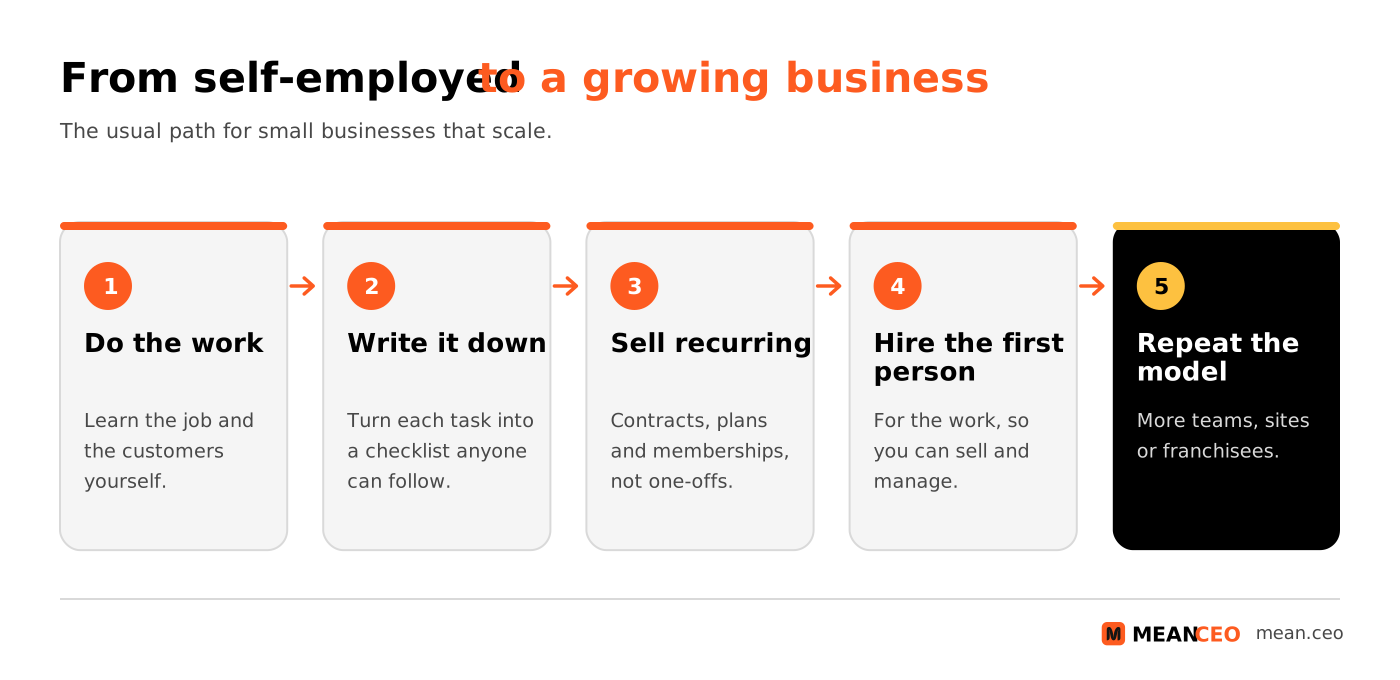
- Do the work yourself first. You learn what customers value, how long each job really takes and what goes wrong.
- Write down every process. Checklists, templates and short videos turn your know-how into something others can follow. Automation and hiring for bootstrapped operations covers the tools.
- Sell recurring work. Move customers from one-off jobs to contracts, plans and memberships. See how bootstrapped businesses grow monthly recurring revenue.
- Hire your first person for the work, not for admin, so you can sell, manage quality and plan.
- Repeat the model. Add teams, sites or franchisees once one unit runs well without you.
What does your first employee cost?
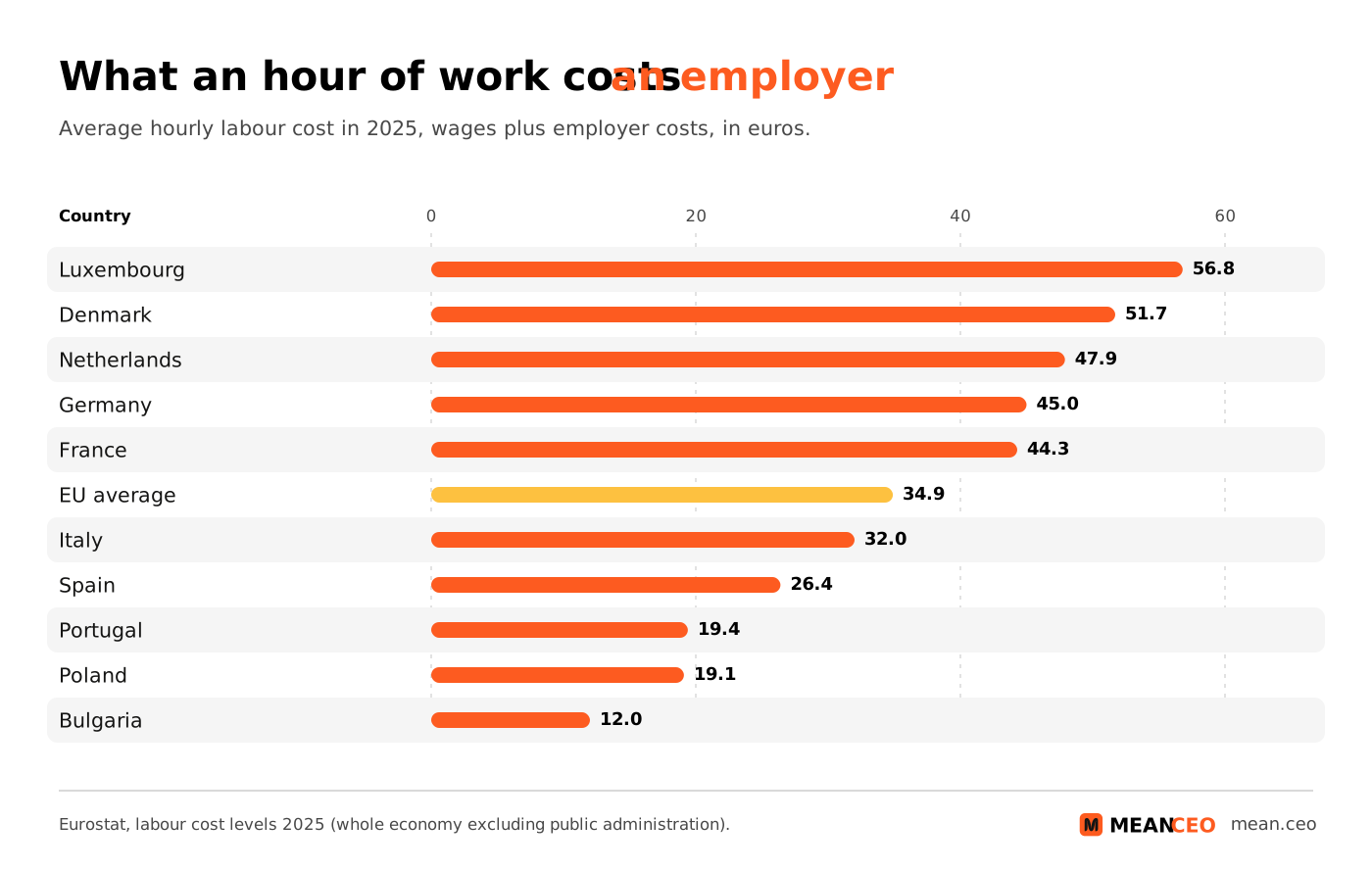
Hiring is the moment most small businesses stall, because an employee costs more than their wage. The average hourly labour cost in the EU, including employer costs, was €34.9 in 2025, ranging from €12.0 in Bulgaria to €56.8 in Luxembourg, according to Eurostat. Non-wage costs, mainly employer social contributions, made up 24.8% on average, and 32.3% in France.
Price your service so that one employee's hour, plus materials, travel and overheads, still leaves a margin. For a country-by-country view of running costs, see the cost of bootstrapping in each European country.
Franchising: growing with other people's capital
Franchising lets other owners open units of your business with their own money. It's widespread in Europe. In France, 2,035 franchise networks ran 93,395 franchised outlets with €93.7 billion in turnover in 2025, according to the Fédération Française de la Franchise. Germany has about 860 franchise systems and almost 150,000 franchisees, according to the German Franchise Association, and the UK had 1,009 systems in a 2024 survey by the British Franchise Association, which found that 89% of franchise units were profitable.
Be careful with marketing claims such as "99.5% of franchises succeed", which come without a definition or time frame. Before you franchise, you need a proven, profitable unit, a written operations manual and legal advice, and only some EU countries, such as France, require pre-contract disclosure to franchisees.
Practise growing a business before you risk your savings
The Fe/male Switch startup game takes you from idea to first customers and beyond in weekly quests, with an AI co-founder that helps with pricing, hiring plans and pitches.
👉 Start the game
Conclusion: choose a small business with a second chapter
Every business starts small, but only some are built to grow. Choose a small business idea with recurring customers, work you can teach and a model you can repeat, such as cleaning contracts, childcare, bookkeeping, home care or a productised web studio. Price for the day you hire your first employee, write your processes down from the start, and you'll have a business that can grow beyond your own hours. For growth benchmarks, see the bootstrapped growth metrics that matter.
FAQ: small business ideas that can grow
What small business can grow the fastest?
Service businesses with recurring contracts and work that can be taught, such as commercial cleaning, home care, bookkeeping, property maintenance and productised web studios. They need little capital and can add staff as contracts grow.
What is a scalable small business?
One whose revenue can grow faster than its costs: it sells recurring work, can be run by a team following documented processes, and can be repeated in new places.
What small business is most profitable?
Profit depends more on pricing and costs than on the type of business. Expertise-based services (bookkeeping, web studios, physiotherapy) usually have higher margins than businesses with stock or premises.
How many small businesses survive?
In the EU, 80.5% of new firms survive their first year, 57.2% reach three years and 46.1% survive five years, according to Eurostat.
When should I hire my first employee?
When you're turning work away or spending most of your time on tasks someone else could do, and your prices cover an employee's full cost. In the EU, non-wage costs such as employer social contributions make up about a quarter of total labour costs.
Is franchising a good way to grow?
It can be, once one unit is proven and profitable and you have a written operations manual. France alone had over 93,000 franchised outlets in 2025. Get legal advice: franchise rules differ by country.
What small business can I start with little money?
Cleaning, bookkeeping, tutoring, productised web design and property maintenance can start with little more than basic equipment, insurance and software.
Do I need a licence to start a small business?
Many need one: childcare, home care, dog daycare, food businesses, physiotherapy and gas or electrical work are regulated. Check your country's rules before you sign a lease or take bookings.
About the Author
Violetta Bonenkamp, also known as MeanCEO, is an experienced startup founder with an impressive educational background including an MBA and four other higher education degrees. She has over 20 years of work experience across multiple countries, including 5 years as a solopreneur and serial entrepreneur. Throughout her startup experience she has applied for multiple startup grants at the EU level, in the Netherlands and Malta, and her startups received quite a few of those. She’s been living, studying and working in many countries around the globe and her extensive multicultural experience has influenced her immensely.
