
TL;DR: what is a niche market and how do you find one?
A niche market is a small, well-defined group of customers with a specific need that mass-market products serve badly. To find one, start from problems you know, look for change (new rules, ageing, new habits), check demand with search data and communities, size it, and pre-sell before you build. Below are 15 niche market examples in Europe with data, including senior services, menopause, pet care, repair, heat pumps, padel, allergy-friendly food and compliance services, plus the rules and a first step for each.
👉 Size your niche with the free Market Size Calculator
Big markets look attractive, but they are where big companies, big budgets and price wars live. A first-time founder usually wins somewhere smaller: a group of customers whose problem is specific enough that you can understand it better than anyone else, and reach them without a large marketing budget.
This guide explains what a niche market is, how to find and size one, and gives 15 niche market examples with real European demand data. If you want ideas for venture-backed sectors instead, see our startup ideas where VC money is going in 2026. If you prefer selling to businesses, see these B2B company ideas.
A niche is not a small idea. It's a big problem for a specific group of people, solved better than anyone else does it.
What is a niche market?
A niche market is a narrowly defined segment of a larger market, with its own needs, preferences or identity. "Food" is a market; "gluten-free bread" is a segment; "certified gluten-free sourdough delivered to coeliac families in one city" is a niche. The narrower the group, the easier it is to find the customers, speak their language and become their obvious choice.
A useful benchmark is Kevin Kelly's essay 1,000 True Fans: a creator or small business needs only about 1,000 customers who each pay around $100 a year to earn $100,000 a year. Be honest with yourself, though. Strategy researchers have tested whether focused strategies outperform broad ones, and the evidence is mixed. A niche works when it's big enough, reachable and willing to pay, not simply because it's small.
How to find a niche market
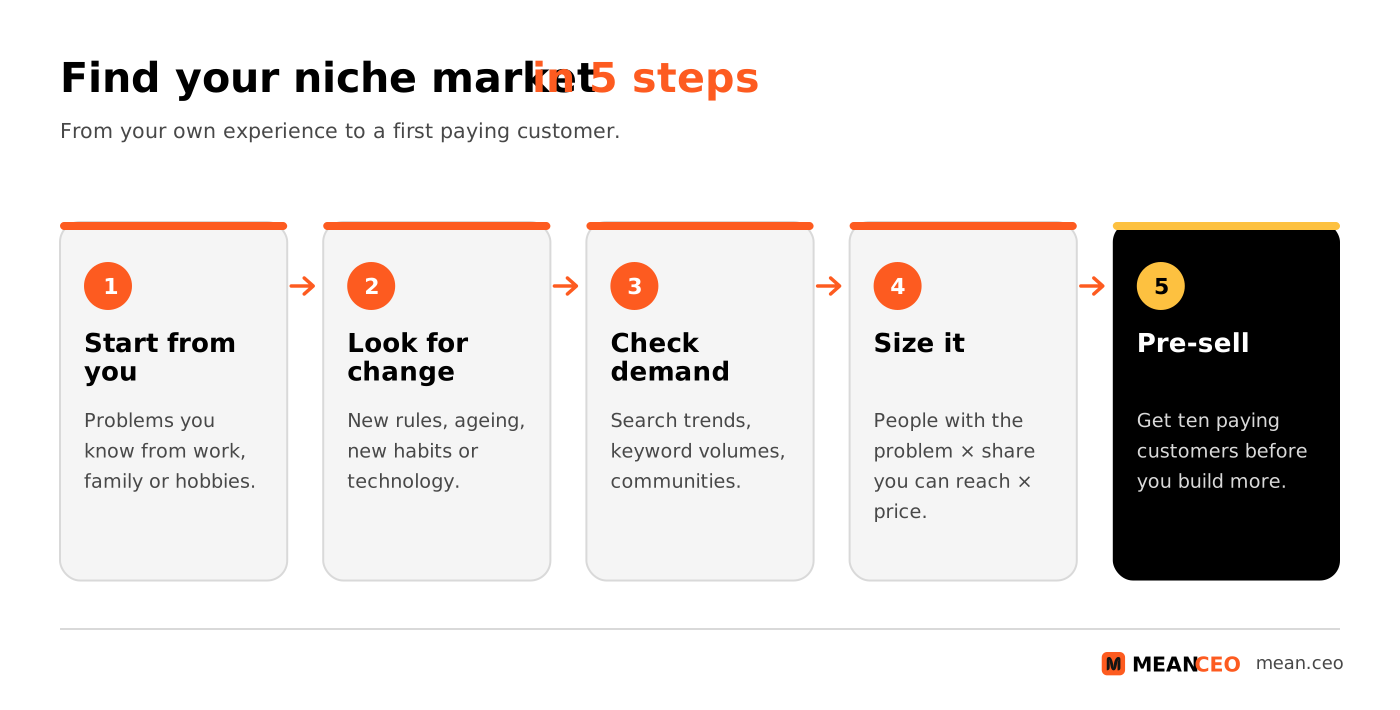
- Start from what you know. List problems from your work, your family, your health and your hobbies. Founders with inside knowledge spot needs others miss; see these techniques to identify gaps in the market.
- Look for change. New rules (the EU Right to Repair Directive, the European Accessibility Act), demographic shifts (ageing, late ADHD diagnoses) and new habits (padel, alcohol-free drinks) create niches that big companies are slow to serve.
- Check demand and find where they gather. Use Google Trends to see whether interest is growing and Google Keyword Planner to see how many people search for the problem each month; our guide to keyword research for a niche startup shows how. Then find the forums, groups, associations, events and podcasts where these customers meet. If you can't reach them, you can't sell to them; podcast advertising for niche audiences is one route.
- Size it. Estimate how many people have the problem, what share you can reach and what they'd pay (see the worked example below).
- Pre-sell. Ten paying customers beat a thousand survey answers. Our guide on how to validate a startup idea with less than €1,000 walks you through it.
15 niche market examples in Europe
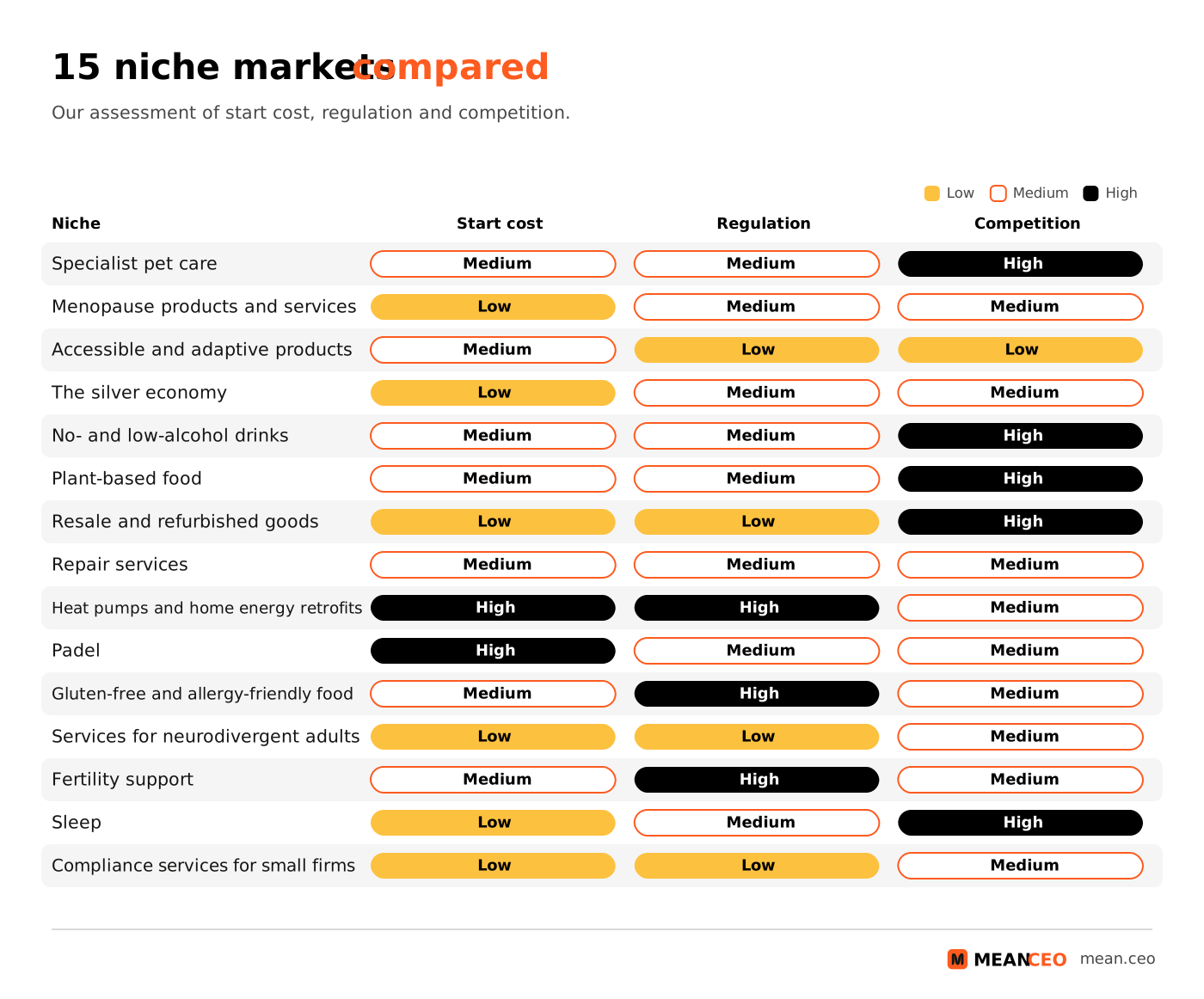
Each example below includes the demand data, how businesses in the niche earn money, the rules to check, where to find the first customers and a first step. The chart compares start cost, regulation and competition.
1. Specialist pet care
Not pet products in general, but one slice of a huge market: fresh or vet-diet food, care for senior pets, home boarding, training for anxious dogs or grooming for one breed type.
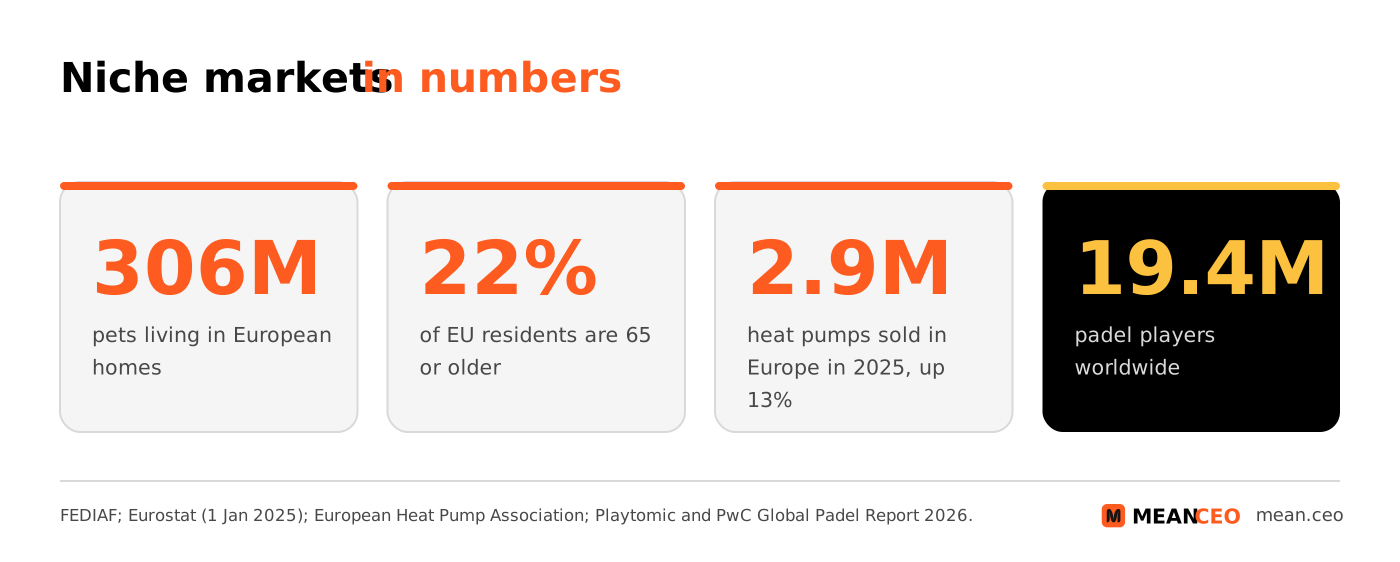
- Demand: 140 million European households (49%) own at least one of Europe's 306 million pets, and Europeans spent €29.4 billion on pet food in 2024, according to the European pet food industry federation FEDIAF.
- How you earn: Subscriptions for food or treats, per-night boarding, per-session training or grooming. Dog boarding in UK cities costs about £27–30 a night on Rover.
- Rules: Pet food counts as animal feed under EU law, so producers must register as feed businesses. Home dog boarding needs a council licence in England.
- First customers: Vets, groomers and local dog-owner groups; one recommendation from a vet is worth a hundred ads.
- First step: Pick one problem, such as senior dogs with joint pain, and interview 15 owners at a dog park or vet's waiting room.
2. Menopause products and services
Products, workplace programmes, coaching and telehealth for women going through perimenopause and menopause, a life stage that was ignored for decades.
- Demand: About 31.6 million women in the EU were aged 45–54 on 1 January 2025, according to Eurostat population data (our sum of two age groups). In a Belgian survey of 2,408 women by Securex and Ghent University, 55% of those with symptoms said menopause hampered their work.
- How you earn: Employer programmes and training sold per company, coaching packages, or products such as cooling sleepwear and supplements.
- Rules: Supplements fall under EU food law, and you may only use health claims authorised under Regulation 1924/2006. Medical advice needs licensed clinicians.
- First customers: HR teams in companies with many women over 45, such as healthcare, education and retail.
- First step: Offer a free lunch-and-learn session to three local employers and sell a follow-up programme.
For more on building for women's health needs, see how to analyse female-focused markets and building female-focused products.
3. Accessible and adaptive products
Adaptive clothing, kitchen tools, home adaptations, accessible travel and leisure for people with disabilities, designed with them rather than for them.
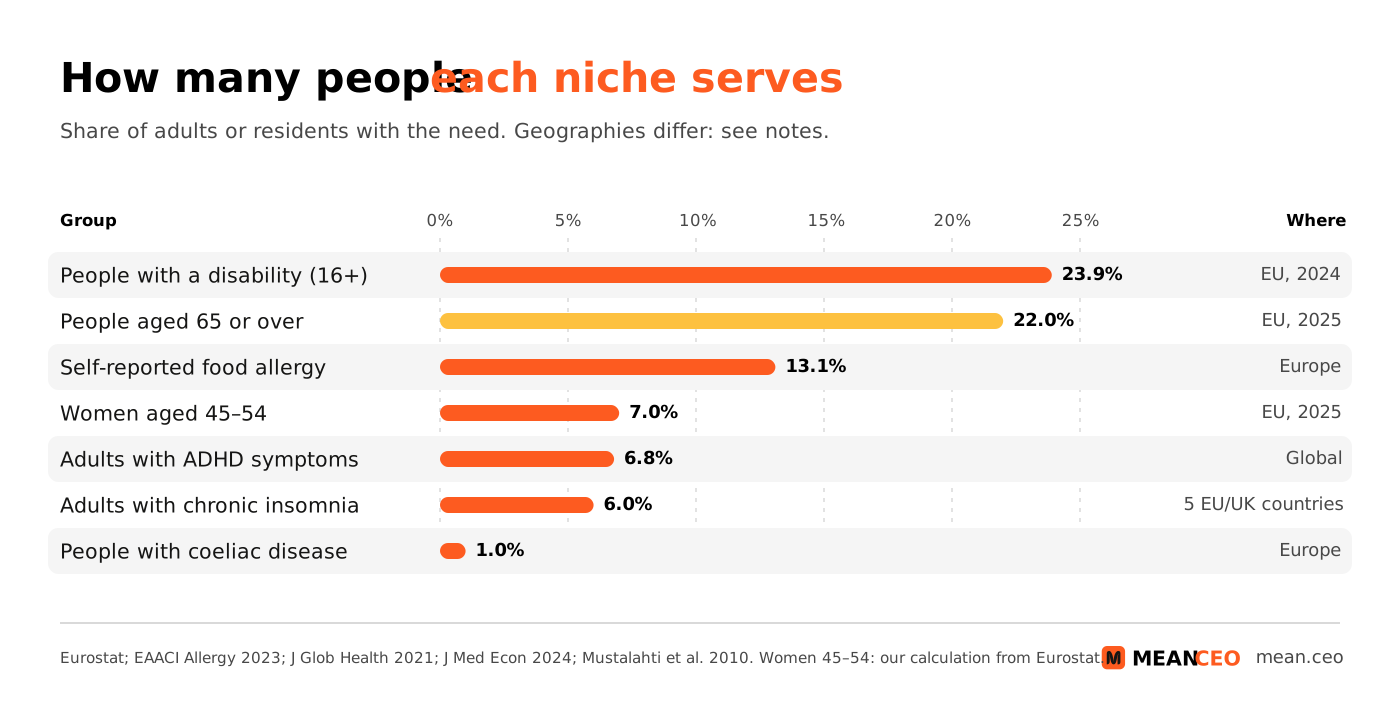
- Demand: 23.9% of people aged 16 and over in the EU had a disability (a long-standing activity limitation) in 2024, 6.7% of them severe, according to Eurostat.
- How you earn: Product sales, home-adaptation projects, or curated accessible travel packages.
- Rules: Medical devices and mobility aids may fall under the EU Medical Device Regulation; everyday adaptive clothing doesn't.
- First customers: Disability associations, occupational therapists and online communities run by disabled people.
- First step: Co-design one product with five users and pre-sell a first small batch.
4. The silver economy
Services for active older adults and their families: home adaptations, digital help, travel, fitness, financial and legal planning, and help with moving house.
- Demand: 22.0% of the EU population was aged 65 or over on 1 January 2025, and the share aged 80 or over is projected to rise from 6.2% to 15.3% by 2100, according to Eurostat. A 2018 study for the European Commission projected that spending by people aged 50 and over would reach about €5.7 trillion by 2025.
- How you earn: Hourly services, packages (for example, a full house move), memberships or group classes.
- Rules: Personal care usually needs registration; companionship, digital help and moving services usually don't.
- First customers: Adult children who buy for their parents, pharmacies, senior associations and housing providers.
- First step: Run a free "phone and online banking" class at a library and sell one-to-one follow-ups.
5. No- and low-alcohol drinks
Alcohol-free beer, wine, spirits and functional drinks, plus bars, events and shops that specialise in them.
- Demand: Global volumes of no-alcohol beer, wine, spirits and ready-to-drink cocktails were expected to grow 9% in 2025, and IWSR forecasts 36% volume growth from 2024 to 2029, according to drinks analysts IWSR.
- How you earn: Own-brand drinks, a specialist online shop, alcohol-free bars or event bars.
- Rules: Drinks need food business registration and EU food labelling. Low-alcohol drinks can have excise duty depending on strength and country.
- First customers: Restaurants that want better alcohol-free options, event organisers and corporate events.
- First step: Run a tasting at a local event, then pitch a curated alcohol-free menu to five restaurants.
6. Plant-based food
Plant-based products for a specific need, such as high-protein, local-ingredient or ready meals, rather than another generic burger.
- Demand: Plant-based food retail sales in France, Germany, Italy, the Netherlands, Spain and the UK reached about €4.75 billion in 2025, up 3.3%, according to Circana data published by GFI Europe. France grew 11.4%.
- How you earn: Branded products in shops, food service supply, or meal kits.
- Rules: Standard food business registration, allergen labelling and nutrition labelling. Naming rules for plant-based products are still being debated in the EU, so check before you print packaging.
- First customers: Independent shops, canteens and caterers that need better plant-based options.
- First step: Test one product at a weekly market for a month and track repeat buyers.
7. Resale and refurbished goods
Buying, checking and reselling second-hand goods for one category or group: children's clothes, designer bags, outdoor gear, cameras or business laptops.
- Demand: Vinted's gross merchandise value grew 47% to €10.8 billion in 2025, according to the company. Back Market reported more than $3.5 billion in gross merchandise value.
- How you earn: Margin on each item, or a service fee for selling on behalf of others.
- Rules: Sellers of refurbished goods must give the legal guarantee; under EU law it can be shortened to one year for second-hand goods in many countries. Check your country's rules.
- First customers: Your own network and online marketplaces; then companies replacing laptops and phones.
- First step: Pick one category you know well and resell 20 items to learn margins and returns.
8. Repair services
Repairing phones, laptops, washing machines, bikes or clothes, as a shop, a mobile service or a repair café that charges for parts and time.
- Demand driver: The EU Right to Repair Directive applies from 31 July 2026. Manufacturers of goods such as washing machines, vacuum cleaners, phones and tablets must offer repairs, and a consumer who chooses repair gets the legal guarantee extended by at least 12 months, according to the European Commission. An EU online repair platform is due in 2027.
- How you earn: Per repair, plus parts; service contracts with offices and landlords.
- Rules: Electrical repairs need qualified staff; handle waste electrical equipment under the WEEE rules.
- First customers: Neighbours, small offices and landlords with appliances in rented flats.
- First step: Offer repairs for one appliance type and list on local platforms and repair-café networks.
9. Heat pumps and home energy retrofits
Installing, maintaining or planning heat pumps, insulation and solar for homeowners, or software that helps installers quote and plan.
- Demand: Heat pump sales in 21 European countries rose 13% in 2025 to about 2.9 million, with 29.3 million now installed, according to the European Heat Pump Association. Sales are still below their 2022 peak of 3.31 million.
- Demand driver: Under the Energy Performance of Buildings Directive, EU countries must cut the average primary energy use of homes by 16% by 2030 and 20–22% by 2035, according to the European Commission.
- Rules: Installers handling refrigerants need F-gas certification; subsidies usually require certified installers.
- First customers: Homeowners applying for subsidies, landlords and housing associations.
- First step: Partner with a certified installer as a surveyor or project manager while you train.
10. Padel
Clubs, coaching, equipment, court building, tournaments and booking or community tools for one of Europe's fastest-growing sports.
- Demand: There were about 58,300 padel courts and 19.4 million players worldwide in 2025, with 91,000 courts projected by 2028, according to the Playtomic and PwC Global Padel Report 2026. Nearly 7,900 new courts were built in 2025, the most in France.
- How you earn: Court hire, coaching, memberships, tournaments and equipment.
- Rules: Building permits for courts and indoor halls; insurance for coaching.
- Watch out: In mature markets, new clubs compete hard on price. Check how many courts are within 20 minutes before you invest.
- First step: Start with coaching or tournaments at existing clubs before you build a court.
Padel is one of several new business ideas proven abroad and now reaching Europe.
11. Gluten-free and allergy-friendly food
Bakeries, ready meals, catering and restaurants that are safe for people with coeliac disease or food allergies, not just "gluten-light".
- Demand: About 1% of Europeans have coeliac disease, according to a screening study of 29,212 people in four European countries (Mustalahti et al., 2010). In a 2023 review in the EAACI journal Allergy, 13.1% of Europeans reported a food allergy, while 0.8% had one confirmed by a food challenge.
- How you earn: Product sales, a dedicated bakery or café, or allergen-safe catering for schools and events.
- Rules: EU law requires 14 allergens to be declared, and "gluten-free" can only be used for foods with no more than 20 mg of gluten per kg.
- First customers: National coeliac societies, which often list certified products and venues, and parents of allergic children.
- First step: Bake one product, get it tested, and sell it through the local coeliac community.
12. Services for neurodivergent adults
Coaching, body-doubling and productivity tools, workplace training and support for adults with ADHD and autism, many of whom were diagnosed late.
- Demand: An estimated 2.58% of adults worldwide have persistent ADHD and 6.76% have symptoms, according to a 2021 meta-analysis in the Journal of Global Health.
- How you earn: Coaching packages, group programmes, apps, or training sold to employers.
- Rules: Coaching isn't therapy; diagnosis and medication are for clinicians. Make the boundary clear.
- First customers: Online ADHD communities, employers with neurodiversity programmes and universities.
- First step: Run a four-week online group programme for ten adults and collect results.
13. Fertility support
Coaching, navigation and employer benefits for people going through fertility treatment or egg freezing, alongside clinics rather than replacing them.
- Demand: More than 1.15 million assisted reproduction cycles were reported in 36 European countries in 2023, resulting in about 247,000 babies, according to preliminary data from the European Society of Human Reproduction and Embryology.
- How you earn: Coaching packages, employer benefit contracts, or partnerships with clinics.
- Rules: Health data is specially protected under GDPR; medical advice needs licensed professionals.
- First customers: Patients in online communities, clinics that lack emotional support services, and employers with benefit budgets.
- First step: Partner with one clinic to offer a support group for its patients.
14. Sleep
Digital sleep programmes, coaching, sleep products and workplace sleep training, with an evidence base such as cognitive behavioural therapy for insomnia (CBT-I).
- Demand: Chronic insomnia disorder affects about 6% of adults in France, Germany, Italy, Spain and the UK, according to a 2024 study in the Journal of Medical Economics.
- How you earn: App subscriptions, coaching, employer programmes, or products.
- Rules: An app that claims to treat insomnia is a medical device. In Germany, approved digital health apps (DiGA) can be prescribed and paid for by health insurers.
- First customers: Shift workers' employers, new parents and people already searching for insomnia help.
- First step: Train in CBT-I methods and run a paid six-week group programme.
15. Compliance services for small firms
Helping small companies meet new EU rules: website and app accessibility, deforestation-free supply chains, AI rules and cybersecurity.
- Demand driver: The European Accessibility Act has applied since 28 June 2025 to products and services such as online shops, banking, e-books and transport, according to the European Commission. Microenterprises providing services are exempt; those selling products aren't.
- More rules: The EU Deforestation Regulation applies to large and medium operators from 30 December 2026 and to micro and small ones from 30 June 2027. AI Act rules for high-risk systems were delayed to December 2027 and August 2028 by the 2026 AI omnibus.
- How you earn: Fixed-price audits, remediation projects and monthly monitoring.
- First customers: Online shops, small manufacturers and importers of coffee, cocoa, wood or rubber products.
- First step: Audit five online shops for accessibility for free and sell the fixes.
How to size a niche market: a worked example
Market size estimates don't need a research budget. Multiply three numbers you can find or test: how many people have the problem, what share you can realistically reach, and what each one pays per year.
The reach and spend figures are illustrative assumptions; replace them with your own test results.
If the result can't support you, widen the niche (a region instead of a city, or all allergies instead of one) or raise the value per customer. For a step-by-step method, see our sister guide on how to evaluate the size of a niche, or try the Market Size Calculator.
Common niche market mistakes
- Too small to pay you. A passionate group of 200 people won't sustain a business unless each pays a lot.
- Unreachable customers. If there's no community, association or search term, marketing will be slow and expensive.
- Customers who can't pay. Some groups have a real need but no budget; find who pays instead (employers, insurers, families, public bodies).
- A trend, not a niche. Check whether demand has grown steadily for years or spiked on social media.
- Ignoring the rules. Food, health, energy and childcare niches come with registration and labelling rules; budget for them from day one.
Once you've found your niche, turn early buyers into a community: see how to build a customer community.
Practise finding and testing a niche
In the Fe/male Switch startup game you pick a niche, test it with real people and build a startup step by step, with an AI co-founder guiding you.
👉 Start the game
Conclusion: go narrow, then go deep
The best niche markets combine three things: a specific group of people, a problem that is growing because something has changed, and customers you can reach and who can pay. Europe offers many: an ageing population, new repair and accessibility rules, the energy transition, changing drinking and eating habits, and health needs that were ignored for years. Pick one niche that you understand from the inside, size it on a single page, and get ten paying customers before you build anything big.
FAQ: niche markets
What is a niche market?
A narrowly defined group of customers with a specific need, preference or identity that mass-market products don't serve well, for example certified gluten-free bakery products for people with coeliac disease.
What are some examples of niche markets?
Specialist pet care, menopause services, adaptive products, services for older adults, no- and low-alcohol drinks, plant-based food, resale, repair, heat pumps, padel, gluten-free food, ADHD coaching, fertility support, sleep and compliance services for small firms.
How do I find a profitable niche market?
Start from problems you know, look for change such as new rules or demographics, check search demand and communities, estimate the size, and pre-sell to ten customers before you invest.
How big should a niche market be?
Big enough that the share you can reach, multiplied by what each customer pays per year, covers your income and costs. Kevin Kelly's rule of thumb is 1,000 customers paying about $100 a year.
Are niche markets more profitable?
Not automatically. A niche can support higher prices and lower marketing costs, but research on focused strategies shows mixed results. Profit depends on size, reach and willingness to pay.
What niche markets are growing in Europe?
Services for older adults, repair (driven by the Right to Repair Directive from July 2026), heat pumps and retrofits, padel, alcohol-free drinks, resale and compliance services for new EU rules.
How do I test a niche market idea?
Talk to ten people with the problem, offer a simple version of your product or service for money, and track whether they pay and come back.
Can a niche business grow big?
Yes. Many companies start in one niche and expand to neighbouring ones once they dominate the first. Vinted, for example, started with second-hand clothes.
About the Author
Violetta Bonenkamp, also known as MeanCEO, is an experienced startup founder with an impressive educational background including an MBA and four other higher education degrees. She has over 20 years of work experience across multiple countries, including 5 years as a solopreneur and serial entrepreneur. Throughout her startup experience she has applied for multiple startup grants at the EU level, in the Netherlands and Malta, and her startups received quite a few of those. She’s been living, studying and working in many countries around the globe and her extensive multicultural experience has influenced her immensely.
