TL;DR: Startup newsletters are the cheapest education a founder can buy and the easiest way to lose five hours a week. I checked 16 active newsletters on their own pages on 30 October 2026: who writes each one, its schedule and the exact price, grouped by job (funding and VC, product and growth, engineering, strategy, AI and Europe). My rule is five newsletters and 60 minutes a week, with paid tiers only where the paid issues change decisions. The free reading stack builder below picks your five.
Startup newsletters fill my inbox faster than customer emails. The roundups that rank for this keyword list 15 to 25 American picks, copy each newsletter's tagline and never say what it costs, how much time it eats or when to unsubscribe. A founder with a product to ship has about an hour a week for reading, and that hour deserves a budget.
So I did the boring work. On 30 October 2026 I opened every newsletter's homepage, about page, subscribe page and archive and kept only those with an issue in the last 60 days. Subscriber numbers appear only where the newsletter states them itself. Reading minutes per issue are MY ESTIMATES for a skim read, labelled every time.
The list leans towards operators and investors. If you are still hunting for a first idea, start with the free MeanCEO Business Idea Generator and come back when you have customers to read for.
How did I pick these startup newsletters?
A startup newsletter here means a regular email about building, funding or running a young tech company, written by a named person or newsroom. Four filters:
- Active today: an issue dated after 31 August 2026 on its own site.
- Named writers: no anonymous aggregators rewriting press releases.
- Something to act on: a pricing idea, a deal comparison, a hiring rule or a funding call.
- Checked price: free, or the exact price on its own page today.
Prices are in US dollars because most paid picks run on Substack, the platform where readers pay writers directly, and it shows dollar prices.
How does the reading stack builder work?
Tick your topics, choose the minutes a week you will really give your inbox, set a monthly budget for paid tiers and say whether you build in Europe. The builder takes the best pick per topic first, stops at five newsletters and upgrades a pick to paid only when your budget and minutes both allow it.
Five is the cap because a sixth newsletter means you skim all six. And minutes beat money: a $15 subscription you never open costs $180 a year.
Which startup newsletters are worth reading in 2026?
All 16 at a glance, with schedules and prices from each newsletter's own pages.
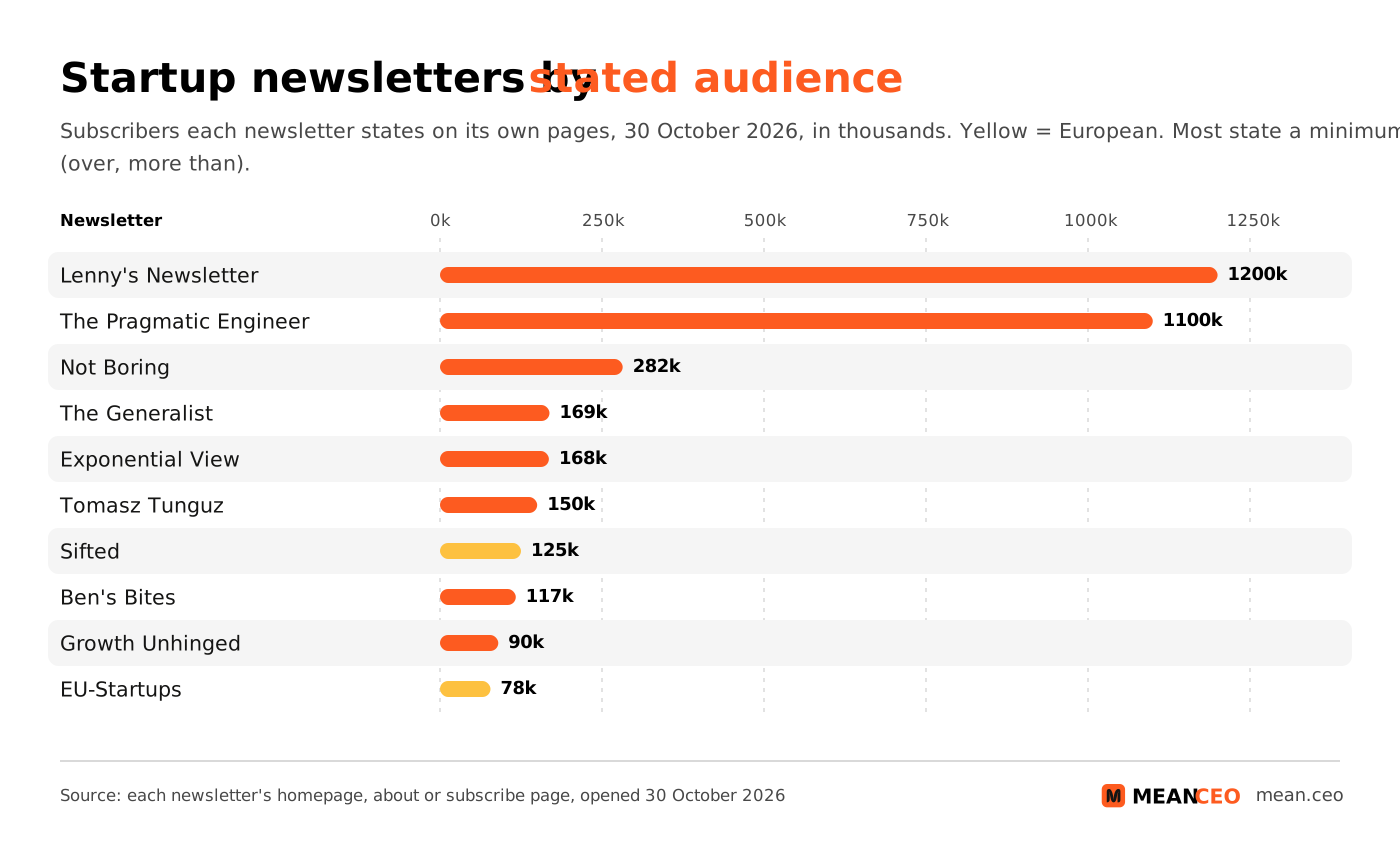
"No price shown" means the sign-up page lists no fee. The chart shows the audience each newsletter states on its own pages; a big list signals reach, nothing more.
Which newsletters track funding and VC deal flow?
Venture capital (VC) funds buy shares in young companies for a shot at a large exit. Deal letters tell you who raised, how much and from whom: gold in the six months around a raise, noise the rest of the year.
1. Fortune Term Sheet: the weekday deals briefing
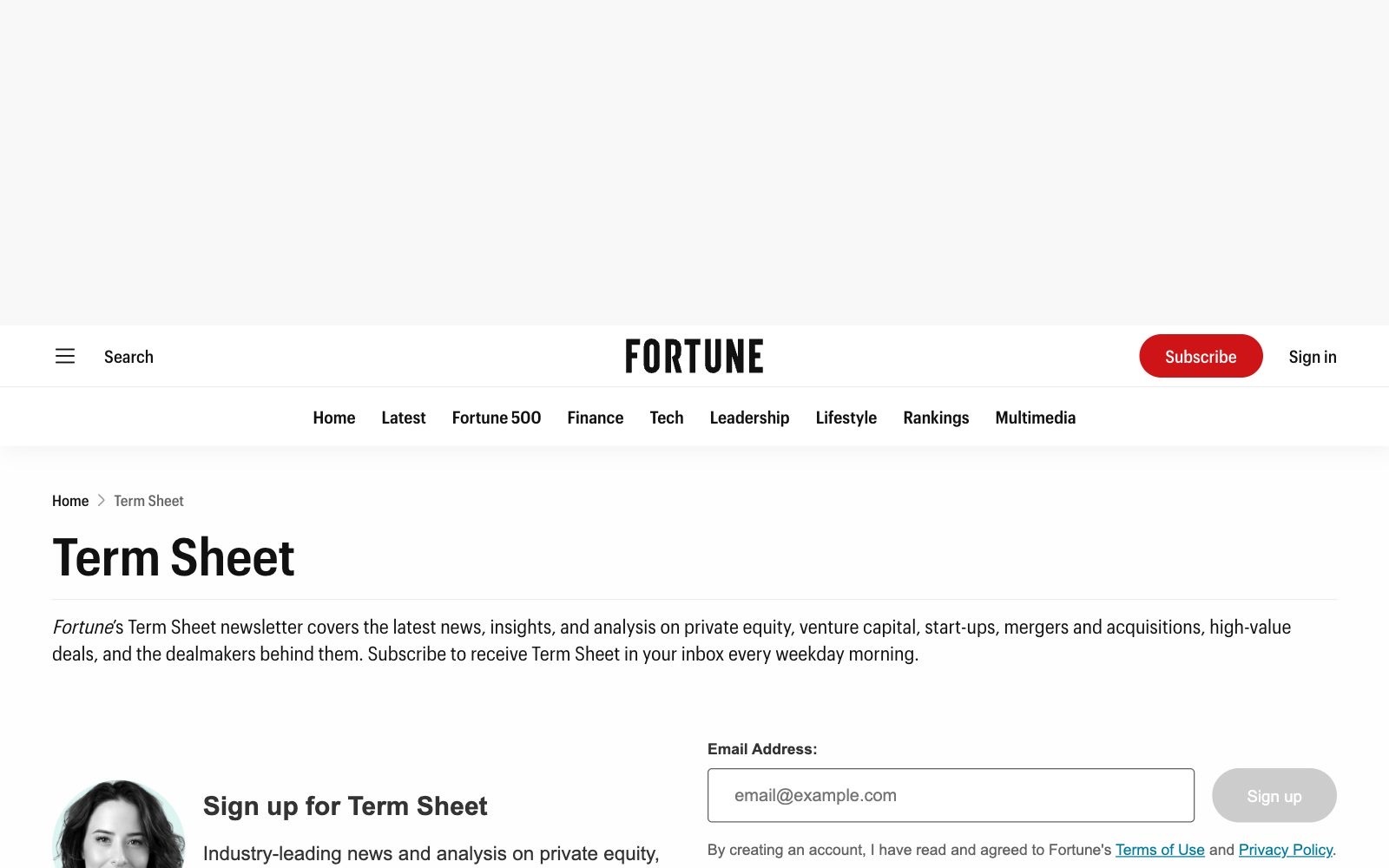
Fortune's newsletter on venture capital, private equity and dealmakers arrives every weekday morning. The week I checked covered the Anthropic S-1, a legal AI startup and a $15 million cybersecurity round.
- Who writes it: Allie Garfinkle, with Morgan Chittum.
- Frequency and price: weekdays; no price on Fortune's newsletters page.
- Read it for / Skip it if: read it while raising for US comparables; skip it as a European seed company.
2. Axios Pro Rata: the daily deal list
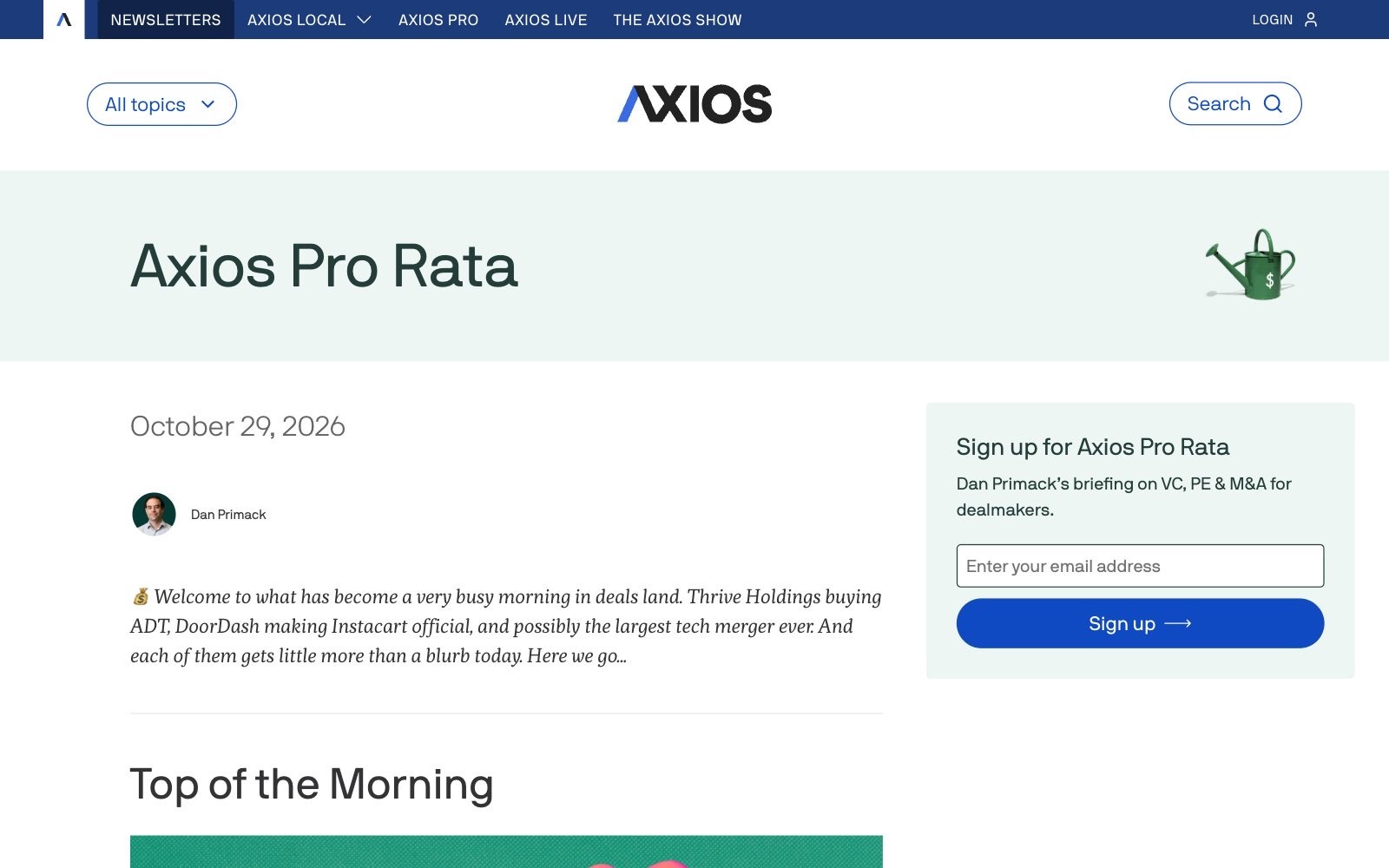
Pro Rata opens with a lead story, then lists the day's VC, private equity and M&A (mergers and acquisitions) deals with lead investors. The 29 October issue covered a $600 million drug-development fund and a law firm winding down.
- Who writes it: Dan Primack, business editor at Axios.
- Frequency and price: daily; issues readable on Axios's site without a login.
- Read it for / Skip it if: read the VC section; skip it if you already read Term Sheet. Two US deal dailies is one too many.
3. Tomasz Tunguz: AI and SaaS numbers in five minutes
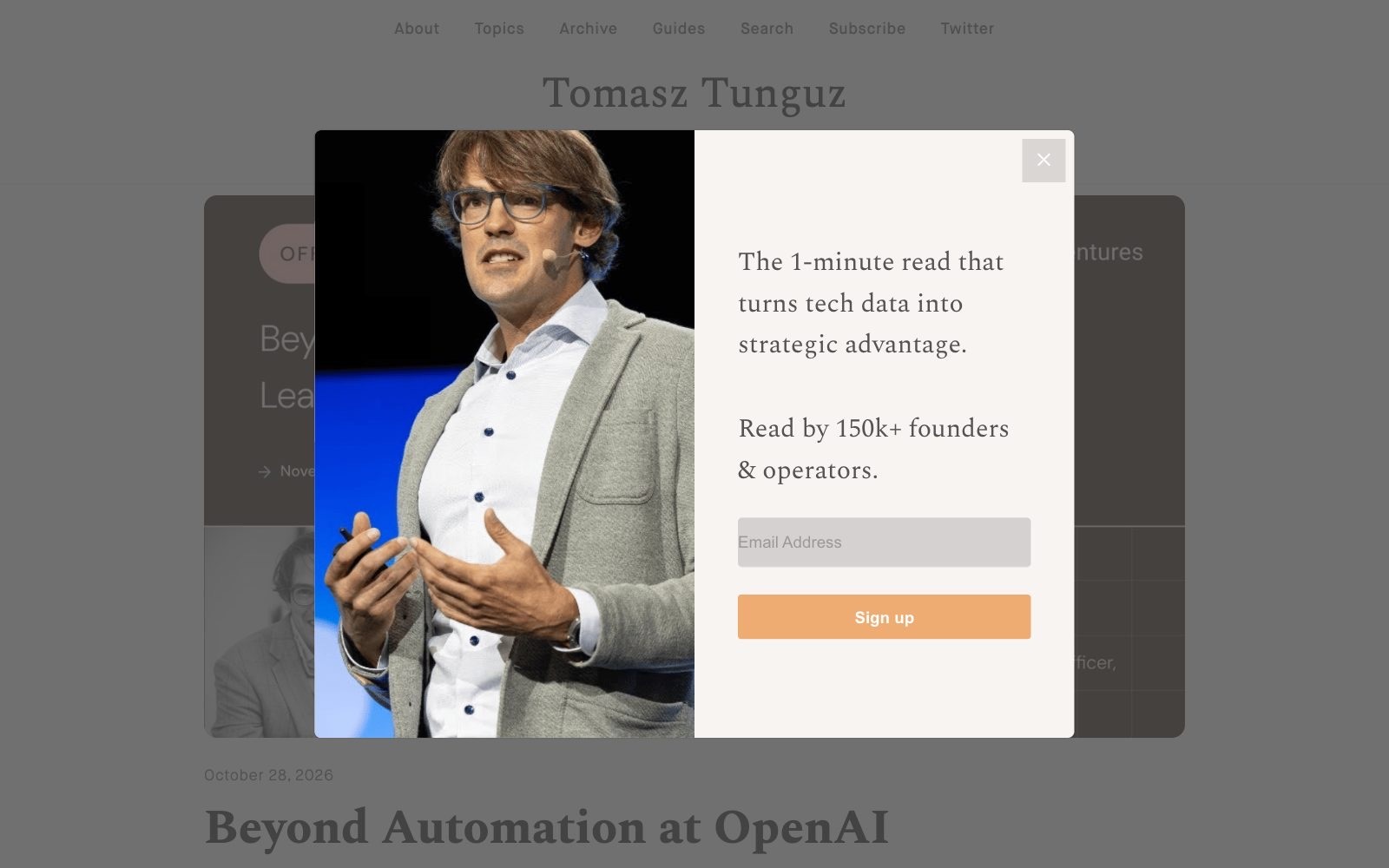
A venture capitalist at Theory Ventures, Tunguz posts one chart and one argument at a time, from "The GPU Revenue Ladder" to seven metrics in Anthropic's S-1. SaaS (software as a service) founders get the most: pricing, sales cycles and ARR (annual recurring revenue) with real numbers.
- Who writes it: Tomasz Tunguz.
- Frequency and price: about 3 to 4 posts a week in October; "150,000 subscribers"; no price shown.
- Read it for / Skip it if: read it for the charts; skip the chip posts unless you buy compute.
My breakdown of Anthropic's S-1 for startups turns that filing into API-bill terms.
Which newsletters help with product and growth?
This is where reading time pays back fastest: one pricing idea beats a year of deal news.
4. Lenny's Newsletter: product and growth playbooks
Lenny Rachitsky calls it "a deeply researched advice column" on product, growth and careers, with "Over 1,200,000 subscribers". Most recent issues are guest posts (startup moats, AI evals, growth ideas), so you pay for his curation. Paid adds every full issue, the archive, a Slack community of "30k+ members" and a free year of 15+ software products.
- Who writes it: Lenny Rachitsky and invited operators.
- Frequency and price: about weekly; free previews, $20 a month or $200 a year.
- Read it for / Skip it if: pay if you run product or growth and will use the bundled software; read the previews if you are pre-revenue.
5. Growth Unhinged: pricing and go-to-market every Wednesday
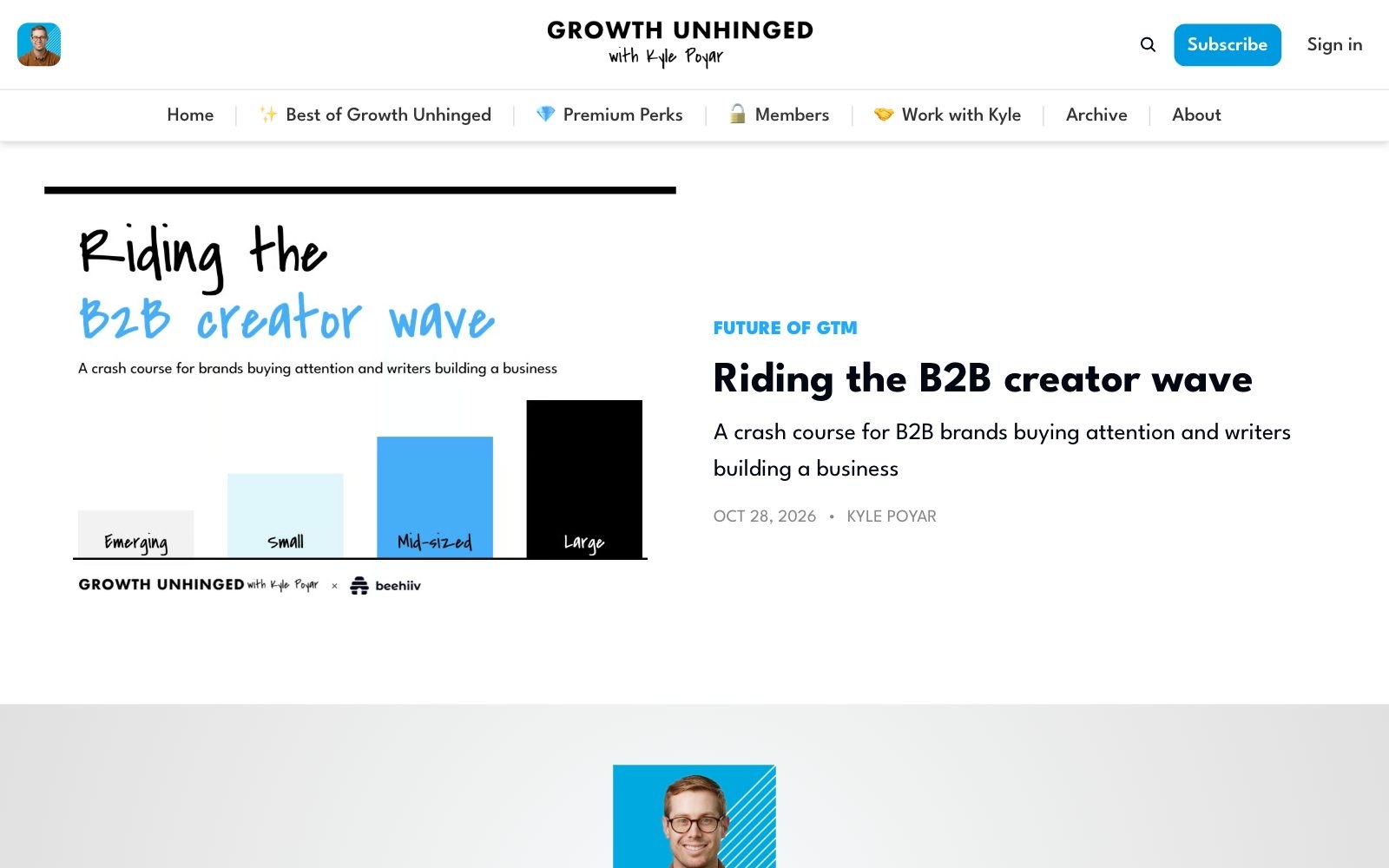
Kyle Poyar covers pricing and packaging, product-led growth and GTM (go-to-market, how you find and win customers). October brought the B2B creator wave and what works in B2B GTM in 2026. "Over 90,000 subscribers". If I could keep one newsletter for revenue, it would be this one.
- Who writes it: Kyle Poyar.
- Frequency and price: Wednesdays; free.
- Read it for / Skip it if: read every pricing issue; skip it if you sell to consumers.
Pair it with our guide to pricing a bootstrapped SaaS against funded rivals.
6. First Round Review: company-building stories
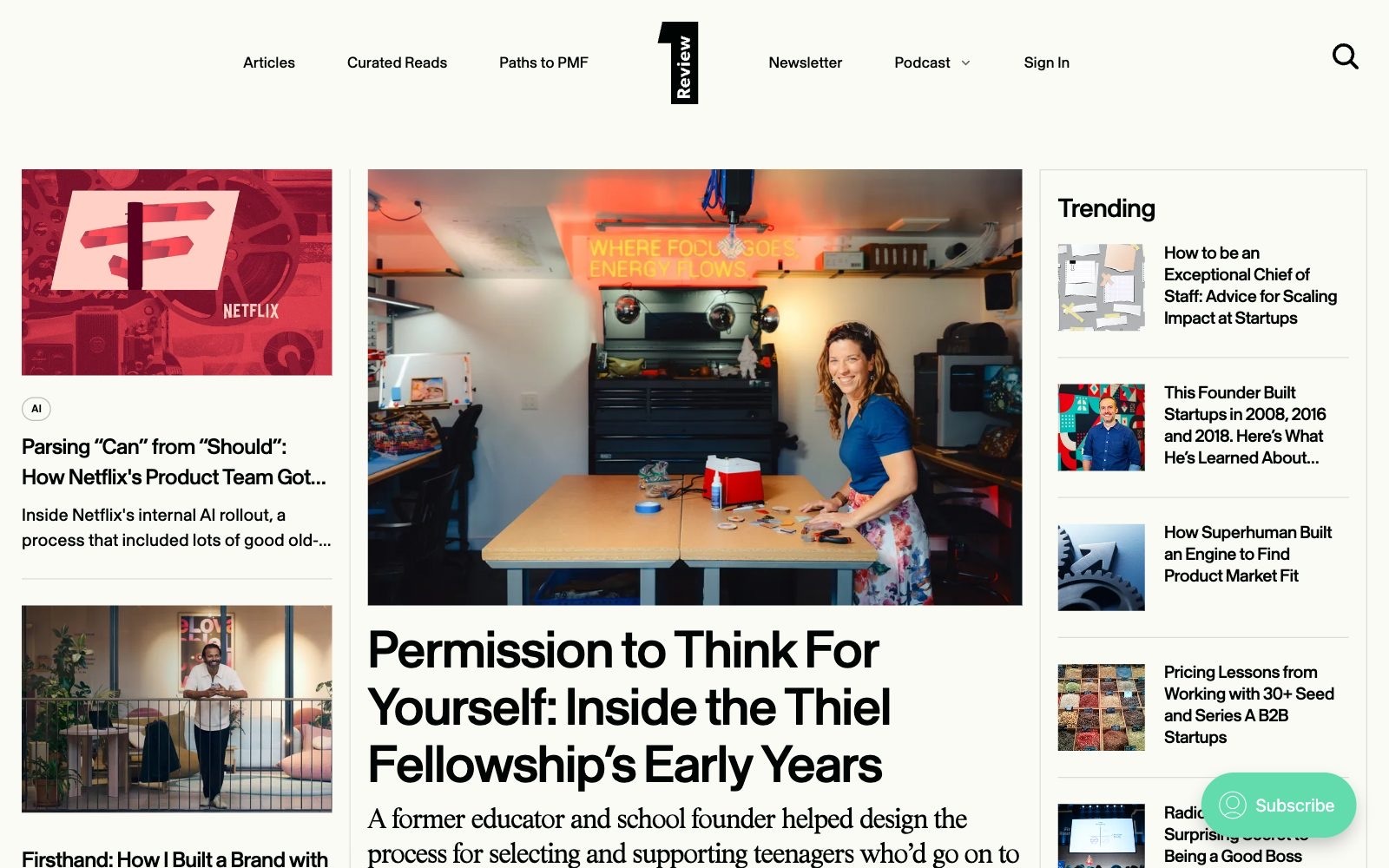
The free publication of the venture firm First Round Capital, "Delivered weekly, for 10+ years", with 600+ articles. Recent pieces covered references in hiring and Netflix's AI product overhaul; the "Paths to Product-Market Fit" series is the best free material on early traction I know.
- Who writes it: First Round Capital's editors with founders and operators.
- Frequency and price: weekly; free.
- Read it for / Skip it if: read the hiring and board pieces before your fifth hire; skip the career stories if you have no team.
Which newsletters should technical founders read?
7. The Pragmatic Engineer: how real engineering teams work
Gergely Orosz, formerly at Uber and Skype/Microsoft, writes about engineering at Big Tech and startups and accepts no sponsorships. He promises "more than 100 issues" a year, and the subscribe page shows "Over 1,100,000 subscribers". Free readers get half of each Tuesday article and the podcast; paid adds full articles and Thursday's The Pulse.
- Who writes it: Gergely Orosz.
- Frequency and price: 100+ issues a year; $15 a month or $150 a year.
- Read it for / Skip it if: pay if you are a CTO or hire engineers; stay free if an agency builds your product.
8. Ben's Bites: building with AI agents
Ben Tossell writes for "AI builders of all levels": Tuesday and Thursday summaries of launches "vetted by us" plus his own agent experiments. "Over 117,000 subscribers". Posts mix free and paid; community access costs $80 a year.
- Who writes it: Ben Tossell, with co-authors.
- Frequency and price: Tuesday and Thursday; free posts, $80 a year for the community.
- Read it for / Skip it if: read it while learning agents; skip it once your team ships agent features weekly.
For the tools these letters name, see our AI tools for small business with real prices and the AI stack for solo founders.
Which newsletters explain tech strategy?
9. Stratechery: the business model behind the headline
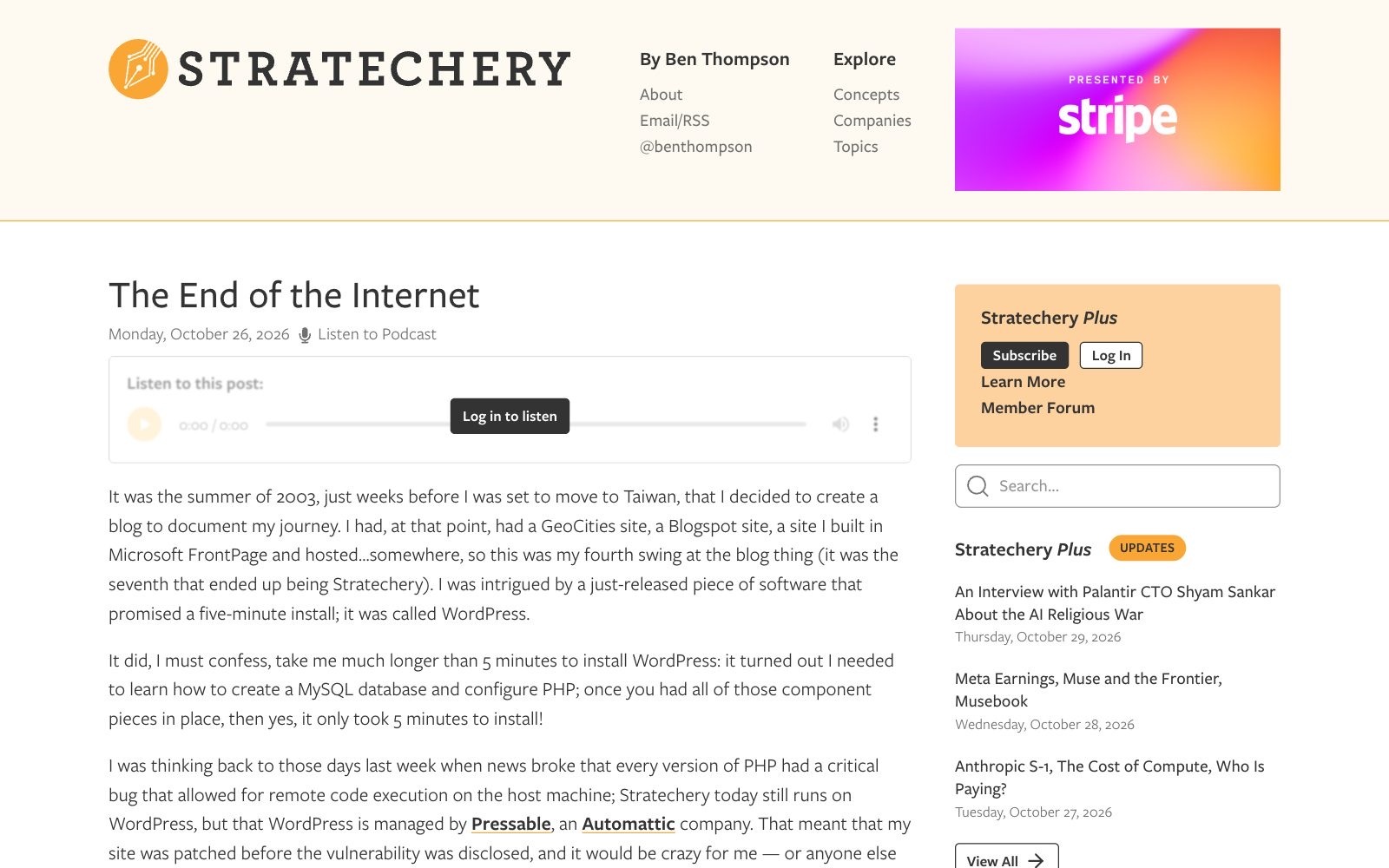
Ben Thompson has written Stratechery since 2013 on the strategy of tech and media, for readers in "over 85 different countries". One article a week is free. Stratechery Plus costs $15 a month or $150 a year and adds three Daily Updates a week, interviews and podcasts.
- Who writes it: Ben Thompson.
- Frequency and price: one free weekly article; three paid updates a week.
- Read it for / Skip it if: pay if you depend on Apple, Google or OpenAI; read only the free article if you run a local B2B service.
10. Not Boring: long essays on ambitious companies
Packy McCormick profiles complex companies every week for "Over 282,000 subscribers", as the subscribe page puts it, plus a Friday Weekly Dose of Optimism. The paid section, "not boring world", carries outside essays at $20 a month or $200 a year.
- Who writes it: Packy McCormick, plus guests in the paid section.
- Frequency and price: weekly essay and Friday digest; main newsletter free.
- Read it for / Skip it if: read one essay a month on your sector; cut it in a fundraising quarter. The essays are long and unfailingly upbeat.
11. The Generalist: company profiles and investor interviews
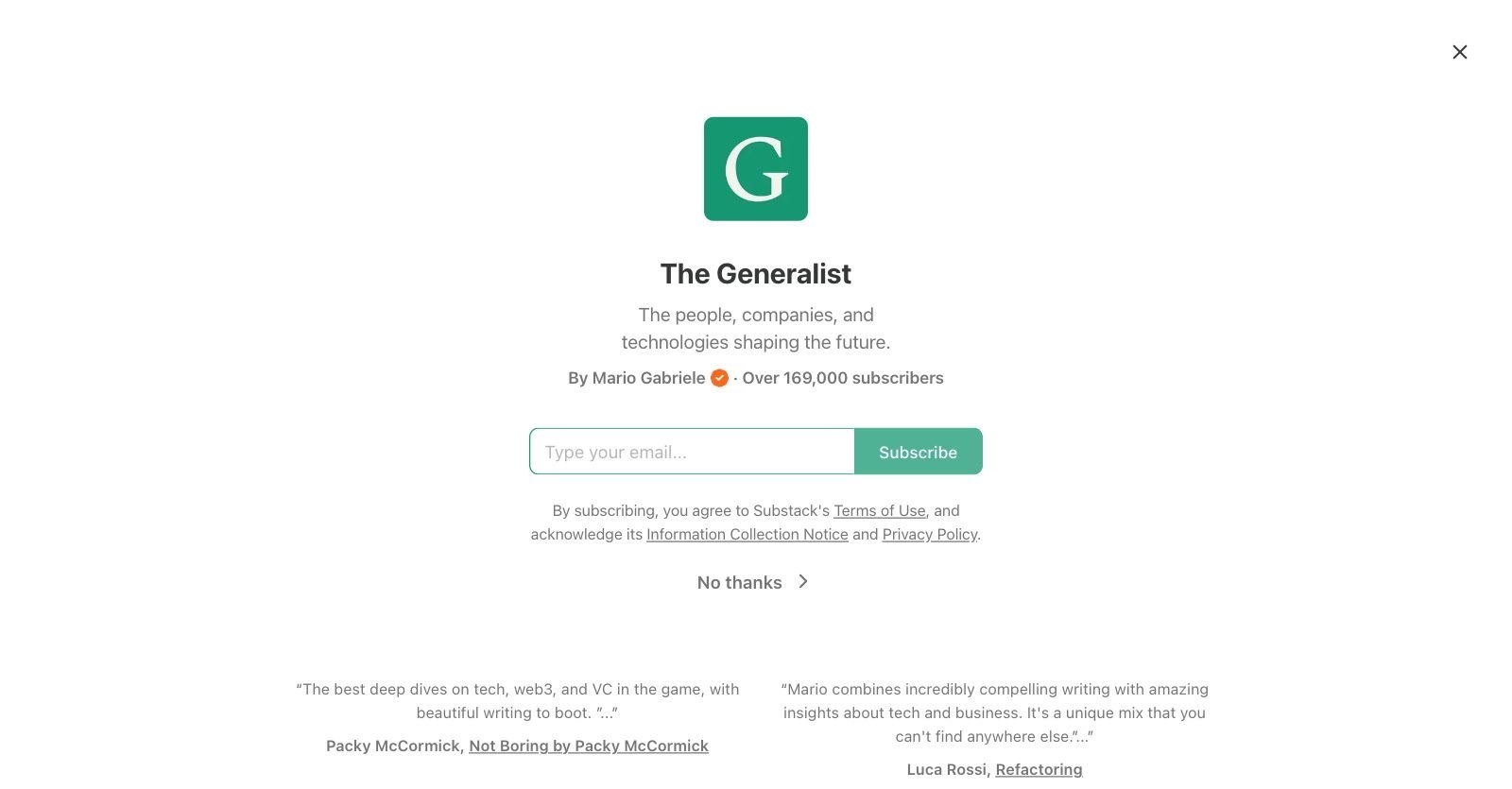
Mario Gabriele covers "the people, companies, and technologies shaping the future" for "Over 169,000 subscribers". Free readers get the podcast and "occasional free posts"; Generalist+ costs $22 a month and adds a Future 50 startup database and letters with Reid Hoffman and Vinod Khosla.
- Who writes it: Mario Gabriele.
- Frequency and price: several posts a month; Generalist+ $22 a month.
- Read it for / Skip it if: read the free interviews; skip paid unless you invest.
Which AI newsletters are worth a founder's time?
12. Exponential View: what AI does to the economy

Azeem Azhar analyses how technology shapes the next three to five years, and the subscribe page counts "Over 168,000 subscribers", from investors and founders to policy-makers. October brought Monday data notes, an S-1 chart essay and Sunday issue 607. Paid is $120 a year.
- Who writes it: Azeem Azhar.
- Frequency and price: several posts a week; $120 a year for the Sunday edition and community.
- Read it for / Skip it if: read it before explaining AI economics to a board; skip it if you only want tool news.
13. The Batch: the week in AI from DeepLearning.AI
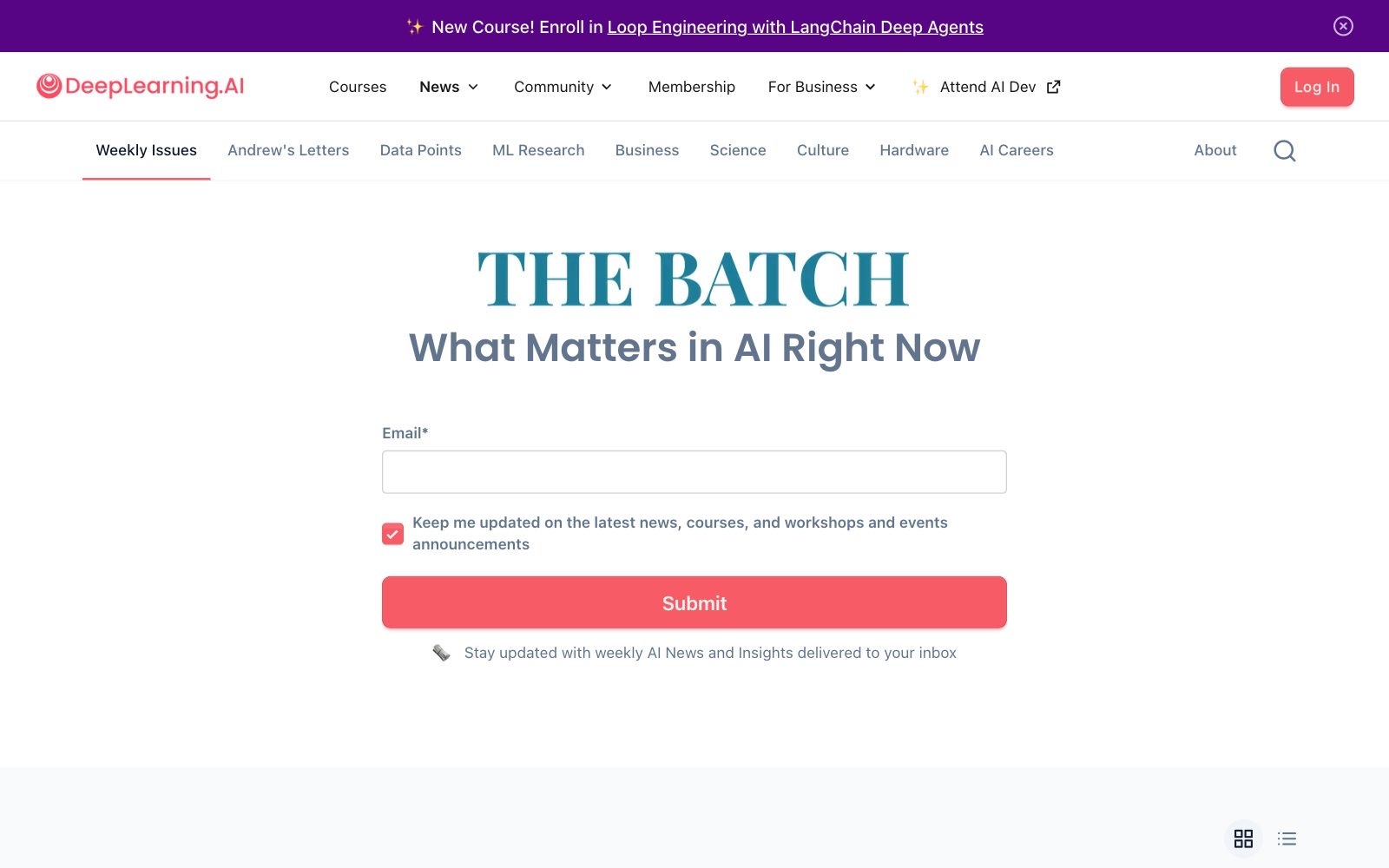
The Batch "delivers weekly AI news and insights", and every issue includes a letter from Andrew Ng. Recent issues covered Claude Haiku 5.5, Mistral Large 4 and Google's first Gemini 4 model. The calmest AI email I know.
- Who writes it: the DeepLearning.AI team, with Andrew Ng's letter.
- Frequency and price: weekly; no price shown.
- Read it for / Skip it if: read it as your one AI email; skip it if Ben's Bites covers you.
Put the ideas to work with our ChatGPT for business workflows and keep the bill sane with what AI tokens really cost.
Which startup newsletters cover Europe?
American lists skip Europe. If you raise, hire or sell in the EU, these three are current.
14. Sifted: European tech, daily or weekly
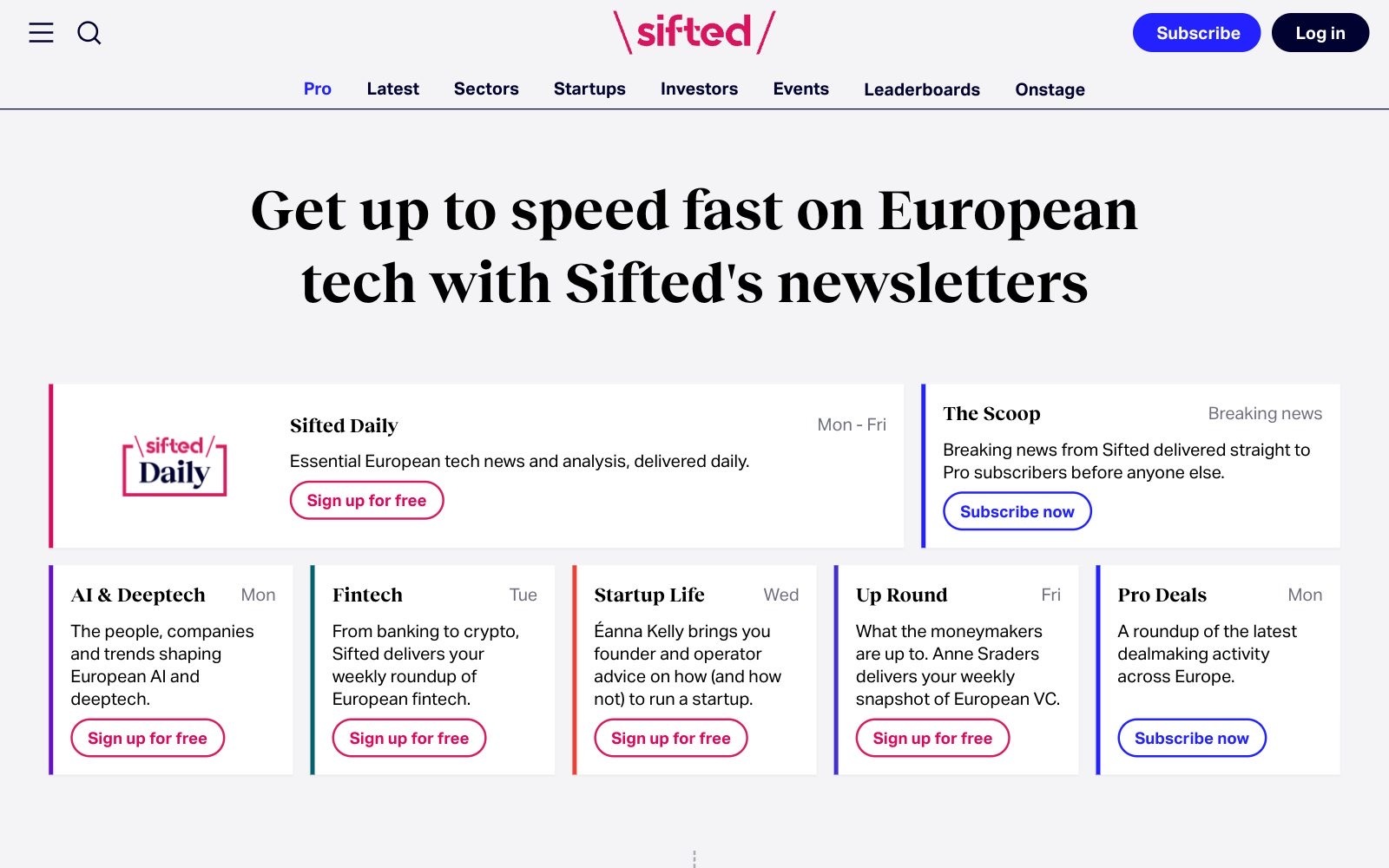
Sifted states "125,000+ subscribers across Europe". Sifted Daily runs Monday to Friday. The operator picks are weekly: Up Round on Fridays, where Anne Sraders "delivers your weekly snapshot of European VC", and Startup Life on Wednesdays with Éanna Kelly's founder advice. Breaking news and the Monday deals letter are for paying Pro members.
- Who writes it: the Sifted newsroom; Anne Sraders and Éanna Kelly.
- Frequency and price: daily plus weekly topic letters; "Free to sign up".
- Read it for / Skip it if: read Up Round and Startup Life; skip the Daily unless you work in VC or media.
15. EU-Startups: European rounds and funding calls
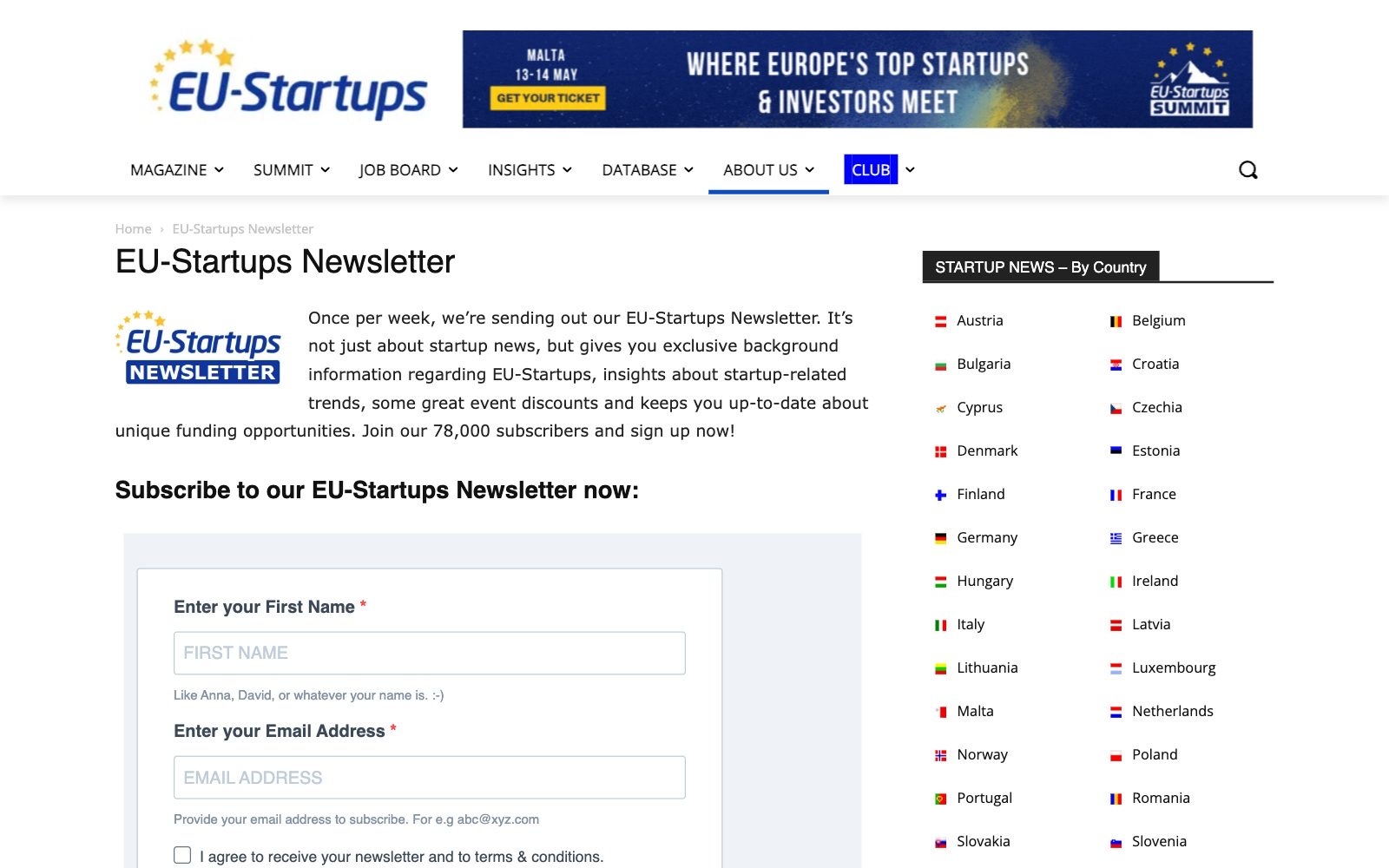
EU-Startups sends its newsletter "Once per week" with news, event discounts and "unique funding opportunities" to 78,000 subscribers. Its site reported rounds from €2.6 million to €22 million on 29 and 30 October.
- Who writes it: the EU-Startups editorial team.
- Frequency and price: weekly; no price shown.
- Read it for / Skip it if: read it for grants and accelerator calls; skip it if Up Round gives you enough deals.
16. Tech.eu: European tech news
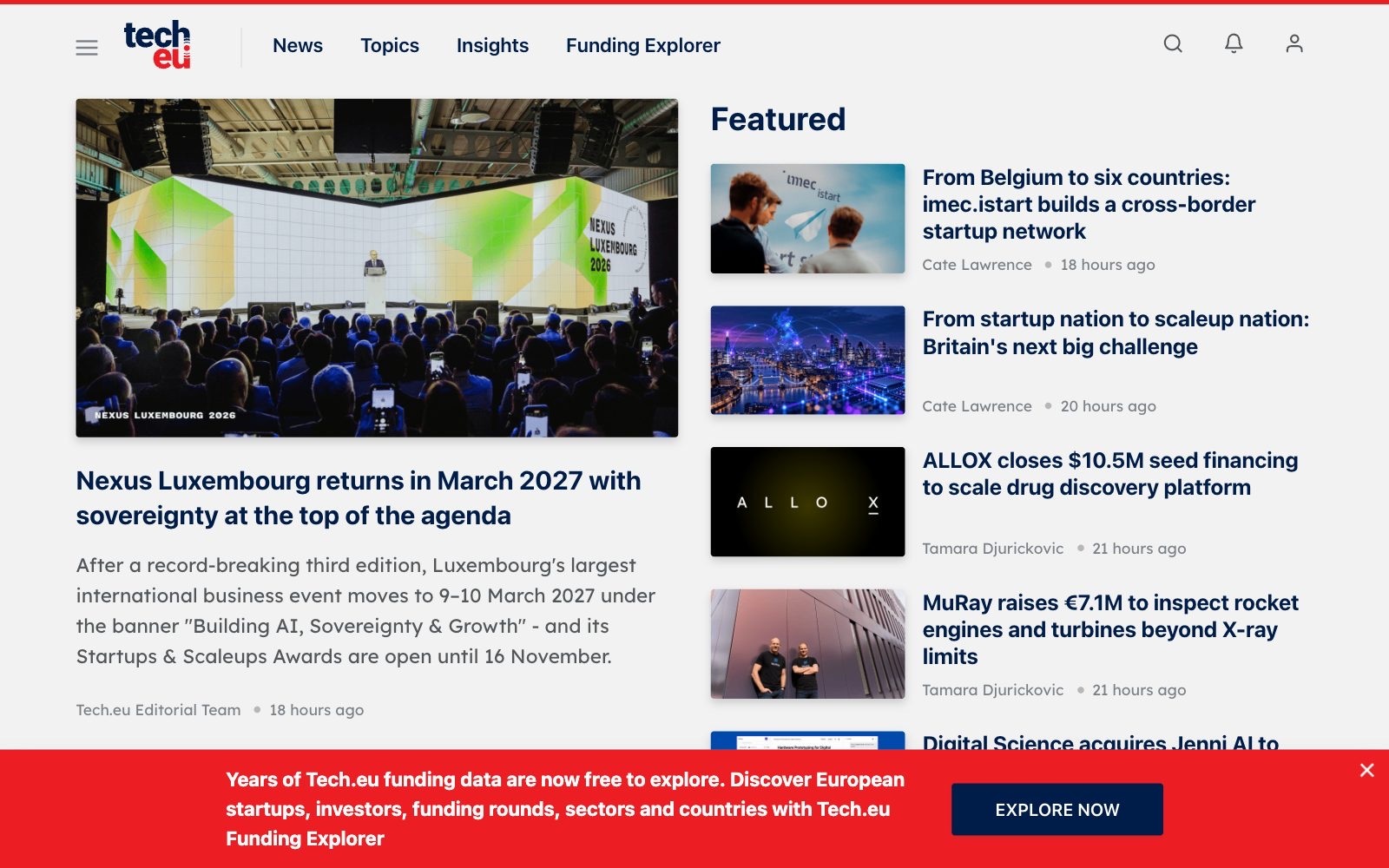
Tech.eu, part of the Webrazzi group, offers daily and weekly newsletters plus a free Funding Explorer. Its news overlaps with Sifted.
- Who writes it: the Tech.eu newsroom.
- Frequency and price: daily or weekly; no price shown.
- Read it for / Skip it if: take the weekly for a second European view; skip it if you read Sifted.
For context, read our European startup ecosystem guide by country, the European accelerators worth applying to and European funding alternatives to VC.
Which startup newsletters would I cut, and why?
All 16 earned a place on this page. They do not all belong in one inbox.
My test: if I cannot name one decision a newsletter changed in the last four weeks, I unsubscribe. Free newsletters still cost attention, the scarcest thing a founder has.
How many minutes a week should a founder spend on startup newsletters?
My budget is 60 minutes a week, about 12 minutes a weekday. Founders who are raising or running growth can stretch to 90; above 120 it is research, so book it as research. Here is the cost in time, using MY ESTIMATES of a skim read:
Both US dailies plus Stratechery Plus come to 90 minutes before a word about product, which is why daily newsletters go first. My 60-minute stack for a European B2B SaaS founder: Growth Unhinged, Tomasz Tunguz, Sifted's two weekly letters, Lenny's free previews and The Batch, about 54 minutes and $0 a week. With an engineering team, swap The Batch for The Pragmatic Engineer.
How do you keep your newsletter inbox to five?
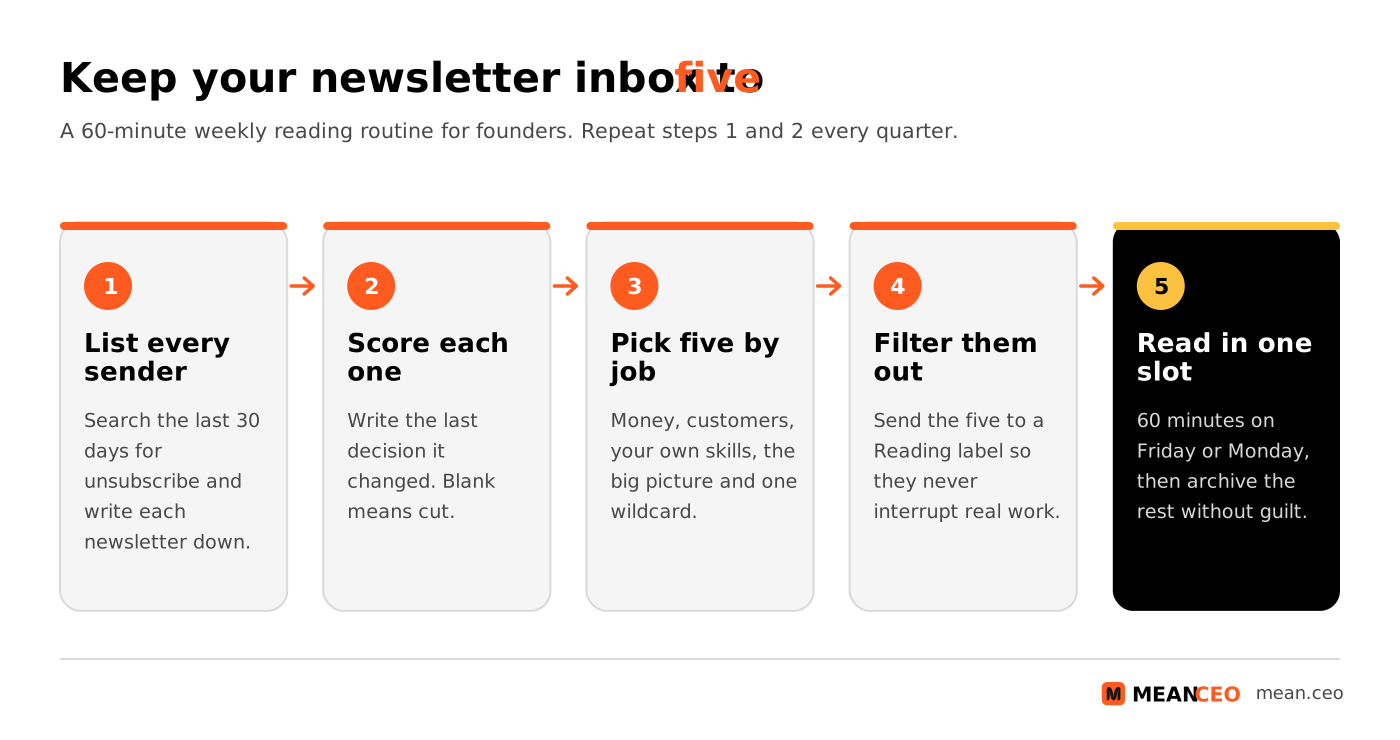
- List every sender. Search the last 30 days for "unsubscribe" and write each newsletter down.
- Score each one. Write the last decision it changed. Blank means cut.
- Pick five by job. Money, customers, your own skills, the big picture and one wildcard.
- Filter them out of the inbox. Send the five to a "Reading" label so they never interrupt real work.
- Read in one slot. Friday after lunch or Monday at 8 am, 60 minutes, then archive the rest without guilt.
Repeat steps 1 and 2 every quarter: deal letters earn their place only during a raise.
How should you read a startup newsletter?
- Read the first paragraph and every number. Skip anecdotes unless a number made you curious.
- Find one thing to do. A price to test, an investor to note, a hiring rule. Nothing by the third section means archive.
- Save one item per issue in a note called "Steal this", with the date.
- Read paid issues first. You paid, so they set the bar.
Let an AI assistant take the first pass on long issues, and keep the summaries private: newsletters are copyrighted.
Prompts to copy:
- Summarise this newsletter issue in 5 bullets, each starting with a number or a company name. Then give one action for a [B2B SaaS / marketplace / service] startup at [STAGE] in Europe.
- List every funding round in this issue in a table: company, country, amount, stage, lead investor. Mark the European ones.
- Name the one claim in this essay I should test in my business this month, how to test it in a week and what result would prove it wrong.
See also how I evaluate an AI tool before paying and my startup tool stack for operations.
Reading is research. Building is the job.
Get five fitting startup ideas in about two minutes from the free MeanCEO Business Idea Generator, map the best one on our free Lean Canvas template and see which grants and loans fit you in the non-dilutive funding finder before you read another email about VC money.
What should you do with your newsletter inbox this week?
Open the stack builder, tick two or three topics and set your real minutes. Subscribe to the five it gives you, drop everything that fails the four-week test and book a 60-minute reading slot. Raising soon? Add one US deal daily for the round, then cut it. Building in Europe? Keep Up Round and EU-Startups whatever else goes.
My monthly startup news and trends roundup covers what changed, so you can skip a few emails. And if deal letters pull you towards money you do not need, read bootstrapping versus VC funding and how to say no to VC money first.
FAQ: startup newsletters
What is the best startup newsletter in 2026?
For operators, Growth Unhinged by Kyle Poyar: weekly, free, full of pricing numbers. For product leaders, Lenny's Newsletter ($20 a month). For European founders, Sifted's Up Round (free, Fridays).
Which startup newsletters are free?
Growth Unhinged, First Round Review, Sifted's newsletters and the free tiers of Not Boring, The Generalist, Stratechery, The Pragmatic Engineer and Lenny's Newsletter. Axios Pro Rata is readable on Axios's site; Term Sheet, The Batch, EU-Startups, Tech.eu and Tomasz Tunguz show no price.
Are paid startup newsletters worth the money?
Three are, for the right reader: The Pragmatic Engineer ($15 a month) for technical founders, Stratechery Plus ($15 a month) for platform businesses and Lenny's Newsletter ($20 a month) for product leaders. Cancel any you open less than half the time.
How many newsletters should a founder subscribe to?
Five, read in one 60-minute weekly slot.
What is the best newsletter for venture capital deal flow?
Axios Pro Rata (daily) or Fortune Term Sheet (weekdays) for US deals, Sifted's Up Round for Europe. Pick one daily.
Which newsletters cover European startups?
Sifted ("125,000+ subscribers across Europe"), EU-Startups (weekly, 78,000 subscribers) and Tech.eu (daily or weekly).
What is the best AI newsletter for founders?
The Batch for one calm weekly email, Ben's Bites if you build with agents and Exponential View ($120 a year) for AI economics.
About the Author
Violetta Bonenkamp, also known as MeanCEO, is an experienced startup founder with an impressive educational background including an MBA and four other higher education degrees. She has over 20 years of work experience across multiple countries, including 5 years as a solopreneur and serial entrepreneur. Throughout her startup experience she has applied for multiple startup grants at the EU level, in the Netherlands and Malta, and her startups received quite a few of those. She’s been living, studying and working in many countries around the globe and her extensive multicultural experience has influenced her immensely.
