TL;DR: Crowdfunding platforms in Europe split into two worlds: equity platforms that sell shares under an EU licence capped at €5 million per 12 months, and reward platforms that pre-sell your product for a 5% to 7% cut plus payment fees. I checked the fee pages of 11 platforms operating today on 2 November 2026. A reward campaign that ships physical goods can leave you half of what backers pledged, and a Crowdcube Full Access round costs about 12% of the raise in platform fees before VAT and lawyers. Put your own numbers into the What you keep calculator below before you pick a site.
The listicles that rank for this keyword show US sites, 2023 prices and platforms that closed years ago. None of them tells you how much lands in your bank account.
This guide is for European tech founders and operators. For each of the 11 crowdfunding sites you get the fee as the platform publishes it, the licence behind it, where it works and MY verdict: who it suits and when to skip it. Every fee comes from the platform's own pages, opened on 2 November 2026; where a price is private, I say so.
What are crowdfunding platforms, and which type fits a startup?
A crowdfunding platform collects small amounts from many people for one project. Four models exist:
- Reward crowdfunding: backers pay now and get a product or perk later. Legally it is a presale.
- Equity crowdfunding: investors buy shares or share-like instruments in your company. In the EU the platform needs a crowdfunding licence.
- Lending or debt crowdfunding: the crowd lends your company money or buys its bonds, and you pay interest.
- Donation crowdfunding: people give with nothing in return, which suits causes better than companies.
Two more terms decide your risk. All-or-nothing means you get the money only if you hit your goal; miss it and backers are refunded, with no fees. Keep-it-all (flexible funding) means you keep whatever comes in. Every reward platform in this guide now runs all-or-nothing for new campaigns.
ESMA's market report on crowdfunding in the EU counted 181 providers that raised €4.25 billion in 2024: 58% in loans, 23% in debt securities and only 12% in equity. The average equity project raised €640,000, and 88% of investors were retail. Equity crowdfunding for startups is the smallest slice.
Still choosing between instruments? Read our breakdown of debt versus equity financing and the overview of European startup funding alternatives to VC.
How much of the money do you actually keep?
Pick reward or equity, type your target, the overfunding you expect and your costs. The calculator applies each platform's published fees (checked 2 November 2026) and shows platform fee, payment fee, other costs and the cash you keep, side by side. Every fee field is editable, so you can paste in a quote. Where a platform keeps its fee private, it shows "on request" and stays out of the totals.
Two settings matter more than the platform. Reward cost per backer decides whether a reward campaign makes money: every extra backer needs a product and a parcel. Legal and admin cost on an equity round is a fixed chunk: €15,000 is 3% of a €500,000 round and 15% of a €100,000 round.
Which equity crowdfunding platforms in Europe hold an EU licence?
Equity crowdfunding platforms in the EU need a licence under the ECSP Regulation, and it works as a passport: one national regulator authorises the platform to offer deals across the Union. On 2 November 2026 ESMA's public register listed 261 crowdfunding service providers, 239 active and 22 inactive.
1. Crowdcube: equity rounds for UK and EU companies with a customer crowd
Crowdcube Capital Ltd is authorised by the UK's Financial Conduct Authority (No. 650205), and Crowdcube Europe SL by Spain's CNMV for EU investors on crowdcube.eu, active in ESMA's register since 11 April 2022. Crowdcube publishes its full price list, which four of the other five equity platforms here do not.
- Fees as published: listing fee £4,995 (Focus, your own network) to £9,995 (Full Access, Crowdcube's investors too), success fee up to 8% (Full Access) or 5% (Focus), a 2.5% platform fee plus VAT, and a nominee fee of £750 or £1,000 a year from month 13.
- Licence and reach: FCA in the UK, CNMV with an EU passport.
- My verdict: pick it for a consumer brand whose customers already ask how to invest, and bring your own lead investor. Skip it for B2B software with 40 enterprise clients.
2. Republic Europe: the former Seedrs, one nominee line on your cap table
Republic Europe runs on the companies once known as Seedrs; its site profile lists Seedrs Limited and Seedrs Europe Limited. The homepage shows £3.1 billion of total investments and 2,546 funded deals, plus a market where investors resell private company shares. ESMA lists Seedrs Europe Limited as authorised by the Central Bank of Ireland since 6 October 2023, and the raise page promises a "single-line nominee".
- Fees as published: company fees on request. Investors pay 2.5% when they invest (capped at £/€250) and 5% carry on profit at exit.
- Licence and reach: Central Bank of Ireland (EU), FCA (UK).
- My verdict: pick it when you want your community to have an exit door later. Skip it if you need to compare costs before you spend a week applying.
3. SeedBlink: venture rounds with a public crowd tranche
SeedBlink shows more than €80 million of capital under administration and 200+ deals, mixing angel syndicates, private rounds and public crowdfunding with cap table and ESOP tools. ESMA lists it as authorised by Romania's Financial Supervisory Authority since 3 November 2022.
- Fees as published: public crowdfunding add-on €3,000 plus a 5% to 7% success fee. Private round €250 per six months plus 1.5% structuring (minimum €3,000, maximum €15,000).
- Licence and reach: Romanian licence with an EU passport.
- My verdict: pick it if you have angels and a lead in Central or Eastern Europe and want the crowd as a top-up. Skip it if the crowd is your whole round.
4. Invesdor: Dutch-licensed platform that now lists mostly bonds
ESMA's register shows Invesdor's licence held by Oneplanetcrowd International B.V., supervised by the Dutch AFM since 15 September 2022; its Austrian entity's authorisation was withdrawn on 29 March 2024. Most live offers are bonds. One equity deal shows valuation in public: Fibersail raised €1,488,020 at a pre-money valuation of €9,000,000, offering up to 21.40%. Pre-money valuation is what the company is worth before the new money arrives.
- Fees as published: not published. Investors start from €250.
- Licence and reach: Dutch AFM licence with an EU passport.
- My verdict: pick it for an impact or energy company that can pay a coupon. Skip it for pre-revenue software, which looks lonely next to 8.75% bonds.
5. Companisto: German-speaking angel crowd with investor pooling
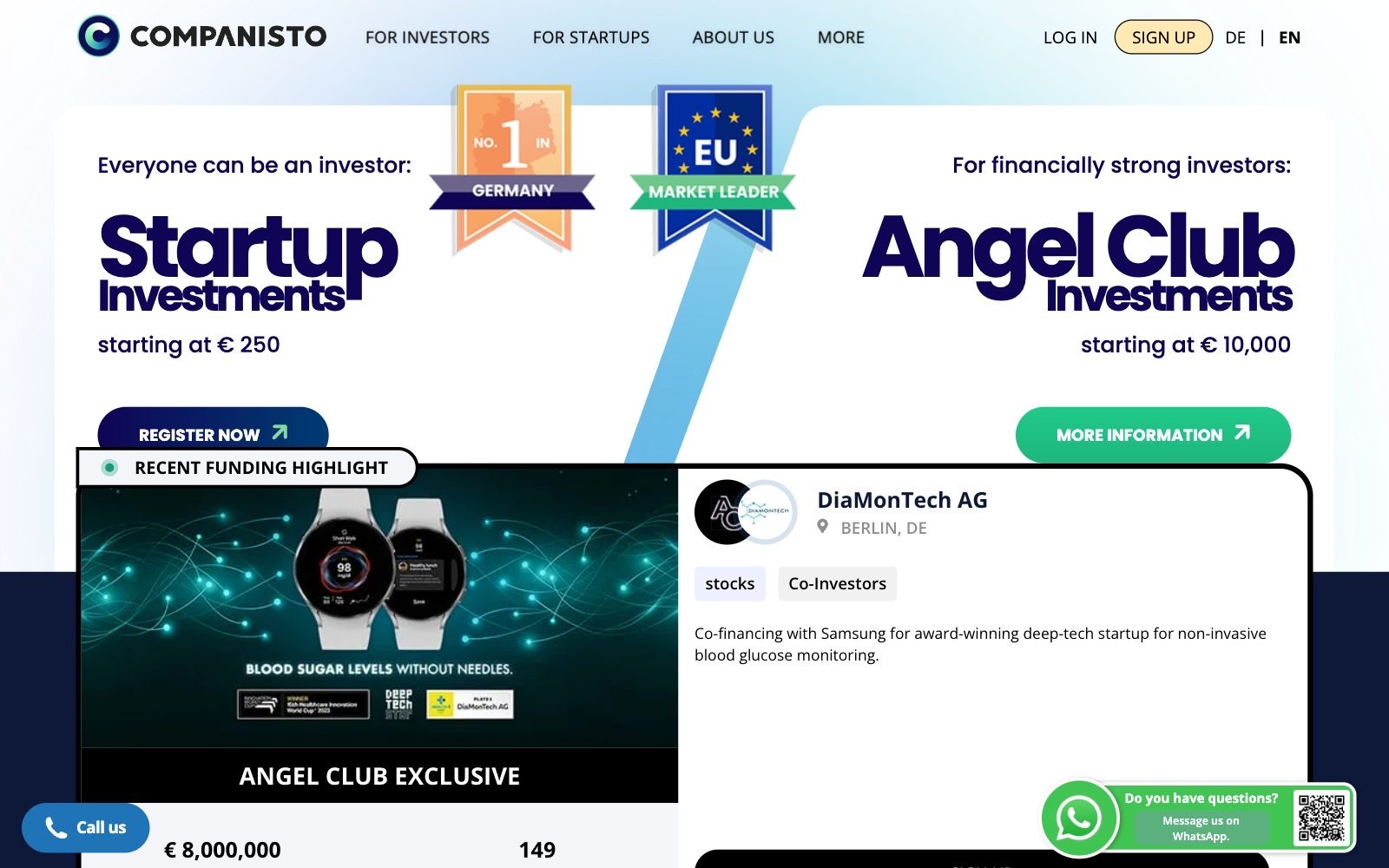
Berlin-based Companisto says it has financed more than 308 startups and growth companies. Investors start at €250 in the standard model, which allows up to €8 million a year, or €10,000 in "Angel Shares". It pools investors, and each offer states whether you buy a security or an asset investment (Vermögensanlage).
- Fees as published: not published.
- Licence and reach: no entry under its name in ESMA's register, and no licence named on its public pages. Ask which licence covers your offer.
- My verdict: pick it for a DACH startup with a story German retail investors understand. Skip it if you need investors in all 27 member states.
6. Mamacrowd: Italy's equity crowd with a fiduciary option
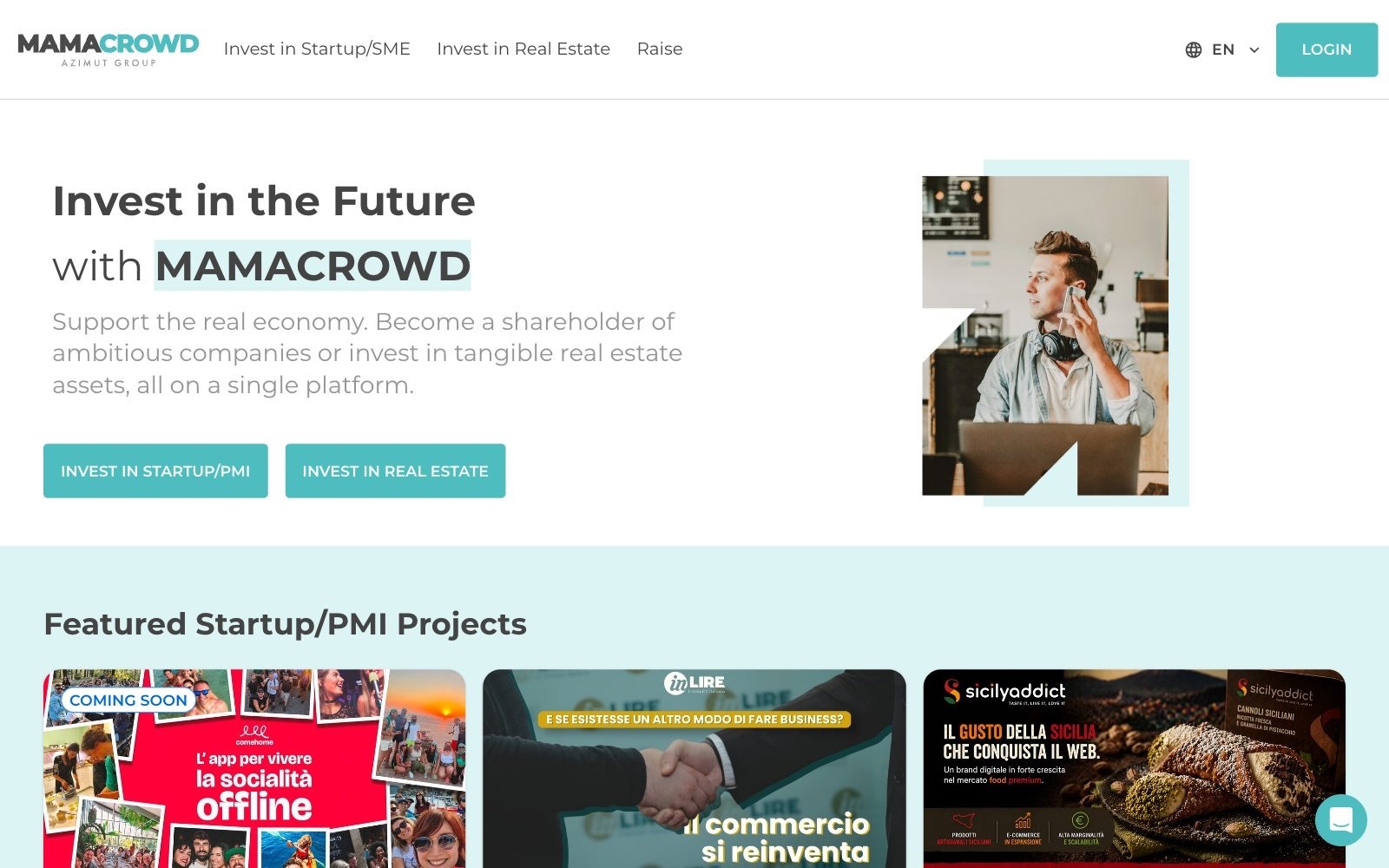
Mamacrowd, part of the Azimut Group, holds CONSOB authorisation No. 22876 of 8 November 2023. In its record year, 2021, it raised more than €59 million with over 100,000 investors. A trust company can hold the shares on investors' behalf.
- Fees as published: investors pay none. The company pays a percentage of capital raised that "varies according to the Offer", only when the round completes.
- Licence and reach: CONSOB licence with an EU passport.
- My verdict: pick it for an Italian S.r.l. or S.p.A. Skip it elsewhere: its investor guides are built for Italians.
Two names are missing on purpose. ESMA shows Wefunder EU's licence withdrawn on 28 November 2024, and Funderbeam's homepage no longer describes a live platform.
Which reward crowdfunding sites work for product launches in Europe?
Reward crowdfunding is a presale, so ESMA's report places it outside the ECSP rules. Consumer law, VAT and your delivery promises still apply. It pairs well with the presale and customer-funded growth methods we covered before.
7. Kickstarter: the default stage for creative and hardware launches
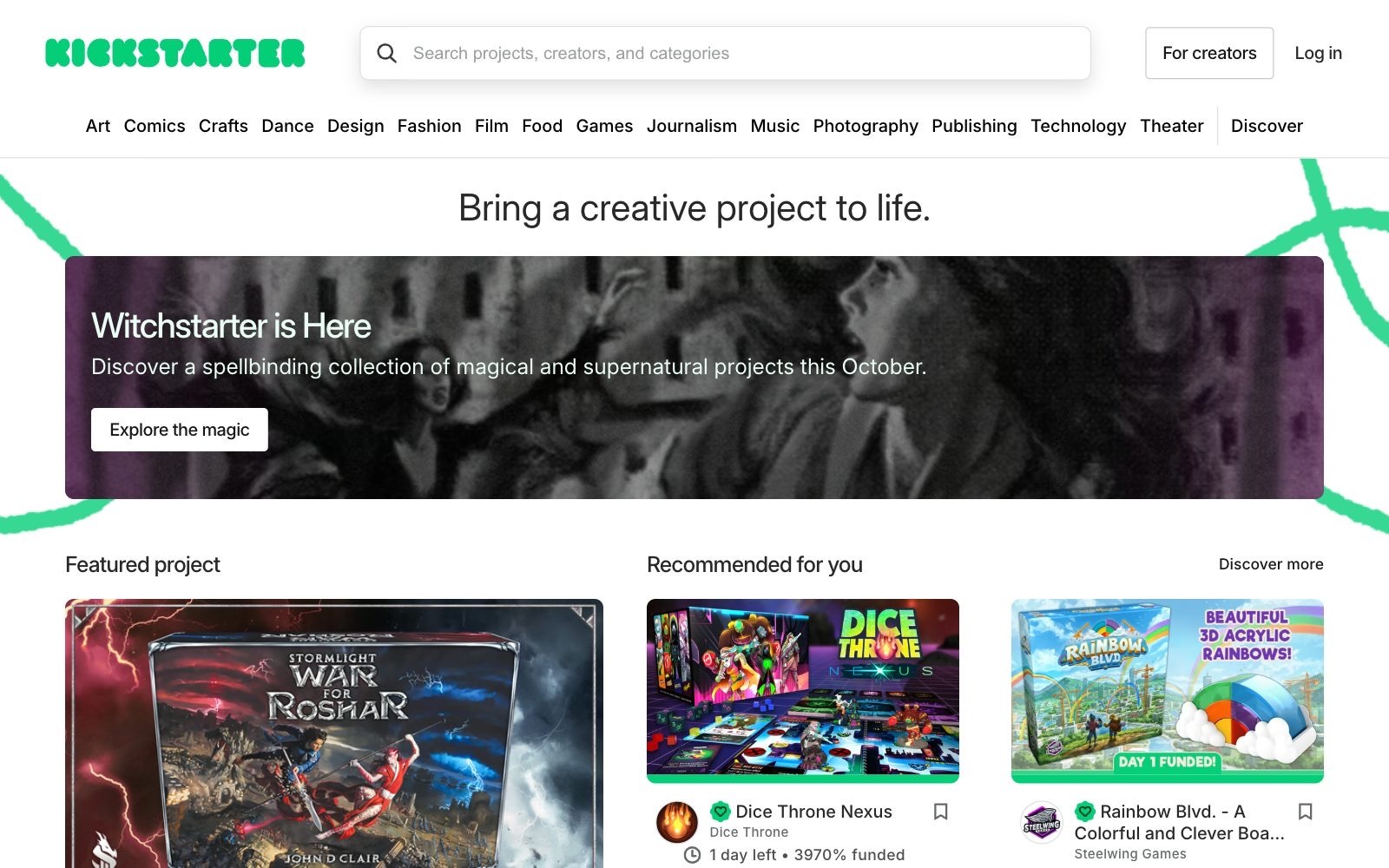
Kickstarter's fee page lists rates for 25 creator countries, 17 in Europe. It runs strictly all-or-nothing and called 2025 its "biggest year to date".
- Fees as published: 5% of funds raised plus 3% + €0.30 per pledge (Netherlands rates); pledges under €10 pay 5% + 8 cents. No fees if you miss the goal.
- Funding model and reach: all-or-nothing, 17 European countries.
- My verdict: pick it for design, games and gadgets that photograph well. Skip it for tiny pledges: fees take 11.6% of a €5 pledge.
8. Indiegogo: fixed funding only since Gamefound bought it
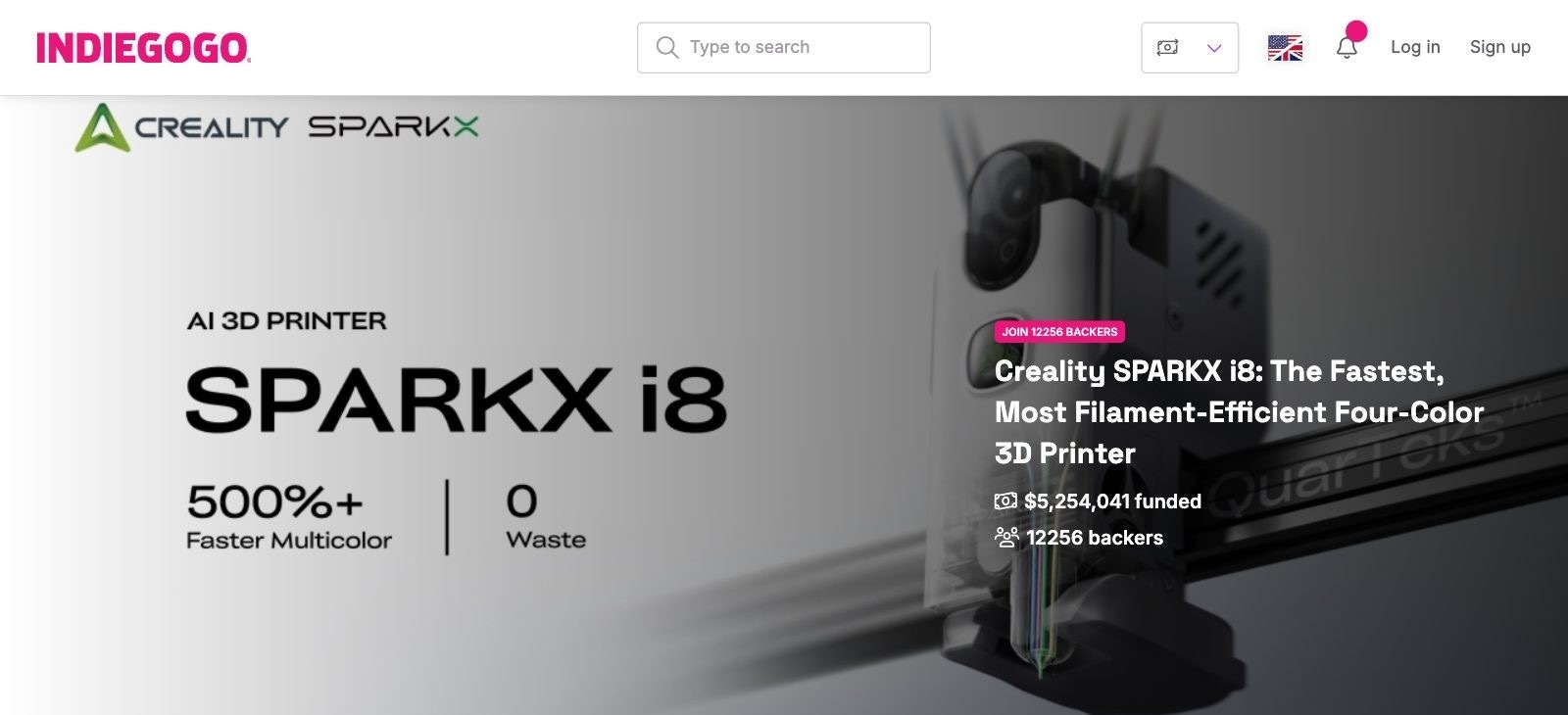
Indiegogo's help centre confirms Gamefound acquired Indiegogo on 22 July 2025. On 16 October 2025 the site moved to Gamefound's technology and flexible funding ended. The minimum goal is now $1, and supported countries changed with the new payment provider.
- Fees as published: 5% platform fee plus 3% + €0.20 per transaction.
- Funding model and reach: fixed funding (all-or-nothing).
- My verdict: pick it for consumer tech. Skip it if keep-it-all was your reason, because that option is gone.
9. Gamefound: board games, comics and geek products
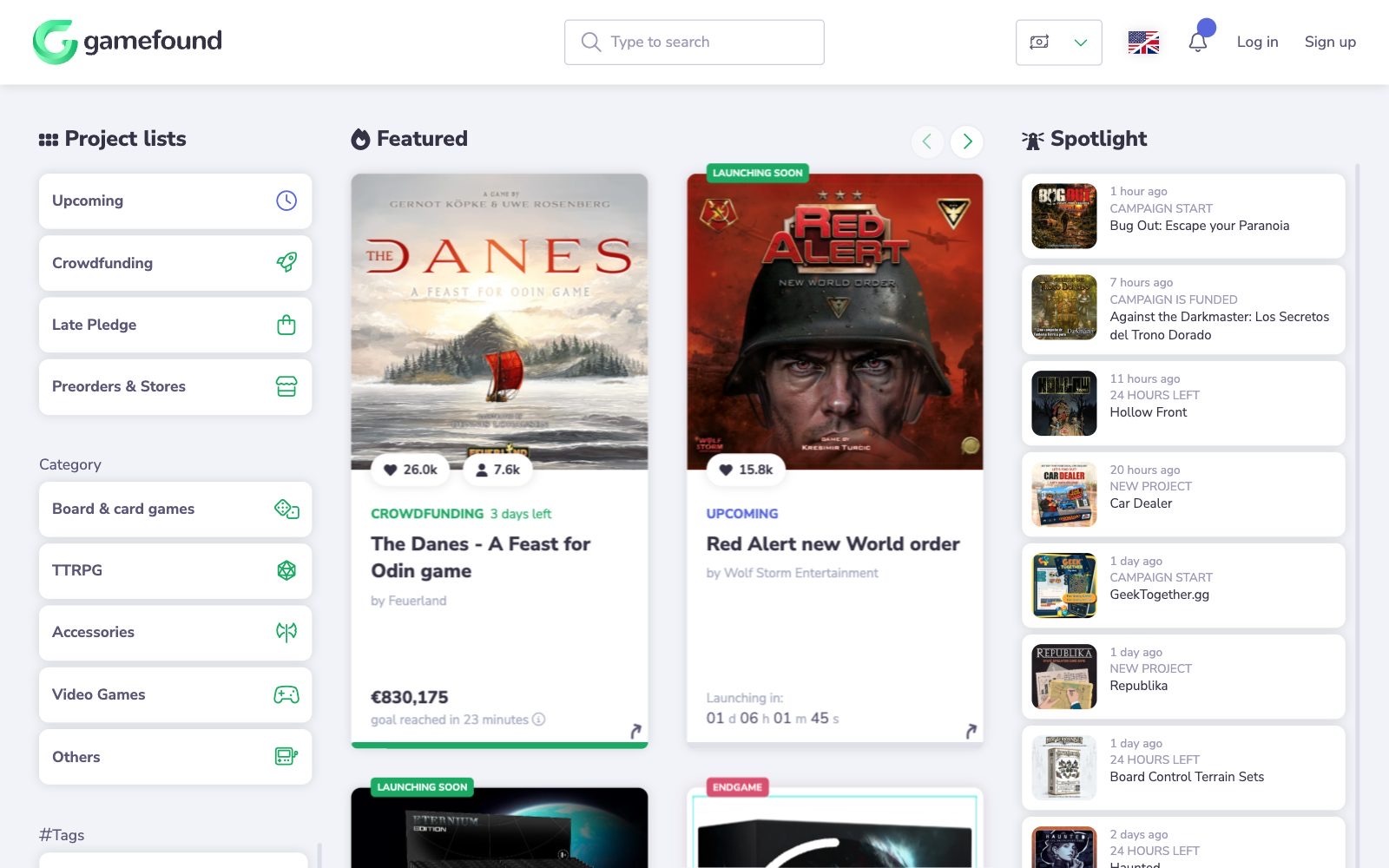
Gamefound takes board games, tabletop RPGs, miniatures, comics, books and geek gadgets from companies or individuals in countries its payment provider Adyen supports. Its own example: a $10,000 campaign pays $500 in platform fees and $320 in processing for 100 transactions, and $9,180 reaches your bank.
- Fees as published: 5% plus 3% + 0.20 per transaction; nothing if you miss the goal. The pledge manager charges the same on later payments.
- Funding model and reach: goal-based, no fees on a missed goal.
- My verdict: pick it for anything a tabletop fan buys. Skip it for SaaS.
10. Startnext: German-language crowdfunding with a 5% Basis plan
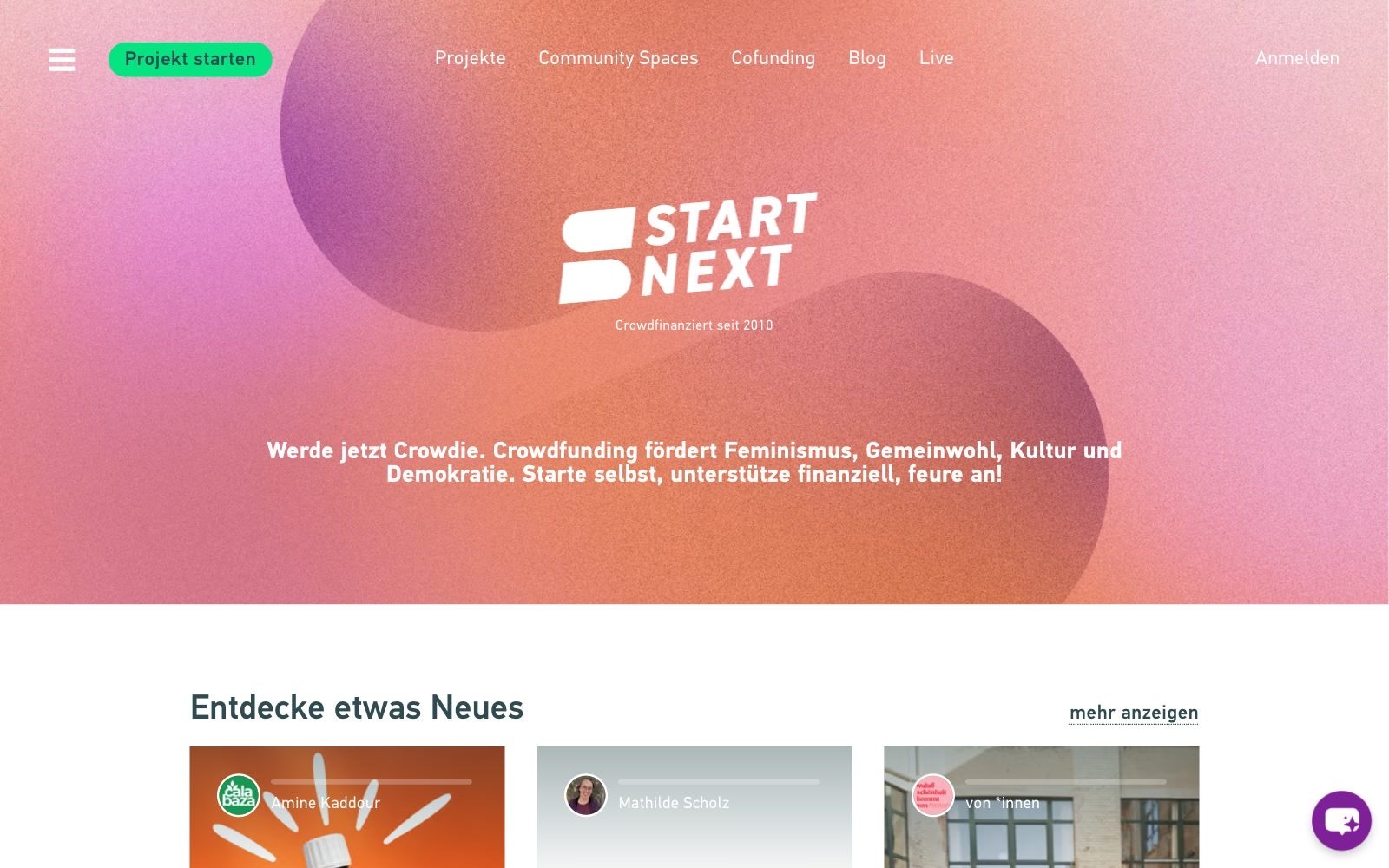
Startnext has run crowdfunding since 2010 and ended its voluntary commission model in late 2025. Since 1 April 2026 the Basis plan is cheaper and all-or-nothing only. Its analysis of 387 active projects found all-or-nothing projects reached a median 122% of their goal, flexible ones 17.3%.
- Fees as published: 5% (Basis), 11% (Pro) or 14% (Premium) for classic crowdfunding. Payments: PayPal 3.5% + €0.45, card 2% + €0.25, direct debit 0.5% + €0.35, about 3.5% overall by Startnext's estimate.
- Funding model and reach: all-or-nothing in Basis, German-speaking audience.
- My verdict: pick it for a German, Austrian or Swiss product. Skip Pro unless you need its services; 11% is more than double Basis.
11. Ulule: presales with a commission that falls as you grow
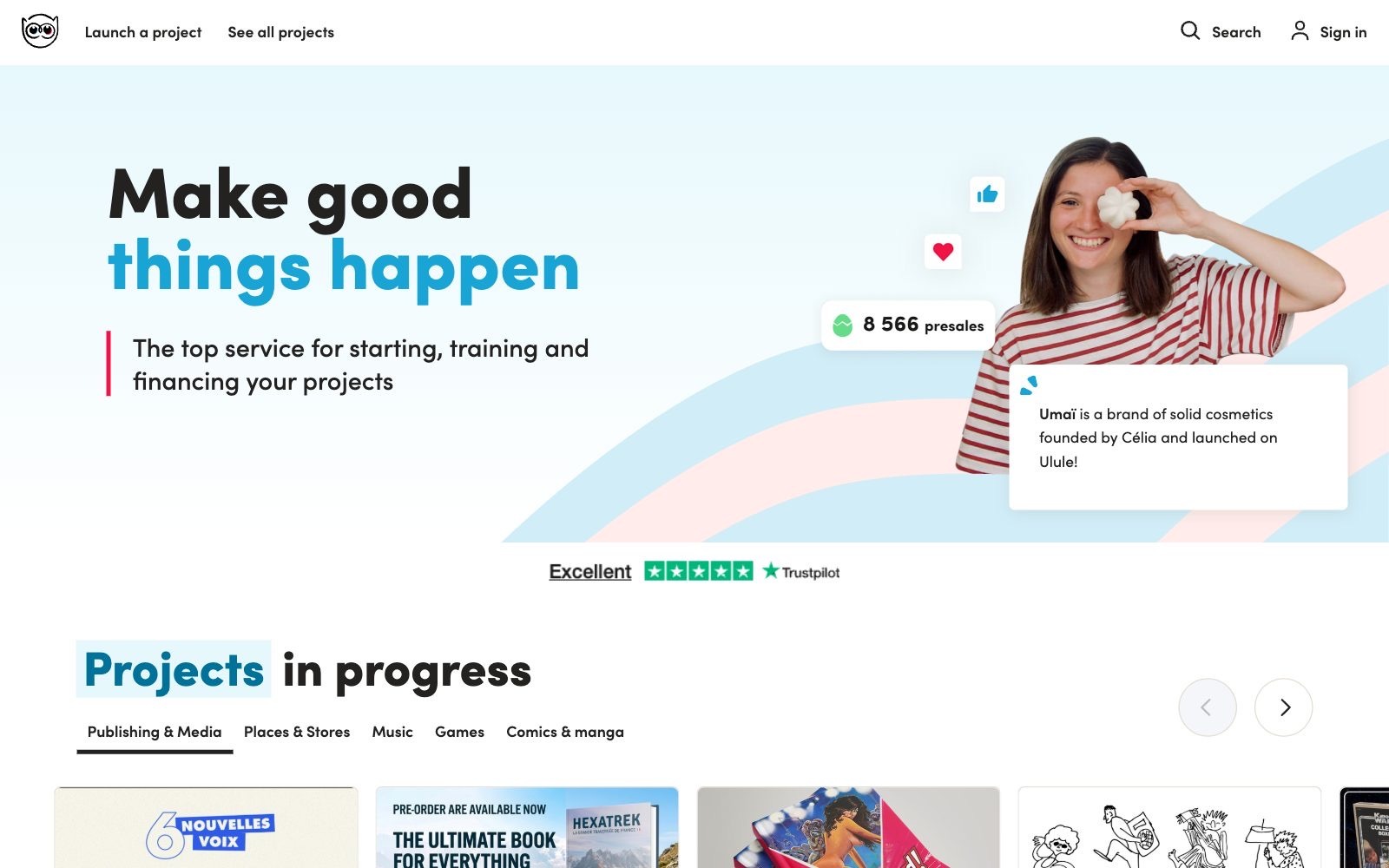
French platform Ulule runs reward campaigns all-or-nothing and lets you set the goal as a number of presales. Since 17 April 2025 backers pay a service fee of €0.10 + 2.2% on top, which its terms say does not reduce what the creator receives.
- Fees as published: 6.67% excl. VAT on card payments up to €100,000, stepping down to 5.83%, 5% and finally 4.17% above €500,000. The commission covers payment processing.
- Funding model and reach: all-or-nothing, strongest in French-speaking Europe.
- My verdict: pick it for French or Belgian launches and campaigns above €100,000. Skip it if your backers are mostly American.
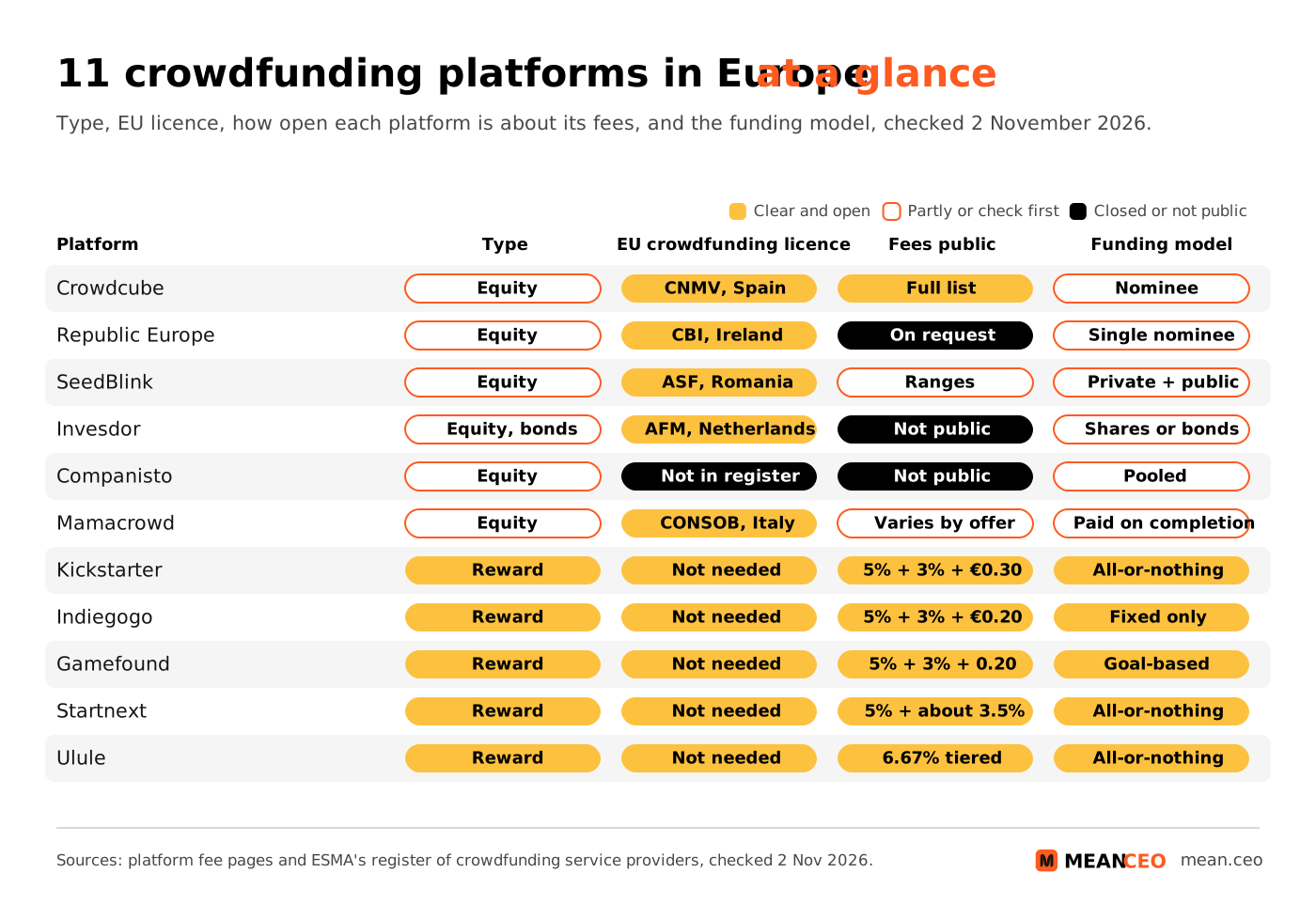
How do the 11 crowdfunding platforms compare side by side?
Sources: platform fee pages and ESMA's ECSP register, checked 2 November 2026.
What do the EU crowdfunding rules (ECSP) require from founders and investors?
ECSP means European crowdfunding service provider. Regulation (EU) 2020/1503 has applied since 10 November 2021 and covers equity, debt and loan crowdfunding for businesses. Five rules shape your round:
- €5 million per 12 months. Offers above €5,000,000 by one project owner over 12 months fall outside the Regulation (Article 1), into prospectus territory.
- A KIIS for every offer. The project owner writes the investment information sheet of Article 23, the KIIS, at most six A4 pages. Treat it as a second pitch deck with legal liability.
- An entry test for non-sophisticated investors. A non-sophisticated investor is anyone who does not qualify as sophisticated: most of your fans. Article 21 makes the platform test their knowledge and simulate their ability to bear a loss of 10% of net worth.
- A risk warning above €1,000. Before such an investor puts in more than the higher of €1,000 or 5% of net worth, they get a warning, give explicit consent and prove they understand the risk.
- A four-day reflection period. Article 22 lets them cancel within four calendar days, with no reason or penalty.
That last rule matters on closing day: money pledged in the final days stays soft for four more. Plan your lead's commitment around it, and keep your due diligence folder ready before the platform's checks start.
What does crowdfunding really cost beyond the platform fee?
The platform fee is the smallest problem. The full stack:
- Platform fee: 5% at Kickstarter, Indiegogo, Gamefound and Startnext Basis; 6.67% excl. VAT at Ulule; up to 8% plus 2.5% at Crowdcube.
- Payment processing: 3% plus a fixed amount per pledge on most reward sites. On 400 pledges, Kickstarter's €0.30 adds €120.
- Legal and nominee costs: new articles, a shareholder agreement, the KIIS, and at Crowdcube a £1,000 yearly nominee fee from month 13.
- Reward fulfilment: product, packaging, shipping, customs and replacements. This line sinks campaigns.
- Marketing: ads, video, photos and the weeks spent building a list.
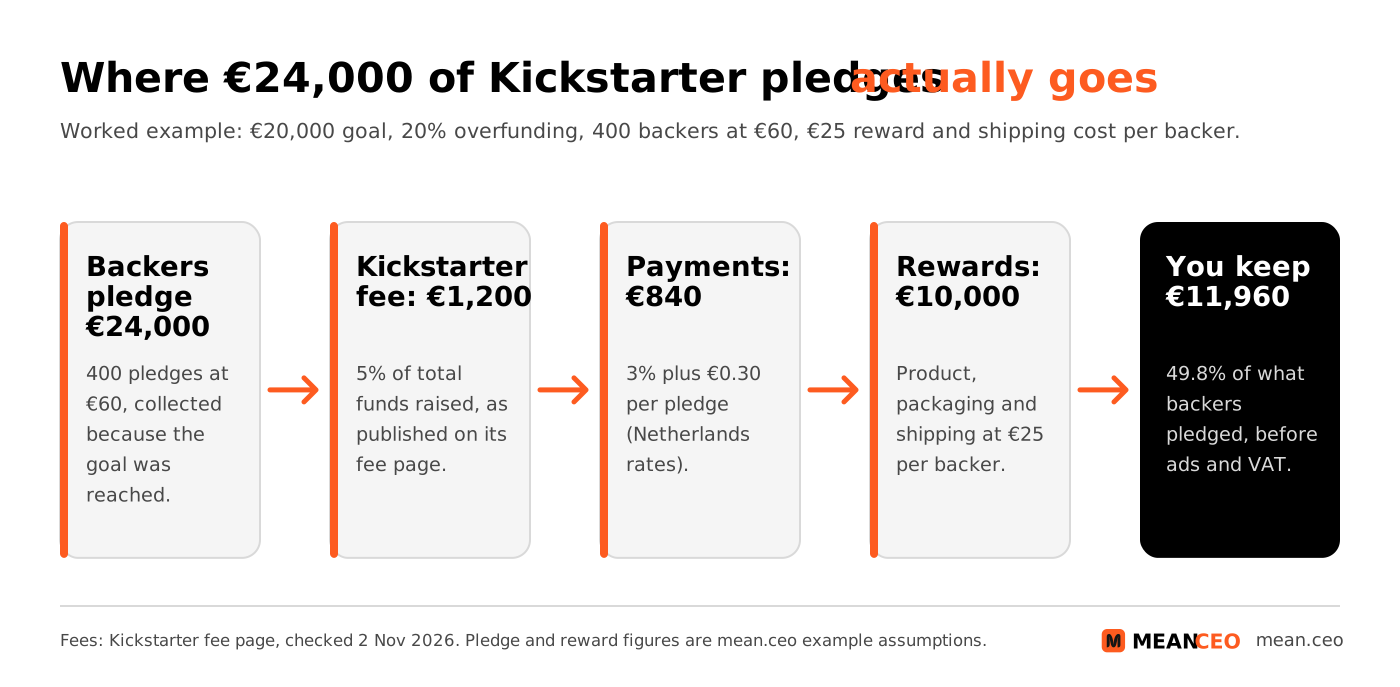
The example uses Kickstarter's published fees and my assumptions: a €20,000 goal, 20% overfunding, a €60 average pledge and €25 per backer for reward and shipping. You collect €24,000 and keep €11,960, or 49.8%. Raise the reward cost to €35 and you keep €7,960.
Equity is simpler and still painful. A £600,000 Full Access round on Crowdcube pays £9,995 + £48,000 + £15,000 = £72,995, about 12.2%, before VAT and lawyers. SeedBlink's public tranche on €600,000 costs €33,000 to €45,000. Compare that with a friends and family round, where the cost is mostly your time.
Does equity crowdfunding hurt your next VC round?
The facts first. A crowd round adds hundreds of small shareholders, and platforms handle them with a nominee structure: one company holds the shares in its own name for all crowd investors, so your cap table shows one line. Republic Europe sells exactly that, Crowdcube charges a yearly nominee fee for it, Companisto pools investors and Mamacrowd offers a fiduciary service.
My opinion, as a serial founder:
- A nominee line removes the cap table objection. Pricing, governance and noise remain.
- Pricing: a crowd round sets a public valuation. Price it high to please the crowd and your next round becomes flat or down, in front of every investor.
- Governance: read the nominee's rights. Pre-emption, information and drag-along clauses decide whether a VC lawyer spends an hour or a week on your file.
- Noise: a thousand investors email you when the update is late. Budget for investor relations before launch.
- My rule: crowdfund equity when customers are your best channel and the crowd tops up a professional lead. Skip it if you need a VC within 12 months and your valuation is a guess.
Before you set the price, run our startup valuation guide, compare SAFE agreements and convertible notes, and set any option pool first, as our piece on equity and stock option plans explains.
How do you run a crowdfunding campaign that fills up?
Platforms convert the crowd you bring. My sequence:
- Validate for under €1,000 with a landing page, a price and 50 conversations, as in our guide to validating a startup idea cheaply.
- Write the business on one page with the free lean canvas template, so page, KIIS and pitch tell one story.
- Build a waitlist using waitlist tactics that convert.
- Secure the first 30% before day one: a lead investor for equity, a primed waitlist for rewards.
- Price rewards in the calculator at the real landed cost. My rule: add 15% for breakage and returns.
- Prepare the deck and video. Study our pitch deck examples, slide by slide.
- Plan every week, with press, partner posts and product news for the middle weeks.
- Write the after-campaign plan using the product launch checklist.
For storytelling, our earlier guides on crowdfunding success secrets and proven crowdfunding strategies still apply.
Copy and adapt these.
- Campaign page outline: Problem in one sentence. Why you. Product in one photo and one GIF. What the money pays for, in euros. Reward tiers with delivery months. Risks and how you handle them. FAQ.
- Launch-morning message: "We are live. The first 100 backers get [reward] at [price]. You asked for this in [month]; today you can make it happen: [link]."
- Mid-campaign update: "We hit [x]% in [y] days. Here is this week's factory photo, and the one thing that gets us to the next tier: forward this to one friend who [problem]."
- AI prompt for your KIIS draft: "Act as an EU crowdfunding lawyer. Using my lean canvas and financials below, draft the business description and risk section of a KIIS under Regulation (EU) 2020/1503, Article 23. Flag every claim I must back with a document."
- AI prompt for reward pricing: "Here are my unit cost, packaging, shipping zones and VAT rates. Calculate the landed cost per reward tier for backers in Germany, France and the Netherlands, and tell me which tier loses money."
Check non-dilutive money before you sell equity. The free mean.ceo non-dilutive funding finder lists grants, competitions and programmes your startup qualifies for. Then place the round in your funding sequence from pre-seed to Series A and compare it with other funding sources that reduce dilution.
Which crowdfunding platform should you pick?
Start from what you sell, then the country, then the fee. A physical product with a strong photo goes to Kickstarter or Indiegogo, a tabletop game to Gamefound, a German or French community product to Startnext or Ulule. For equity, Crowdcube is the only platform here that shows every price up front, Republic Europe gives investors a way out later, and SeedBlink, Invesdor, Companisto and Mamacrowd make sense when their home market is yours.
Then set your real landed reward cost in the calculator. If you keep under 75%, fix the rewards or the price before launch. Founders who compare bootstrapping and VC funding honestly tend to raise less, later and on better terms.
FAQ: crowdfunding platforms
What is the best crowdfunding platform for startups in Europe?
For equity, Crowdcube publishes the fullest fee list and holds an EU licence through Spain's CNMV. For reward campaigns, Kickstarter lists rates for 17 European countries.
How much do crowdfunding platforms charge?
Reward platforms take 5% to 6.67% plus about 3% payment processing and a fixed fee per pledge. Crowdcube charges up to 8% success fee, a 2.5% platform fee and a listing fee from £4,995.
What is the maximum you can raise through equity crowdfunding in the EU?
€5 million per project owner over 12 months under Regulation (EU) 2020/1503.
Is Kickstarter all-or-nothing?
Yes. Miss the goal and backers pay nothing, and Kickstarter collects no fees.
Does Indiegogo still offer flexible funding?
No. It ended on 16 October 2025, when Indiegogo moved to Gamefound's technology.
What is an ECSP licence?
An EU licence for crowdfunding service providers under Regulation (EU) 2020/1503. One national regulator grants it, and it covers the whole EU. ESMA keeps the public register.
Can investors cancel an equity crowdfunding investment?
Non-sophisticated investors can revoke within four calendar days, with no reason or penalty.
Does equity crowdfunding scare off VC investors?
A nominee keeps the cap table to one line. A high public valuation is the bigger risk.
About the Author
Violetta Bonenkamp, also known as MeanCEO, is an experienced startup founder with an impressive educational background including an MBA and four other higher education degrees. She has over 20 years of work experience across multiple countries, including 5 years as a solopreneur and serial entrepreneur. Throughout her startup experience she has applied for multiple startup grants at the EU level, in the Netherlands and Malta, and her startups received quite a few of those. She’s been living, studying and working in many countries around the globe and her extensive multicultural experience has influenced her immensely.
