TL;DR: European Startup Events in 2026, Your Fast Track to Funding & Networking
Four events give bootstrapped founders the most for their time and money: VivaTech (Paris) for corporate clients and press, Bits & Pretzels (Munich) for relaxed investor meetings and a free startup ticket, Latitude59 (Tallinn) for a small, investor-dense crowd, and the EU-Startups Summit (Malta) for early-stage pitching. All four have confirmed their 2027 dates. Pick one goal per event, book meetings in the event app before you travel and follow up within 48 hours.
💡 Dive deeper into Europe's unique startup climate with the European Startup Ecosystem Guide. Pick the best location for your next big move!
European Startup Community Events Worth Attending (2026)
The European startup ecosystem in 2026 is thriving with high-impact community events that fuel collaboration, provide insights, and offer invaluable networking opportunities for founders, investors, and enthusiasts alike. From tech festivals in Paris to pitch battles in Vienna, the continent is a buzzing hub of entrepreneurial energy. As a female founder who has bootstrapped multiple ventures and navigated the complexities of EU grants, I can confidently say that prioritizing the right events can be a game-changer for startup growth.
“Startup events aren’t just about networking; they’re a tool for discovery, refinement, and momentum. The founders who use them strategically build lasting advantages.”
Get Visibility in European Media
Struggling to get your startup featured?
👉 Learn how European media covers startups
Which European Startup Events Should Female Founders Prioritize?
Not all events are created equal, especially if you are a female entrepreneur who’s bootstrapping and focusing on maximizing ROI for your investment of time and money. I’ve laid out the events with the clearest value for founders, with the dates of the 2026 editions and the next editions already confirmed for 2027. All figures come from the events’ own websites.
1. VivaTech: Europe’s Biggest Startup Stage
Location: Paris Expo Porte de Versailles, France
2026 edition: 17–20 June 2026
Next edition: 16–19 June 2027
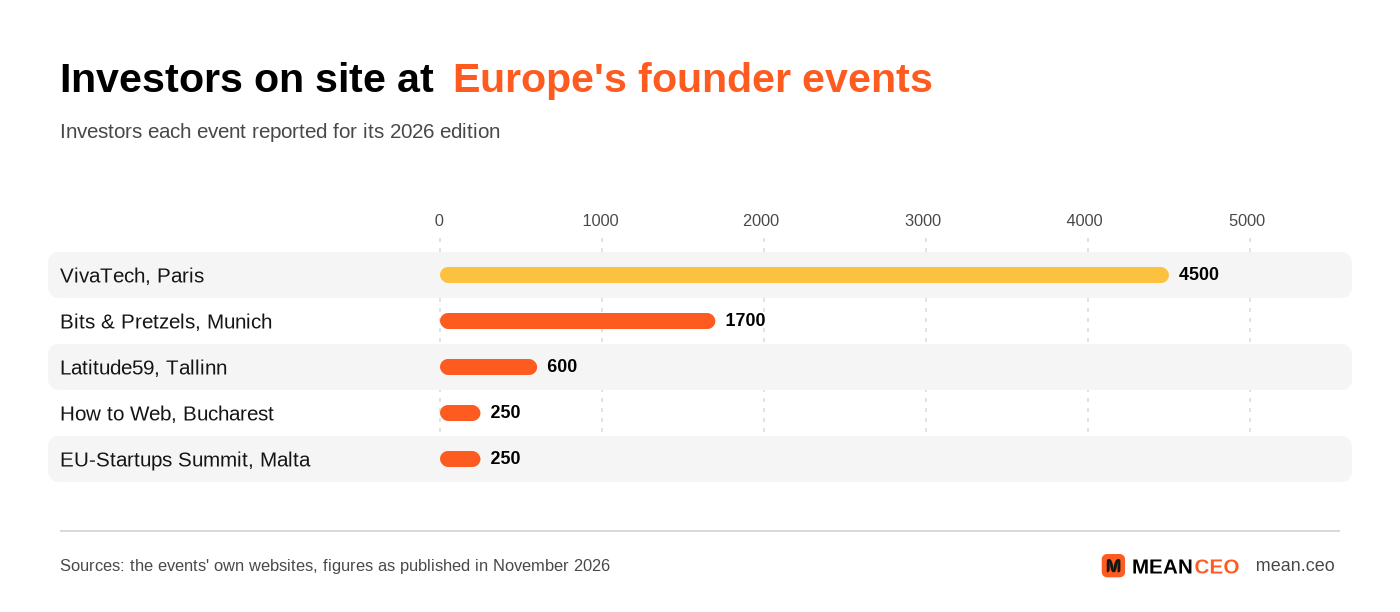
Why attend: VivaTech is Europe’s biggest tech show. Its tenth edition in 2026 drew about 200,000 visitors from 165 countries, with more than 15,000 startups, and the organisers say over 4,500 investors attend. It suits bootstrapped startups looking for corporate clients, partners or press rather than a quiet investor chat.
For founders, the useful parts are free with a pass: Investors Office Hours give you a 15-minute pitch slot with a fund, first come, first served; in the Investors Reverse Pitch, more than 30 funds explain on stage what they invest in; and the Startup Challenges let you apply to work with a large company. The startup pass is paid and sold for young companies only (under 8 years old, fewer than 100 staff), so check the early rates in autumn.
2. Bits & Pretzels: Oktoberfest Meets Startups
Location: Munich, Germany (ICM trade fair centre, plus a day at the Oktoberfest)
2026 edition: 28–30 September 2026
Next edition: 27–29 September 2027
Why attend: This three-day founders festival is capped at 7,500 people, with more than 3,000 founders and 1,700 investors, and it is the main meeting point for the DACH region. On day three, the famous Table Captain format seats you at an Oktoberfest table of seven around an expert, founder or investor that you pick in advance.
Two things make it a strong pick for bootstrappers. Bits & Pretzels offers a free startup ticket (a three-day pass with the matchmaking tools) for startups founded in the last ten years with a scalable business model and one to ten employees, and every attendee gets two guaranteed meeting sessions. The festival also runs a Female Lunch Reception for women founders, limited to 100 places with registration.
3. Latitude59: Your Gateway to Baltic Breakthroughs
Location: Tallinn, Estonia (Kultuurikatel)
2026 edition: 20–22 May 2026 (main programme 21–22 May)
Next edition: 19–21 May 2027
Why attend: Latitude59 is Estonia’s flagship startup conference and much smaller than the Paris or Lisbon giants. The 2026 edition had more than 3,000 attendees from 70 countries, including 600 investors and 800 startup representatives, so investors make up an unusually large share of the room.
Its startup programme includes a pitch competition with a €1 million main prize (more than €4.5 million has been invested on its stage since 2018), matchmaking in the event app from mid-May and a matchmaking area on site. A demo booth costs €899 plus VAT, and volunteering is a low-cost way in.
4. EU-Startups Summit: Actionable Insights and Funding Opportunities
Location: Mediterranean Conference Centre, Valletta, Malta
2026 edition: 7–8 May 2026
Next edition: 13–14 May 2027
Why attend: The EU-Startups Summit is built for early-stage founders. Its organisers report about 2,400 attendees, 1,200 founders, 250 investors and 8,500 meetings. As a first-time founder, you can benefit from the pitch competition and fireside chats with seasoned entrepreneurs. Make use of the event app to book meetings before you arrive, minimizing wasted opportunities.
For the pitch competition, 15 early-stage startups are picked from more than 1,600 applications and pitch for three minutes each to an investor jury, for a prize package worth €1 million. Applications for 2027 open in December 2026.
5. Slush: Helsinki’s Founder-First Conference
Location: Helsinki, Finland
2026 edition: 18–19 November 2026
Next edition: dates not yet announced
Why attend: Slush is run for founders and investors rather than for exhibitors. More than 12,000 people attend, the startup ticket (€395 including VAT in 2026, sold out) included Investor Office Hours, and about 1,600 volunteers help run it, which is another way in on a tight budget.
6. How to Web: Affordable Access to Central and Eastern Europe
Location: Bucharest, Romania
2026 edition: 6–8 October 2026
Next edition: 5–7 October 2027
Why attend: How to Web gathered more than 3,000 participants in 2026, including 500 founders and 250 investors, and runs the Spotlight pitch for early-stage startups. Startup tickets for 2027 started at €89 (super early bird, by application), which makes it one of the cheapest serious founder events in Europe.
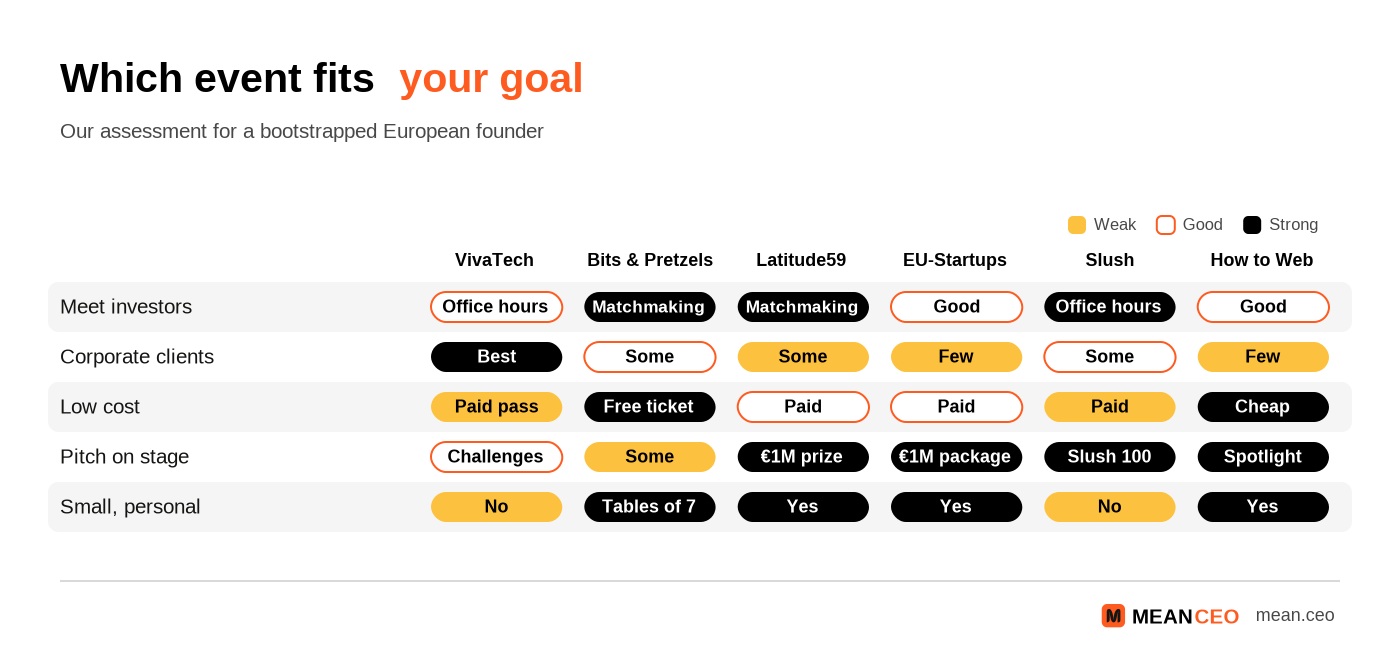
European Startup Events at a Glance
Here is how the six events compare, using each event’s own figures for its 2026 edition.
Source: the events’ official websites, checked on 25 November 2026.
Build Strategic Partnerships
Discover the game-changing potential of strategic alliances.
👉 Learn how to create lasting partnerships
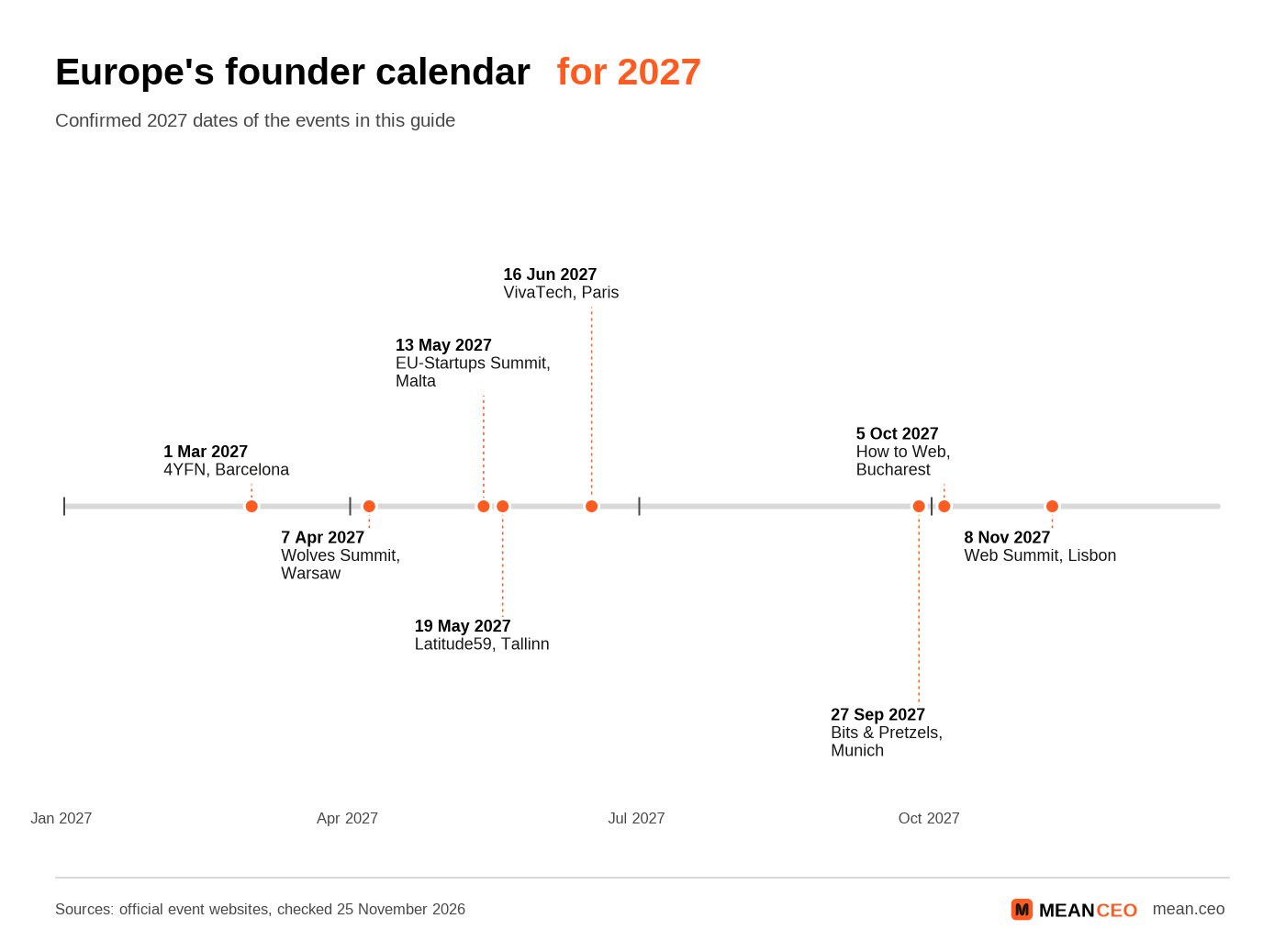
Plan Your 2027 Event Calendar Now
The best tickets, pitch slots and free places go months ahead, so the time to plan next year is now. These 2027 dates are confirmed by the organisers. Europe’s founder calendar has two peaks: May to June, when Malta, Tallinn and Paris follow each other, and the autumn, from Munich in September to Lisbon in November.
Ticket terms change often, so check each event’s own page before you book. For every country and city, see our sister site’s guide to the best startup events in Europe. For the first event of the year, our 4YFN 2027 cost guide compares every pass, the cheapest ways in and a sourced Barcelona trip budget.
How Should Female Founders Prepare for Startup Events in 2026?
Strategic preparation can define whether you merely attend or maximize every minute. Here’s my actionable guide to make startup events worth your while:
- Research Before You Go: Familiarize yourself with the speaker lineup and plan which sessions match your goals, be it connecting with investors or learning about AI advancements.
- Leverage Tools: Use the event app to pre-schedule meetings or discover like-minded attendees. Most large events open their matchmaking a few weeks before the doors do, so the best slots go early.
- Apply for the free extras: Pitch competitions, office hours, startup tickets and volunteer places all have their own deadlines, often months ahead.
- Practice Your Pitch: Convince investors within 60 to 120 seconds by addressing how your product solves problems, especially for niche gaps like gender-lens investments.
- Follow Up Immediately: Send personalized emails or schedule virtual coffee meetings within 48 hours to nurture relationships post-event.
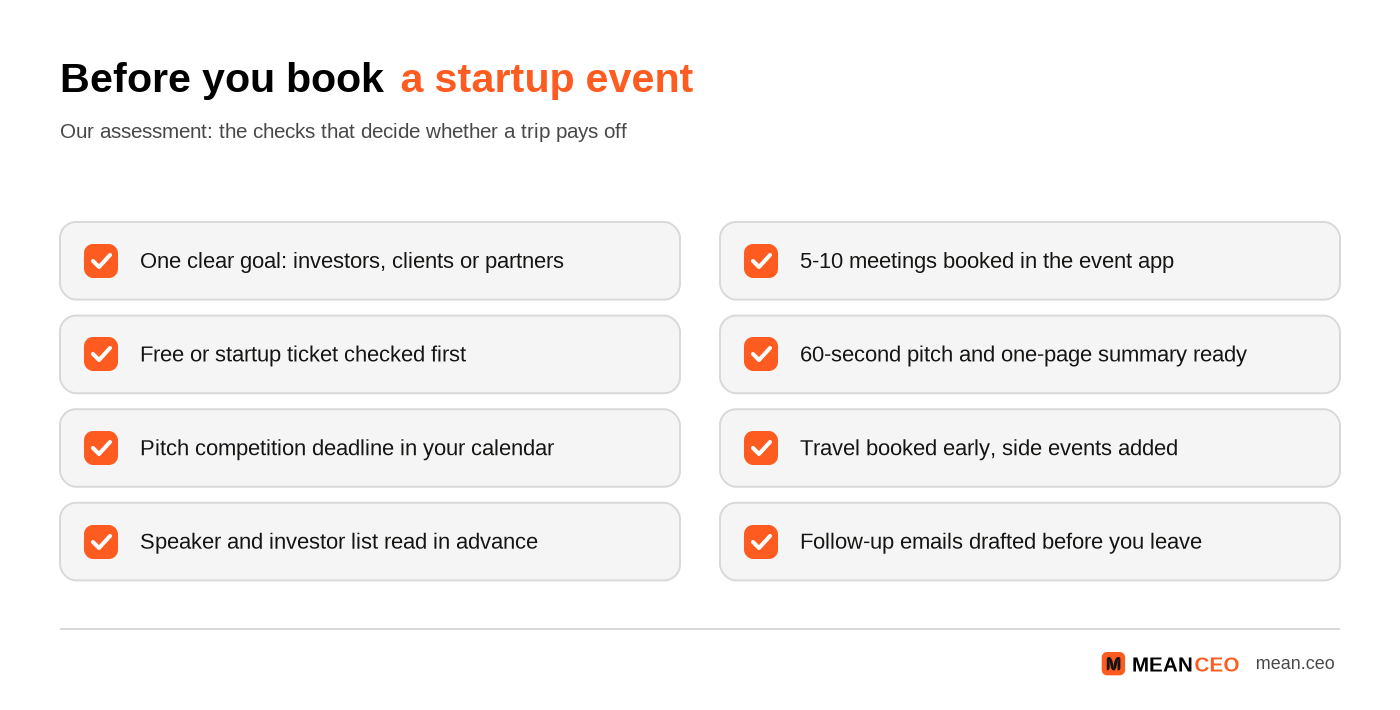
Your startup’s growth will not hinge on luck but precision in execution. Pre-planned touchpoints at startup events make all the difference.
A simple follow-up plan keeps the contacts you made from going cold. This is the rhythm I use after an event.
Mistakes Female Entrepreneurs Often Make at Events (and Solutions)
- Networking Too Randomly: Without defined objectives, founders often waste time. Instead, identify top priorities (investor introduction, tech demo feedback) and focus your efforts.
- Paying full price by default: Free startup tickets, volunteer places and early rates exist at several of these events. Check them before you pay for a standard pass.
- Underestimating Tech Integration: Too often, I meet founders who ignore zero-code or AI tools at expos. Use these to build live demos or onboard customers during the events.
- Focus on Collecting, Not Connecting: Gathering contacts without building meaningful relationships is a missed opportunity. Fast-track connections with key decision-makers through program facilitators.
If big rooms drain you, read our guide to female founder networking: quality over quantity and these CEO networking strategies that don’t feel salesy.
Conclusion: The Next Step for Founders Building Beyond These Events
Attending the right European startup community events in 2026 is more than checking off calendar entries. It’s a strategic move to understand trends, resonate with investors, and connect with peers who share your challenges. In a landscape crowded with opportunity, female bootstrappers must invest in actions that offer the highest return.
For founders keen to dig deeper into what makes Europe’s startup fabric so unique, check out the country-by-country startup ecosystem handbook. Alternatively, dive into how community-first marketing strategies create scalable traction through authentic relationships by reading Community-First Marketing.
Boost Your SEO by Sharing Unique Insights.
Optimized founder content can rank on platforms like Google, ChatGPT, and more. More and more traffic is coming from Perplexity, ChatGPT, Grok and other AI tools.
👉 Rank on ChatGPT
People Also Ask:
What are the key startup events in Europe for 2026?
The biggest founder events in Europe in 2026 were 4YFN in Barcelona (2–5 March), the EU-Startups Summit in Valletta (7–8 May), Latitude59 in Tallinn (20–22 May), VivaTech in Paris (17–20 June), Bits & Pretzels in Munich (28–30 September), How to Web in Bucharest (6–8 October), Web Summit in Lisbon (9–12 November) and Slush in Helsinki (18–19 November). All except Slush have already confirmed their 2027 dates, listed in the calendar above.
How can female entrepreneurs stand out at European startup conferences?
Female founders can stand out by leveraging their unique perspectives and addressing untapped markets. Preparation is vital. Develop a clear, concise pitch that highlights the social and economic impact of your startup. Apply for pitch competitions and speaking slots that showcase your expertise, and book meetings through the event app before you arrive. Representation matters; bringing gender-inclusive vision to discussions leaves a strong impression on attendees and sponsors.
Which startup networking events emphasize female empowerment?
Several large events run dedicated formats for women, such as the Female Lunch Reception at Bits & Pretzels and the Women in Tech programme at Web Summit. For events built around women founders, see our sister site’s guide to the top startup events for women in tech. These gatherings help women founders connect with like-minded peers and potential investors.
What industries offer more opportunities for female founders in Europe?
Women entrepreneurs in Europe often succeed in industries such as healthcare technology, sustainability-focused businesses, and educational platforms. Sustainable solutions receive heavy government and private sector backing, while healthcare’s evolving landscape presents market gaps that female founders can address with differentiated services. Education-focused startups benefit from digital innovation in remote learning and skill development. Ventures rooted in AI applications also thrive as tools for scaling become more widely available.
How does bootstrapping benefit female-founded startups?
Bootstrapping allows female founders to retain full control and equity while focusing intensively on validating their business concepts. Funding through personal savings or early revenue leads to resilient and customer-focused ventures. In industries like sustainability and AI, bootstrapping creates the opportunity to develop innovative services without the pressures associated with venture capital. Many successful female founders strategically bootstrap early before opting for funding rounds once strong metrics are in place.
What are the top challenges facing women startup founders in Europe?
Common hurdles include limited access to financing, cultural biases in the workplace, and fewer mentorship opportunities in male-dominated sectors. Women entrepreneurs often report challenges in balancing family responsibilities with business demands. EU and national programmes for women founders, such as the EU’s Women TechEU, and women-focused networks continue to open doors.
How can female-led startups leverage EU grants in 2026?
The main EU grant for women is Women TechEU, which gives women-led deep-tech startups €75,000 in equity-free funding plus coaching. Open Horizons, another Horizon Europe scheme with equity-free grants for women-led digital startups, closed its final call in May 2026. National innovation agencies add smaller schemes. Our funding playbook for female entrepreneurs lists the amounts and deadlines.
What strategies help women founders build strong networks at conferences?
Effective networking involves actionable steps like participating in workshops, joining panel discussions, and actively engaging during pitch competition sessions. Follow up with contacts via email or LinkedIn within 48 hours of events such as the EU-Startups Summit or Latitude59. Creating collaborations with similarly mission-driven founders cultivates robust professional networks over time.
Are there startup events specifically designed for space industry innovators?
Yes. Space and aerospace founders have their own conferences and investor days across Europe, often linked to the European Space Agency’s business incubation centres. See our sister site’s list of the top startup events for space tech. Attending such niche events gives founders industry-specific insights and high-value collaborations within an evolving sector.
What role do pitch events play for European startups in 2026?
Pitch competitions such as the ones at Latitude59 (€1 million main prize), the EU-Startups Summit (a prize package worth €1 million) and How to Web’s Spotlight let founders present to investors while gaining feedback and refining their business models. The spotlight on narrative-driven pitches helps entrepreneurs connect authentically with audiences, and even a place in the final round brings meetings.
FAQ: European Startup Community Events 2026
What are the benefits of attending startup events as a bootstrapper?
Startup events provide bootstrappers access to industry insights, investor matchmaking, and potential partnerships. Networking-focused formats like Bits & Pretzels foster personal connections while curated sessions at VivaTech or Latitude59 ensure targeted outreach, maximizing outcomes for bootstrapped ventures.
How can female founders stand out during pitch sessions?
Female founders should prioritize storytelling, highlight impact metrics, and address obstacles overcome. Engaging narratives, clarity on market validation, and prepared answers to questions ensure investors remember you after competitive pitch sessions.
What tools help maximize post-event follow-up efforts?
To ensure seamless follow-ups, tools like LinkedIn Sales Navigator for personalized messages and CRM platforms (e.g., HubSpot) are essential. Use the event’s own app, or matchmaking platforms such as Brella, to book meetings and keep the attendee list for follow-up.
Are European events gender-inclusive for female founders?
Many are making an effort: Bits & Pretzels runs a Female Lunch Reception and Web Summit a Women in Tech programme. Formats and places change each year, so check each event’s programme in detail before attending.
Which European regions are best for networking at events?
Central Europe excels for investor connections, while Northern Europe, with its tech-savvy audience, fosters innovation-centric gatherings. The DACH region mixes ecosystem maturity with informal networking, making events here ideal for both startups and investors.
What European event suits early-stage startups most?
Latitude59 in Estonia, with its intimate format and high share of investors, and the EU-Startups Summit in Malta, built around early-stage founders, are strong choices. On a tight budget, Bits & Pretzels’ free startup ticket and How to Web’s €89 early tickets are hard to beat.
Should founders invest in creating live demos for events?
Yes, interactive live demos increase engagement and convey traction to investors. By integrating AI and no-code platforms, bootstrappers can build compelling showcases without high costs. For an example of a local event scene, see our Netherlands startup events roundup.
What networking mistakes should female founders avoid?
Avoid random networking; instead, approach with clear goals. Pre-schedule meetings via event apps. Don’t collect contacts if you lack intent to follow up; prioritize meaningful conversations that lead to collaborations.
What cultural challenges exist for entrepreneurs at European events?
Cultural nuances influence communication styles, with Northern Europe emphasizing directness and Southern regions favoring relationship-building. Learn local business etiquette beforehand to navigate conversations effectively. For one example, see our Malta startup events roundup.
How do hybrid events compare to in-person gatherings?
Hybrid events combine virtual scale with in-person connections. While online elements ensure accessibility, the physical presence enhances trust-building and deep discussions, making a mix of both ideal for strategic attendance.
About the Author
Violetta Bonenkamp, also known as MeanCEO, is an experienced startup founder with an impressive educational background including an MBA and four other higher education degrees. She has over 20 years of work experience across multiple countries, including 5 years as a solopreneur and serial entrepreneur. Throughout her startup experience she has applied for multiple startup grants at the EU level, in the Netherlands and Malta, and her startups received quite a few of those. She’s been living, studying and working in many countries around the globe and her extensive multicultural experience has influenced her immensely.
