TL;DR: European Startup Media is a Game-Changer for Visibility
Getting featured in European startup media helps you attract investors, build credibility and reach customers. Match each story to the right outlet: pan-European titles such as Sifted, EU-Startups and Tech.eu for funding and big launches, national startup media such as Trending Topics, deutsche-startups.de, UKTN or El Referente for local news, and trade press for your sector. Every one of them has a public way to send news, so use it, keep your pitch short, and follow up once. Female founders, more visibility means better opportunity pipelines.
🌍 For insights on European startup ecosystems, explore the Founder Handbook: Country Breakdown. Know your market, nail your outreach strategy.
European Startup Media: Where to Get Coverage
Grabbing media coverage as a European startup isn't just desirable, it's essential. Whether you're vying for investments, hunting customers, or building credibility, visibility is everything in startup ecosystems. Yet, finding the right platform often feels like threading a needle, especially when your team is bootstrapping or working with limited resources.
Media coverage isn't about vanity, it's your shortcut to credibility, traction, and funding opportunities. Without it, you're nearly invisible in the ecosystem.
Here’s the secret most founders miss: the right media outlet can transform your startup’s reach. From pan-European titles like Sifted to national outlets that cover one country in depth, each speaks to a different audience. Picking the right platform, not just any platform, matters as much as your story.
For female founders, securing these platforms can also help combat visibility gaps. As seen through my work building Fe/male Switch and bootstrapping CADChain, leveraging European startup media provided a credibility boost that directly impacted investor interest and partnerships. It works, but only if done strategically.
This guide is about where to get coverage: which European outlets cover which stories, how each one takes news, which journalist-request services are worth a try, and when to pitch. For how to write the pitch itself, see our guide to media pitching strategies for female-led startups and how to get press coverage without a PR agency.
Boost Your SEO by Getting Featured in Our Blogs and get a backlink.
We publish content about startups, education, tech, funding, etc. that ranks well not only in Google but also in Perplexity, ChatGPT, Grok and other AI tools.
👉 Get featured now!
What Top European Startup Media Platforms Offer
Different media outlets cater to distinct founder needs. EU-Startups, run from Barcelona since 2010, focuses on funding news and founder journeys and is excellent for early visibility. Sifted, backed by the Financial Times, is read by investors and corporate innovation teams across Europe. Tech.eu covers European tech and funding and takes startup news through a simple form. Publication reach, focus, and tone all play into your overall strategy.
Here are the outlets most European founders pitch first, what they cover and how they take news. All were publishing in November 2026.
Checked on each outlet’s own about and contact pages, 18 November 2026. Submission routes change, so look at the contact page again before you pitch.
Pan-European Outlets
- Sifted: In-depth industry analyses, rankings and newsletters. Its pitch page asks for news, ideally exclusive, and has separate routes for op-eds and paid partner content.
- EU-Startups: Perfect for founders seeking pan-European reach with funding news, interviews and a weekly funding round-up. Paid posts are labelled “(Sponsored)”, so you can see what is editorial.
- Tech.eu: Covers diverse aspects of European innovation, often intertwining breakthrough sectors like sustainability and AI. It was bought by the Turkish media group Webrazzi in 2021.
- TNW (The Next Web): Amsterdam-based tech media with a global audience. Since December 2025 it belongs to Tekpon; it has no public news-tip page, so it is a harder first target.
National and Regional Outlets
National outlets often give a small startup more space than the pan-European titles, and their readers are your first customers, hires and local investors. In the DACH region, Trending Topics asks for funding, launch, exit or study news with the press release and images, and an embargo in the subject line. In the UK, UKTN lists an editor desk for pitches. Germany has deutsche-startups.de and Gründerszene, Switzerland has Startupticker.ch, Spain and Portugal have El Referente, France has Maddyness, Italy has StartupItalia, and Central and Eastern Europe has The Recursive.
Two outlets you will find on older lists need a check first. ArcticStartup, the Helsinki-based Nordic and Baltic outlet, blocks automated checks, so we could not confirm recent editorial articles; its Arctic15 conference still runs. Silicon Canals in Amsterdam was sold in November 2025 and has moved away from startup news, so Dutch founders may do better with national business press.
Violetta's Tip: "Always read the media's most shared articles to understand their audience's preferences and adapt your pitch accordingly."
Which Story Fits Which Outlet, and When to Pitch
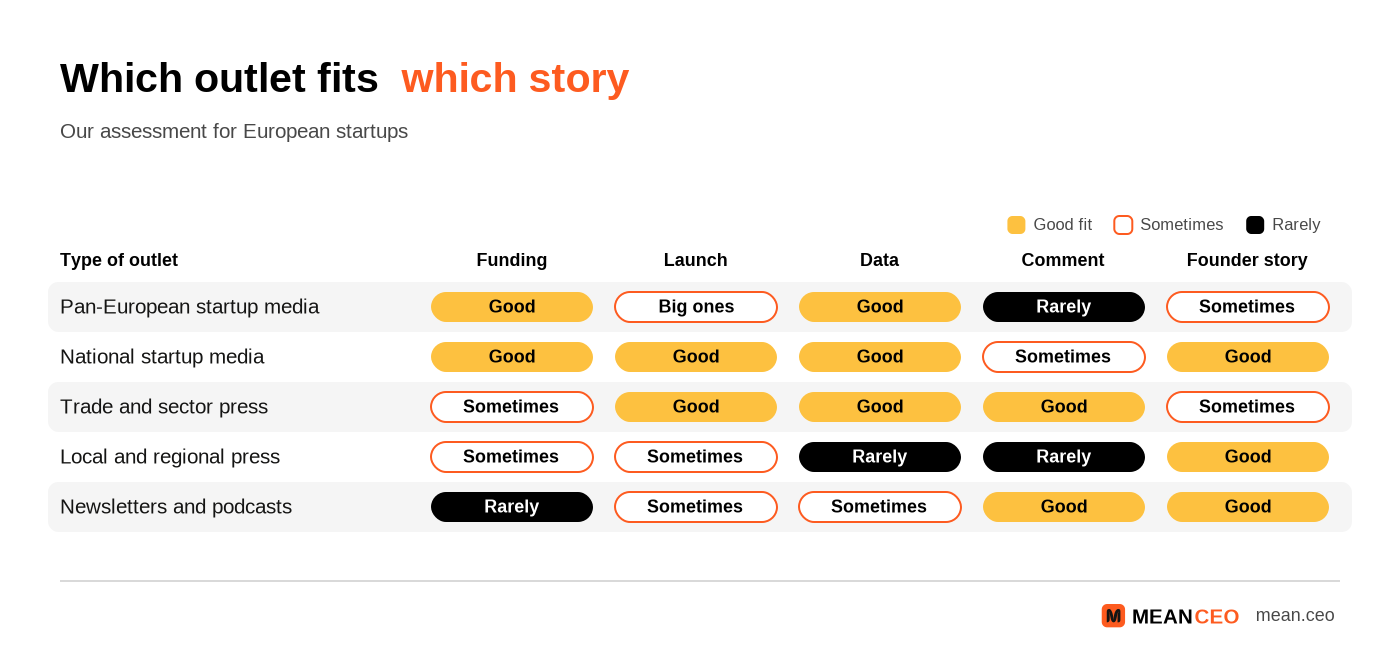
Journalists cover news, not companies. Before you choose an outlet, name the news: a funding round, a launch, a move into a new country, a piece of original data, a comment on something already in the news, or a founder story with a strong hook. The table shows where each kind of story usually lands and how much lead time to give.
Our assessment, based on how startup and trade media usually plan their coverage. Larger outlets need more lead time; news sites can move within a day.
Don’t forget newsletters, podcasts and events. A founder interview on a niche podcast or a mention in a sector newsletter often reaches more of your buyers than a funding note in a big outlet. Our guides to starting a CEO email newsletter and landing speaking engagements cover the owned and live versions of the same visibility.
How To Build A Successful Media Outreach Strategy
Getting media attention isn't about blindly sending press releases. It's about storytelling. As Simon Sinek would say: 'Start with why.' Why should your startup matter to their audience?
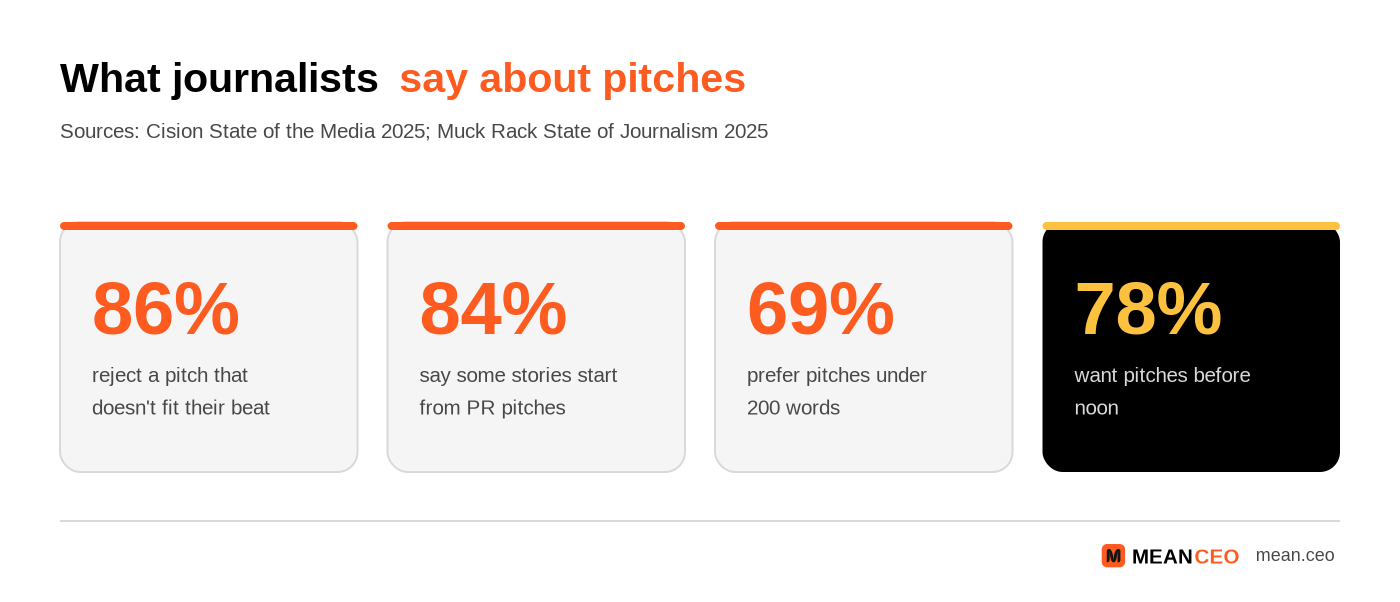
Two surveys back this up. In Cision’s 2025 State of the Media report, 86% of journalists said they immediately reject a pitch that doesn’t fit their beat or audience. In Muck Rack’s State of Journalism 2025, 84% said at least some of their stories start from PR pitches, and in its multi-year surveys 69% prefer pitches under 200 words and 78% want them before noon. Muck Rack’s respondents are mostly North American, but European startup editors say much the same on their contact pages: short, relevant, with the facts and images attached.
- Target the right platform: match your story to the outlet’s beat and country, using the tables above, and read its last ten articles.
- Understand the pitch process: Most media outlets prefer concise email pitches with clear value propositions. Use the outlet’s own news desk or form, and avoid jargon.
- Leverage existing events: Announce groundbreaking partnerships or funding rounds at major European startup events.
- Keep relationships alive: Journalists aren’t just connections to use once. Build rapport by sharing insider info and exclusives.
A great example? Fe/male Switch's campaign used press-worthy hooks like 'first role-playing incubator' and 'empowering women founders using AI,' both timely and audience-specific.
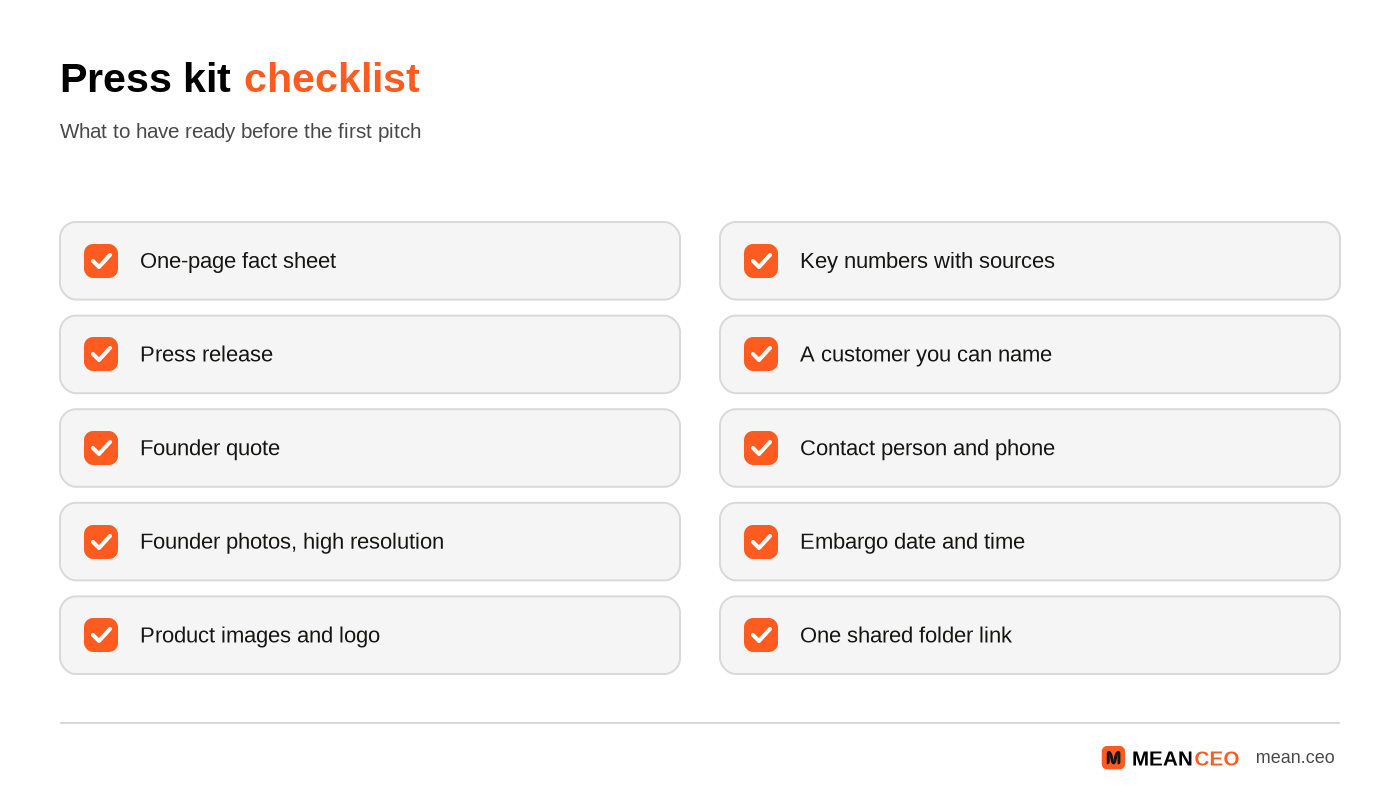
Prepare a Press Kit Before You Pitch
A journalist who says yes usually needs material the same day. Keep one shared folder with everything below, and put the link in every pitch.
Use Journalist-Request Services
Journalist-request services turn the process around: reporters post what they need, and you answer if you fit. They work best for expert comment, which builds a track record before you have big news. Answer fast, answer only what was asked, and include one fact or number only you can give.
Prices from each service’s pricing page, checked 18 November 2026; US-based services price in US dollars.
Is your startup on ChatGPT?
More and more traffic is coming from Perplexity, ChatGPT, Grok and other AI tools.
👉 Rank on ChatGPT
Common Mistakes Founders Make when Pitching to Media
Startup media is hyper-competitive. Here are pitfalls to avoid:
- No clear story: Journalists don't chase vague ideas. Define your angle: disruption, human interest, or social good.
- Generic pitches: Sending mass emails doesn't work. Tailor each pitch to the outlet's style and audience.
- Skipping follow-ups: If you hear nothing within a week, send a polite second email. The first pitch often gets buried.
- Pitching the wrong desk: A funding note sent to a features writer, or a Swiss story sent to a UK outlet, is deleted unread.
- Paying and calling it press: A sponsored post is advertising. It can be worth buying, but it doesn’t carry the trust of an editorial article.
Founders, remember: Media coverage repays effort. Strategic storytelling gets traction; cookie-cutter approaches don’t.
Media Coverage as Your Startup’s SEO Ally
Coverage in a respected outlet sends readers to your site, gives search engines and AI tools such as ChatGPT a trusted source to describe your company, and is easy to quote in your own sales material. Many news sites mark outbound links as nofollow or sponsored, so treat the link as a bonus, not the goal. Our guides to guest posting and PR for backlinks and building backlinks without outreach cover the SEO side in detail.
The Next Step for Female Entrepreneurs: Personal Branding
Media attention builds credibility, but combining visibility with personal branding escalates growth power. Our 30-day plan for building a CEO personal brand on LinkedIn shows where to start.
Journalists also look for founders who can explain their field in plain words. Building that reputation is covered in building authority as a female thought leader in tech, and once the interviews start, our guide to CEO media training helps you prepare.
Let’s get your name on every relevant headline, because the world deserves to know about your innovation!
People Also Ask:
How to get media coverage for your startup?
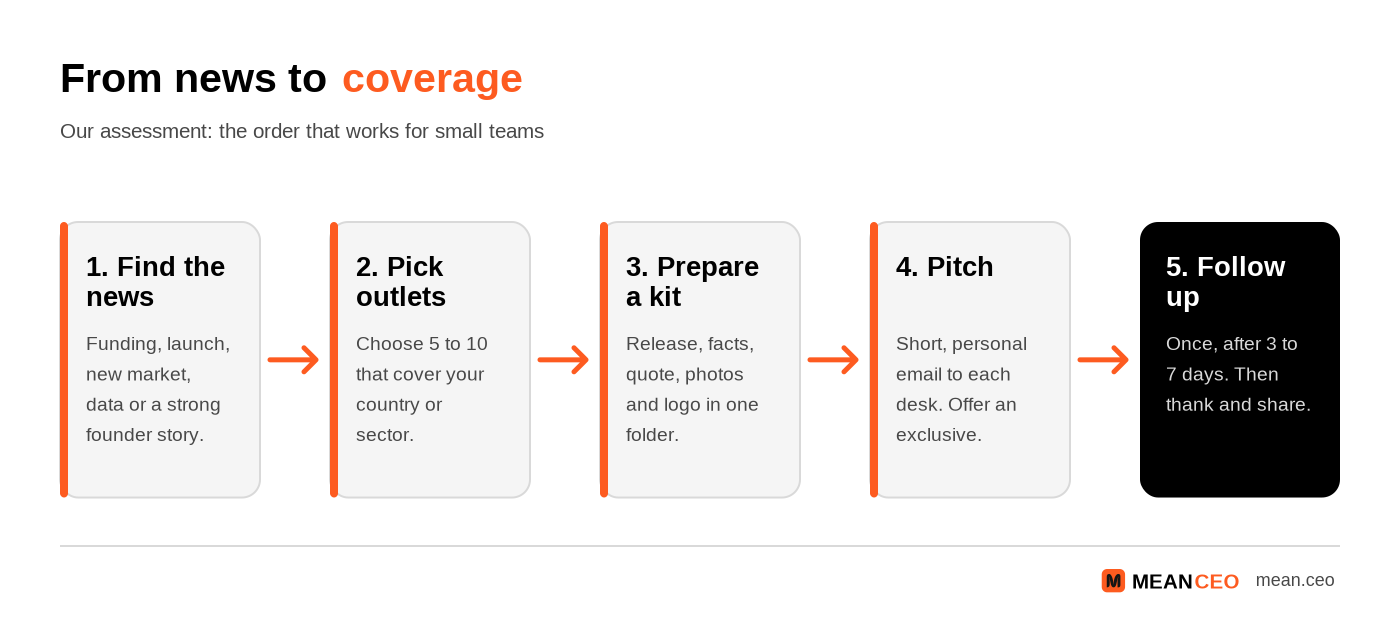
Start with real news: a funding round, a launch, a new market, original data or a strong founder story. Then pick five to ten outlets that cover that kind of news in your country or sector, read what they published recently, and send each one a short, personal email with the facts, a quote and images. Use the outlet’s own submission route (a news desk address or a form) rather than a reporter’s private inbox, give exclusives where it helps, and follow up once after three to seven days.
Which European startup media outlets accept news submissions?
Most of them, through a public route. Sifted has a pitch page, Tech.eu a “Pitch Your Startup” form, EU-Startups and UKTN list news desk addresses, and national outlets such as Trending Topics, deutsche-startups.de, Startupticker.ch and El Referente take press releases by email or form. Check the contact page of each outlet before you pitch, because routes change.
Do European startup media charge for coverage?
Editorial coverage is free: journalists decide what to write. Many outlets also sell sponsored articles, and the reputable ones label them as sponsored or partner content. EU-Startups, for example, labels paid posts “(Sponsored)” and its advertising form starts at a budget bracket of €900–2,900. Paying for a sponsored post is advertising, not press coverage, and readers can tell the difference.
Is a press release enough to get covered?
Rarely on its own. In Cision’s 2025 State of the Media survey, 72% of journalists said press releases are the most useful resource PR teams offer, but they use them as source material. Maddyness, for example, says press releases are reviewed by journalists and not published as they are. Send the release with a short personal note that explains why the story matters to that outlet’s readers.
Should I offer a journalist an exclusive?
For big news, often yes. Sifted’s pitch page asks for news, ideally exclusive, and many outlets give more space to a story they get first. Offer the exclusive to one outlet at a time, agree the publication date and time, and send the release to everyone else only after the exclusive is out.
What is the best time to pitch a journalist?
Mornings. In Muck Rack’s journalist surveys, 78% want pitches before noon and half don’t care which day; of those who do, Monday is the most popular. Half of journalists say one follow-up is ideal, and about half want it within three to seven days. These surveys are mostly of North American journalists, so treat them as a guide, not a rule.
What happened to HARO?
Cision renamed HARO (Help a Reporter Out) “Connectively” in 2024 and shut it down in December 2024. Featured.com bought the HARO brand in April 2025 and brought back the free daily email of journalist requests. Qwoted, SourceBottle and, in the UK, ResponseSource offer similar services.
FAQ: European Startup Media and Coverage Strategies
How can European startups leverage AI for media coverage?
AI search tools such as ChatGPT and Perplexity often cite established media and well-linked articles, so coverage in respected outlets can help your startup appear in AI answers. There is no guarantee, but clear facts about your company in several trusted sources make it easier for both search engines and AI tools to describe you correctly. Check out how to make your startup visible on AI search.
Which European startup media outlets should you target first?
Start with the outlet that covers your country and sector, not the biggest name. For pan-European news, EU-Startups, Tech.eu and Sifted are the usual first targets; for national news, outlets such as Trending Topics (DACH), deutsche-startups.de (Germany), Startupticker.ch (Switzerland), UKTN (UK), El Referente (Spain and Portugal) or The Recursive (Central and Eastern Europe). Our sister site Fe/male Switch keeps a longer list in its European Media Outlets Guide for Startups.
How can startups craft a compelling pitch for media coverage?
Focus your pitch on relevance, storytelling, and audience-specific content. Make it concise, avoid jargon, and personalize the message to the outlet's profile. Announcing partnerships or funding at key events also boosts chances of being featured.
What’s the role of backlinks in improving startup media reach?
A link from a respected outlet brings readers to your site, and many SEO practitioners see editorial links as a strong signal of trust. Many news sites mark links as nofollow or sponsored, so don’t judge coverage by the link alone: the readers, the credibility and the chance to be quoted again matter as much.
Why do female founders face unique media coverage challenges?
Female founders often encounter visibility gaps and biases in media outreach. Building credibility through niche publications and leveraging storytelling about innovation helps combat these challenges effectively.
How do European startup ecosystems benefit from media coverage?
Media coverage spotlighting funding trends, regional innovations, and founder journeys fosters ecosystem growth. It attracts investors and partners while making resources accessible to upcoming ventures.
What mistakes should startups avoid when pitching to media outlets?
Common mistakes include generic pitches, unclear stories, and skipped follow-ups. Tailor your pitch to the outlet, define your angle clearly, and ensure timely follow-through to maximize media interest.
Can deep tech startups secure effective media coverage in Europe?
Yes. Deep tech stories need a clear “why now” and a result a non-specialist can picture: a pilot with a known customer, a grant win, a test result. Sector and trade press often cover them before startup media do. Learn more about deep tech coverage strategies.
What role does personal branding play in media outreach?
Personal branding elevates founder credibility and attracts organic media interest. Sharing expert insights, opinions, and experiences alongside startup milestones builds a relatable and trusted public voice.
Can startup media coverage improve SEO rankings in AI queries?
It can help. Mentions in reputable outlets make your company easier to find and describe, in search engines and in AI tools. Ask for a link to your site when it fits the article, but never make coverage depend on it.
About the Author
Violetta Bonenkamp, also known as MeanCEO, is an experienced startup founder with an impressive educational background including an MBA and four other higher education degrees. She has over 20 years of work experience across multiple countries, including 5 years as a solopreneur and serial entrepreneur. Throughout her startup experience she has applied for multiple startup grants at the EU level, in the Netherlands and Malta, and her startups received quite a few of those. She’s been living, studying and working in many countries around the globe and her extensive multicultural experience has influenced her immensely.
