
TL;DR: is buying a business a better idea than starting one?
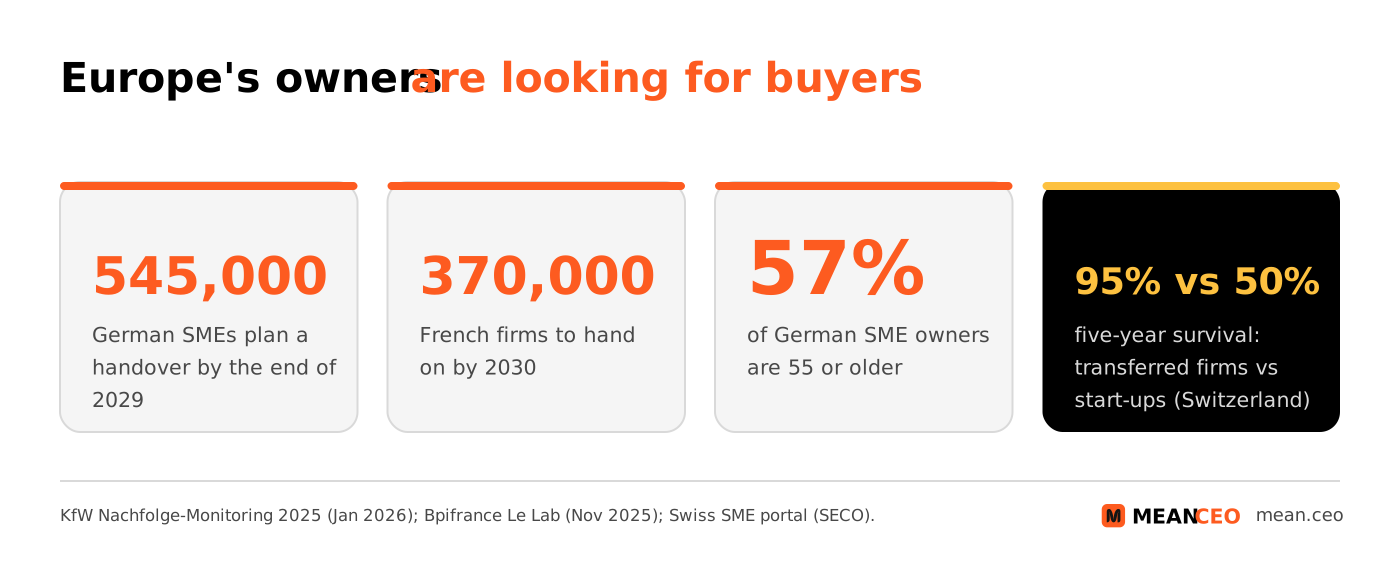
Often, yes. A business you buy has customers, staff and cash flow on day one, and in Switzerland 95% of transferred companies survive five years against 50% of new ones. Europe is entering a succession wave: about 545,000 German SMEs plan a handover by 2029 and 370,000 French owners want to hand on by 2030, and many won't find a successor. The best businesses to buy include service firms with contracts, accounting practices, trades firms, small manufacturers, wholesalers and small software businesses. Below: prices, financing, where to look and what to check.
👉 Check whether a business fits you with the free Idea Validator
Ask anyone for the best business ideas and you'll get a list of things to start. But one of the best business ideas in Europe right now isn't a new idea at all: it's buying a business that already works, from an owner who wants to retire.
This guide explains why buying can beat starting, how big the opportunity is, what small businesses cost, how to finance a purchase, where to find businesses for sale and what to check before you sign. For ideas to start from scratch, see our small business ideas that can grow and the data-based ranking of the best business ideas on Fe/male Switch.
Starting a business is building from zero. Buying one is starting from year ten.
Why buying a business can beat starting one
The strongest argument is survival. In Switzerland, 95% of transferred companies are still running after five years, compared with only 50% of new enterprises, according to the Swiss government's SME portal. The European Commission has made the same point for years: existing companies keep on average five jobs, while a start-up creates on average two, and transfers succeed more often than start-ups.
Buying isn't risk-free: you pay up front for profits that already exist, and you inherit problems along with customers. But the risks can be checked before you sign, which you can't do for an idea. If you've built a business yourself and are thinking of selling, see our guide to exits for bootstrapped founders.
Europe's succession wave: millions of owners need buyers
Almost 8.9 million self-employed people in the EU were aged 55 or over in 2024, and in June 2026 the European Commission adopted a new Recommendation to make business transfers easier, noting that millions of companies will be affected over a decade, according to the European Commission.
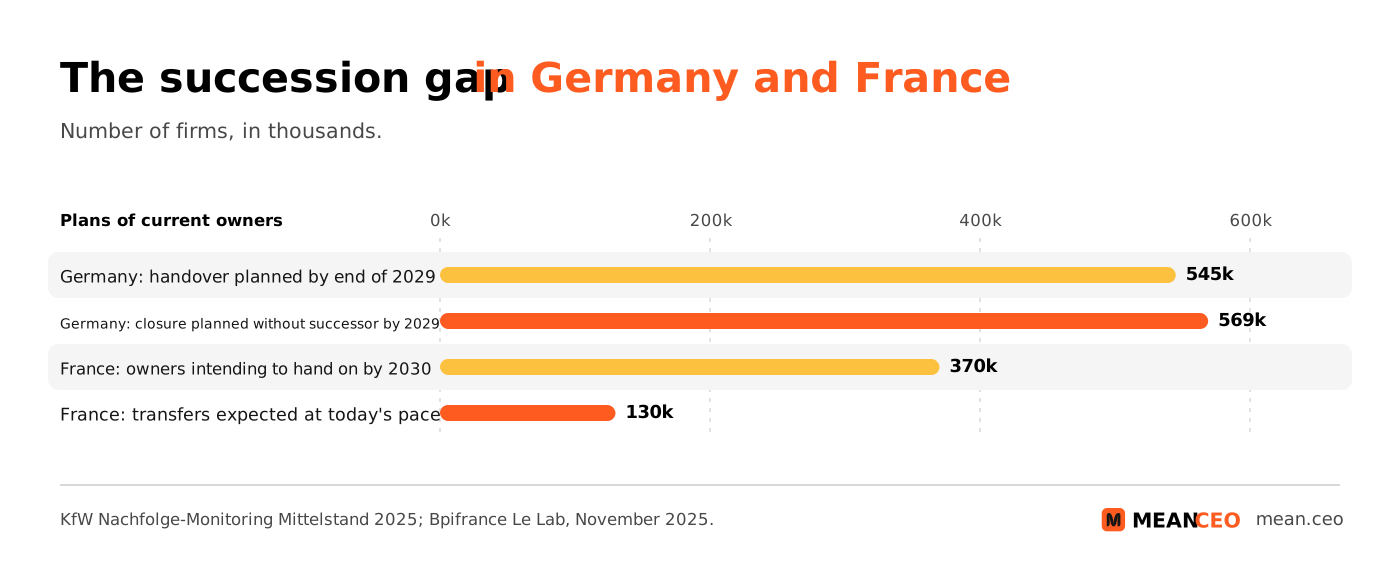
- Germany: about 545,000 SMEs plan a handover by the end of 2029, but 569,000 plan to close without a successor. For the first time, planned closures outnumber planned handovers. 57% of owners are 55 or older, up from 20% twenty years ago, according to KfW Research.
- France: 40% of owners intend to hand on their business within five years, a market of 370,000 firms by 2030, but at today's pace only about 130,000 would actually be transferred, according to Bpifrance.
- Netherlands: almost 13% of owners of firms with two or more workers are 65 or older, and a fifth of those planning to stop haven't found a successor, according to an ABN AMRO analysis of national statistics.
Every firm that closes for lack of a buyer is a missed opportunity for someone who wanted to run a business but didn't want to start from zero.
How much does it cost to buy a small business?
In Germany, owners planning a handover expect an average price of about €499,000, and a median of €375,000, according to KfW. That's about 1.2 times annual revenue on average, but only 0.6 times at the median, so most small firms are cheaper than the average suggests. These are sellers' expectations, not final prices.
Europe has little public data on final sale prices, so US data is the best benchmark. In Q2 2026, the median US small business sold for $349,250 at an average of 2.7 times its cash flow, according to BizBuySell's Insight Report. Multiples differ by sector:
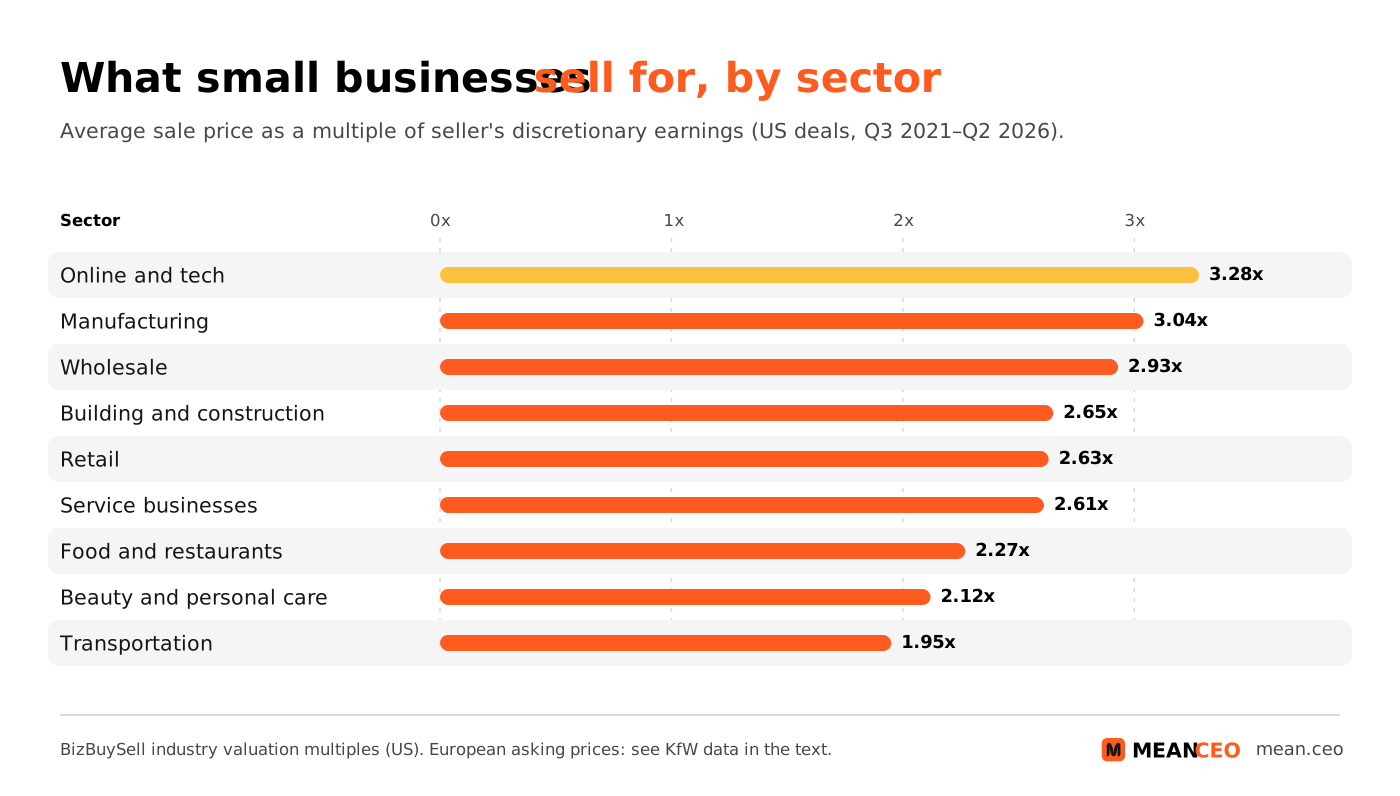
Seller's discretionary earnings (SDE) means the profit plus the owner's own salary and perks: what the business earns for one full-time owner. A multiple of 2.5 means you pay about two and a half years of those earnings.
12 of the best businesses to buy
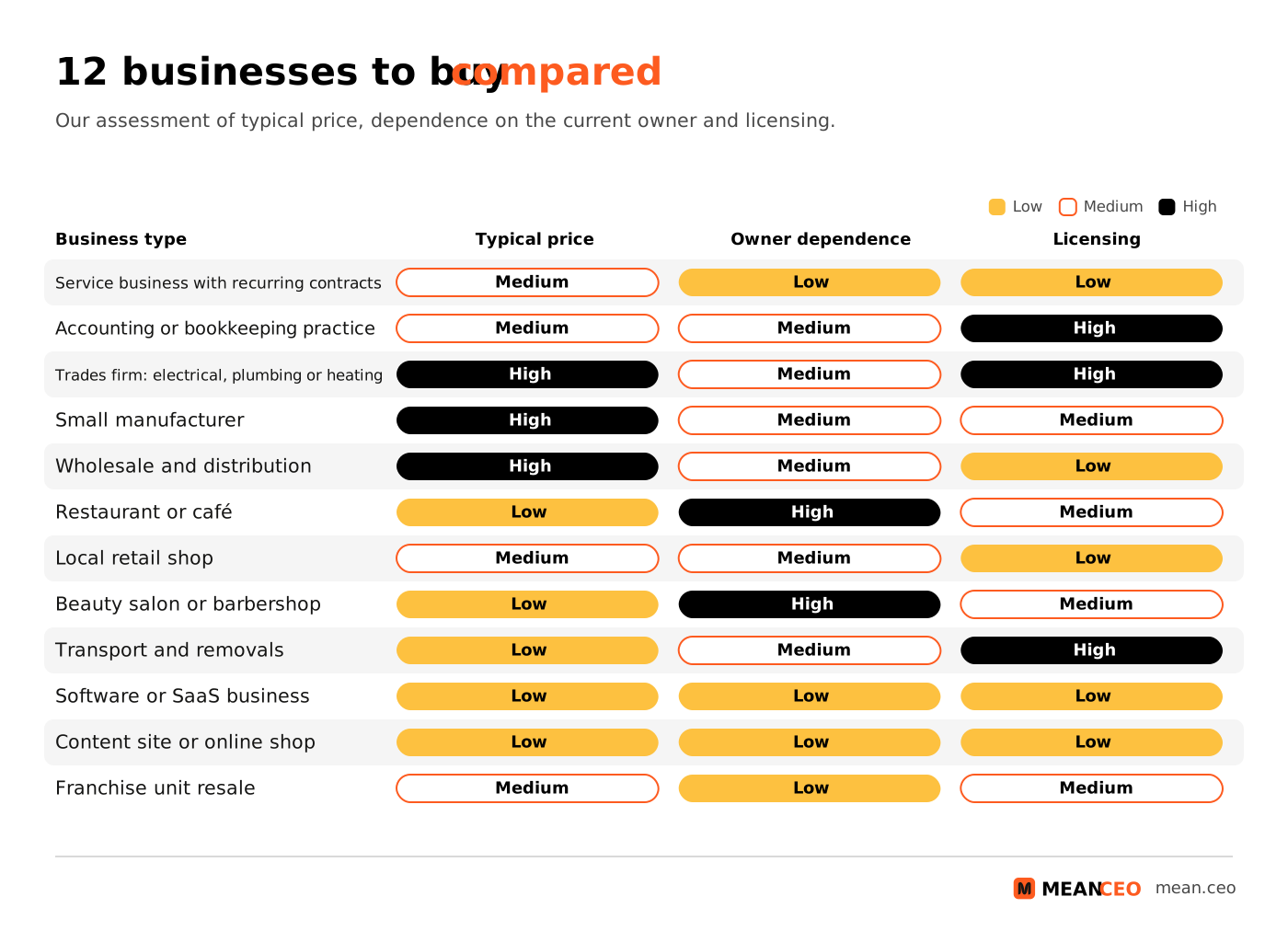
Each type below includes typical prices or multiples where reliable data exists, why buying beats starting, the rules and checks that matter, and a first step. The chart compares typical price, how much the business depends on its current owner, and licensing.
1. Service business with recurring contracts
Cleaning, facility maintenance, pest control, heating and ventilation servicing: businesses whose customers sign yearly contracts. You buy a predictable income and a trained team.
- Typical price: Service businesses sold in the US at an average of 2.61 times seller's discretionary earnings (SDE), with a median price of $350,000, according to BizBuySell.
- Why buy, not start: Winning the first contracts is the hardest and slowest part of starting; here they come with the business.
- Check first: How many contracts can be cancelled on a change of owner, and whether key clients are tied to the seller personally.
- First step: Ask local facility managers which suppliers are run by owners close to retirement.
If you'd rather build a B2B service from scratch, see these company ideas that sell to other businesses.
2. Accounting or bookkeeping practice
A client list of small businesses that need monthly bookkeeping, payroll and tax returns, often sold when the founder retires.
- Typical price: We found no reliable public multiple; practices are usually priced on recurring fees, with part of the price depending on how many clients stay.
- Why buy, not start: Clients rarely switch accountants, so a new practice grows slowly; buying gets you the clients and their trust.
- Rules: Tax advice and audit are regulated professions in most EU countries; in the UK, practices need anti-money-laundering supervision.
- Check first: Client concentration, fee levels versus the market, and the software and data you inherit.
- First step: Ask professional bodies and local accountants about retiring practitioners.
3. Trades firm: electrical, plumbing or heating
An established trades business with vans, staff, suppliers and a phone that rings. Many are run by owners nearing retirement, with no family successor.
- Typical price: US building and construction businesses sold at an average of 2.65 times SDE, with a median price of $750,500 (BizBuySell).
- Rules: In Germany, many trades require a master craftsman qualification (Meister) or an employee who holds one to run the business; check equivalent rules in your country.
- Why buy, not start: Skilled staff are scarce across Europe; buying a firm is often the only way to get a qualified team.
- Check first: Whether the qualified staff stay, the age of vehicles and tools, and open warranty claims.
- First step: Search official succession marketplaces and ask your chamber of crafts about owners seeking successors.
Trades are among Europe's worst labour shortages; see the best business ideas in Europe's labour-shortage trades.
4. Small manufacturer
A workshop or factory making components, food products or specialised equipment, often with long-standing business customers.
- Typical price: US manufacturing businesses sold at an average of 3.04 times SDE, with a median price of $726,914 (BizBuySell), higher than most other sectors.
- Why buy, not start: Machines, certifications and customer approvals take years to build from scratch.
- Check first: Machine condition and maintenance records, customer concentration, environmental permits and supplier contracts.
- First step: Look at German and French succession marketplaces, where industrial firms are well represented.
5. Wholesale and distribution
A business that buys from manufacturers and sells to shops, restaurants or trades, with warehouse, routes and supplier agreements.
- Typical price: US wholesale businesses sold at an average of 2.93 times SDE, with a median price of $604,000 (BizBuySell).
- Why buy, not start: Supplier agreements and exclusive territories are hard to win as a newcomer.
- Check first: Whether supplier agreements transfer to a new owner, stock valuation and working-capital needs.
- First step: Talk to manufacturers about distributors in your region that may be for sale.
6. Restaurant or café
An existing restaurant, café or bakery with a fitted kitchen, permits and regular guests.
- Typical price: US food and restaurant businesses sold at an average of 2.27 times SDE, with a median price of $200,000 (BizBuySell).
- Why buy, not start: A fit-out costs a lot and permits take time; buying gives you both, plus customers on day one.
- Watch out: Margins are thin and many restaurants are sold because they struggle. Check the real reason for sale.
- Check first: The lease (length, rent reviews, transfer clause), hygiene inspection history and staff contracts.
- First step: Work a few shifts in the business before you make an offer.
7. Local retail shop
A specialist shop, such as a bike shop, garden centre, pet shop or optician, with a loyal local customer base.
- Typical price: US retail businesses sold at an average of 2.63 times SDE, with a median price of $286,000 (BizBuySell).
- Why buy, not start: Location, supplier accounts and a known name are worth years of marketing.
- Check first: Stock value and age, the lease, online competition and the share of sales from repairs or services, which are harder to copy online.
- First step: Visit the shop as a customer on several days and count transactions.
8. Beauty salon or barbershop
A salon with chairs, equipment, booking system and regular clients, often sold by owners who want to stop working weekends.
- Typical price: US beauty and personal care businesses sold at an average of 2.12 times SDE, with a median price of $145,000 (BizBuySell), one of the lowest entry prices.
- Rules: Some countries, such as Germany for hairdressing, require a master qualification or a qualified manager.
- Check first: Whether stylists and their clients stay; in many salons clients follow the stylist, not the brand.
- First step: Agree a handover period in which the seller introduces you to the regular clients.
9. Transport and removals
A removals, courier or specialist transport company with vehicles, drivers and business customers.
- Typical price: US transportation businesses sold at an average of 1.95 times SDE, with a median price of $150,000 (BizBuySell), the lowest multiple in the data.
- Rules: Commercial road transport needs operator licences in the EU and UK, and drivers need the right licences and qualifications.
- Check first: Vehicle age and leases, driver availability, fuel costs and customer contracts.
- First step: Check how many years remain on vehicle leases and what replacing the fleet would cost.
10. Software or SaaS business
A small software product with paying subscribers, often built by a solo founder who wants to move on.
- Typical price: SaaS businesses sold on the marketplace Flippa at an average of 2.47 times annual profit in H1 2026; apps at 2.62 times.
- Why buy, not start: Building a product and its first paying customers can take years; buying gives you revenue and a codebase.
- Check first: Churn, revenue concentration, code quality, dependence on one platform or API, and GDPR compliance.
- First step: Set clear criteria (revenue, churn, tech stack) and review listings on online-business marketplaces for a few weeks before you bid.
11. Content site or online shop
A website earning from advertising and affiliate links, or an online shop with its own products, suppliers and customer list.
- Typical price: On Flippa, content sites sold at an average of 2.32 times annual profit in H1 2026 and e-commerce businesses at 1.55 times.
- Watch out: Search engine and platform changes can cut traffic overnight; diversify traffic sources after you buy.
- Check first: Traffic sources and their history, supplier terms, stock, and verified revenue from payment platforms.
- First step: Ask the seller for read-only access to analytics and payment accounts before you agree a price.
12. Franchise unit resale
An existing franchised outlet, such as a fitness studio, bakery or service franchise, sold by its current franchisee.
- Typical price: We found no reliable public multiple for resales; prices depend on the unit's profit and the franchise terms.
- Why buy, not start: The brand, systems and training already exist, and an existing unit has a trading history you can check.
- Check first: The franchisor's approval, remaining contract term, fees, and the network's track record with other franchisees.
- First step: Talk to three current franchisees of the same network before you speak to the seller.
How to finance buying a business
Banks and public lenders are more willing to finance a business with a trading history than a start-up idea. Several European schemes explicitly fund takeovers:
Ask for seller financing early. In the US, 90% of buyers expect it, but only 29% of sellers plan to offer it, according to BizBuySell. A seller who lends you part of the price is betting on the business too. For loan negotiations, see how to negotiate debt funding, and for other routes, the European startup funding landscape.
Where to find businesses for sale in Europe
- Germany: nexxt-change, the federal government's official succession marketplace, run with chambers and banks.
- France: Bpifrance's Bourse de la Transmission, relaunched in July 2026 with around 80,000 listings, plus Transentreprise (chambers of commerce and crafts) and the CRA association.
- Across Europe: BusinessesForSale.com, which lists over 50,000 businesses in more than 130 countries.
- Online businesses: Acquire.com and Flippa for software, content sites and online shops.
- Off-market: accountants, lawyers, banks, chambers of commerce and trade associations often know owners who want to sell before anything is listed.
What to check before you buy
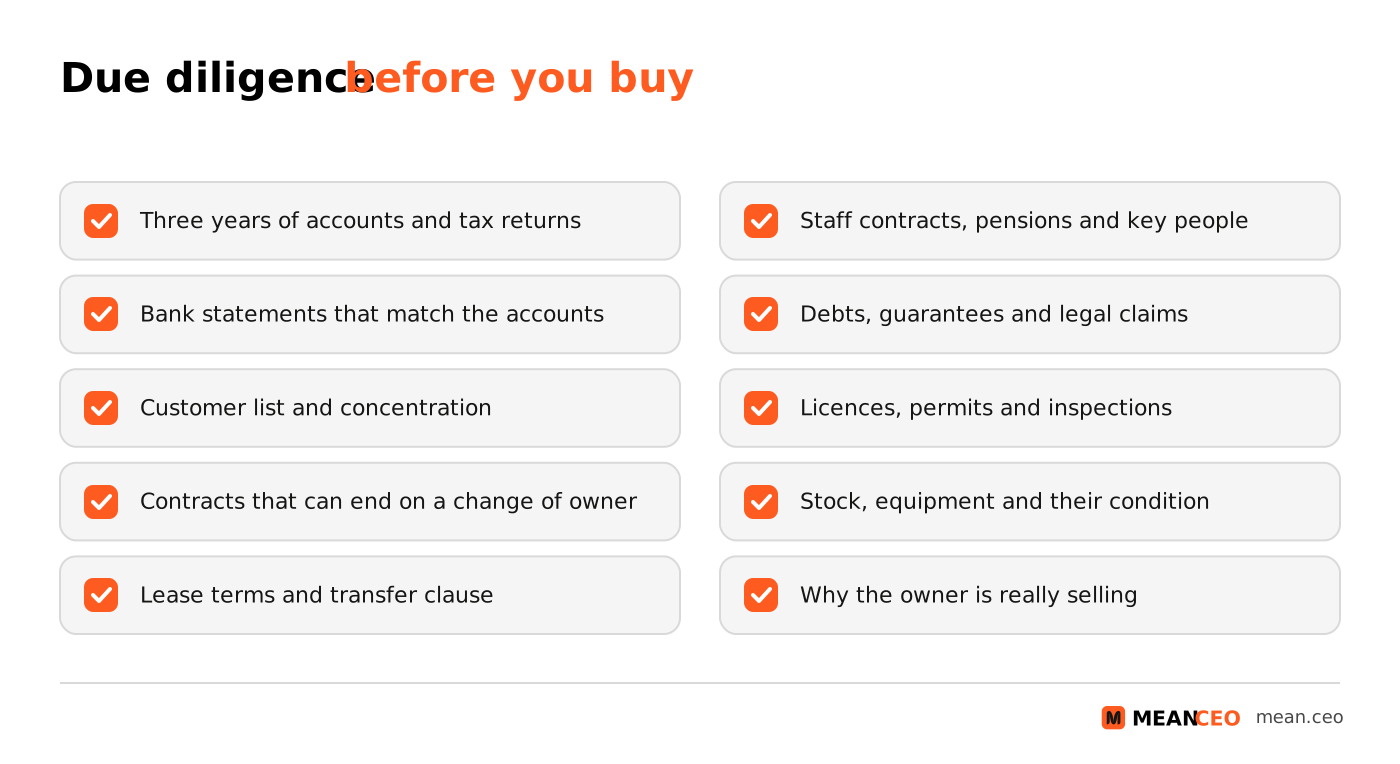
Hire an accountant and a lawyer for this stage; their fees are small compared with the price. The British Business Bank's due diligence checklist for buying a business is a good starting list, covering accounts, debts, legal claims, tax, employees, pensions and contracts.
Agree a handover period in which the seller stays on for a few months to introduce you to customers, suppliers and staff. The more the business depends on the seller personally, the longer that period should be, and the more of the price should depend on results.
Search funds: buying a business with investors' money
A search fund is a model in which investors pay a would-be owner to find and buy one company, then fund the acquisition. In the US and Canada, search funds have returned 33.9% a year on aggregate, and 58% of searchers acquired a company, according to Stanford Graduate School of Business. Outside North America, IESE Business School counted 320 search funds in 40 countries by the end of 2023, led by Spain and the UK, with an aggregate return of 18.1% a year. For how search funds work in Europe, with returns, risks and financing, see our guide to search funding on grant-grants.com.
How to buy a business: step by step
- Set your criteria: sector, region, price range, and the skills you bring.
- Line up financing before you search, so sellers take you seriously.
- Search listed and off-market deals: marketplaces, accountants, chambers and direct letters to owners aged 60+.
- Sign a confidentiality agreement and review the numbers.
- Make a non-binding offer (a letter of intent) with price, structure and conditions.
- Do due diligence with an accountant and a lawyer.
- Sign, pay and take over, with a handover period agreed in writing.
Practise running a business before you buy one
The Fe/male Switch startup game lets you make the decisions of a business owner in weekly quests, with an AI co-founder, before you put your savings at stake.
👉 Start the game
Conclusion: the best business idea may already exist
Starting from scratch isn't the only way to become a business owner, and often not the safest. Europe has hundreds of thousands of profitable small firms whose owners want to retire, and many will close if nobody buys them. If you have management skills, some capital or access to a takeover loan, and the patience to check the numbers, buying a service firm, trades business, practice, manufacturer or small software company can give you customers, staff and cash flow from the first month.
FAQ: buying a business instead of starting one
Is it better to buy a business or start one?
Buying is usually less risky and gives you customers and cash flow from day one, but costs more up front. In Switzerland, 95% of transferred companies survive five years, compared with 50% of new ones. Starting costs less but takes longer to pay you.
What are the best businesses to buy?
Businesses with recurring customers and low dependence on the owner: service firms with contracts, accounting practices, trades firms, small manufacturers, wholesalers, and small software or online businesses.
How much does a small business cost?
In Germany, owners planning a handover expect a median of about €375,000 (average €499,000). In the US, the median small business sold for $349,250 in Q2 2026, at about 2.7 times its cash flow.
How do I finance buying a business?
Combine your own capital with a bank or public loan (such as KfW in Germany, Bpifrance in France, Qredits in the Netherlands or Start Up Loans in the UK) and, ideally, seller financing for part of the price.
Where can I find businesses for sale in Europe?
nexxt-change in Germany, Bpifrance's Bourse de la Transmission in France, BusinessesForSale.com across Europe, Acquire.com and Flippa for online businesses, plus accountants, banks and chambers of commerce.
What should I check before buying a business?
Accounts and bank statements, customer concentration, contracts that end on a change of owner, the lease, staff and pensions, debts and claims, licences, equipment and the real reason for selling.
Why are so many businesses for sale in Europe?
Owners are ageing: 57% of German SME owners are 55 or older, and many have no family successor. In Germany, more owners now plan to close than to hand over.
What is a search fund?
A model in which investors fund a searcher to find and buy one established company, which the searcher then runs. Returns have been strong in the US and positive internationally, but not every searcher finds a company.
About the Author
Violetta Bonenkamp, also known as MeanCEO, is an experienced startup founder with an impressive educational background including an MBA and four other higher education degrees. She has over 20 years of work experience across multiple countries, including 5 years as a solopreneur and serial entrepreneur. Throughout her startup experience she has applied for multiple startup grants at the EU level, in the Netherlands and Malta, and her startups received quite a few of those. She’s been living, studying and working in many countries around the globe and her extensive multicultural experience has influenced her immensely.
