TL;DR: Google's September 2026 spam update is done. What now?
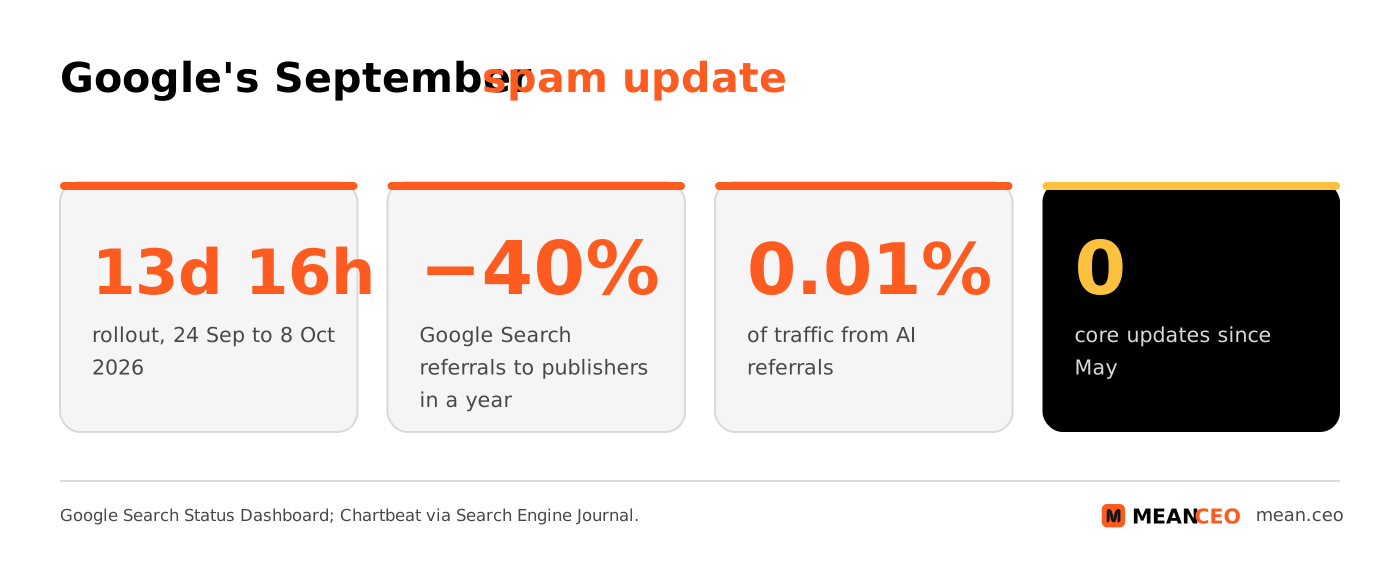
Google's September 2026 spam update rolled out from 24 September to 8 October, 13 days and 16 hours, much longer than the year's earlier spam updates of one to three days. Google hasn't said which spam it targeted, and says recovery "can take many months". There has been no core update since May. Meanwhile, publishers in Chartbeat's network got 40% less traffic from Google Search than a year ago, and AI chatbots send just 0.01% of traffic. If your traffic dropped in late September or early October, here's what to check, and why you need channels beyond Google.
If your traffic did something strange in the last two weeks, you're not imagining it. Google has just finished its longest spam update of 2026, and it landed on top of a year in which search traffic to many sites has been shrinking anyway.
Here's what happened, what we know and don't know, and what a small team should do about it.
What happened
Google announced the September 2026 spam update on its Search Status Dashboard on 24 September, saying it "applies globally and to all languages" and could take up to two weeks. It finished on 8 October, after 13 days and 16 hours.
- No details on the target. Google called it "a normal spam update" and didn't say which spam policies it focused on. It doesn't target link spam, according to Search Engine Roundtable.
- Recovery is slow. Sites hit by the update can recover after fixing the problem, but "it can take many months", Google said.
- Two waves. Rank-tracking tools showed the biggest swings on 25–27 September and 4–6 October; Semrush's volatility sensor hit 94 out of 100 on both.
- Some "drops" were fake. SEOmonitor noted that many rank trackers showed false ranking changes from 26 September because Google returned bad results to automated queries, according to Search Engine Journal. Check Search Console before you panic.
Analytics provider Diib looked at 32,569 sites during the first days of the rollout: the median share of visits from Google search fell from 34% to 31%, and 10% of sites lost half or more of that share, twice as many as in the week before.
A long spam update in a year without autumn core updates
Spam updates in 2026 had been quick: under a day in March, about two days in June and August. September's took almost two weeks, as long as a core update. And there has been no core update since May, according to Google's ranking update history.
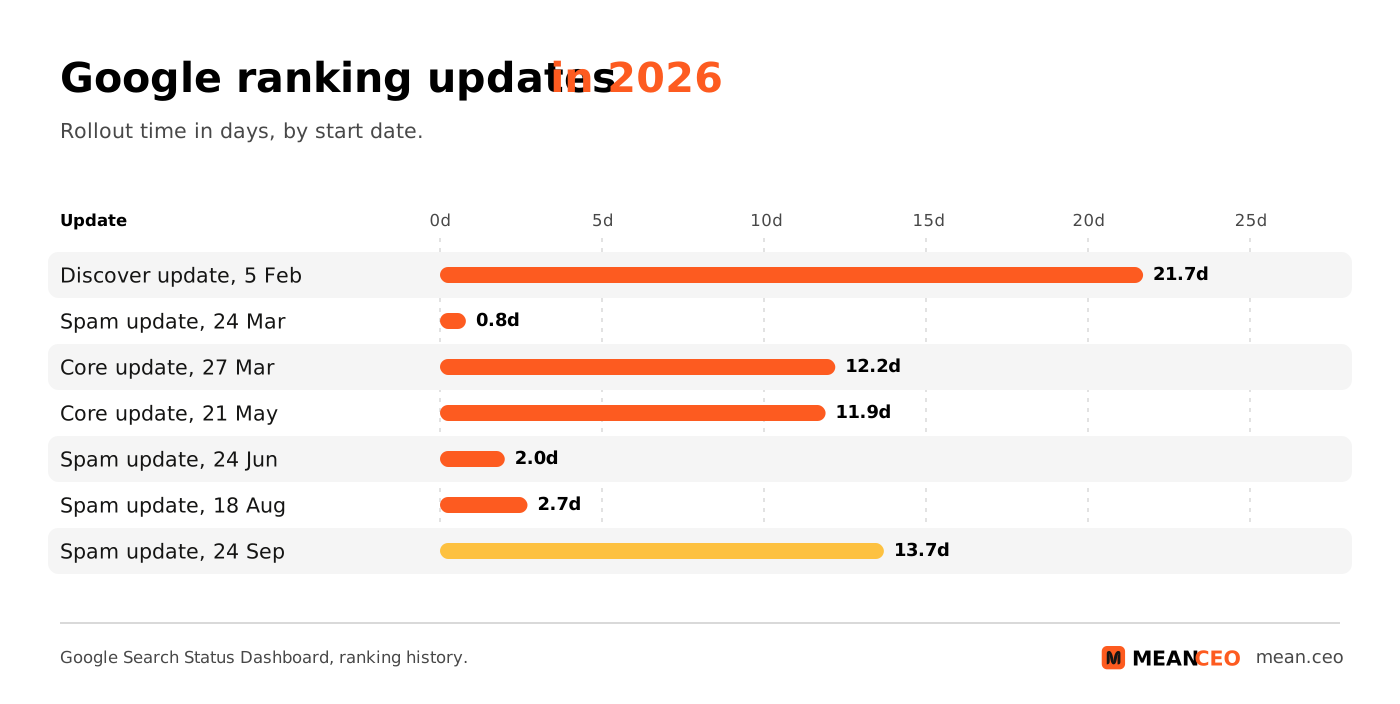
If you saw a drop in late September, the timing points at the spam update rather than a core update. That matters, because the fix is different: spam updates hit pages that break Google's spam policies, while core updates reassess overall quality.
The bigger trend: Google sends less traffic
The spam update lands in a year of shrinking search traffic. Chartbeat's 2026 Publisher Playbook, reported by Search Engine Journal, found that Google Search referrals to publishers in its network fell 40.2% between July 2025 and July 2026, after a 21.9% drop the year before. Google Discover fell 34.3%.
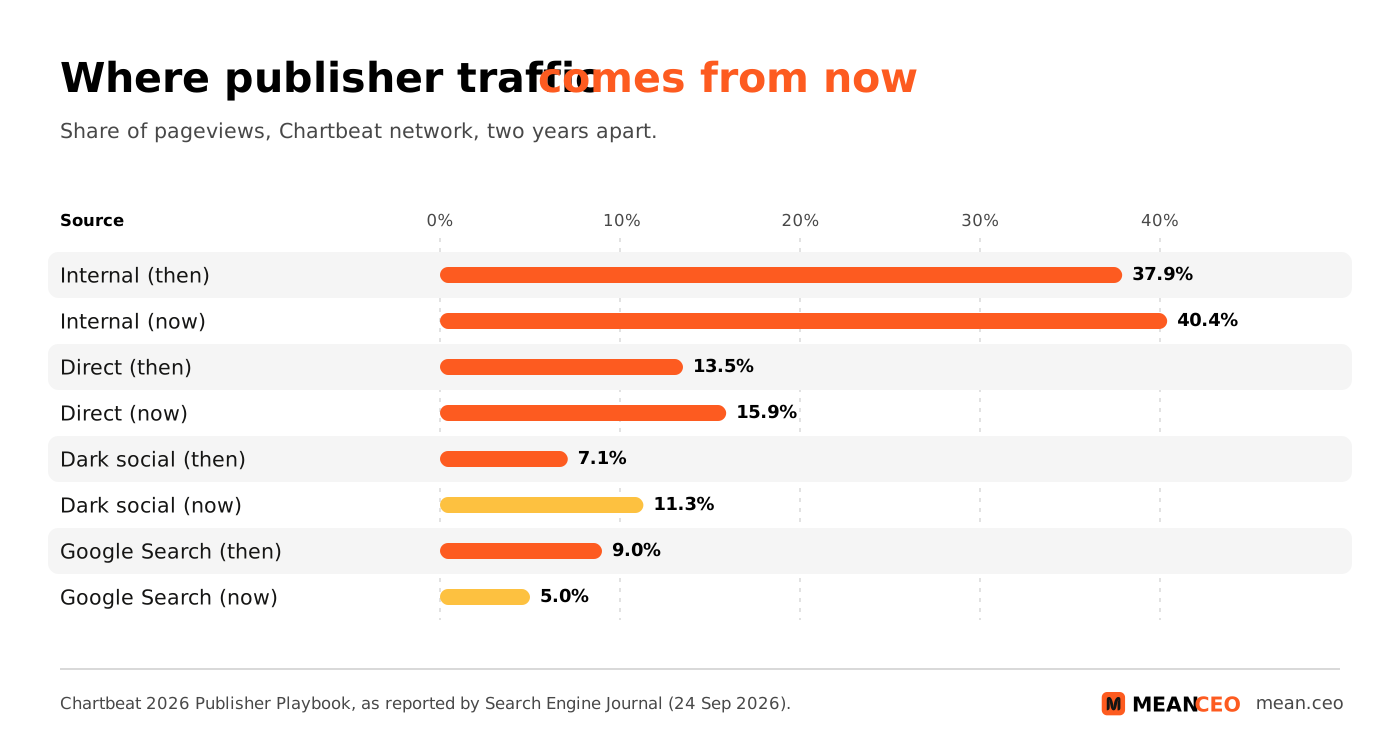
- Search's share of pageviews fell from 9% to 5% in two years.
- AI referrals from ChatGPT and similar tools grew eightfold in two years, but are still only 0.01% of traffic.
- Dark social, links shared in messaging apps and email, rose from 7.1% to 11.3%. Direct traffic rose from 13.5% to 15.9%.
Chartbeat's network leans towards news publishers, so small business sites may see different numbers. But research points the same way: a field experiment by researchers at UPenn and Northeastern found that Google's AI Mode sends fewer visits to websites. In September, AI Overviews also spread to most branded searches, according to DemandSphere data.
What this means for you
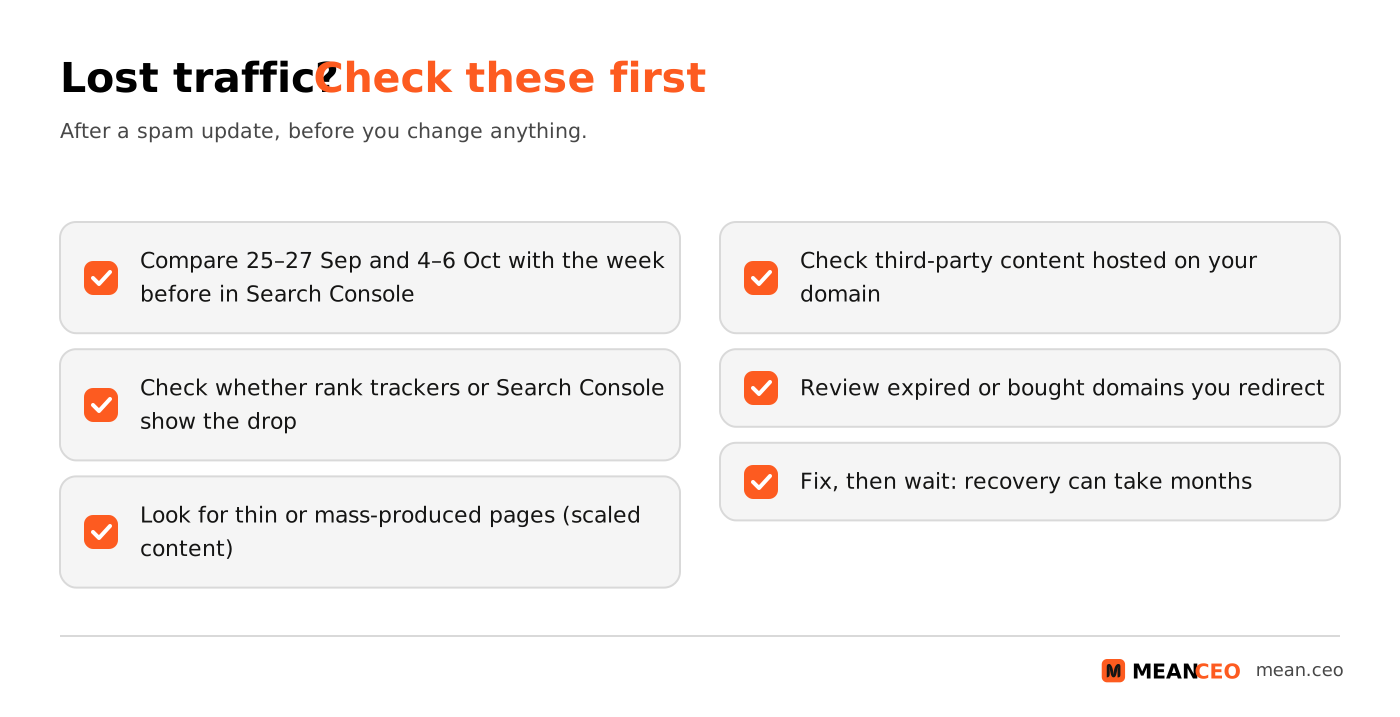
- Look at Search Console, not just rank trackers. Compare 25–27 September and 4–6 October with the week before. If you're new to it, see Google Search Console for startups.
- If you were hit, look for spam patterns, not quality tweaks. Mass-produced AI pages, thin location or tool pages, third-party content on your domain and redirected expired domains are the usual suspects. See writing SEO content without sacrificing quality.
- Don't rewrite everything. If you weren't hit, there's nothing to fix. If you were, fix the cause and give it time: recovery can take months.
- Fix the technical basics. Slow, broken or duplicated pages make every update riskier; see technical SEO for startup websites.
- Build channels Google doesn't control. With search falling and dark social rising, an email list, a community and shareable content are your insurance. Read how to rank on Google with zero budget and SEO for bootstrapped startups for a realistic plan.
For the month's other search news, see our Google and SEO news roundup for October 2026.
Are you getting customers from ChatGPT yet?
More and more traffic is coming from Perplexity, ChatGPT, Grok and other AI tools.
👉 Rank on ChatGPT
FAQ: Google's September 2026 spam update
When did the Google September 2026 spam update happen?
It started on 24 September 2026 and finished on 8 October 2026, a rollout of 13 days and 16 hours, according to Google's Search Status Dashboard.
What did the September 2026 spam update target?
Google didn't say. It called it a normal spam update that applies globally and to all languages, and it doesn't target link spam.
How long does it take to recover from a spam update?
Google says recovery can take many months after you fix the problem, because its systems need to see that the site now follows the spam policies over time.
Was there a Google core update in October 2026?
No core update had been announced as of 13 October 2026. The last ones were the March and May 2026 core updates.
Why is my Google traffic falling even without an update?
Search is sending less traffic overall: Chartbeat found Google Search referrals to publishers fell 40.2% in a year, as AI Overviews and AI Mode answer more questions directly.
Does traffic from ChatGPT and AI tools make up for it?
Not yet. AI referrals grew eightfold in two years but are only about 0.01% of traffic in Chartbeat's network.
About the Author
Violetta Bonenkamp, also known as MeanCEO, is an experienced startup founder with an impressive educational background including an MBA and four other higher education degrees. She has over 20 years of work experience across multiple countries, including 5 years as a solopreneur and serial entrepreneur. Throughout her startup experience she has applied for multiple startup grants at the EU level, in the Netherlands and Malta, and her startups received quite a few of those. She’s been living, studying and working in many countries around the globe and her extensive multicultural experience has influenced her immensely.
