TL;DR: Gemini 4 Argon and Meta Muse Wonder, what do they cost and can you use them in Europe?
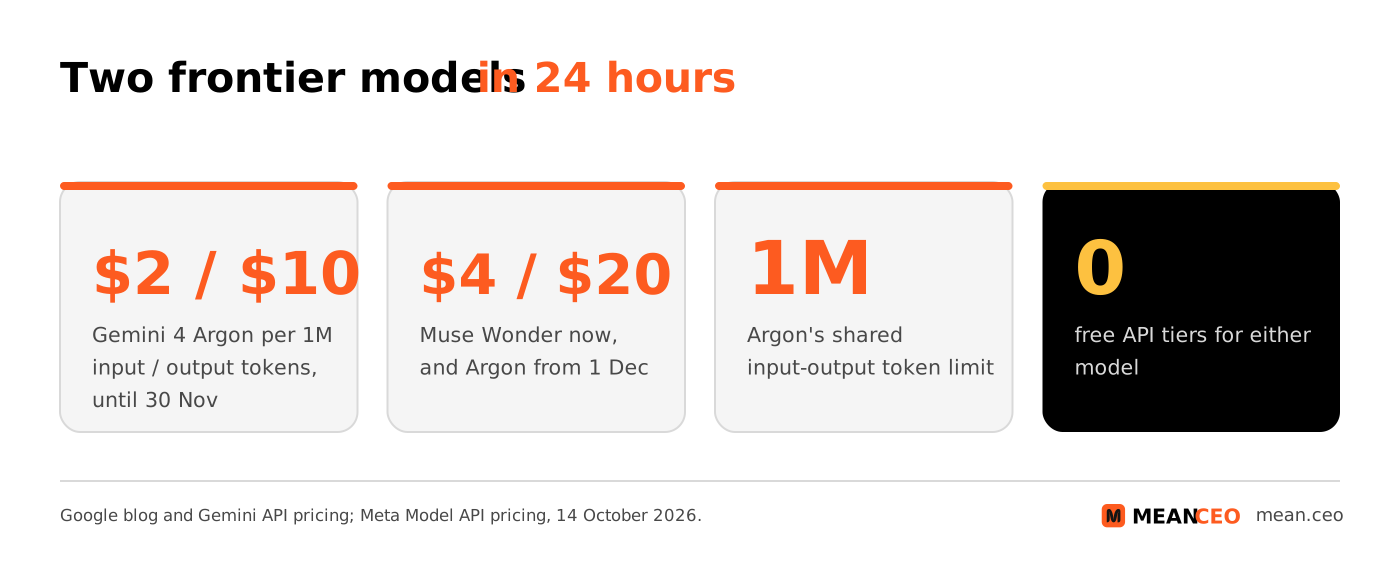
Within 24 hours, two new frontier models reached developers. Meta launched Muse Wonder on 12 October at $4 per million input tokens and $20 per million output tokens. Google opened Gemini 4 Argon to everyone on 13 October at an introductory $2 and $10, which doubles to $4 and $20 on 1 December. Neither has a free API tier. Argon's API is open in every EU country; Meta hasn't published a country list for its API, and both companies' consumer agents still skip Europe. Here's what each one costs a small team, and how to test them before you switch.
Earlier this week we wrote about the AI price war at the cheap end of the market. This week the fight moved to the top. Google and Meta both shipped their most capable models, and both priced them at or below what Anthropic and OpenAI charge for theirs.
For a bootstrapped founder, that's good news with small print. Here's what happened, what it costs, and what works from Europe.
What happened
Meta Muse Wonder (12 October)
Meta introduced Muse Wonder and Muse Wonder Full on 12 October, calling them its most capable models to date, built for "state-of-the-art performance on personal and professional agentic tasks". Muse Wonder is available through the Meta Model API and Meta's coding agent, Muse Code. The bigger Muse Wonder Full is only for Muse Code subscribers.
- Price: $4 per million input tokens, $0.20 for cached input and $20 for output, with no long-context premium, according to Meta's API pricing page. Web search costs $2.50 per 1,000 queries on top.
- Rate limits: 3,000 requests and 4 million tokens per minute, per team.
- Status: Meta's API docs list Muse Wonder as a preview, and the company says a full safety report "will be available soon".
- Easy to try: Meta says its Model API is compatible with the OpenAI and Anthropic SDKs, so testing it can be a change of base URL and model name.
Google Gemini 4 Argon (13 October)
A day later, Google made Gemini 4 Argon globally available through the Gemini API in AI Studio and Google's Gemini platform for enterprises, in Google Antigravity for AI Ultra subscribers, and in the Gemini app and AI Mode for AI Pro and Ultra subscribers. Until then, Argon was only open to cybersecurity partners in Google's Fairwind programme.
- Price: an introductory $2 per million input tokens and $10 per million output tokens, with cached input 95% off. After 30 November it becomes $4 and $20.
- Cheaper modes: Batch and Flex requests cost half, $1 and $5 until 30 November; Priority costs $3.60 and $18, according to the Gemini API pricing page. Output prices include thinking tokens.
- No free tier: the pricing page lists Argon's free tier as "Not available".
- Long jobs: Argon has a 1 million token limit shared between input and output.
- Google's claims: first place on the Vals Index, and inside Google, more than 35% more agentic code submissions with nearly a third fewer rollbacks. "Gemini 4 Argon is just the beginning," Google wrote.
How the prices compare
Both new models land in the same price band as the models most founders already use. Argon's introductory price matches Claude Sonnet 5.5 and GPT-6.1 Sol; from December it matches Claude Opus 5.5 and Muse Wonder.
Sources: Google, Meta, Anthropic, OpenAI and Mistral price pages, 13–14 October 2026. Mistral Large 4 is currently on a 50% preview sale price of $0.68 and $2.09.
What does that mean in real money? We took a modest workload, 10 million input tokens and 2 million output tokens a month, the kind a small support bot or content tool might use, and priced it at list prices with no caching.
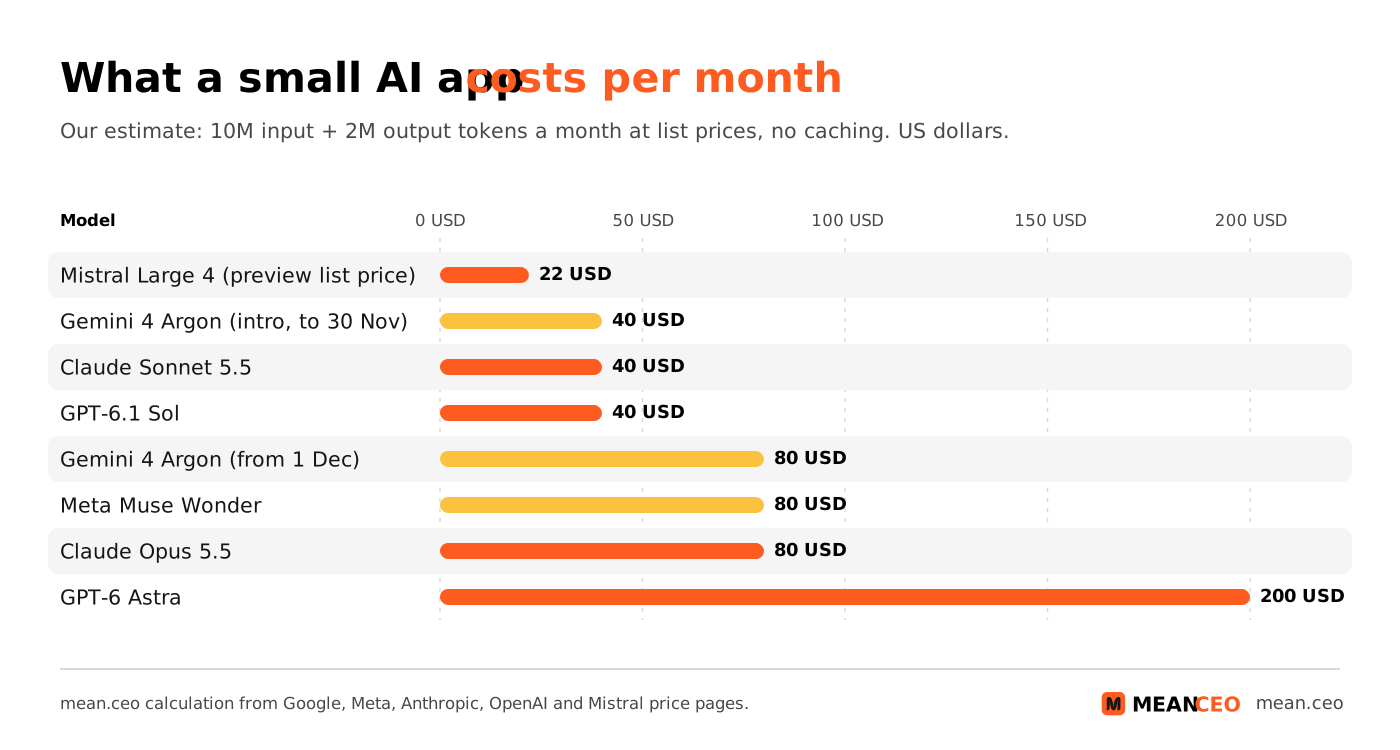
Until 30 November, Argon costs half as much as Muse Wonder for the same tokens. From 1 December they cost the same. Caching changes the picture a lot: if most of your prompt is a fixed system prompt or document, cached input at $0.10–$0.20 per million cuts the input bill by 95%.
Price per token isn't everything. In independent testing reported by Notebookcheck, Muse Wonder scored 52 on the Artificial Analysis Intelligence Index, against 58 for Claude Opus 5.5 and 56 for both Muse Wonder Full and Claude Sonnet 5.5. VentureBeat reported Argon at 53, level with GPT-6 Astra. Meta's own "Personal Superintelligence Index" puts Muse Wonder Full first, but Meta hasn't published how it's calculated.
The Europe fine print
This is where the two launches differ most for founders in the EU.
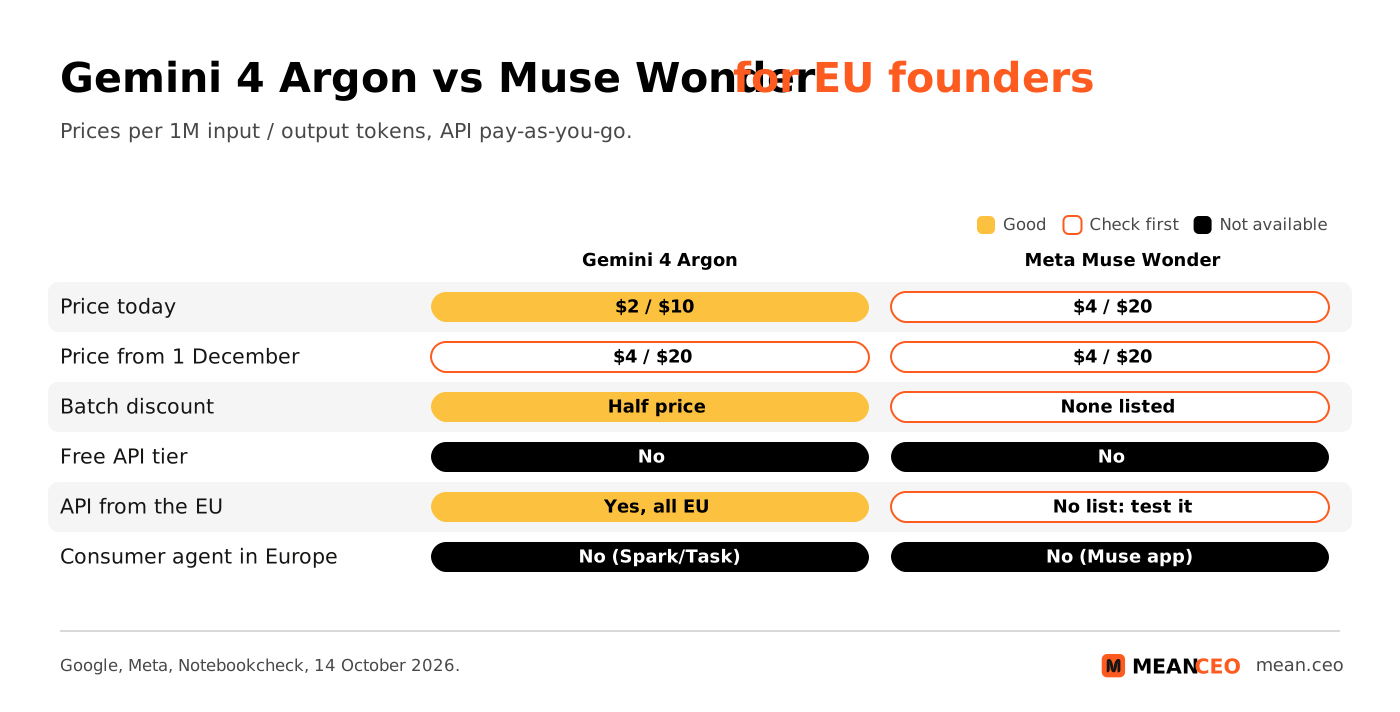
- Gemini API: Google's available regions list includes all 27 EU countries, Norway, Iceland, Liechtenstein, the UK and Switzerland. You can call Argon from Europe today.
- Meta Model API: Meta's Geographic Use Policy, updated on 12 October, only blocks sanctioned territories, and its terms name Meta Platforms Ireland as the contracting party for users in Europe. But the policy also says the services "are not available in all jurisdictions", and the launch post doesn't list countries. Test it from your EU account before you build on it.
- The agents skip Europe again. Meta's Muse app runs only in the US and Canada, with no date for Europe. Google folded its Spark agent into the Gemini app as a "Task" button on 12 October, and its help page still excludes the EEA, Switzerland and the UK. It's the same pattern we saw with OpenAI's dots agents.
- Watch Meta's training default. Meta's pricing page says Muse Code subscriptions default to "Contributor mode", which lets Meta use your prompts, code, files and responses to train future models. You can switch it off in settings. On the pay-as-you-go API, Muse Wonder runs in Standard mode only, where your content isn't used for training.
- AI Act questions. According to The Next Web, whether Meta publishes Muse Wonder's weights decides what it owes under the EU AI Act, and Meta has not said. Meta also declined to sign the EU's code of practice for general-purpose AI models.
If you handle client or personal data, that training setting matters more than the benchmark. Before anyone on your team pastes client code into Muse Code, check the setting and your data processing agreements. Meta’s appetite for training data goes beyond prompts, too: from 30 October, its new Commercial Terms let it crawl and train on websites linked to business accounts.
What this means for you
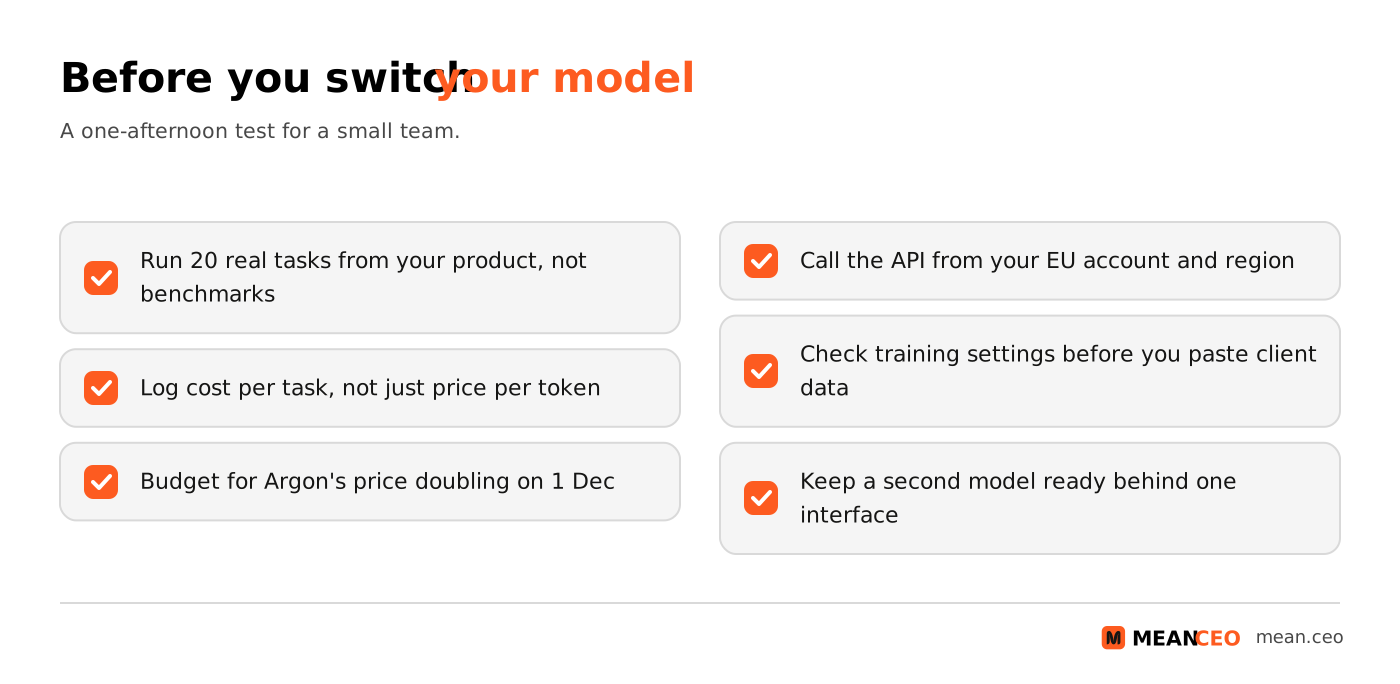
- Test, don't switch. Benchmarks are vendor-picked. Run 20 real tasks from your product through Argon, Muse Wonder and your current model, and compare quality and cost per task. Our guide on how to evaluate an AI tool has a simple scoring sheet.
- Use Argon's intro price for batch work now. Until 30 November, Batch costs $1 and $5 per million tokens. If you have a backlog of classification, summarising or content jobs, run them this month.
- Budget for December. If you move production traffic to Argon, your bill doubles on 1 December unless you cache. Put the date in your calendar.
- Check Europe access yourself. Google's API works from the EU. For Meta's, make a test call from your EU account and keep a fallback.
- Mind the training settings. Free or discounted tiers often pay with your data. Read the settings before you use any new tool with client material.
- Stay model-agnostic. Both Meta and Google support the common SDK formats, so put your model behind one interface and switch when prices move. Our list of AI tools for solo founders and the Gemini versus ChatGPT comparison help you pick the rest of the stack.
For the month's other model news, see our AI news roundup for October 2026 and Anthropic Claude news for October 2026.
Are you getting customers from ChatGPT yet?
More and more traffic is coming from Perplexity, ChatGPT, Grok and other AI tools.
👉 Rank on ChatGPT
FAQ: Gemini 4 Argon and Meta Muse Wonder
How much does Gemini 4 Argon cost?
$2 per million input tokens and $10 per million output tokens until 30 November 2026, then $4 and $20. Batch and Flex requests cost half, and cached input is 95% off.
How much does Meta Muse Wonder cost?
$4 per million input tokens, $0.20 for cached input and $20 for output through the Meta Model API, with no extra charge for long prompts. Web search costs $2.50 per 1,000 queries.
Is there a free tier for Gemini 4 Argon?
No. Google's pricing page lists Argon's free tier as not available, so you need the paid tier of the Gemini API.
Can I use Gemini 4 Argon in the EU?
Yes. Google lists all EU countries, the UK and Switzerland as available regions for the Gemini API and Google AI Studio. The Spark agent in the Gemini app is still not available in the EEA, the UK or Switzerland.
Can I use Meta Muse Wonder in Europe?
Meta's policy doesn't exclude EU countries from the Model API, but Meta hasn't published a country list. The Muse consumer app is only available in the US and Canada.
Does Meta train on my data in Muse Code?
Muse Code subscriptions default to Contributor mode, which lets Meta use your content to train future models. You can turn it off in settings; Muse Wonder on the pay-as-you-go API runs in Standard mode, which doesn't train on your content.
About the Author
Violetta Bonenkamp, also known as MeanCEO, is an experienced startup founder with an impressive educational background including an MBA and four other higher education degrees. She has over 20 years of work experience across multiple countries, including 5 years as a solopreneur and serial entrepreneur. Throughout her startup experience she has applied for multiple startup grants at the EU level, in the Netherlands and Malta, and her startups received quite a few of those. She’s been living, studying and working in many countries around the globe and her extensive multicultural experience has influenced her immensely.
