How to find beta testers and early product feedback in online communities
The best place to find beta testers is wherever your future customers already talk to each other: niche online communities, professional groups, forums and your own waitlist. Join before you ask, help first, then post one specific request the group's rules allow and move interested people into short calls and a small private beta. If your product is for women, women-focused communities such as Women in Product, Ladies that UX or Mumsnet can give you sharp, honest feedback, as long as you treat them as communities and not as free test panels.
Quick answer: pick 2 or 3 communities where your exact users spend time, contribute for a few weeks, then ask for 10 to 30 testers with a clear, specific post. Offer something back (early access, a discount, a summary of what you learned). For mobile apps, plan for the app stores' rules: Google Play requires many new developers to run a closed test with at least 12 testers for 14 days before launch.
Write FREE SEO-optimized Blog Articles! Our Article Writer ensures your blog is loved by both Google and your readers, turning those clicks into customers.
👉 Write your article here
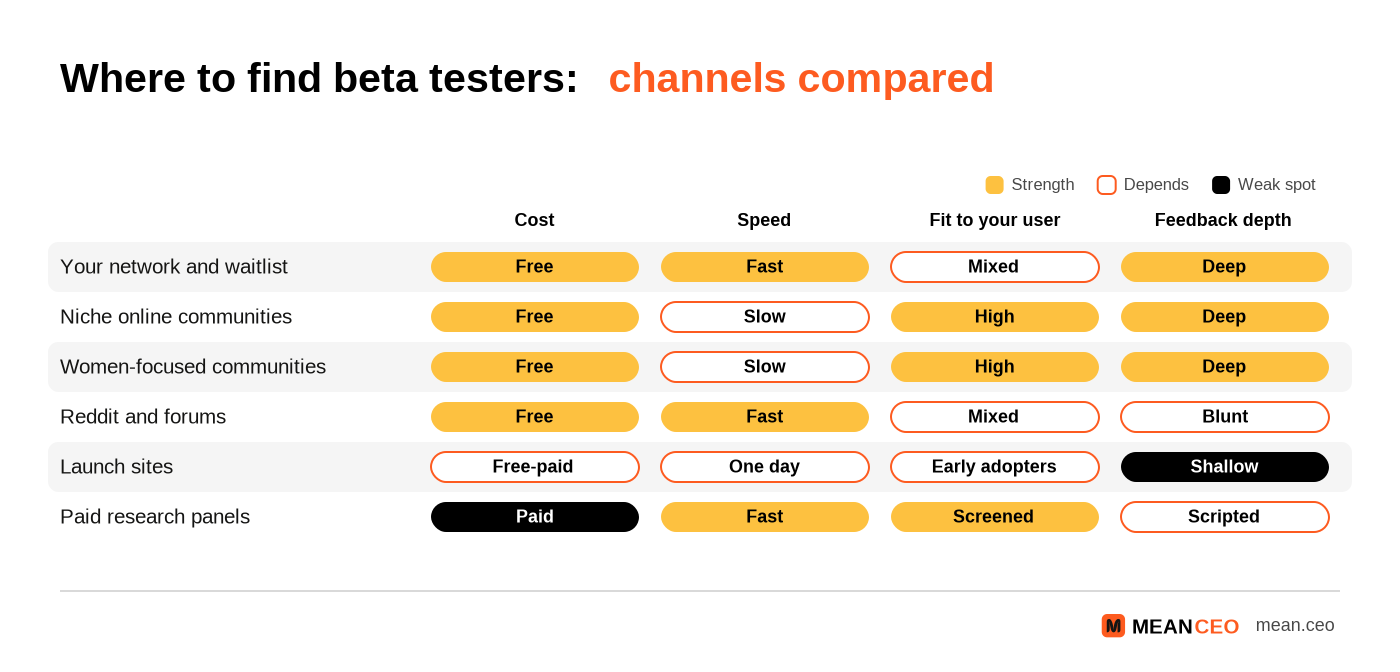
Where to find beta testers: channels compared
Not every channel gives the same kind of tester. Launch sites bring curious early adopters for a day; niche communities bring fewer people who match your customer much better. This table compares the main options.
Source: Mean CEO comparison; facts from BetaList, Apple TestFlight and Google Play Console Help, checked 21 November 2026.
Women-focused communities for early product feedback
If you build for women, or you're a woman founder building for professionals, these communities are worth knowing. All were checked on their own websites in November 2026:
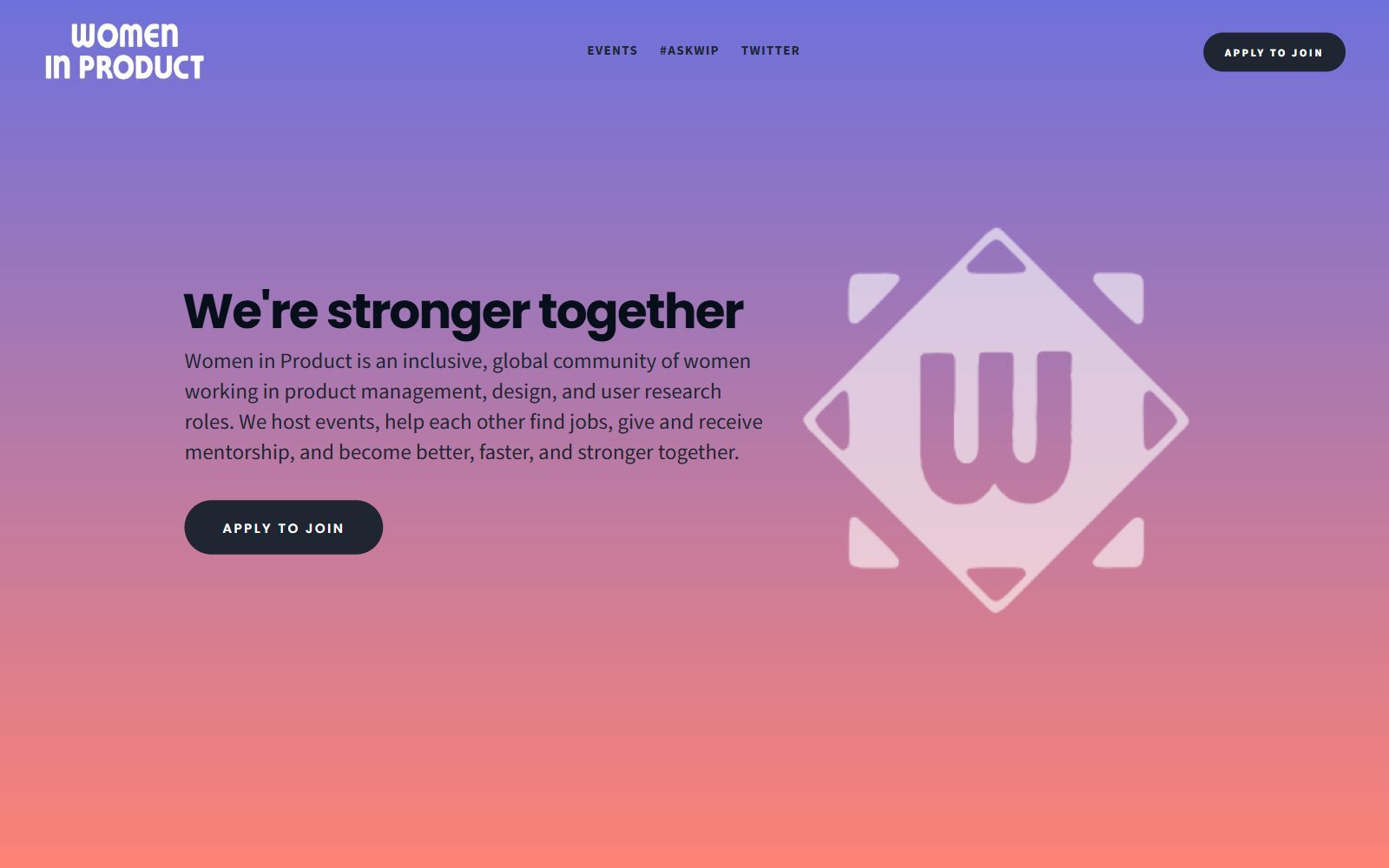
- Women in Product. A global community of women working in product management, design and user research, founded in 2015. Members meet in a Slack workspace with city channels and topic channels such as #founders, plus events. You apply to join. It's a strong place to get usability feedback on a SaaS or app from people who build products themselves.
- Ladies that UX. A community of women in UX with local chapters across Europe, including Amsterdam, Berlin, Lisbon, London, Paris and Stockholm. Good for design and usability feedback, and for finding a researcher to help you run tests.
- Mumsnet. The UK parenting platform reports around 700,000 user posts a month and 8 million users across its sites, overwhelmingly female. Its forums are for members, not for advertising, but its audience insight team runs surveys of its user panel and focus groups for brands that want to hear from parents.
- Fe/male Switch. Our own startup game and community for women founders at femaleswitch.com, where founders test their startup ideas in a game with an AI co-founder. For more networks, see our list of European female founder communities.
Two cautions. First, these groups exist for their members' careers and lives; a founder who only shows up to collect feedback gets ignored or removed. Second, women are not one market. A community of product managers and a parenting forum will give you very different answers, so choose the one that matches your actual customer.
How to get product feedback from a community in 5 steps
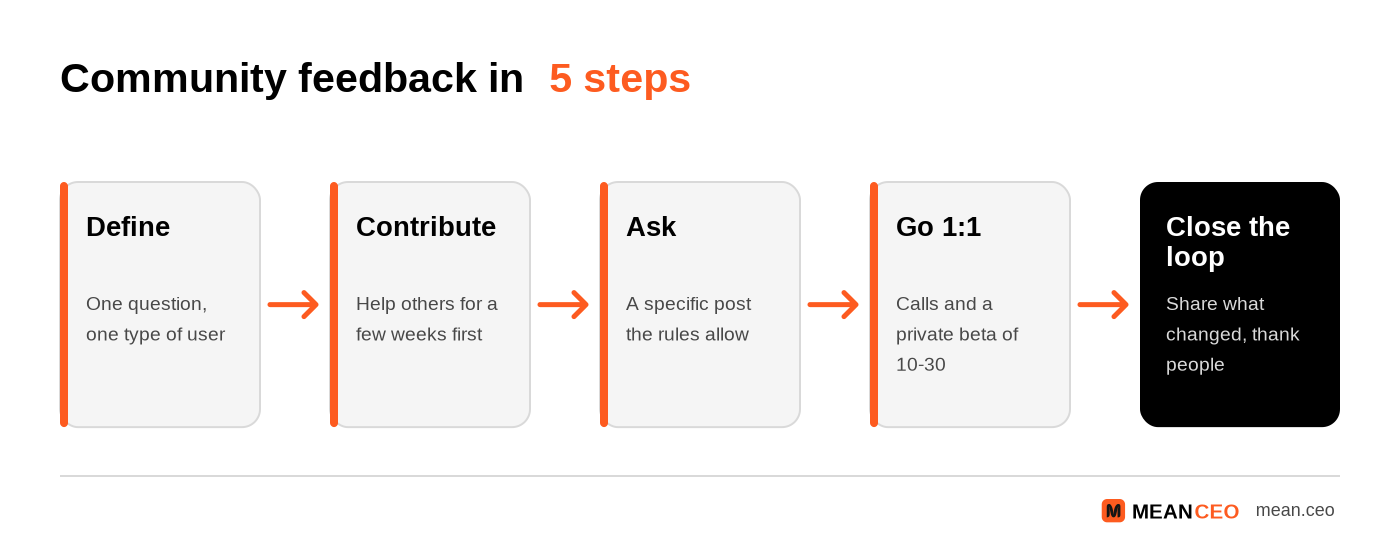
- Define the one thing you need to learn. "Would freelancers switch from spreadsheets to this invoicing flow?" is a research question; "thoughts on my app?" is not. Write down which type of person you need and how many.
- Contribute before you ask. Answer questions, share what you know, and learn the group's language for a few weeks. Read the rules on self-promotion, and ask a moderator if a feedback post is allowed.
- Post a specific request. Say who you are, what problem you're solving, who you'd like to hear from, how long it takes and what people get in return. Ask people to reply or message you rather than dropping a sign-up link if the rules say so.
- Move to one-to-one. Group threads tell you what's popular; calls tell you why. Book 20-minute calls and invite 10 to 30 people into a private beta. Our guide to customer discovery interviews has the questions to ask.
- Close the loop. Go back to the thread and share what you changed because of the feedback. Thank people by name if they agree, and give testers early access or a founding-member price. That is how testers turn into early adopters who stay.
A feedback post template that respects the community
"Hi all, I'm [name], a long-time member and the founder of [product]. I'm building a tool for [type of person] who struggle with [problem]. I'm looking for 10 people who [did X in the last month] to try an early version and spend 20 minutes on a call with me. In return you get free access for six months and I'll share a summary of what I learn here. Mods, happy to remove this if it breaks the rules."
Questions that get useful feedback
- "When did you last have this problem, and what did you do about it?"
- "Walk me through how you'd use this for your last project."
- "What would you have to stop using if you switched to this?"
- "What almost stopped you from signing up?"
- "Would you pay for this today? If not, what's missing?"
Ask about past behaviour, not hypothetical opinions. Once you have testers in the product, collect feedback in one place with a simple customer feedback system so it doesn't get lost across chats and threads.
Beta testing rules on the app stores
If you're building a mobile app, community testers become part of your launch plan, not only your research:
- Apple TestFlight lets you invite up to 10,000 external testers by email or a public link. Your first build for external testers must be approved by App Review for TestFlight.
- Google Play requires developers with personal accounts created after 13 November 2023 to run a closed test with at least 12 testers who have been opted in continuously for at least 14 days before they can apply for production access.
The Google Play rule is where many solo founders get stuck: 12 people who keep the app installed for two weeks is a small community in itself. Start recruiting from your communities and waitlist before the build is ready.
GDPR and community feedback in Europe
Feedback is personal data the moment you collect names, email addresses, recordings or screenshots that identify someone. Tell testers what you collect and why, ask before you record a call, keep sign-up forms to what you need, and delete data you no longer use. Our guide to GDPR compliance for early-stage startups covers the basics, including privacy notices and processors.
Mistakes to avoid when asking communities for feedback
- Drop a link and disappear. It reads as spam, and moderators remove it. Stay in the thread and answer every reply.
- Ask vague questions. "What do you think?" gets compliments. Ask about one task, one screen or one decision.
- Count likes as validation. Upvotes and "I'd use this" comments are not demand. Sign-ups, repeated use and payment are. Validate the idea with something people commit to.
- Test only with friends. They want you to succeed and will soften bad news. Use them for bugs, not for deciding whether the problem is real.
- Argue with critics. Thank them, ask a follow-up question and look for the pattern. Our guide on handling negative feedback helps when it stings.
- Invite too many testers at once. A hundred testers you can't talk to give you less than fifteen you can. Grow the beta in waves.
- Go quiet afterwards. Not telling people what happened to their feedback burns the community for your next launch, and your product launch checklist depends on them.
FAQ on finding beta testers
How do I find beta testers for free?
Start with your own network, customers and waitlist, then join two or three online communities where your target users talk: Slack and Discord groups, forums, LinkedIn or Facebook groups and relevant subreddits. Contribute first, then post a specific request the rules allow.
How many beta testers do I need?
For learning, 10 to 30 engaged testers you can talk to is enough for an early product. For a Google Play launch from a new personal developer account, you need at least 12 testers opted in to a closed test for 14 days in a row.
Where can I find beta testers for an app?
Your waitlist and communities first, then launch sites such as Product Hunt or BetaList, Reddit communities for your niche, and the app stores' own tools: TestFlight on iOS and closed or open testing tracks on Google Play.
What is the difference between beta testers and early adopters?
Beta testers try an unfinished product and report problems. Early adopters are the first real customers who use and often pay for the product early. Good beta testers often become early adopters if you keep them involved.
Should I pay beta testers?
Community testers usually join for early access, a discount or the chance to shape the product. Paid panels make sense when you need specific, screened participants quickly, such as parents for a family product.
How do I ask an online community for feedback without spamming?
Be an active member first, read the rules, ask a moderator if unsure, be specific about who you want to hear from and what they get, and report back on what you changed.
Are women-focused communities useful for product feedback?
Yes, when your customers are women or the community matches your product, such as Women in Product for product tools or Ladies that UX for design feedback. Join as a member and contribute; don't treat the group as a free test panel.
How do I turn beta testers into paying customers?
Keep them close: fix what they report, tell them what changed, give them a founding-member price when you launch, and ask the most active testers for a testimonial or a referral.
Validate your business idea in the Fe/male Switch Sandbox! Test, experiment, and pivot your way to success, all in a risk-free environment with an AI Co-Founder.
About the Author
Violetta Bonenkamp, also known as MeanCEO, is an experienced startup founder with an impressive educational background including an MBA and four other higher education degrees. She has over 20 years of work experience across multiple countries, including 5 years as a solopreneur and serial entrepreneur.
