Most CPG brands waste months collecting product feedback that's too late, too vague, or too expensive to act on. The best product testing platforms address exactly that problem, but finding one that actually fits your brand's needs is harder than it looks. After reviewing dozens of options across sampling programs, consumer research tools, and in-home testing solutions, the gap between platforms becomes obvious fast. This guide breaks down the top five options for 2026, so you can stop guessing and start shipping better products.
The research approach for this ranking
Public information formed the backbone of this evaluation, pulling from official product pages, case studies, user reviews, and directory listings. Every platform included had to show a real track record in product testing and consumer research before making the cut.
→ See the full research breakdown
- Peekage - Best for in-home product testing and consumer insights
- Qualtrics - Best for enterprise experience management and omnichannel feedback
- Quantilope - Best for automated consumer research and rapid insight generation
- NIQ - Best for global consumer intelligence and omnichannel measurement
- Zappi - Best for fast consumer feedback and product development testing
Why Product Testing Platforms Matter for Your Business
Picking the wrong product testing platform doesn't just slow your team down. It creates blind spots that send real problems straight through to launch. Consumer feedback collected too late or drawn from the wrong audiences leads to costly reformulations, packaging revisions, and missed shelf performance targets.
The stakes are genuinely high. Teams that skip structured testing before launch often face escaped defect rates that are painful to unwind once a product is already in market.
A well-chosen platform tightens defect detection and brings the mean time to catch a problem down from weeks to days. That kind of speed changes how confidently a team can move.
When your test pass/fail rate is grounded in real consumer behavior rather than internal assumptions, product decisions stop being guesses. That's the actual advantage the right platform delivers.
Top 5 Product Testing Platforms Breakdown and Comparison
Note: All data in this table is sourced from review platforms and the official websites of the listed companies.
Peekage - Best for In-Home Product Testing and Consumer Insights
What Does Peekage Do?
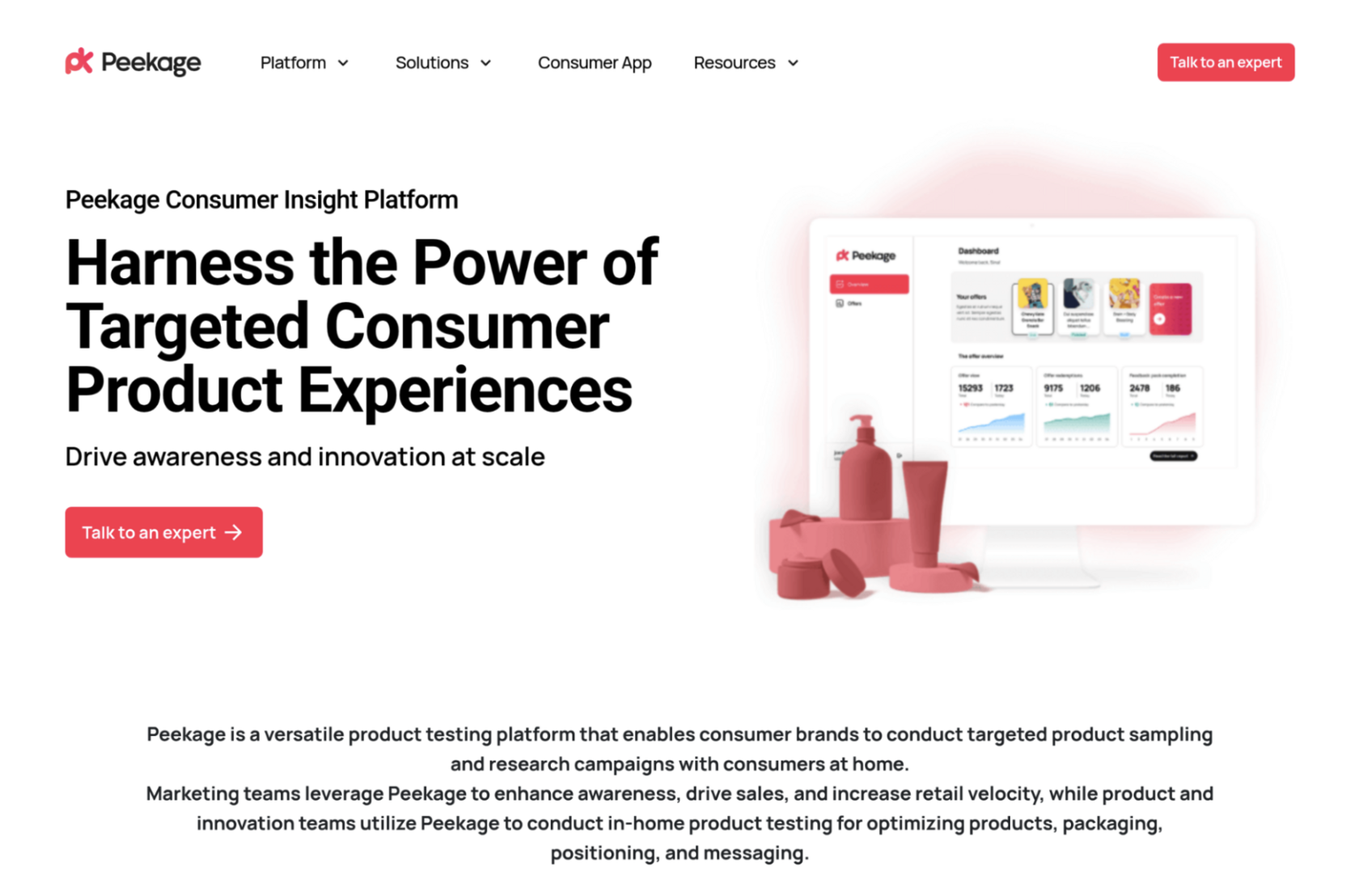
Peekage runs targeted product sampling and in-home research campaigns for consumer brands. Their platform covers three main areas: digital product sampling, in-home product testing, and consumer insights research. With access to a community of over 5 million shoppers and tools that sort through 200+ shopper attributes, they bring research-firm-level quality without requiring a data scientist on your team. That combination is genuinely rare at this price point.
Why Does Peekage Stand Out for Product Testing Platforms?
Peekage solves the classic CPG problem: getting real consumer feedback before launch without burning through the research budget. Clients like KIND reporting 6x return on investment and Wise Snack cutting product development costs by 70% are the kind of numbers that show up in actual business results, not just a slide deck.
Summary of Real User Reviews:
Users consistently point to ease of use and the quality of the shopper community as the biggest strengths. Teams without dedicated research staff seem to get the most out of it, because the AI tools handle a lot of the heavy lifting. That kind of accessibility is hard to match at this scale.
Qualtrics - Best for Enterprise Experience Management and Research
What Does Qualtrics Do?
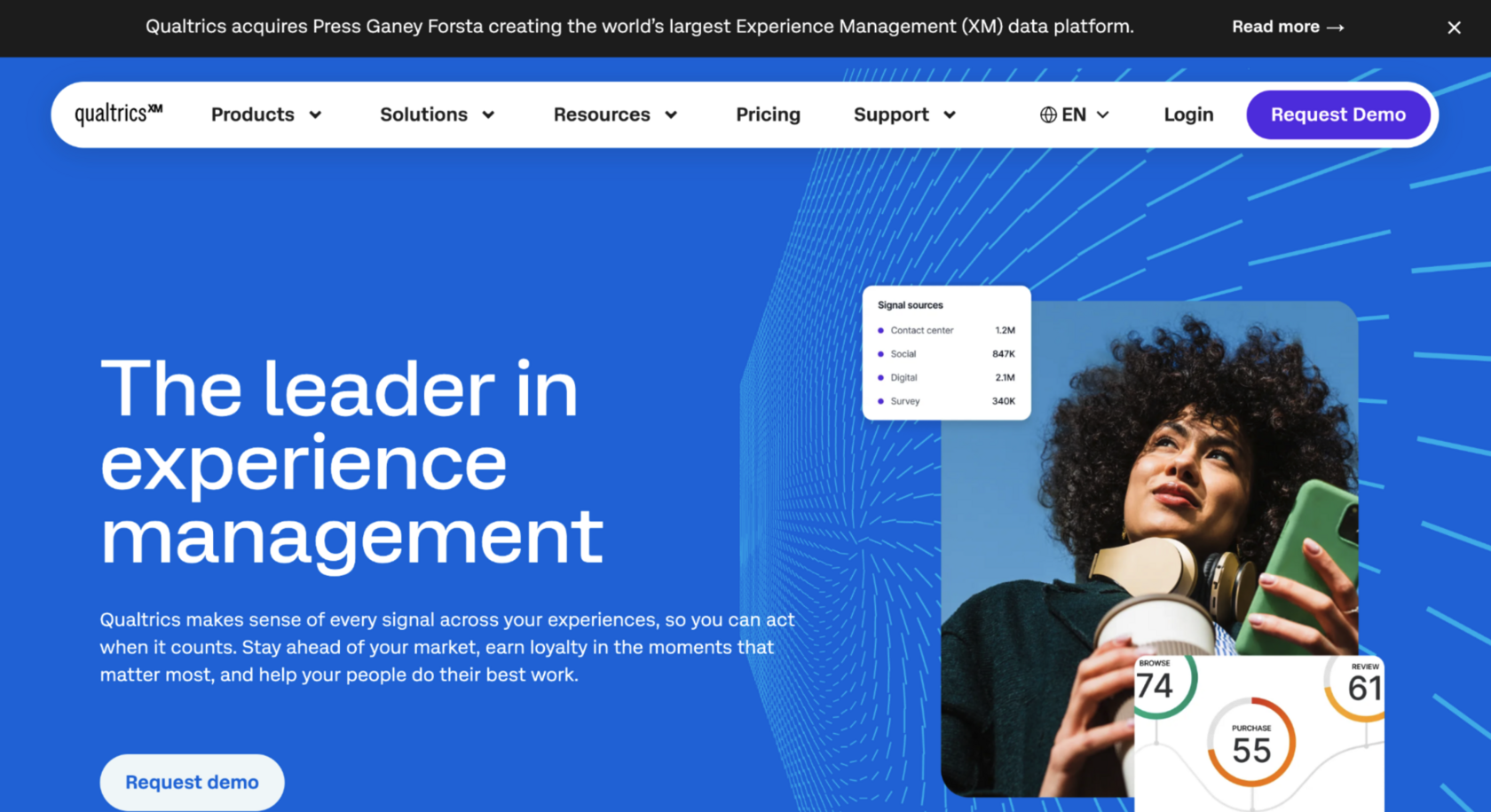
Qualtrics is an experience management platform that collects and analyzes feedback across surveys, calls, digital channels, and service interactions. Their Experience Agents use agentic AI to automate workflows and validate hypotheses fast. Backed by Silver Lake, CPP Investments, and Accel, they serve organizations at enterprise scale. The platform's connected intelligence approach ties together signals from across the customer journey into one place (think big-team, big-budget deployments).
Why Does Qualtrics Stand Out for Product Testing Platforms?
Qualtrics tackles the challenge of making sense of feedback coming in from multiple channels at once, which is exactly where most enterprise research setups fall apart. Their agentic AI layer and research-grade synthetic audiences put rapid hypothesis testing within reach of teams that previously needed weeks to get answers.
Summary of Real User Reviews:
Enterprise clients consistently point to speed of insight and reliability as the wins they keep coming back to. Shake Shack's 30% lift in likelihood to recommend is a good example of the platform moving beyond data collection into producing real outcomes. Users do note that full deployment takes time, which honestly matches what you'd expect at enterprise scale.
Quantilope - Best for Enterprise Consumer Insights and Market Research Automation
What Does Quantilope Do?
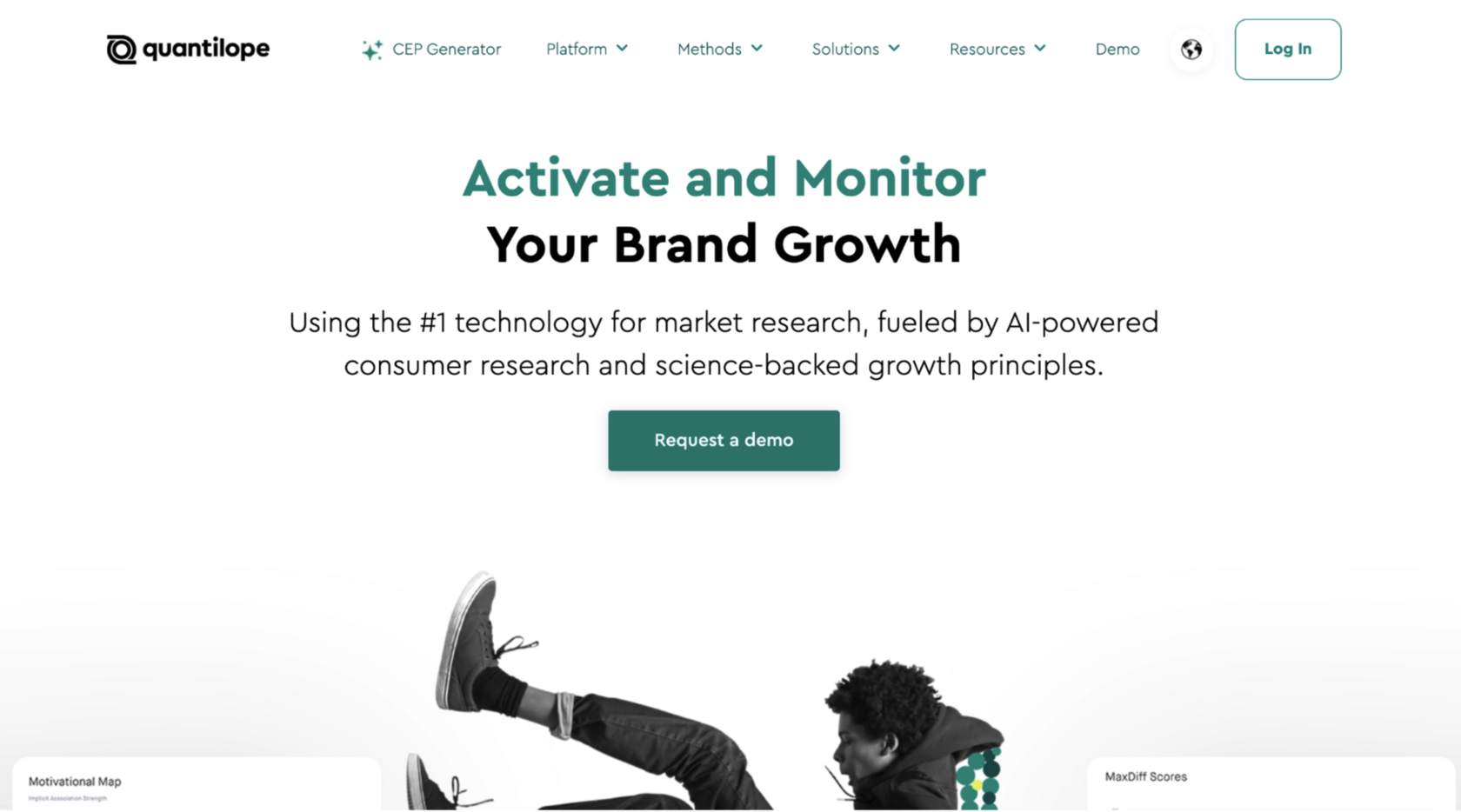
Quantilope is an AI-native research platform built around automation, offering 16 advanced research methods including MaxDiff, TURF, Implicit Testing, and A/B Tests. Insights arrive in under a second after survey responses come in, and their panel network gives access to 300 million consumers. Over 300 global brands including Nestle, Pepsi, and Danone use the platform. Being named the number one market research technology in Greenbook's 2025 GRIT Report two years running makes it hard to argue with their standing in this space.
Why Does Quantilope Stand Out for Product Testing Platforms?
Quantilope removes the bottleneck between running a research study and actually getting answers your team can act on. Samsung's results with the platform, including 4x more asset testing at 80% lower cost with 48-hour turnarounds, show what's possible when automation is done right at scale.
Summary of Real User Reviews:
Users point to the speed and depth of the automated methods as the biggest differentiators from traditional research tools. The fact that 80% of clients report making 80% more consumer-driven decisions after adopting the platform is a strong signal. Teams with high research volume tend to see the most dramatic results, at least based on what the reviews consistently show.
NIQ - Best for Global Consumer Intelligence and Omnichannel Measurement
What Does NIQ Do?
NIQ is a global consumer intelligence company operating in 95+ countries covering 97% of the world's GDP. Their Full View ecosystem delivers omnichannel consumer shopping insights across market measurement, consumer insights, brand analytics, and activation. Generating $4.5 billion in annual revenue, NIQ serves CPG companies, retailers, media, and financial services. With roots going back to 1923, the depth of their longitudinal data is something no newer platform can replicate (not quickly, anyway).
Why Does NIQ Stand Out for Product Testing Platforms?
NIQ addresses the challenge of understanding consumer behavior at true global scale, which most platforms simply can't support with any credibility. Their Full View ecosystem connects retail measurement data with consumer insights in a way that gives CPG teams a more complete picture of product performance across every channel.
Summary of Real User Reviews:
NIQ's long-standing reputation in the consumer intelligence space generates strong trust signals among enterprise CPG clients. Teams working across multiple geographies consistently point to NIQ's breadth as the deciding factor. That usually means brands choosing NIQ are prioritizing scale and data depth over speed or self-serve flexibility.
Zappi - Best for Consumer Insights and Product Development Testing
What Does Zappi Do?
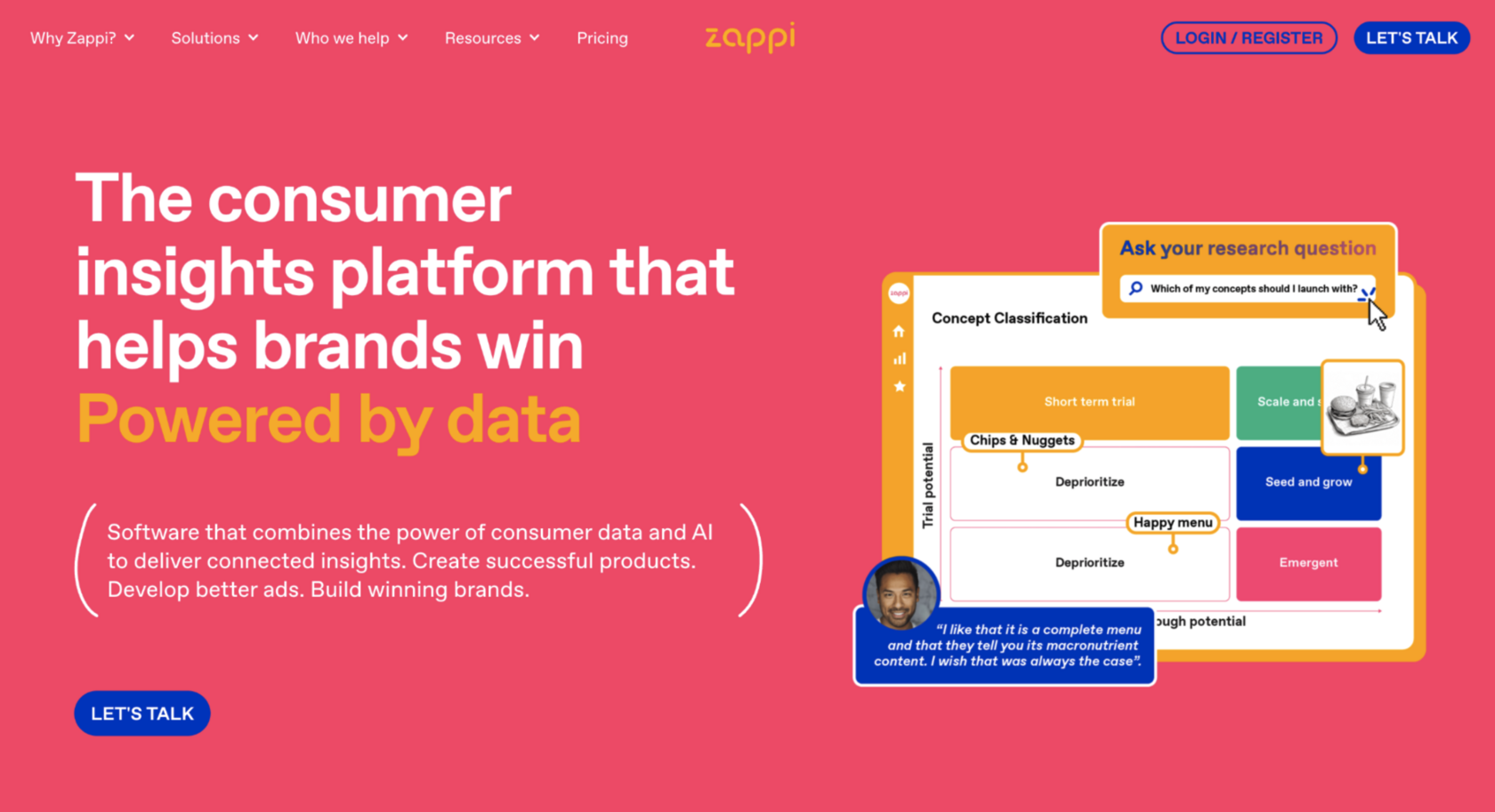
Zappi combines consumer data with machine learning to deliver market insights in 6 to 8 hours rather than weeks. Their platform runs three systems: the Innovation System for product testing, the Rapid Research System for advertising feedback, and the Brand Health System for ongoing brand tracking. With $204 million in total funding and over 350 global brands including PepsiCo and McDonald's in their client base, they're the best-funded platform in this category. Winning the 2024 MarTech Breakthrough Award for Best Marketing Insights Platform two years running builds confidence here.
Why Does Zappi Stand Out for Product Testing Platforms?
Zappi cuts the feedback loop between concept creation and consumer reaction down to same-day turnarounds, which matters enormously when product teams are moving fast. PepsiCo reports 30% improved creative effectiveness, and hundreds of millions in value gained from using the platform gives those speed claims real weight.
Summary of Real User Reviews:
Users across the platform consistently flag turnaround speed and the quality of machine learning-driven analysis as the strongest points. The B-Corp certification and environmental commitments also appeal to teams at brands that hold those values seriously. For teams that need consumer validation fast and can't wait for traditional research timelines, Zappi fits that need better than most alternatives on this list.
Research Methodology and Selection Process
Building this ranking required more than just visiting a few product pages. The goal was to find platforms that genuinely deliver for CPG brands doing real product testing work, not just platforms with polished marketing.
Initial Data Collection
The process began by compiling a broad list of platforms from multiple sources: industry directories, software review sites, case study repositories, and brand-facing research publications. The aim was to capture the full range of options operating in the product testing and consumer insights space, from self-serve tools to full-service research platforms. Each entry was logged with available details on capabilities, client base, and market positioning before any filtering began.
Shortlisting Phase
From the initial list, options without verifiable client evidence or clear product testing use cases were cut early. Review patterns across multiple platforms were analyzed to identify consistency between what companies claimed and what actual users reported. Platforms that appeared only in sponsored placements or lacked documented results from named clients didn't make the cut. What remained was a tighter group of platforms with demonstrable track records.
Verification of Claims
Claims pulled from official websites were cross-checked against external sources wherever possible, including review platforms, published case studies, and brand testimonials. Where a company cited specific results like cost savings, return on investment figures, or turnaround improvements, those numbers were traced back to client-sourced documentation rather than taken at face value. Platforms where the gap between stated capabilities and documented outcomes was large got flagged or removed.
Authority and Industry Contribution Layer
Beyond client results, each platform was evaluated for signals of broader industry authority. This included award recognition, mentions in research publications, analyst reports, and original research contributions. A platform earning repeated recognition across independent sources carries more weight than one with a single mention. Quantilope's consecutive GRIT Report rankings and Zappi's back-to-back MarTech Breakthrough Awards are examples of this kind of consistent external validation.
Product Testing Platforms-Specific Evidence
The final layer focused on evidence that each platform actually serves product testing use cases rather than just general research. This meant looking for dedicated service pages covering in-home testing, product concept validation, consumer sampling, or category-specific research workflows. Verified reviews from CPG teams and case studies tied to product launches, reformulations, or packaging decisions carried the most weight here. Platforms like Peekage with clearly documented outcomes from recognizable CPG clients scored strongly in this phase.
How to Choose the Right Product Testing Platforms
Picking the right product testing platform comes down to matching the tool's actual strengths to your team's specific research needs, timeline, and budget. Here's what to look at before committing.
- Industry and Domain Experience: Look for platforms that have documented results with CPG brands. A research tool built for tech SaaS feedback won't ask the right questions about taste, texture, or packaging performance.
- Features and Service Options: Consider whether you need in-home testing, digital sampling, concept testing, or brand tracking. Some platforms cover all of it (like Peekage and Zappi), while others go deep on a single method.
- Pricing Structure: Platforms vary widely from self-serve monthly plans to custom enterprise contracts. Understand what's included before assuming a lower price means lower value (or vice versa).
- Results Measurement: The best platforms tie outputs back to business metrics like defect detection rate or escaped defect rate, not just survey completion numbers.
- Industry Knowledge and Compliance: For CPG brands operating across multiple markets, confirm the platform understands relevant testing standards and can support research across different regional requirements without cutting corners.
Bottom Line
The best product testing platforms in 2026 share one thing: they close the gap between product development and real consumer feedback before launch day. Peekage works well for brands that want in-home testing and consumer insights without enterprise overhead. Qualtrics and NIQ suit larger organizations with complex, multi-channel needs. Zappi and Quantilope deliver speed when timelines are tight. The right fit depends entirely on your team's scale, research cadence, and how quickly consumer feedback needs to reach your product decisions.
FAQ on Product Testing Platforms for CPG Brands
What are product testing platforms for CPG brands?
Product testing platforms help consumer packaged goods brands collect structured feedback on products before, during, or after launch. They typically support use cases like in-home usage tests, concept validation, packaging feedback, and shopper research. For founders and brand teams, this means fewer decisions based on gut feeling and more decisions backed by real buyer behavior. In practical terms, the right platform can reduce wasted spend on weak launches and improve speed to market.
Why do CPG brands need product testing before launch?
CPG brands need product testing because once a product hits shelves, mistakes become expensive fast. Issues with taste, packaging, messaging, or usability can trigger reformulation costs, poor reviews, and weak retail performance. Early testing gives teams a chance to catch problems while they are still fixable, which is especially important for lean brands trying to protect margins. It is one of the smartest ways to de-risk product innovation without slowing down growth.
What makes a good product testing platform in 2026?
A strong product testing platform in 2026 should combine fast turnaround times, reliable participant targeting, actionable reporting, and clear CPG-specific workflows. It should also show real proof of results through case studies, verified reviews, or known brand customers rather than vague marketing claims. The best platforms help teams move from raw feedback to confident action quickly, which matters when product cycles are getting shorter. For entrepreneurial teams, a good platform should feel like a growth tool, not just a research expense.
Which product testing platform is best for in-home testing?
Peekage stands out as one of the best options for in-home product testing because it is built around product sampling, household usage, and consumer insight collection. That makes it especially relevant for CPG brands that need real-world feedback on taste, texture, packaging, and repeat-purchase potential. It also appears well suited to smaller teams that want research-grade outputs without needing a full in-house insights department. If your goal is to test how a product performs in everyday consumer life, this type of platform offers a strong fit.
How do enterprise platforms like Qualtrics and NIQ differ from niche CPG testing tools?
Enterprise platforms like Qualtrics and NIQ are designed for larger organizations that need broader data visibility, cross-channel feedback, and complex reporting across markets. They can be extremely powerful, but they may also involve more setup, more internal coordination, and a heavier operational lift. Niche CPG testing tools tend to be more focused on specific workflows like product sampling or rapid launch validation. For a startup or scaling brand, the right choice often depends on whether you need precision and speed or global depth and infrastructure.
How can product testing platforms help reduce product development costs?
Product testing platforms reduce costs by helping brands identify weak product elements before those problems become expensive to fix in-market. Instead of spending heavily on a full rollout and then reacting to poor customer response, brands can validate formulas, packaging, and positioning earlier. This can lower the risk of failed launches, unnecessary redesigns, and inefficient ad spend supporting a flawed product. From an operator’s perspective, good testing improves capital efficiency, which is a major advantage in a competitive CPG business.
What should startups look for when choosing a product testing platform?
Startups should look for relevance, speed, affordability, and proof of outcomes. A platform might have impressive technology, but if it does not understand CPG use cases or your customer segment, the insights may not help much. Founders should also evaluate whether the platform supports the exact stage they are in, from concept testing to post-launch feedback. If you are still validating your offer and go-to-market approach, this guide on startup idea validation with SEO can complement your product testing strategy well.
Are fast consumer insights platforms better than traditional market research?
Fast consumer insights platforms are often better for teams that need rapid iteration, especially when product, creative, and packaging decisions need to happen in days rather than weeks. They can dramatically shorten feedback loops and help brands keep momentum during launch or reformulation cycles. Traditional research still has value when a company needs deeper strategic analysis or highly customized studies. The best approach is not always speed alone, but speed with enough rigor to support confident decisions.
How do brands measure success from a product testing platform?
Brands usually measure success through clearer launch decisions, lower defect rates, faster issue detection, and better market performance after release. Other useful signals include lower research costs, improved consumer satisfaction, and stronger confidence in packaging or formulation choices. A platform is delivering value when its insights lead to concrete actions that improve outcomes, not just more dashboards. In entrepreneurial terms, success means turning consumer feedback into sharper execution and stronger revenue potential.
What are the top product testing platforms for CPG brands in 2026?
The leading product testing platforms highlighted here are Peekage, Qualtrics, Quantilope, NIQ, and Zappi. Each serves a different kind of brand need, from in-home testing and rapid concept validation to enterprise-scale consumer intelligence. There is no universal winner because the best fit depends on company size, budget, timeline, and research complexity. The smartest brands choose the platform that matches their operating model and helps them make better product bets faster.
About the Author
Violetta Bonenkamp, also known as MeanCEO, is an experienced startup founder with an impressive educational background including an MBA and four other higher education degrees. She has over 20 years of work experience across multiple countries, including 5 years as a solopreneur and serial entrepreneur. Throughout her startup experience she has applied for multiple startup grants at the EU level, in the Netherlands and Malta, and her startups received quite a few of those. She’s been living, studying and working in many countries around the globe and her extensive multicultural experience has influenced her immensely.
