
Supplement brands face a fulfillment problem that most other ecommerce categories don't. Your products need climate-controlled storage, precise lot tracking, and a 3PL that actually understands label compliance. The top 3PL providers for supplements aren't just warehouses with good software, they're partners who won't botch your kitting runs or surprise you with hidden storage fees mid-peak season. After reviewing dozens of options across warehouse coverage, platform connections, and accuracy standards, this guide covers five providers worth seriously considering.
The shortlist methodology
Publicly available information was the foundation here: official service pages, verified customer case studies, ratings from logistics-focused directories, and real reviews left by ecommerce operators. Only providers with a demonstrated track record in supplement or adjacent product fulfillment made the cut.
→ See the full research breakdown
- Deliverzen - Best for e-commerce and B2B order fulfillment for beauty, skincare, and supplement brands
- Ops Engine - Best for direct-to-consumer (DTC) brands and supplement companies requiring specialized fulfillment with added services
- Rakuten Super Logistics - Best for ecommerce fulfillment and order logistics
- Red Stag Fulfillment - Best for enterprise ecommerce brands and fast-growing companies handling diverse product types
- Ware2Go - Best for on-demand fulfillment and warehouse solutions for ecommerce and retail merchants
The Stakes Behind Choosing the Wrong 3PL Providers
Picking the wrong 3PL for your supplement brand isn't just a logistics headache. It's a revenue problem.
Supplements require consistent storage conditions, accurate lot tracking, and fulfillment partners who can handle compliance-adjacent packaging requirements. A warehouse that's three shipping zones away from your main customer base will quietly eat your margins every single month.
Beyond location, the connection question is real. If a 3PL's warehouse management system doesn't talk cleanly to Shopify, Amazon, or your ERP, you're managing inventory manually, and that's where errors compound fast.
The right provider brings more than warehouse space. They bring proximity to your buyers, clean platform connectivity, and the operational discipline to maintain order accuracy rates above 99.5%, low inventory shrinkage, and on-time ship rates that keep your customers coming back.
5 of the 3PL Providers Compared
Note: All data in this table is sourced from review platforms and the official websites of the listed companies.
Deliverzen - Best for Supplement and Skincare Brand Fulfillment
What Can Deliverzen Provide?
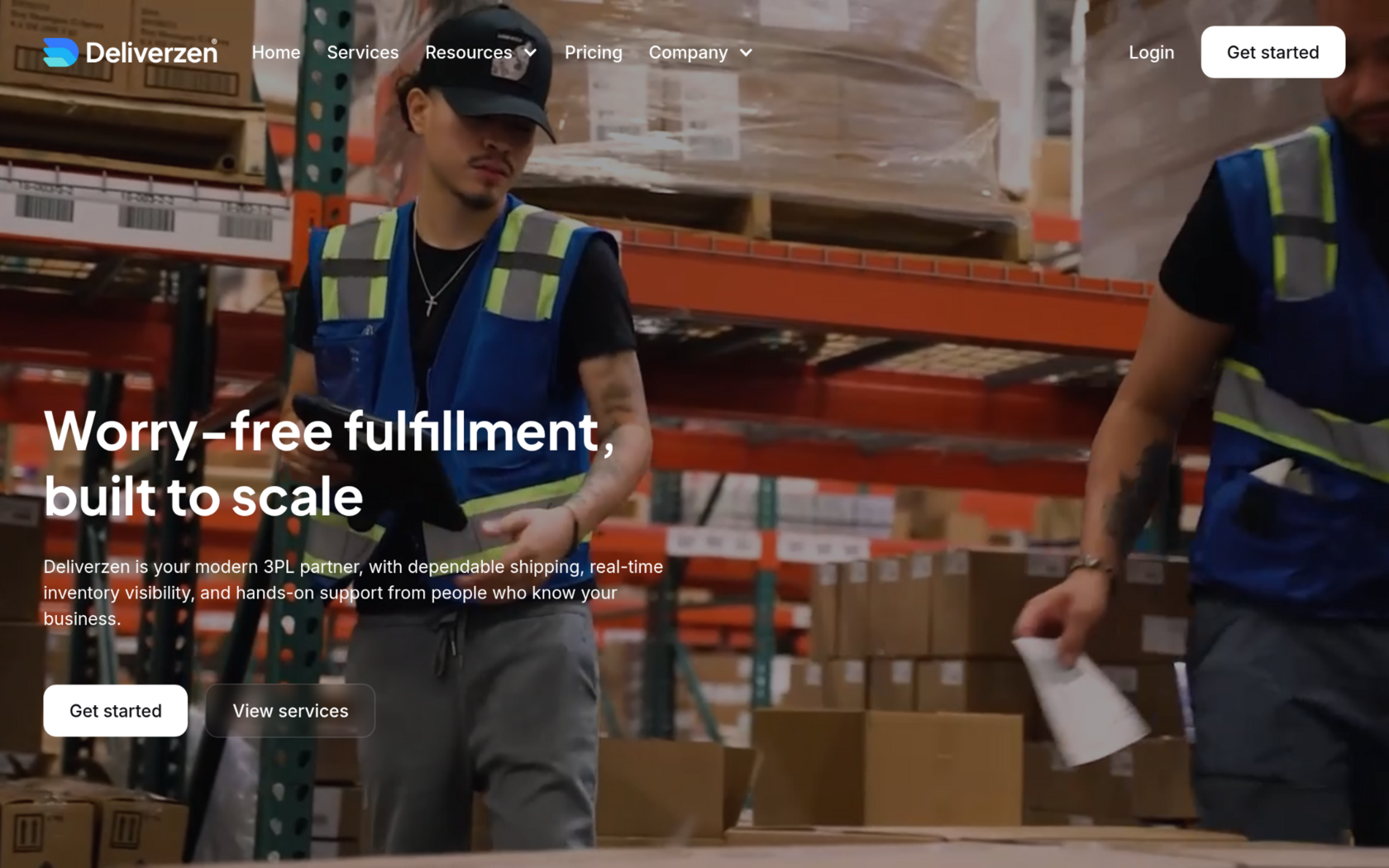
Deliverzen runs a 34,000 square foot climate-controlled warehouse in Irving, Texas, plus additional fulfillment centers across the U.S. That matters a lot for supplement brands that can't risk heat-damaged inventory. Their fully managed fulfillment model covers everything from inbound receiving to custom kitting and outbound shipping, with a dedicated customer service team actually stationed on the warehouse floor. They guarantee 99% order accuracy and back it with transparent, no-hidden-fee pricing, a combination that's genuinely hard to find at this price point.
Why Pick Deliverzen for 3PL Providers?
Supplement brands that have outgrown self-fulfillment but need a partner who understands skincare and health product handling will find Deliverzen's climate-controlled infrastructure and kitting depth a strong fit. Their real-world results speak clearly. One client scaled from 12,000 to 35,000 monthly orders while maintaining accuracy, which is the kind of operational runway growing brands actually need.
What the Reviews Show:
The case study with Divi scaling from $20M to $75M in revenue after partnering with Deliverzen says more than most review scores ever could. Clients highlight the floor-level customer service and the clean pricing structure as standout differentiators. That kind of operational transparency is rare at this scale.
Ops Engine - Best for DTC Supplement Brands Needing Precision Fulfillment
What Can Ops Engine Provide?
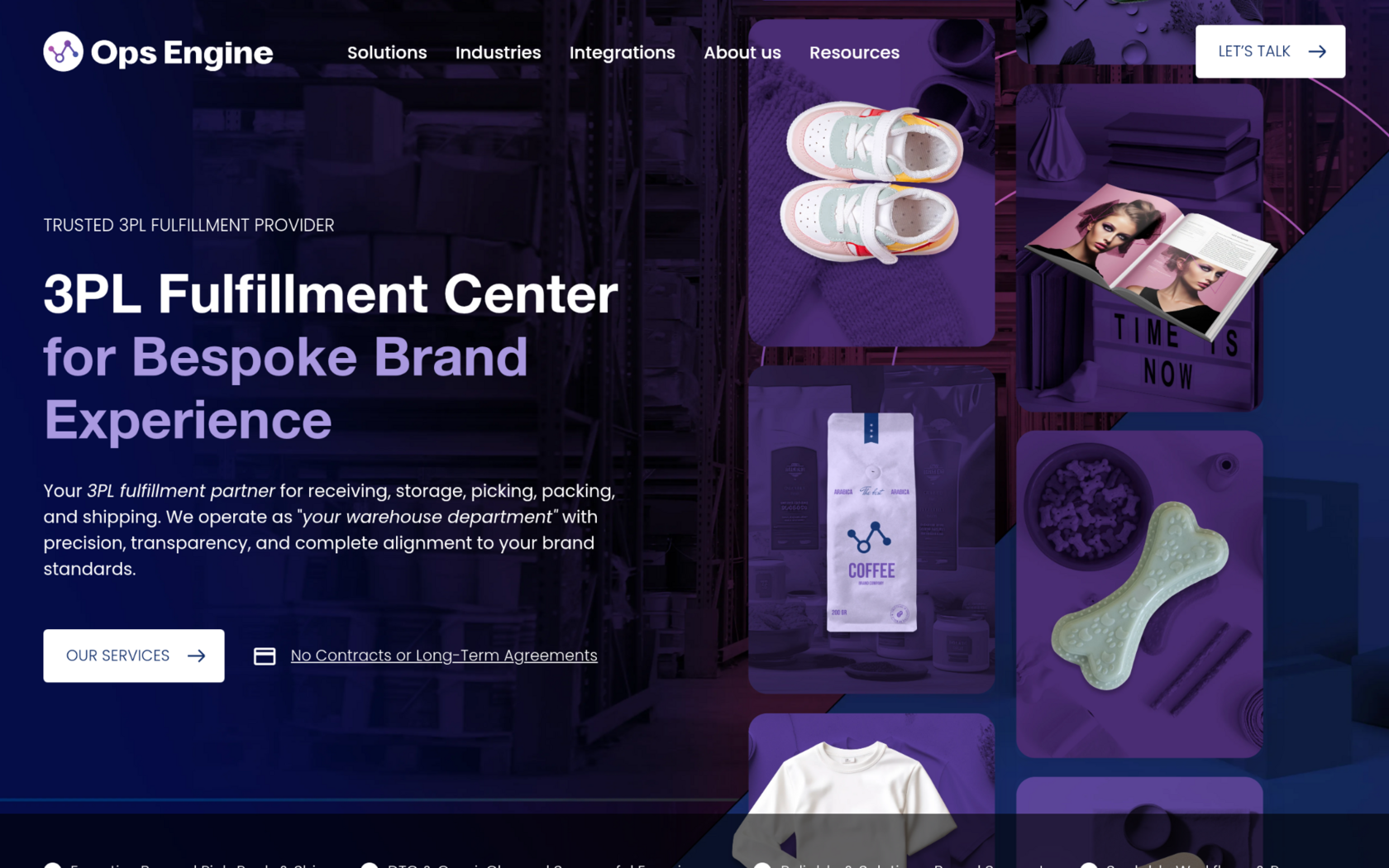
Ops Engine offers a tight set of services built for brands where accuracy isn't optional. Their picking and packing runs through a four-part scan verification process that delivers 99.99% order accuracy, a meaningful step above the industry-standard 99.5% target. For supplement brands running bundled promotions or subscription boxes, their kitting and assembly services handle multi-item configurations without the mis-pick chaos that usually follows. Brands that need supplement fulfillment with inventory management done with genuine care will find their returns management and retail prep capabilities cover the full operational picture. They also position themselves as a dedicated "warehouse department," not a transactional vendor.
Why Pick Ops Engine for 3PL Providers?
Supplement brands that sell through multiple channels (DTC, retail, and marketplace) need a fulfillment partner who won't treat their account like a number in a queue. Ops Engine's personalized account management model and four-part scan verification give quality-focused brands the precision and attention that high-SKU, compliance-adjacent products genuinely require.
What the Reviews Show:
Clients consistently reference the transparency in billing and the responsiveness of account management as the reasons they stay. The 99.99% accuracy commitment backed by scan verification builds the kind of trust that's hard to replace once you have it. That level of operational accountability is what separates a real fulfillment partner from just another warehouse.
Rakuten Super Logistics - Best for Ecommerce Brands Needing Nationwide Speed
What Can Rakuten Super Logistics Provide?
Rakuten Super Logistics has been in the ecommerce fulfillment space since 2001, and their product suite reflects that depth. Their SmartFill tool connects directly to Shopify, Amazon, Magento, Walmart Marketplace, and eBay, which covers most multi-channel supplement brands without custom work. SmartStock handles inventory management and helps reduce the shipping cost bloat that hits brands with poor zone distribution. Their two-day delivery network reaches 98% of the U.S. within one to two days, and SmartShip Optimizer routes orders across that network to shave transit time and carrier cost at the same time. For brands focused on delivery speed above all else, this infrastructure is genuinely competitive.
Why Pick Rakuten Super Logistics for 3PL Providers?
Supplement brands running high order volumes across multiple sales channels benefit from the pre-built platform connections and nationwide warehouse distribution that Rakuten brings. Their carbon-neutral logistics recognition and AI deployment track record also signal a provider thinking seriously about where fulfillment is headed, not just where it is today.
What the Reviews Show:
Ecommerce operators point to the two-day delivery reach and the platform connections as the main reasons for choosing Rakuten. The SmartFill and SmartStock tools get consistent mentions for reducing manual inventory management work. For brands prioritizing speed and channel breadth, this network is hard to match at scale.
Red Stag Fulfillment - Best for Fast-Growing Brands With Performance Guarantees
What Can Red Stag Fulfillment Provide?
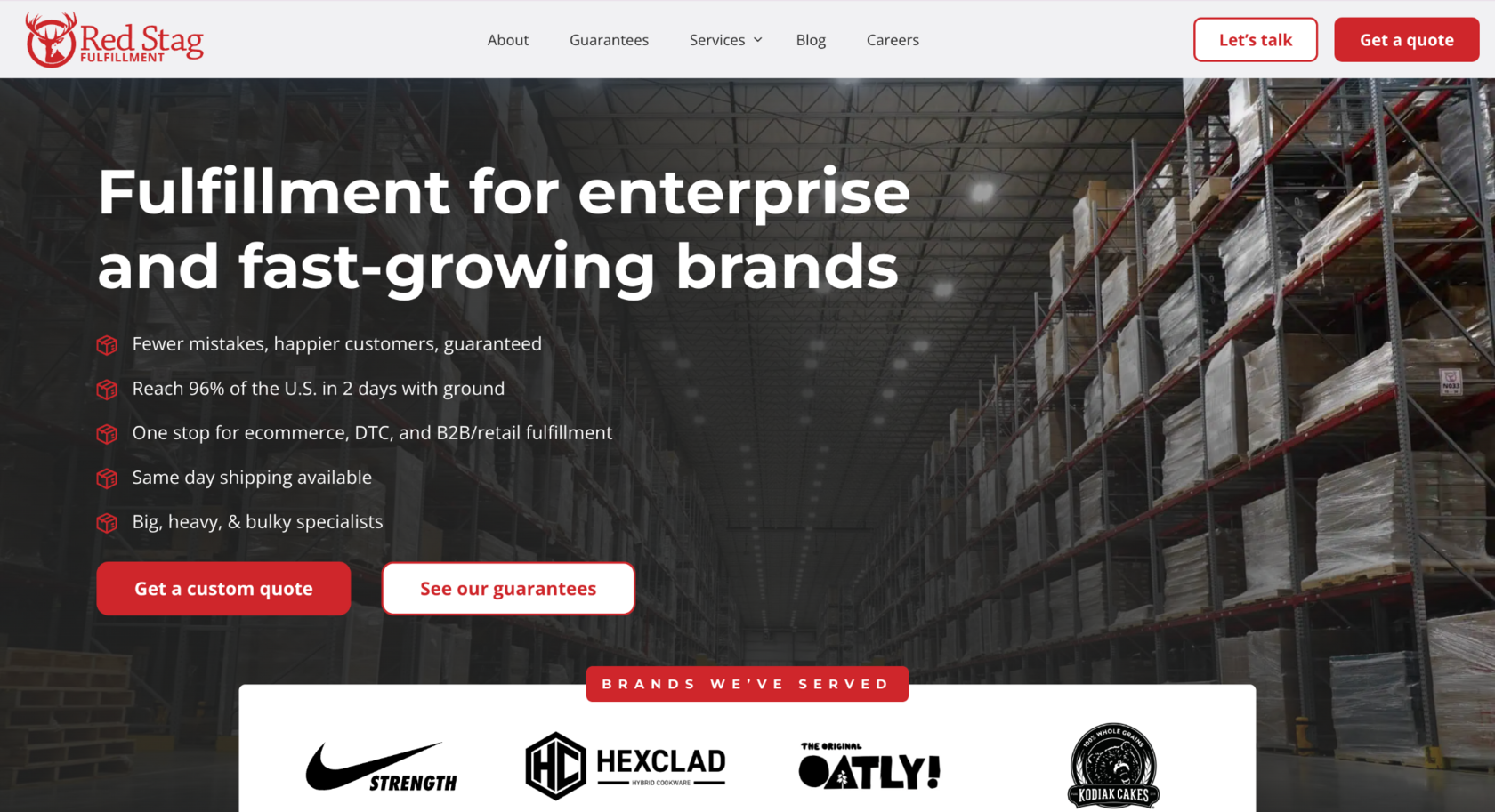
Red Stag operates 1.2 million square feet across two warehouse locations in Tennessee and Utah, covering 96% of the U.S. within two days. Their DTC parcel fulfillment comes with a zero-shrinkage guarantee (not a target, an actual guarantee with client compensation if missed), and their order accuracy and on-time shipping commitments work the same way. For supplement brands running Amazon alongside their DTC channel, Red Stag handles FBA preparation alongside direct fulfillment. Their kitting and bundling services cover supplement multi-packs with the same performance-backed accuracy as single-item orders, and LTL shipping covers bulk B2B supplement distribution when needed.
Why Pick Red Stag Fulfillment for 3PL Providers?
Brands that have been burned by 3PLs who promise accuracy but deliver excuses will find Red Stag's compensation model refreshing. Their founder-owned structure, with no venture capital pressure to cut corners for margin, means the service quality commitments are built to last.
What the Reviews Show:
Fit Small Business has named Red Stag one of the best 3PLs for small businesses for six consecutive years (not an easy streak to maintain). The guarantee-backed model and responsive account management are the most cited reasons clients stick around. WebRetailer's 98% overall rating backs that up. That kind of consistency is rare.
Ware2Go - Best for On-Demand Fulfillment With Advanced Analytics
What Can Ware2Go Provide?
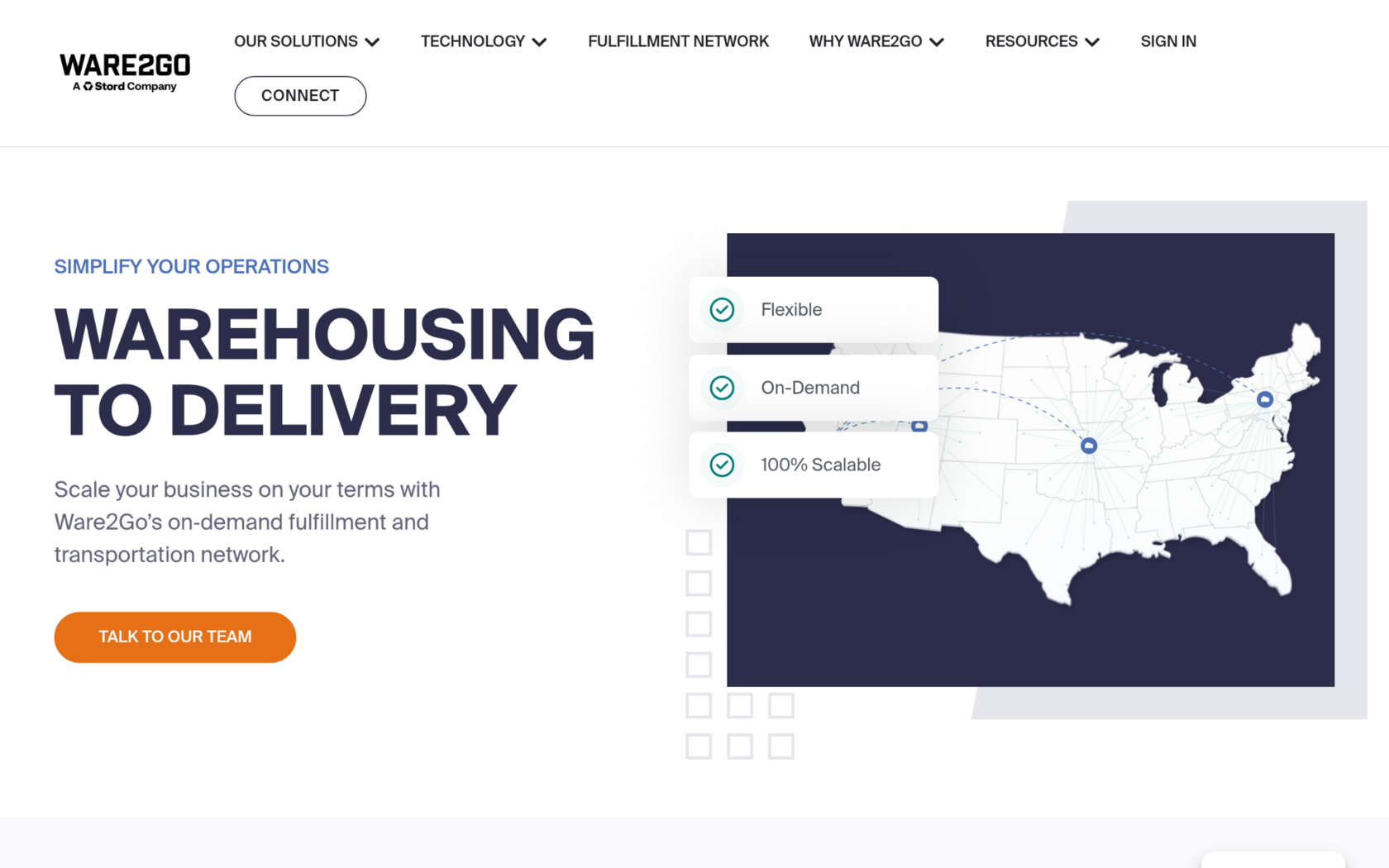
Ware2Go takes a technology-first approach to fulfillment that stands out from more traditional 3PL setups. Their platform connects to 80+ ecommerce and ERP connections, making it one of the more flexible options for supplement brands running complex tech stacks. Short-term warehouse agreements let brands scale storage up or down without the long-term commitments that trap most 3PL clients mid-contract. Their machine learning layer handles demand forecasting and inventory placement, which directly reduces the risk of stockouts during peak periods. As a Stord company, their retail fulfillment capabilities also bridge B2B and B2C operations without requiring separate providers for each channel.
Why Pick Ware2Go for 3PL Providers?
Supplement brands that experience sharp seasonal volume spikes (think January fitness resolutions or Black Friday bundles) need a fulfillment partner with flexible capacity and smart inventory forecasting built into the platform. Ware2Go's analytics-driven model directly addresses the overage fee problem that hits scaling brands hardest.
What the Reviews Show:
Customer results tell a strong story here. O2 Recovery achieved 10x ecommerce growth through the platform, and ALOHA grew D2C sales over 300%, which tracks with what reviews describe about the forecasting and inventory tools. Merchants highlight the flexibility of short-term agreements and the analytics depth as the two features that keep them on the platform. For a brand in growth mode, that combination is a real differentiator.
Evaluation Criteria and Research Approach
Putting together a shortlist of 3PL providers for supplement ecommerce required more than a surface-level scan of service pages. The process was structured to surface providers with real operational track records rather than polished marketing copy.
Data Collection Framework
The research started by pulling names from multiple sources: logistics-focused directories, B2B review platforms, and industry publications that cover ecommerce fulfillment. Case studies linked directly to supplement, health, beauty, and consumer packaged goods brands were given priority during this phase. Initial entries were gathered from across the market, including newer entrants and established players, before any filtering was applied.
Filtering Candidates by Important Criteria
Once the initial list was assembled, candidates without verifiable operational history in relevant product categories were removed. Review patterns were analyzed across platforms to identify providers with consistent feedback on accuracy, responsiveness, and pricing transparency. Providers whose reviews pointed to frequent mis-picks, unresolved billing disputes, or poor peak season performance were excluded regardless of how polished their website appeared.
Authenticating the Information
Claims made on official service pages were cross-referenced against actual customer reviews and third-party case studies. When a provider advertised 99%+ order accuracy, that figure was checked against client testimonials and documented outcomes. Discrepancies between marketing language and reported real-world performance flagged a provider for closer scrutiny or removal from the shortlist entirely.
The Authority Layer
Industry recognition was factored in as an additional signal. Awards from logistics publications, appearances on fast-growth company lists, and mentions in supply chain media all contributed to a provider's credibility score. These signals don't override operational data, but they do help confirm that a provider is being noticed beyond their own marketing efforts.
3PL Providers Case Files
Each provider's dedicated service pages were reviewed for detail: did they show supplement or health product experience, or were they speaking entirely in generic fulfillment terms? Verified reviews tied to named clients and documented case studies with measurable outcomes carried the most weight in the final selection. Providers who could point to real volume growth, accuracy metrics, or cost reduction results for relevant clients earned their place on this list.
Finding the Right 3PL Providers for Your Needs
Choosing a 3PL for your supplement brand isn't just about price per pick. It's about finding a partner whose infrastructure, technology, and service model actually match where your business is right now and where you're headed.
- Industry and Domain Experience: Look for providers who specifically mention supplement, health, or consumer packaged goods fulfillment. Generic warehouse experience doesn't cover the lot tracking, climate control, or label compliance nuances that supplements require.
- Features and Service Offerings: Map your current needs against each provider's actual service list. Kitting, returns processing, retail prep, and FBA preparation aren't universal. Confirm they're offered before signing anything.
- Pricing Structure: Hidden fees in 3PL contracts are common and painful. Long-term storage charges, kitting minimums, and account setup fees can quietly erode your margins. Ask for a full fee schedule before committing.
- Results Measurement: The metrics that matter are order accuracy rate, on-time ship rate, inventory shrinkage, and cost per order. Any provider worth working with should be able to share their benchmarks for these clearly.
- Industry Knowledge and Compliance: Supplement brands selling across channels need a 3PL that understands retail prep requirements, proper lot tracking, and the documentation that comes with regulated product categories.
Final Words
Supplement fulfillment has distinct demands that reward choosing carefully. Climate-controlled storage, kitting accuracy, returns processing, and clean platform connections all affect your customer experience and your margins directly. The five providers covered here each bring a distinct strength. Deliverzen and Ops Engine lead on personalized accuracy and health product expertise, Rakuten and Red Stag lead on scale and speed, and Ware2Go leads on flexibility. As DTC supplement brands grow more competitive, the 3PL you choose becomes a real part of your operational edge.
FAQ on best 3PL providers for supplement ecommerce businesses
What is a 3PL provider for supplement ecommerce?
A 3PL provider for supplement ecommerce is a third-party logistics company that stores, picks, packs, and ships supplement products on behalf of your brand. Unlike generic fulfillment partners, supplement-focused 3PLs often support climate-controlled storage, lot tracking, kitting, returns, and compliance-sensitive handling. For founders building a scalable health brand, the right 3PL becomes an operational growth engine rather than just a warehouse.
Why do supplement brands need specialized 3PL fulfillment?
Supplement products come with stricter operational demands than many standard ecommerce categories. Temperature sensitivity, expiration dates, lot traceability, and labeling accuracy all raise the stakes, especially as order volume grows. A specialized 3PL helps reduce costly errors, protect brand trust, and free entrepreneurs to focus on customer acquisition and product expansion.
What features should I look for in the best 3PL for supplements?
The best 3PL for supplements should offer climate-controlled warehousing, accurate lot tracking, strong inventory management, and direct integrations with platforms like Shopify, Amazon, and ERPs. You should also evaluate kitting, subscription box assembly, returns handling, and retail prep if you sell across channels. From an entrepreneurial standpoint, these features are not “nice to have” extras, they directly influence margin, repeat purchases, and your ability to scale without chaos.
How important is order accuracy in supplement fulfillment?
Order accuracy is critical because even small mistakes can create refunds, customer churn, and compliance headaches. In the supplement space, mis-picks can also damage consumer trust faster than in less sensitive categories, especially when customers depend on consistent products. High-performing 3PL providers usually target 99% to 99.99% accuracy, which can make a major difference in long-term unit economics.
What are the biggest risks of choosing the wrong 3PL provider?
The wrong 3PL can quietly drain your business through shipping delays, hidden fees, poor system integrations, and inventory errors. For supplement brands, the risks are even higher because mishandled storage, weak lot tracking, or poor kitting can affect product quality and customer satisfaction. If you are trying to build a durable brand, a bad logistics partner can become an expensive bottleneck to growth.
Which 3PL providers are best for fast-growing supplement brands?
Based on the article, Deliverzen, Ops Engine, Rakuten Super Logistics, Red Stag Fulfillment, and Ware2Go each stand out for different reasons. Some are better for precision and personalized support, while others shine in nationwide delivery speed, enterprise-scale guarantees, or flexible analytics-led fulfillment. The best choice depends on your growth stage, channel mix, and whether your priority is accuracy, speed, flexibility, or cost control.
How do Shopify and Amazon integrations affect supplement fulfillment?
Clean integrations with Shopify and Amazon reduce manual work, improve inventory visibility, and help prevent overselling or fulfillment delays. For supplement founders selling on multiple channels, this operational connectivity becomes essential because disconnected systems create expensive mistakes at scale. If you want to build a lean ecommerce machine, strong platform integrations are one of the smartest logistics investments you can make.
How can a supplement brand reduce fulfillment costs without hurting service?
Brands can lower fulfillment costs by choosing warehouses closer to their main customer base, improving inventory placement, and avoiding providers with confusing fee structures. Transparent pricing, accurate demand forecasting, and efficient kitting can protect margins without sacrificing delivery performance. If you are bootstrapping or managing cash carefully, pairing logistics discipline with a broader bootstrapping startup playbook can help you grow more sustainably.
Is climate-controlled storage necessary for supplement ecommerce?
Climate-controlled storage is often necessary for supplements because temperature fluctuations can affect product integrity, shelf life, and customer satisfaction. While not every SKU requires the same level of environmental control, many founders underestimate how much storage conditions influence product quality over time. Choosing a 3PL with the right storage setup is a practical way to protect both your inventory and your reputation.
How should founders compare supplement 3PL providers before signing a contract?
Founders should compare 3PL providers across storage conditions, order accuracy, on-time shipping rates, software integrations, pricing transparency, and proven supplement experience. It is also wise to verify marketing claims using customer reviews, case studies, and real service guarantees rather than relying on sales calls alone. Smart entrepreneurs treat 3PL selection like a strategic partnership decision, because the right operator can strengthen both profitability and brand loyalty.
About the Author
Violetta Bonenkamp, also known as MeanCEO, is an experienced startup founder with an impressive educational background including an MBA and four other higher education degrees. She has over 20 years of work experience across multiple countries, including 5 years as a solopreneur and serial entrepreneur. Throughout her startup experience she has applied for multiple startup grants at the EU level, in the Netherlands and Malta, and her startups received quite a few of those. She’s been living, studying and working in many countries around the globe and her extensive multicultural experience has influenced her immensely.
