
Link exchange study: key findings
- Link exchange partners gave us 131 backlinks, and only 64.9% of them ended up as a dofollow link on a page Google has indexed.
- 14.5% of the links we received stopped delivering any value within about 14 months.
- Page deletion caused almost half of all lost links: 7 of 16.
- In 5 of the 8 links removed from live pages, the partner kept the anchor words as plain text and took out only the hyperlink.
- Partners were all-or-nothing: only 2 of 62 kept some of our links and dropped others.
- None of the 6 links on open-publishing platforms became a dofollow link on a Google-indexed page.
- 97.7% of agreed anchors were published exactly as agreed.
Link exchange requests reached us from 62 partner sites between mid-August 2025 and 13 October 2026, and we tracked all 131 backlinks we received in return.
We never pitched an exchange. Every one started with a partner contacting us and asking for a link. We agreed, and asked for a link back to one of our sites.
The 131 links are only a small share of what we were offered. We declined most requests because the partner’s website didn’t pass our quality check. That check was simple: a prompt to Perplexity asking whether the site looked legitimate and not like a private blog network (PBN), plus a Domain Rating check by a small script built on the free Ahrefs API.
We ran this as an experiment on test websites from our portfolio, not on the sites we use for business. The links went to 27 of those test sites.
For about 14 months we simply logged the exchanges in a sheet. Then, on 13 October 2026, we checked every link: is it still there, does it still count, and has Google indexed the page it sits on?
This article shares what we found, what we got wrong, the rules we changed, and a checklist you can copy. If someone offers you a link exchange, these numbers show what you can realistically expect back.
What is a link exchange, and is it allowed?
A link exchange is an agreement between two sites to link to each other. The common versions are:
- Reciprocal (two-way): site A links to site B, and B links back to A.
- ABC (three-way): a partner links to one of your sites, and you link back from a different site.
- Guest post swap: each side publishes an article on the other's site, with a link inside.
- Link insertion (niche edit): a link is added to an article that already exists.
What Google says (outside source, not our data): Google's spam policies list "excessive link exchanges ("Link to me and I'll link to you")" as a form of link spam. The same policies also name partner pages that exist only for cross-linking. The key word is "excessive". Sites that cite each other because the link helps readers are a normal part of the web.
What this means for you: keep exchanges few, relevant and in the body of real articles, and never trade links at scale.
Backlink exchange results: 85.5% of links still counted
On 13 October 2026, 112 of the 131 links (85.5%) were live on a page search engines can index.
Another 3 links (2.3%) were still on the page but worthless. The other 16 links (12.2%) were lost outright.
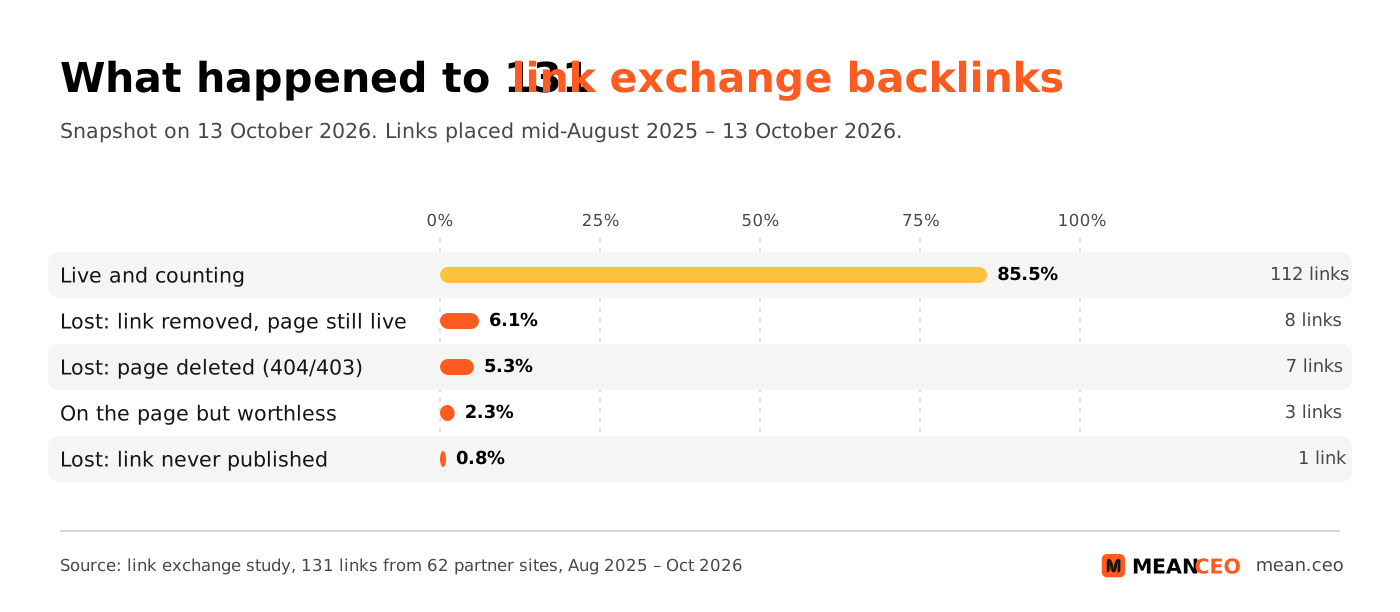
So roughly 1 in 7 links received in an exchange stopped delivering value within about 14 months.
As a yearly rate, that is at least about 12% lost or neutralised per year. The real yearly rate is probably higher, because links were placed throughout the period and the average link has been live for less than 14 months.
Page deletion caused almost half of all losses (7 of 16).
What this means for you: expect to lose some exchanged links every year, and assume you won't hear about it.
How partners removed exchanged links
8 links disappeared from pages that are still online. We opened each page in a real browser to see what had happened.
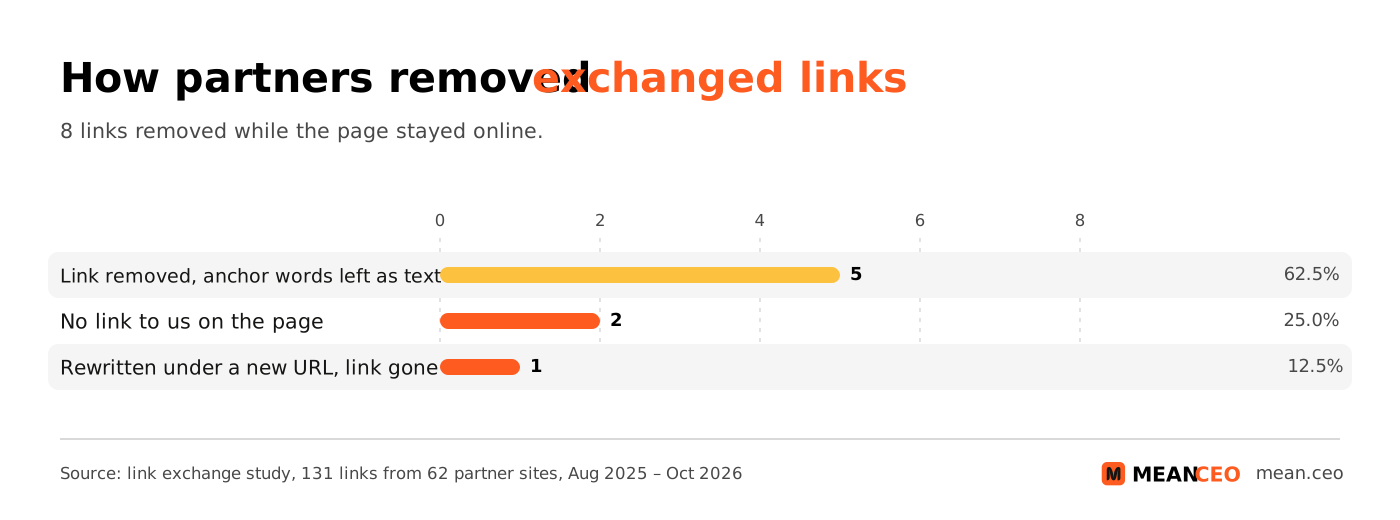
In most removals the partner deliberately unlinked the anchor and kept the text. That isn't an accident during an edit.
Three of those five unlinkings came from a single partner, which removed every link it had given us.
What this means for you: a page that "looks unchanged" can still have lost your link, so check the HTML, not just the words.
Links that are live but worthless
3 links were still on the page but no longer count. None of these problems is visible to a casual reader.
The header noindex is the sneakiest. Nothing shows in the page source; you only see it in the server's response headers.
What this means for you: "the link is there" is not the same as "the link counts". Check the canonical, the meta robots tag and the HTTP headers.
Link insertion, guest posting or open publishing: results by placement type
Most of our links (110) sat in editorial articles, and 86.4% of those were still counting.
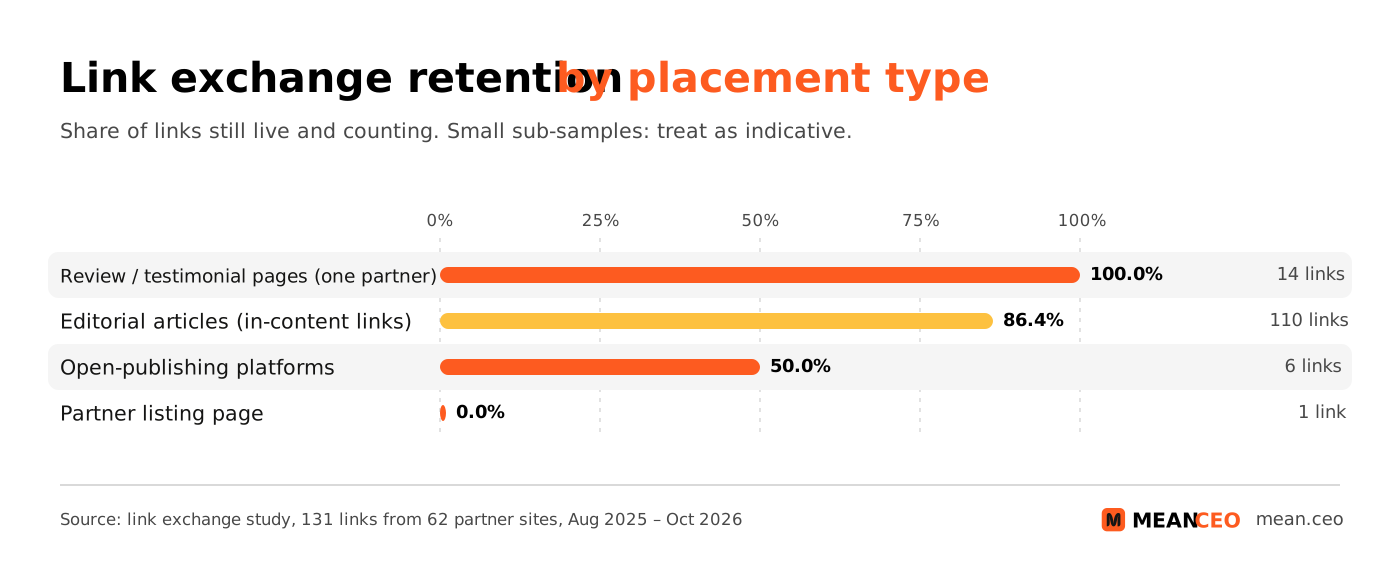
Open-publishing platforms did worst. These are sites where anyone can publish. Of the 6 links there:
- 2 pages were deleted or made private.
- 1 is canonicalised away to a different URL.
- 2 of the 3 survivors are nofollow.
- The one dofollow survivor sits on a page Google hasn't indexed.
So none of the 6 is a dofollow link on a Google-indexed page.
The review-page exchange kept 100% of its 14 links, all dofollow. Every one of them uses a generic anchor, such as "Learn more", "Read more", an image or testimonial text.
Our records don't say whether each editorial link was a new guest post or an insertion into an older article. That is one reason we now accept insertions into already-indexed pages only (see "What we changed").
What this means for you: say no to open-publishing platforms, and treat the sub-groups here as indicative, because they are small.
ABC link exchange: our weakest exchanges
Some partners linked to one of our test sites while we linked back to them from a different one. That is a three-way, or ABC, link exchange.
These did worst of all. The partner sites were mostly low quality, and most of the pages carrying our links never got indexed by Google.
We tagged which exchanges were ABC, but this study's statistics don't break that group out, so we don't give a figure for it here.
What this means for you: a three-way setup doesn't make a weak partner site any better. Judge the page your link lands on.
Partner behaviour: all or nothing
49 of 62 partners (79.0%) kept every link they gave us.
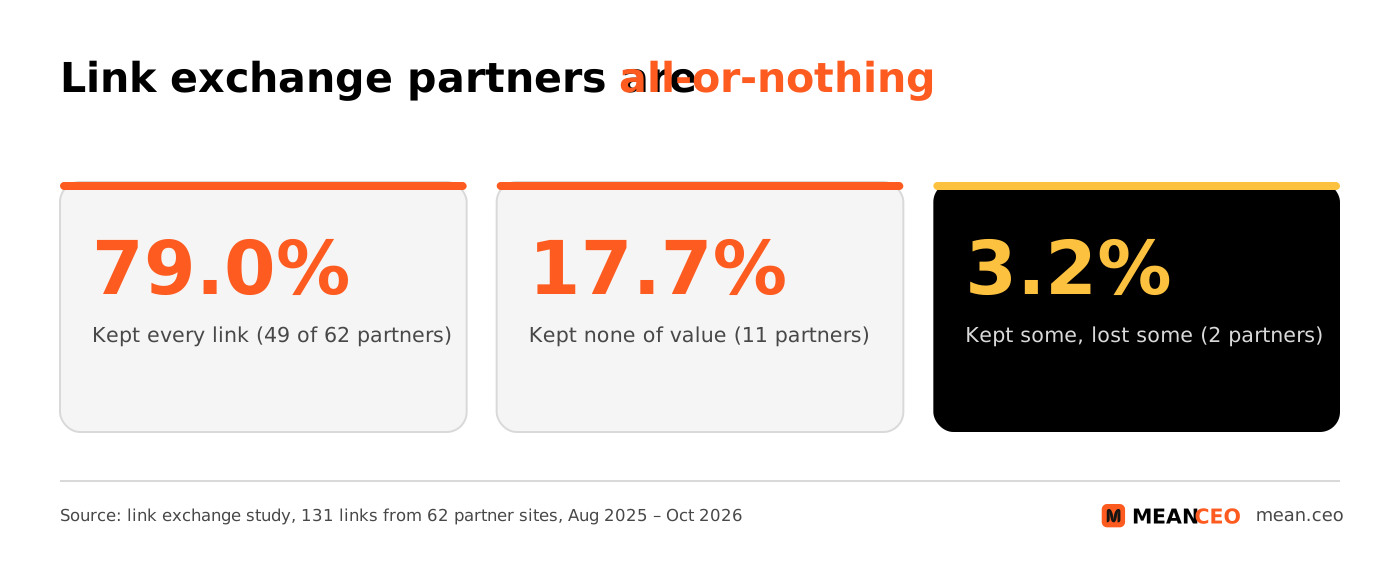
Only 2 of 62 kept some links and lost others. When a partner dropped links, it usually dropped all of them.
One partner removed all 3 of its links. Another removed both of its links. A third deleted all 3 pages that carried our links.
What this means for you: when one link from a partner disappears, check every other link from that partner the same day.
Link attributes and anchor text
Of the 115 links still on a page, 105 (91.3%) were dofollow.
Among the 112 links that still count, 92.0% are dofollow. Five of the nine nofollow links that still count come from a single page.
Partners honoured the agreed anchor almost every time: 84 of 86 links (97.7%) used it exactly.
All 10 lost links whose anchor is known were keyword anchors. No branded or generic anchor was lost.
Treat that with care. Six lost links never had an anchor recorded, the generic anchors all come from one exchange, and the branded ones come from a handful of partners.
What this means for you: anchors are rarely the problem; whether the link stays and counts is.
Partners changing URLs
30 of 115 placement pages (26.1%) had moved to a new URL since the link was placed.
Most moves came from site-wide restructures with redirects, and a redirected move almost never cost the link. The one loss came with a full rewrite of the article.
What this means for you: a redirect isn't a red flag, but update your records so you keep checking the right page. If your links come from consortium or project partners, see how to keep project partner links alive.
Indexing, Bing and AI visibility
A live link on a page Google hasn't indexed passes little or no value yet. So we checked every placement page in Google and Bing.
1 in 5 live placements (19.6%) sat on a page Google hadn't indexed, against 8.2% for Bing.
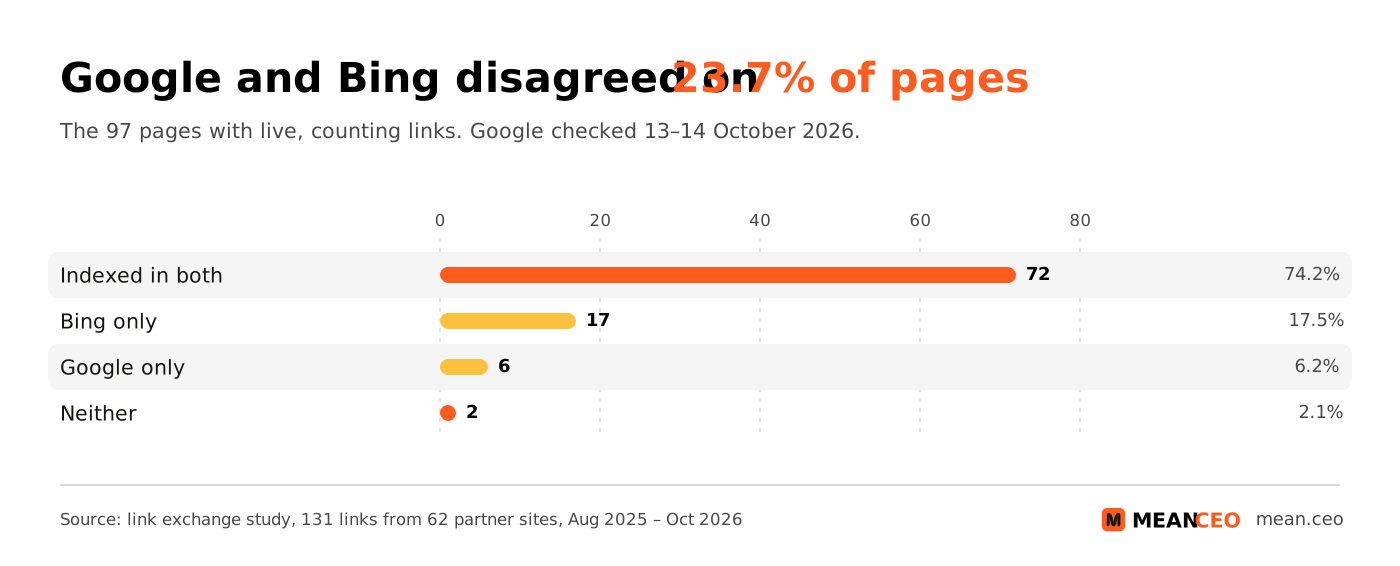
Google and Bing disagreed on almost a quarter of the pages: 23 of 97 (23.7%). A page indexed in one engine says little about the other.
One deleted page was even still listed in Bing.
AI visibility (outside source, not our data): Bing matters beyond Bing itself. A February 2025 Seer Interactive study of 500+ citations found that over 87% of ChatGPT search citations matched Bing's top results. If AI visibility is a goal, the Google-versus-Bing gap above is worth knowing about.
Our recommendation is still to track Google only. Checking Bing doubled our index-checking work and never changed a decision.
What this means for you: before you count a link, check that Google has indexed the page it sits on.
What's left after every filter
Put every filter together and the picture changes.
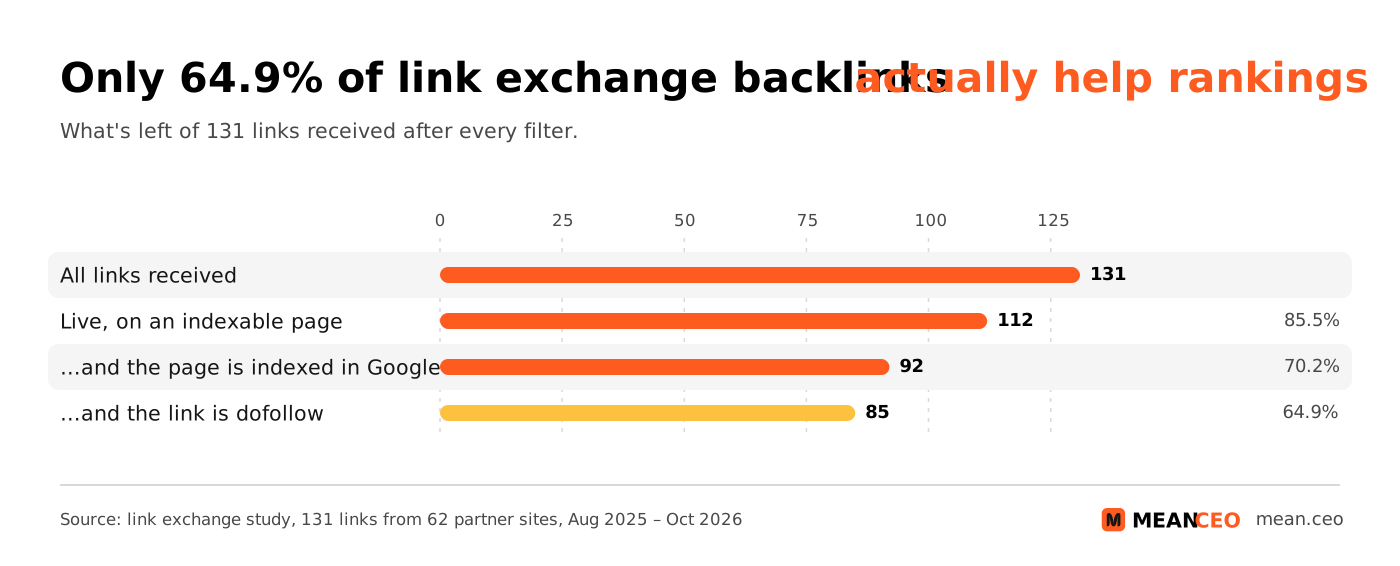
Only about two in three links received in an exchange were a dofollow link on a page Google has indexed. That's the share that actually helps search rankings.
What this means for you: when you weigh an exchange, count on roughly two useful links in three, not every link you're promised.
Record keeping
Our own records were part of the problem.
More than 1 in 5 placements had no record of which of our pages they pointed to. We had to read the target from the live page.
We kept these records by hand in a plain Google Sheet, with no automation. Record keeping is now handled by AI agents: Claude and Codex.
What this means for you: write down the partner page, your page and the anchor on the day you agree the exchange.
What we got wrong
The numbers above are partly a record of our own mistakes. These are the seven that cost us most.
- Poor record keeping. Incoming and outgoing links were mixed in one sheet, and two notes had no partner name, so they could never be followed up.
- Nobody checked. 14.5% of the links had died or stopped counting before anyone noticed.
- Counting "the link is there" as success. On top of the 3 worthless links, 20 links sat on pages Google hadn't indexed.
- Accepting links on open-publishing platforms. None of the 6 became a dofollow link on a Google-indexed page.
- Accepting links on new or unindexed pages. A link on a page Google never indexes doesn't help you.
- Taking the partner's word for it. One agreed link was never published, and the section it was meant to go into isn't even in that article.
- Underestimating deliberate removals. Most removals were on purpose, and partners tended to remove everything at once.
What we changed: link insertions (niche edits) only, and a 7-day rule
After the audit we rewrote our rules for every exchange. They took effect on 14 October 2026.
- The partner places our link first. We wait until it is live before we do our part.
- Insertions only. Our link must go into an existing page that Google has already indexed, often called a link insertion or niche edit. We don't accept links on new pages.
- The partner requests re-indexing of the page in Google Search Console and sends us the page URL and the date of the request.
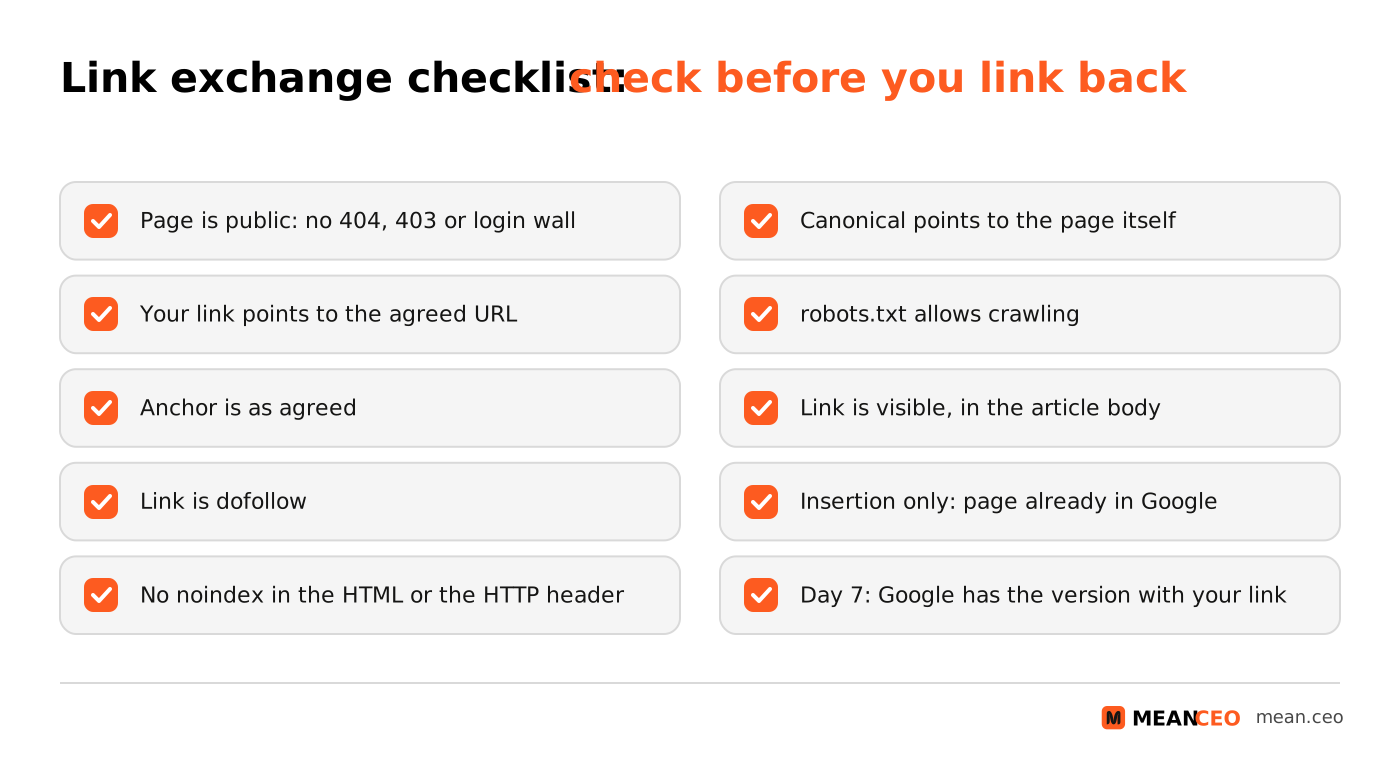
- We run 10 checks on their page (see the checklist below). If any check fails, we publish nothing and tell the partner what to fix.
- If the checks pass, we publish their link within 24 hours.
- 7-day index check. 7 days after the re-indexing request, we check that Google has the version of the page with our link. If it doesn't, we remove their link.
- Ongoing checks. We check our links automatically every week and the indexing every month. If our link is no longer live, their link is deleted from our site.
- We decline open-publishing platforms by default.
We also send partners our conditions up front: placement in the main content, the agreed URL and anchor, a normal (dofollow) link, an indexable page, no open-publishing platforms, and a 301 redirect if they move the article. The full conditions, ready to copy, are in our 11-point link exchange checklist.
What this means for you: decide your rules before the next request arrives, and send them with your first reply.
How to check if a link exchange adds any value
Everything above measures whether the links stayed and still count. It doesn't measure whether they helped.
We didn't measure that, and we can't. It wasn't the purpose of the experiment. We also did a lot of other work on our test websites during the same 14 months, so no change in rankings or traffic could be put down to link exchanges alone.
If you want to know whether your own exchanges pay off, track three things. Start before the exchange, then check again after 1 and 3 months.
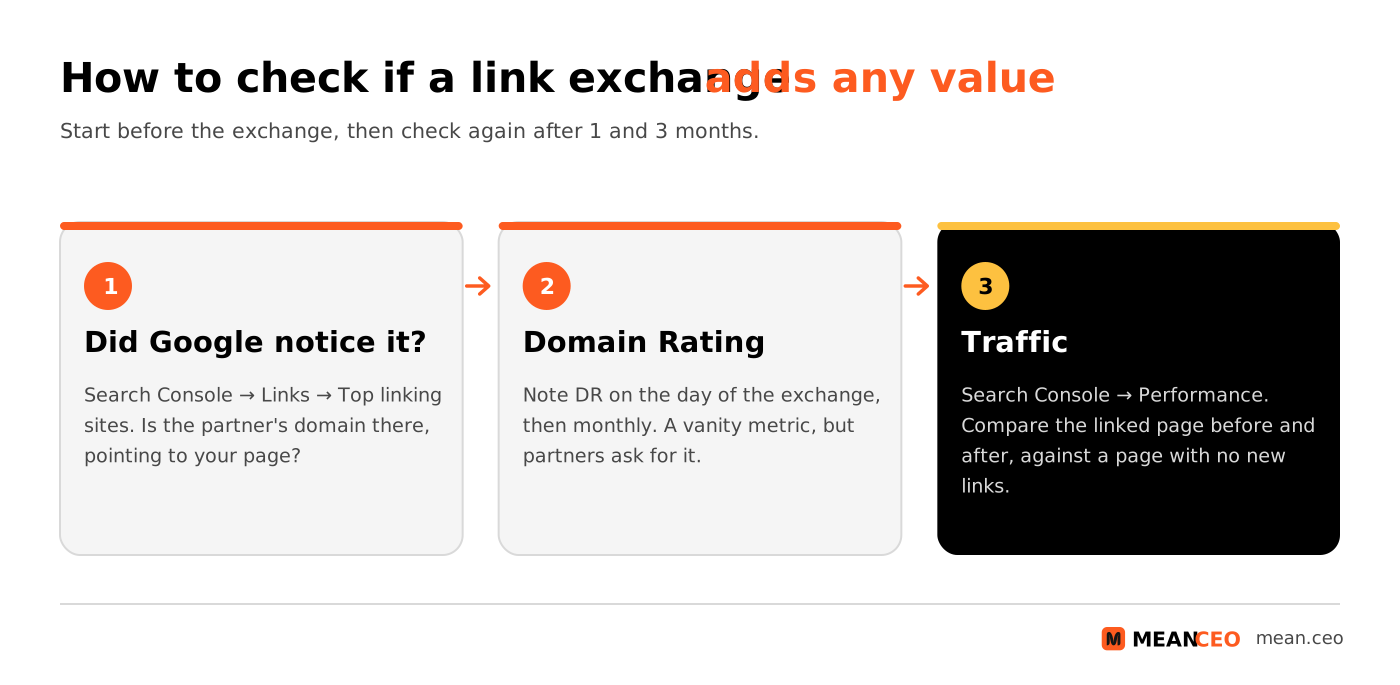
1. Did Google notice the link? (Search Console Links report)
Google Search Console shows the links Google has found to a site you own, which is exactly what you need here.
- Open Search Console and select your website.
- In the left menu, click Links.
- Under External links, open Top linking sites and look for the partner's domain. Click it to see which of your pages it links to.
- For dates, click Export external links and choose Latest links. The export lists linking pages with the date Google last crawled each one.
If the partner's page still isn't there after a few weeks, Google either hasn't crawled it yet or doesn't count it. The report shows a sample of links, not all of them, and it updates slowly. So a missing link isn't proof of a problem, but a listed link is proof that Google noticed it.
2. Domain Rating (DR)
Domain Rating is Ahrefs' 0–100 score for the strength of a site's backlink profile. It's a vanity metric: it isn't a Google metric, and it moves with links from any site, good or bad.
It is still popular, and partners and buyers ask for it, so it's worth tracking. Note your DR on the day of the exchange and then once a month. Ahrefs Webmaster Tools shows it for free on sites you verify.
3. Traffic and rankings (Search Console Performance report)
- Open Performance, then Search results.
- Click Add filter (or + New), choose Page, and enter the page the partner links to.
- Switch the date range to Compare, for example the 3 months before and the 3 months after the link went live.
- Check clicks, impressions and average position, then open the Queries tab to see whether the words in your anchor text gained impressions.
Do the same for a similar page on your site that got no new links in that period. If both pages move together, the cause was something else, such as a Google update, the season or your own content work.
What this means for you: write down the exchange date, the page and the anchor, and check all three after 1 and 3 months. It's the only way to tell an exchange that helps from a free link that does nothing.
How we measured this (and how to build your own tracker)
We built the tracker in one evening, about two hours, with free tools only. The full step-by-step guide, with the template, is here: our guide to building a link exchange tracker.
1. One row per link. A row is one pair of partner page and our page, not one partner or one page. A single partner page can carry several of your links, and each can disappear on its own.
2. Separate columns for people and for the script. People fill in the placement page, your target page, the agreed anchor and notes. The script fills in the link status, the anchor it found, the rel attribute, page flags and the date checked. That way you can re-run it any time without losing anything.
3. Recognise your own domains. The checker reduces every domain you own to its root, so links to subdomains count as yours too.
4. A checker that behaves like a browser. Ours is one Python file of about 400 lines, standard library only. It fetches each page with browser-like headers, one request at a time with a 1.5-second pause, and a full run takes about 10 minutes. For every link it reads:
- whether the link to your exact page is there,
- the anchor text and the rel attribute,
- noindex in the meta tags and in the X-Robots-Tag HTTP header,
- the canonical tag,
- redirects,
- whether your own target page still works.
5. Confirm every loss in a real browser. Some sites show scripts a near-empty page. For one partner, 3 of 4 links looked removed to the script but were live in the browser. Bot-protection pages also carry their own noindex tag, so only judge page signals once you know you have the real page.
6. Check indexing slowly. We used a site: search on the exact URL. Google showed a CAPTCHA after about 35 searches, so pace the checks, never try to get around a CAPTCHA, and use a paid search-results API if you need volume. Search Console can't help here, because the placement pages belong to your partners.
7. Keep the history. Lost links move to a "deleted" list and links on unindexed pages to a "parked" list, so the data stays usable for statistics like these.
Link exchange checklist (copy this)
Method and limitations
- Link check: each placement page was fetched and its links parsed automatically. Pages that hide content from scripts, every lost link and every worthless link were then confirmed by hand in a real browser.
- Indexing: Bing was checked with an exact-URL query (url:), which also follows redirects. Google was checked with site: on the exact URL, between 13 and 14 October 2026. Google rate-limits these checks heavily (about 35 searches before a CAPTCHA), so they were run slowly over two days.
- Inbound only: every exchange started with the partner contacting us. These figures measure whether partners delivered and kept the link they gave back. They don't measure our side of the exchange.
- Pre-selected partners: we declined most of the exchange requests we received. Only sites that passed a simple quality check made it into the data: a Perplexity prompt on whether the site looked legitimate and not like a private blog network (PBN), and a Domain Rating check by a script built on the free Ahrefs API. Results from unscreened partners would likely be worse.
- Dates: links were placed throughout mid-August 2025 – October 2026, but most individual placement dates weren't recorded. Loss rates therefore cover the whole period, and the yearly figure is a lower bound.
- Small sub-samples: the placement-type and anchor-type splits rest on small groups (6 open-publishing links, 1 listing page, 1 review-page partner). Treat them as indicative.
- Test websites: the links pointed to test websites in our portfolio, not the sites we use for business.
- ABC exchanges were tagged in our records, but the figures in this study don't break them out.
- No outcome measurement: we didn’t measure rankings, traffic or Domain Rating. It wasn’t the purpose of the experiment, and other work on the test websites in the same period means no change could be attributed to link exchanges alone.
FAQ
Are link exchanges worth it?
They can be, but expect less than you're promised. In our data only 64.9% of the links we received ended up as a dofollow link on a page Google has indexed. Exchanges with real, indexed editorial pages did far better than open-publishing platforms. We didn’t measure ranking or traffic effects, so check those yourself in Search Console (see “How to check if a link exchange adds any value” above).
How often are exchanged links removed?
In our audit, 14.5% of exchanged links stopped delivering value within about 14 months. That works out to at least about 12% a year, and probably more, because many links were placed partway through the period. Page deletion caused almost half of the losses.
How do I check if a backlink is still live?
Open the page and confirm the link points to your exact URL with the agreed anchor, then check the rel attribute. Also check the meta robots tag, the X-Robots-Tag header and the canonical, because a link can be on the page and still not count. Confirm any loss in a real browser, since some sites show scripts a near-empty page.
Does a link count if the page isn't indexed?
A link on a page Google hasn't indexed passes little or no value yet. In our data, 1 in 5 live placements (19.6%) sat on a page Google hadn't indexed. That's why we now accept only insertions into pages Google has already indexed, plus a 7-day index check.
Is link exchange against Google's rules?
Google's spam policies treat excessive link exchanges as link spam, and so are partner pages built only for cross-linking. Occasional links between relevant sites that help readers are a normal part of the web. Keep exchanges few, relevant and inside real articles.
What is an ABC link exchange?
It's a three-way setup: a partner links to one of your sites, and you link back from a different site. In our experiment these did worst, because the partner sites were mostly low quality and most of their pages never got indexed by Google.
Should I check Bing as well as Google?
Google and Bing disagreed on 23 of 97 pages (23.7%) in our check, so the engines don't mirror each other. But checking Bing doubled our work and never changed a decision, so we track Google only.
Cite this study
Suggested citation: Violetta Bonenkamp (2026). Link exchange study: what happened to 131 exchanged backlinks over 14 months. MeanCEO. https://mean.ceo/startup-blog/tpost/link-exchange-study
Embed the main chart:
About the Author
Violetta Bonenkamp, also known as MeanCEO, is an experienced startup founder with an impressive educational background including an MBA and four other higher education degrees. She has over 20 years of work experience across multiple countries, including 5 years as a solopreneur and serial entrepreneur. Throughout her startup experience she has applied for multiple startup grants at the EU level, in the Netherlands and Malta, and her startups received quite a few of those. She’s been living, studying and working in many countries around the globe and her extensive multicultural experience has influenced her immensely.
