US freight forwarders bleed hours every week to manual documentation work, re-entering shipment data across multiple systems, hunting down missing fields on customs forms, and re-keying vendor invoices that a TMS should already have. The 5 top freight forwarding tools for automating documentation listed here attack those problems head-on, covering document generation, e-invoicing compliance, customs filing, and AI-assisted data extraction. Each platform made this list for its actual feature depth and its fit across different forwarder sizes.
Why Documentation Automation Matters for Freight Forwarders
Manual documentation isn't just slow. It creates errors that delay shipments, trigger customs holds, and cost money to fix after the fact.
Take a forwarder moving 50 air shipments a week - that's potentially 50 separate instances of typing the same consignee address. One wrong AWB number can ground cargo for days. And when a new e-invoicing mandate drops in a market they service - Mexico's CFDI, Italy's SDI, Saudi Arabia's ZATCA, any system that can't produce the required format puts that revenue at risk immediately.
Automation addresses this at three levels: document generation (pulling live shipment data into customizable templates), carrier connectivity (sending booking and AWB data electronically instead of by email or portal), and compliance (producing tax-authority-accepted invoice formats without a separate system). The platforms below vary in how much of that stack they cover.
1. Logistaas
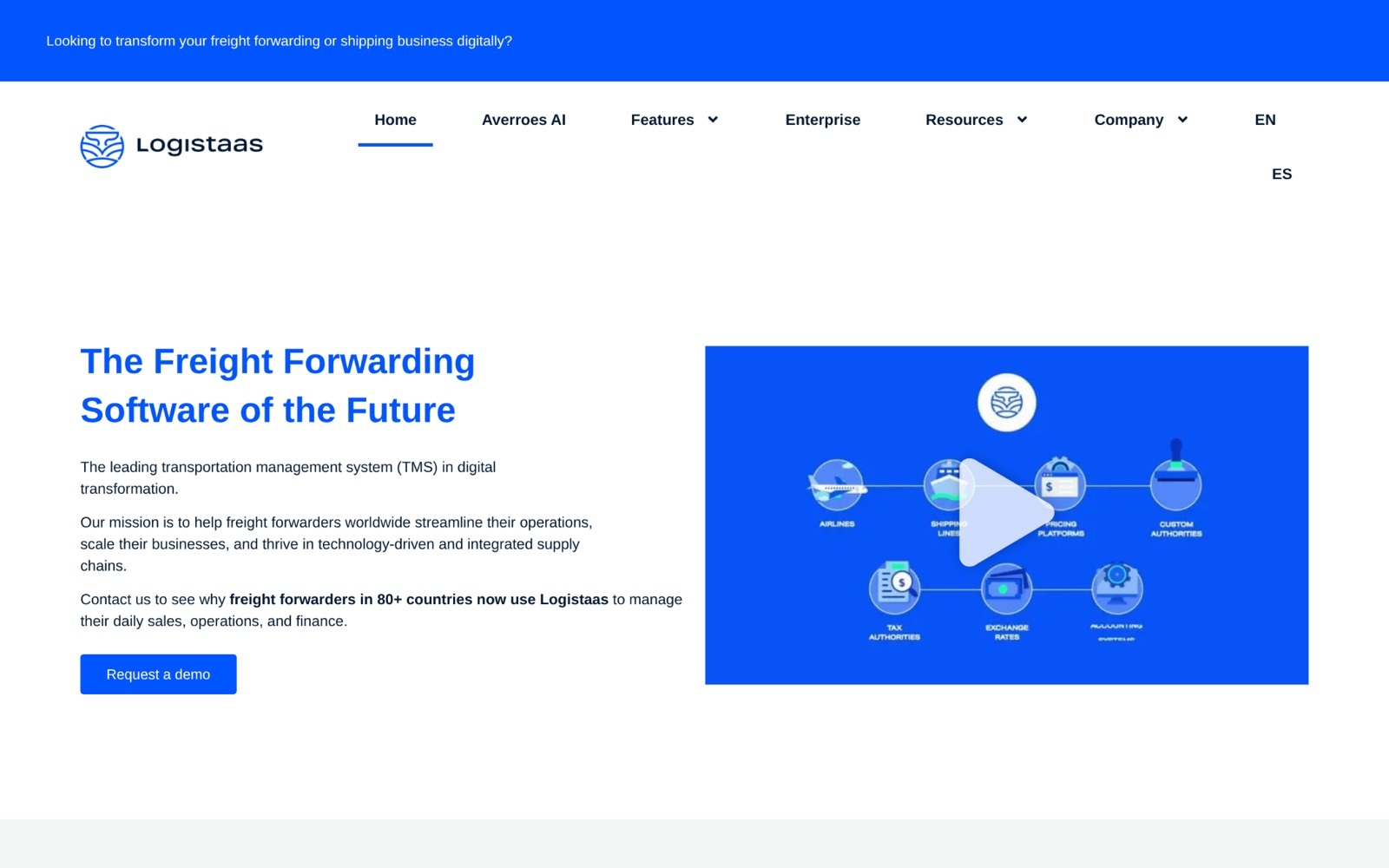
Logistaas is a TMS for freight forwarders, NVOCCs, and shipping lines, used in more than 80 countries, combining CRM, air, sea, land, and customs operations with a native accounting module in one platform.
Where it fits: Forwarders replacing spreadsheets or legacy software who need documentation automation across the full workflow - from quoting through customs filing and invoicing - will find Logistaas covers that ground without requiring a second system. Its Averroes AI assistant reads bill of lading and AWB PDFs, extracts shipment details, and imports them directly into the shipment record, cutting manual entry at the point of receipt. Document templates are 100 percent customizable and can be produced in any language, then emailed directly from the platform. On the compliance side, e-invoicing is supported across roughly 30 jurisdictions - including Mexico CFDI, Italy, Saudi Arabia, Romania, and the US - and direct customs filing is live for Dubai, Oman, ACE (United States), Mexico, and Uruguay. Carrier connectivity runs to 50-plus ocean carriers via INTTRA and 100-plus airlines for e-AWB through Champ Traxon CargoHub and Descartes. The branded customer portal, available in nine languages, lets clients download their own documents and track shipments without calling in. Pricing starts at $65 per user per month for the Operations Engine plan.
2. Logipulse
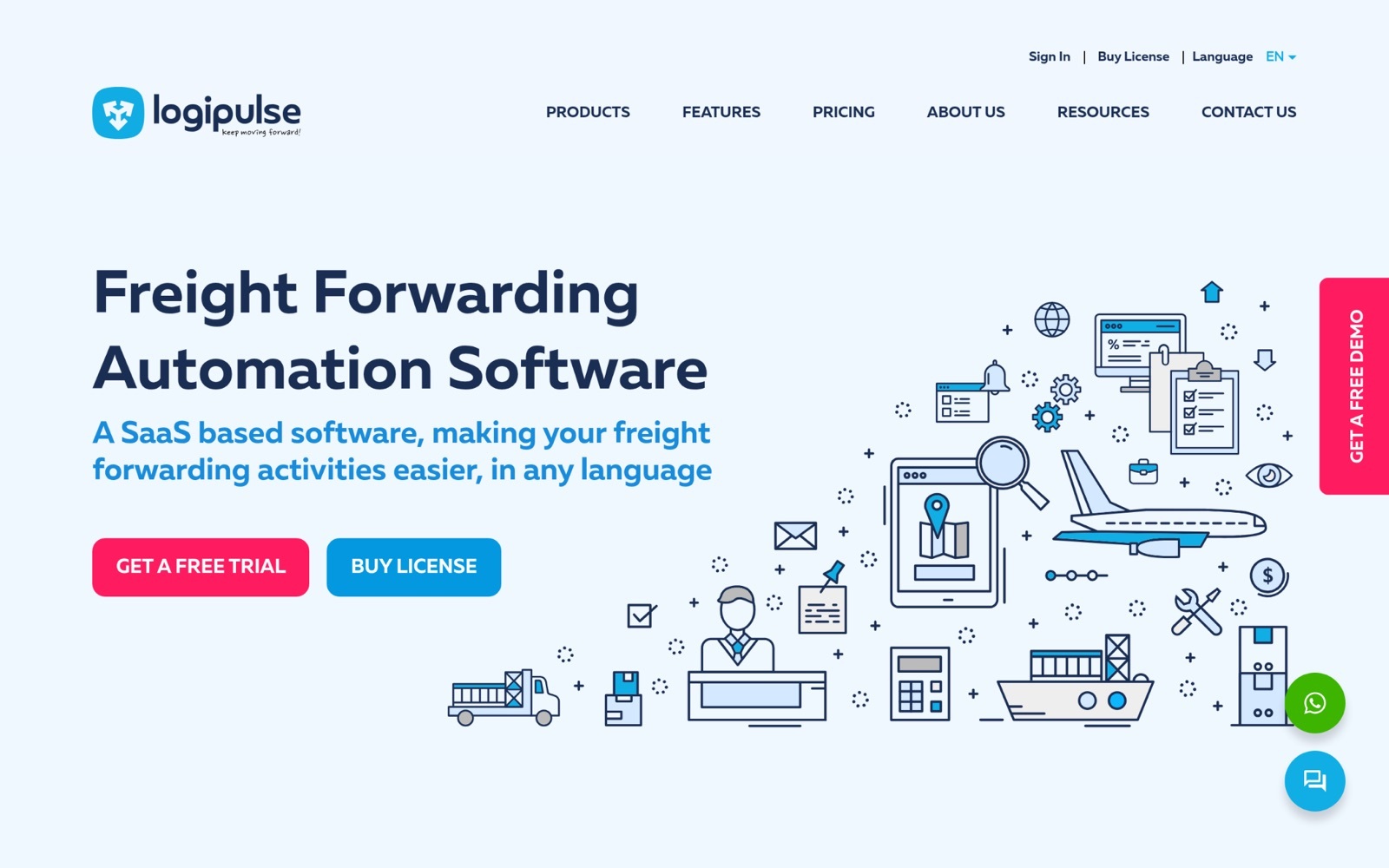
Logipulse is a SaaS logistics platform developed by Stellosys, a software company founded in 2010 and headquartered in Kerala, India, built for freight forwarders, customs brokers, and 3PLs.
Where it fits: Small to mid-sized forwarding operations looking for a multi-modal platform at a lower annual cost will find Logipulse accessible. It covers air and ocean freight management, customs documentation, warehouse management, and accounting within a single subscription, with entry-level pricing starting below $5,000 annually. The platform is accessible across desktop, tablet, mobile, PDA, and scanning devices, useful for teams moving between office and warehouse. An event engine handles alerts and notifications via in-system messages, email, SMS, and WhatsApp, which keeps documentation milestones visible without logging in repeatedly. User permissions can be configured to restrict access to sensitive financial data by role. Real-time shipment tracking is available from both the operator and customer perspectives. Logipulse positions itself as a lower-cost alternative to CargoWise and Magaya, with a pay-as-you-go model and no processing fees at startup.
Worth checking: The multilingual support and multi-device accessibility are genuine strengths, but publicly available case studies and third-party review data are limited compared to larger platforms on this list. Forwarders with complex North American customs requirements should confirm ACE filing support before committing.
3. Magaya
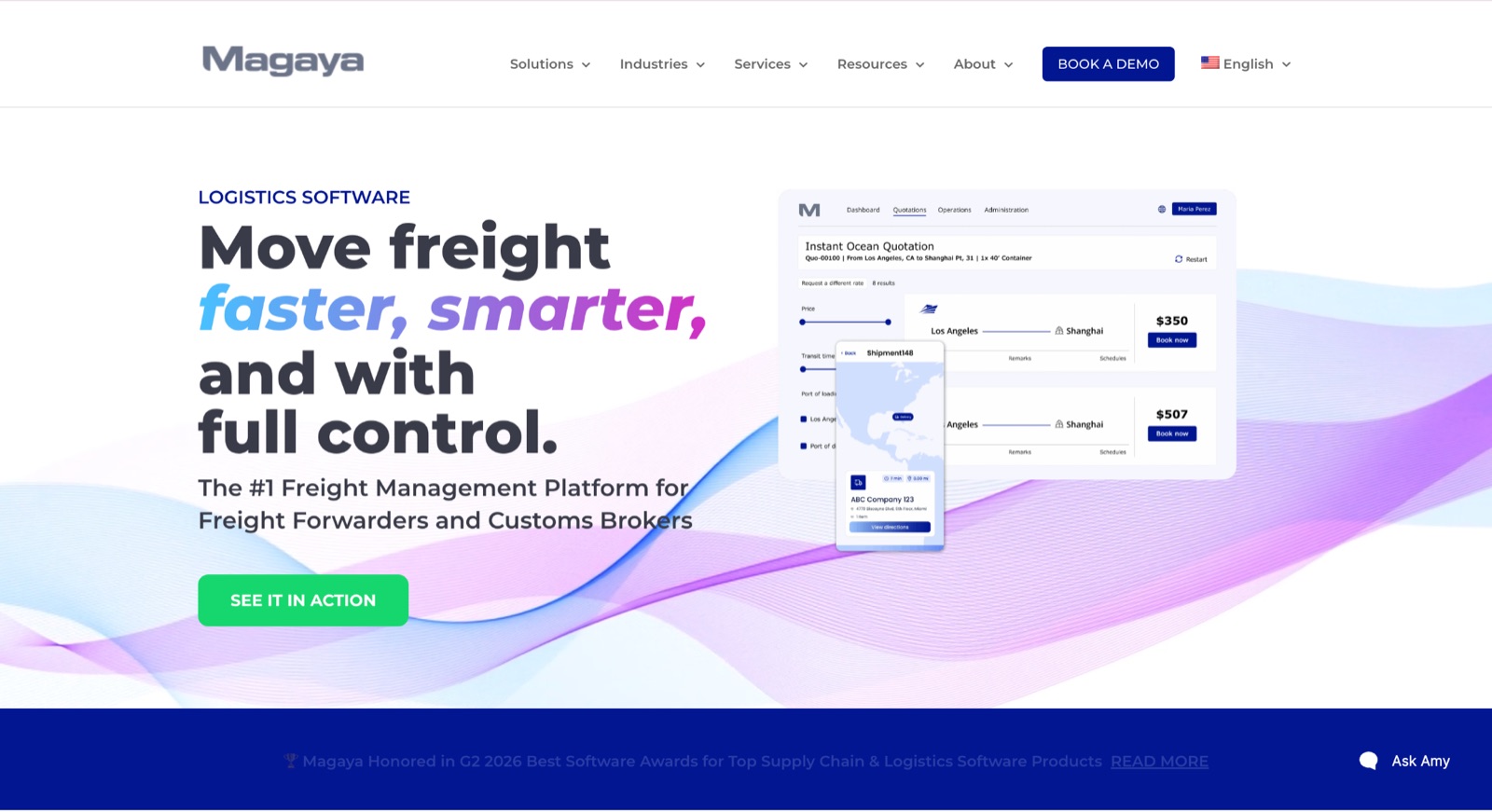
Magaya is a Miami-based logistics software company founded in 2001, operating the Magaya Digital Freight Platform, a modular system serving 2,300-plus customers across more than 100 countries.
Where it fits: Mid-market North American forwarders who want enterprise-grade documentation and customs compliance without an enterprise-only pricing model will find Magaya's modular approach practical. The platform's Magaya Customs Compliance module is ACE-certified, which matters for US-based forwarders filing directly with CBP. The integrated architecture - covering quoting, booking, warehousing, customs, and invoicing in one system - removes the data re-entry that causes most documentation errors. According to Magaya's published case study, Interglobal Logistics achieved a 300% improvement in turnaround times for documentation and shipment processing after switching to the platform. Extensions like Quote Automation, Denied Party Screening, and Carrier Connections add depth for forwarders with more complex compliance needs. Magaya earned Leader status in nine G2 categories in small-business and mid-market segments, and received a "Best Overall" designation from SoftwareConnect in 2025. Pricing runs approximately $200 per user per month, which sits above some competitors but below full enterprise systems.
Worth checking: Pricing is customized based on modules and user count, so actual cost varies. Forwarders outside North America should verify regional customs filing support for their specific markets.
4. Riege
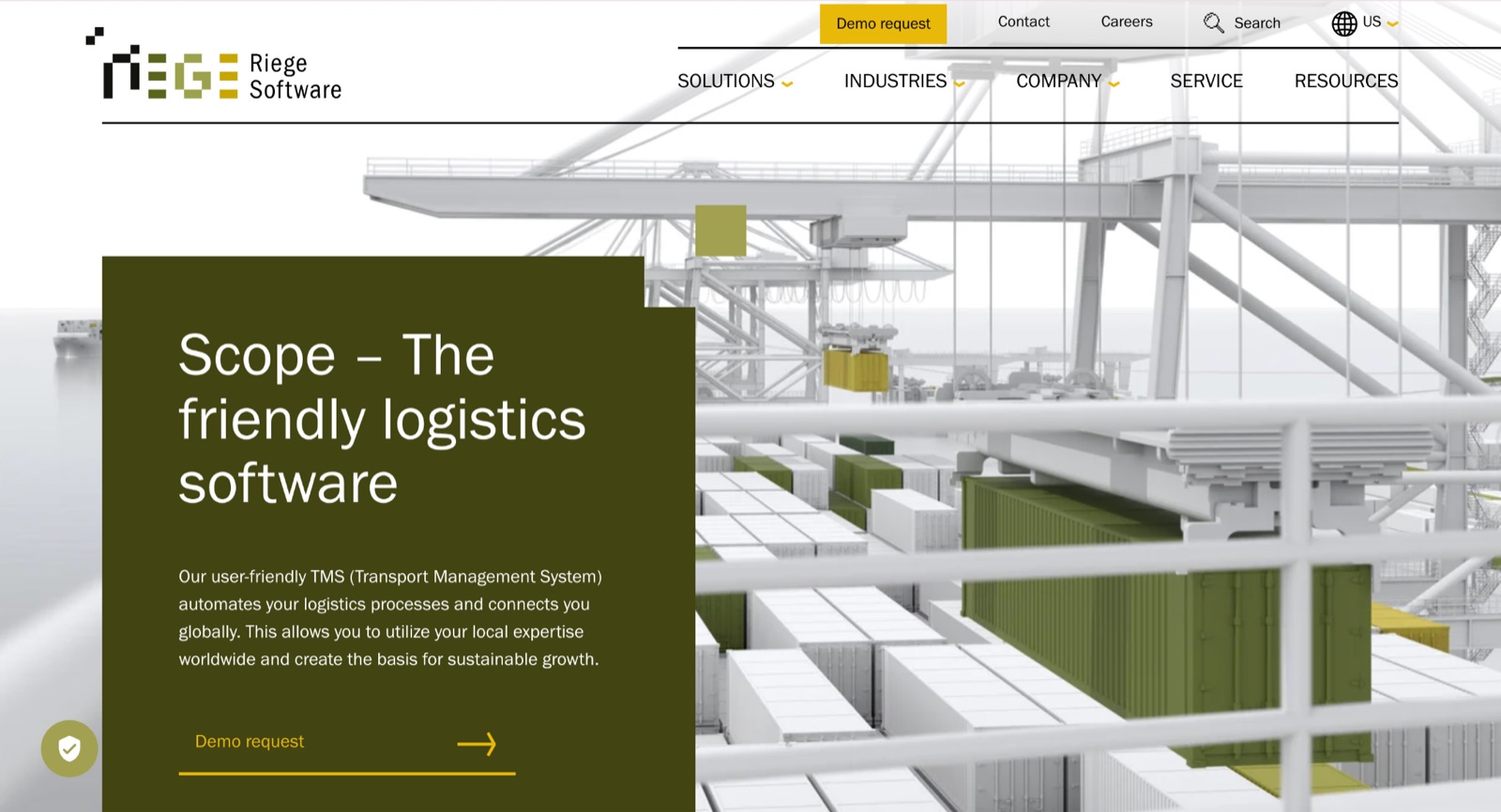
Riege Software is a privately owned German company founded in 1985 and headquartered in Meerbusch, North Rhine-Westphalia, with Scope as its flagship transport management system, used by more than 900 customers across 60-plus countries.
Where it fits: Forwarders with large European and cross-border operations who need strong customs data exchange will find Riege's Scope platform built for exactly that environment. Scope supports direct, automated data exchange with customs authorities in Germany, Switzerland, the Netherlands, and the USA, and documentation workflows cover both air freight and ocean freight. The platform includes emissions calculation per shipment, increasingly a requirement for enterprise shipper clients, alongside real-time tracking and what Riege calls its Scope Community for network-wide collaboration. Its seven global branches across Europe, Asia, and the Americas provide regional support rather than a single-timezone help desk. The platform uses a per-user, per-module subscription model, allowing operations to scale selectively. Riege received "Most Valuable Industry Partner" and "Diamond Sponsor" recognition at the 5 Star Logistics Network conference in Bangkok.
Worth checking: Riege's deepest customs automation is strongest for European jurisdictions. Forwarders based primarily in the US should confirm ACE and US-specific documentation coverage matches their volume before selecting it over a North America-first platform.
5. Shipthis
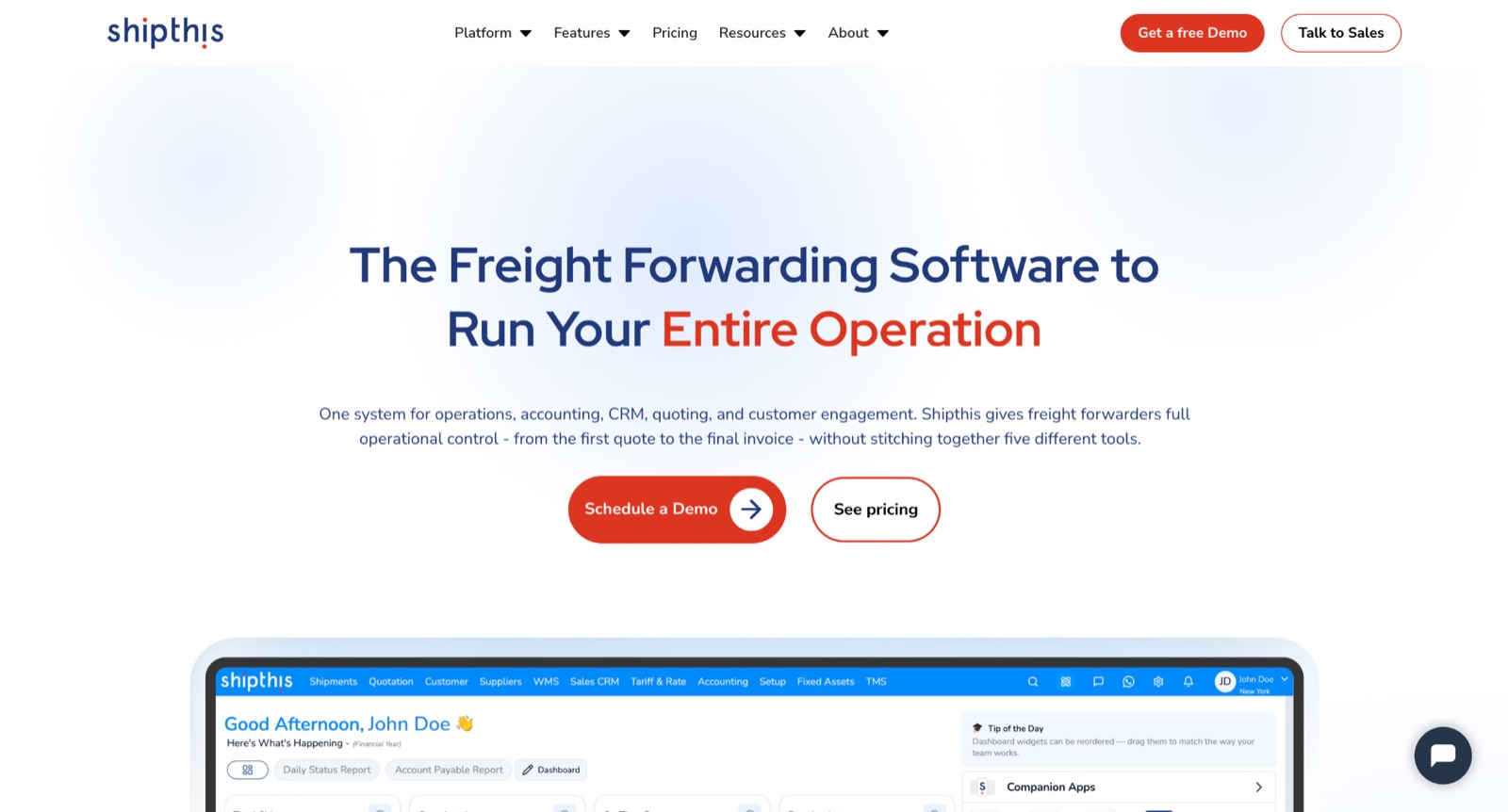
Shipthis is an AI-native freight forwarding software company founded in 2017, headquartered in Newark, Delaware, with a single-plan model that includes all modules from the start.
Where it fits: Smaller forwarding operations and NVOCCs that want AI-driven document automation without paying per module will find Shipthis's flat pricing structure, starting at $49 per month, easy to budget. Its "Magic Drop" document intelligence feature reads uploaded documents and extracts data automatically, addressing the same manual-entry problem that slows most operations desks. "Email Bridge" parses incoming emails and pulls booking or shipment data directly into the system, which cuts the time spent copying details out of client emails. Real-time vessel, container, and flight tracking covers all modes, and automated vendor bill matching reduces the manual reconciliation work in the finance workflow. Multi-currency, multi-entity, GAAP-compliant accounting is built in, alongside CO2 emissions tracking per shipment and real-time profit and loss per file. Shipthis is an unfunded company with approximately 28 employees as of April 2026.
Worth checking: The company's small team size means product depth and support capacity are more limited than the larger platforms on this list. Forwarders with high shipment volumes or complex customs filing requirements across multiple jurisdictions should test the platform thoroughly before full rollout.
How to Choose the Right Platform for Your Operation
The right pick depends on where documentation errors are actually costing time and money.
For US forwarders filing directly with CBP, ACE certification is a hard requirement - Magaya and Riege both support it, and Logistaas handles ACE filing as part of its customs module. Forwarders servicing markets with active e-invoicing mandates should count the jurisdictions each platform covers before shortlisting; a platform built for North America may not produce a ZATCA-compliant invoice for a Saudi client without custom work.
Budget drives this decision just as much as features do. Logipulse and Shipthis are the most affordable entry points, and both cover multi-modal documentation under a single plan. Magaya and Riege carry higher per-user costs but come with deeper connections to carrier networks and customs authorities. For operations looking to consolidate CRM, ops, finance, and accounting under one roof so document data doesn't get re-typed as it moves between systems, the important question is whether a platform's accounting module is native or just bolted on as an add-on.
Finally, check deployment time honestly. A six-month rollout during peak season is a real operational risk. Ask each vendor for a realistic go-live timeline based on team size and data migration scope, not the best-case estimate from the sales deck.
Bottom Line
The 5 top freight forwarding tools for automating documentation each approach the same problem differently: too much manual data entry, too many disconnected systems, and too much risk of a missed field stalling a shipment. Logipulse and Shipthis suit smaller operations that prioritize affordability and a fast start. Magaya's modular platform fits mid-market North American forwarders who need ACE compliance and an integrated WMS. Riege works best for European and cross-border operations requiring customs authority connectivity across multiple countries. Operations that want a single system spanning CRM through customs filing with native accounting - no separate add-ons to wrangle - face a narrower shortlist and should assess documentation depth, e-invoicing jurisdiction coverage, and deployment scope carefully before signing anything.
About the Author
Violetta Bonenkamp, also known as MeanCEO, is an experienced startup founder with an impressive educational background including an MBA and four other higher education degrees. She has over 20 years of work experience across multiple countries, including 5 years as a solopreneur and serial entrepreneur. Throughout her startup experience she has applied for multiple startup grants at the EU level, in the Netherlands and Malta, and her startups received quite a few of those. She’s been living, studying and working in many countries around the globe and her extensive multicultural experience has influenced her immensely.
